- Date
- 13 MARCH 2026
- Author
- FEDERICO RENOLDI
- Image by
- JACOPO OLMO
- Categories
- Aesthetics
Chrome Spirits: Tradition, Technology and Desire in the World of Hajime Sorayama
Entering the new exhibition dedicated to Hajime Sorayama in Tokyo feels like stepping into something that belongs simultaneously to the past and the future.
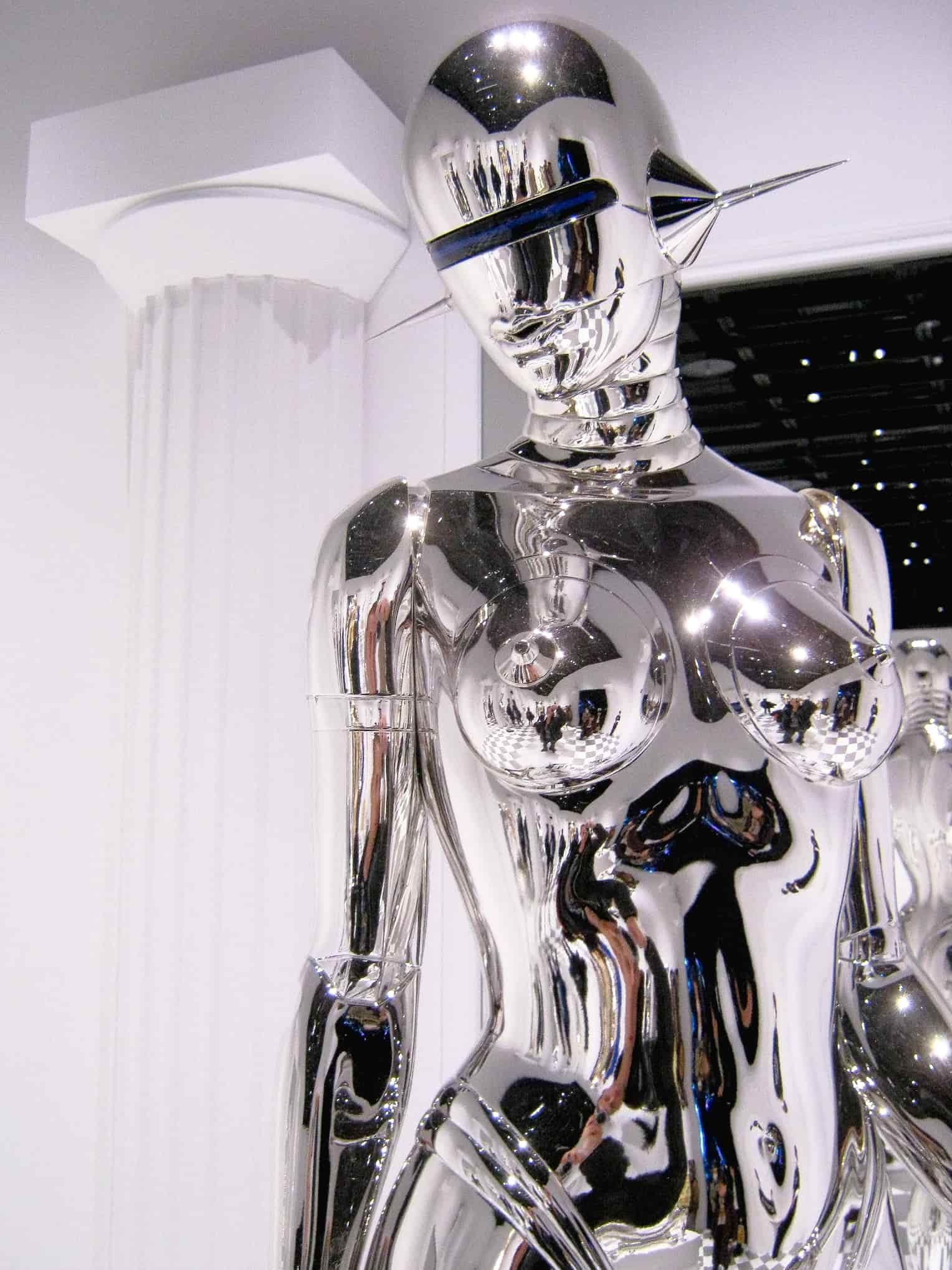
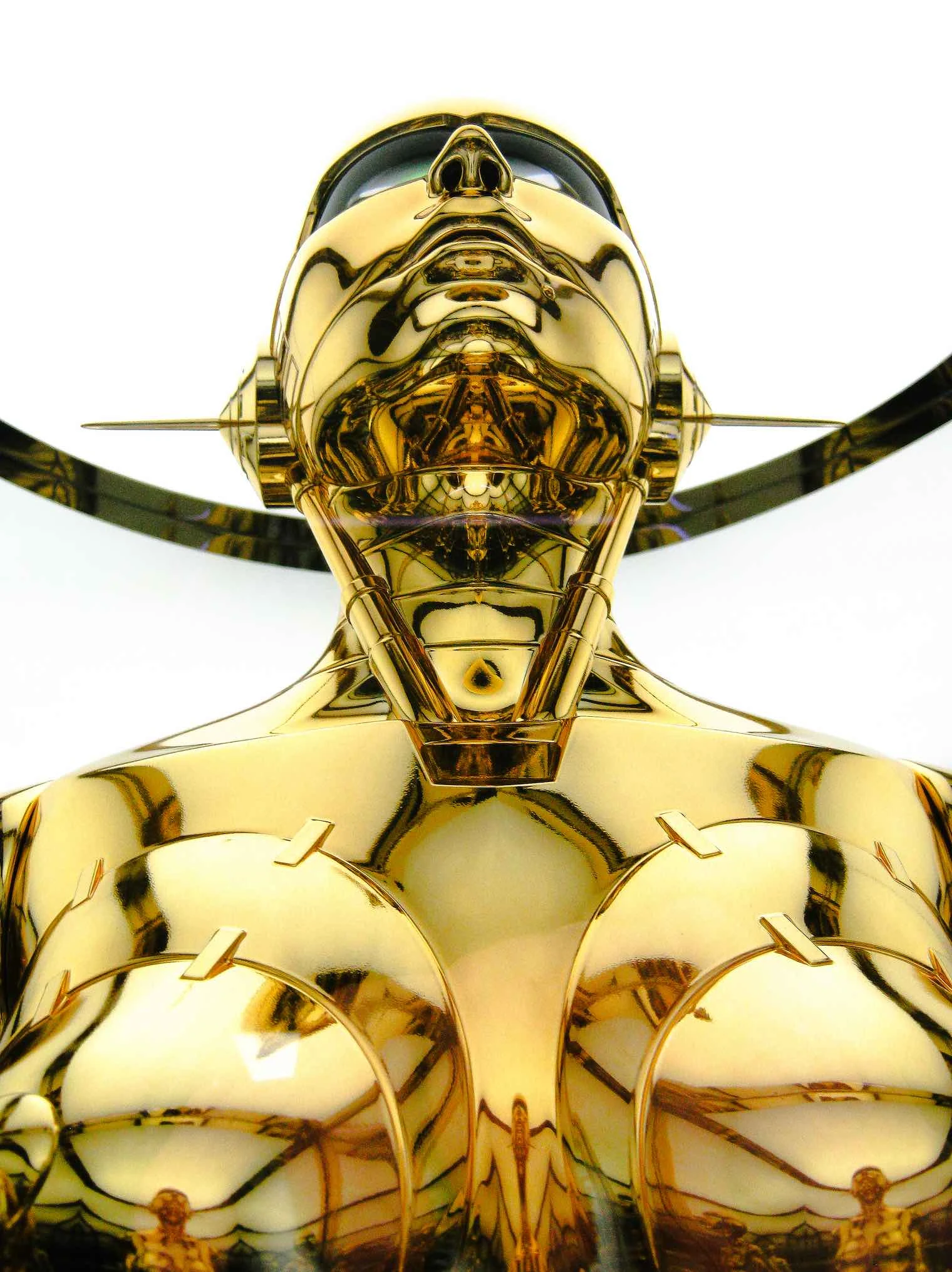
Chromed figures emerge from the darkness of the exhibition space: perfect bodies, polished and almost liquid in their appearance. Their mirrored surfaces reflect lights, cables, visitors and architecture, multiplying the space into endless distortions. At first glance they appear to be creatures from a cyberpunk universe. But looking more closely, something surprisingly ancient begins to emerge.
Sorayama’s work is not simply futuristic.
It is deeply Japanese.
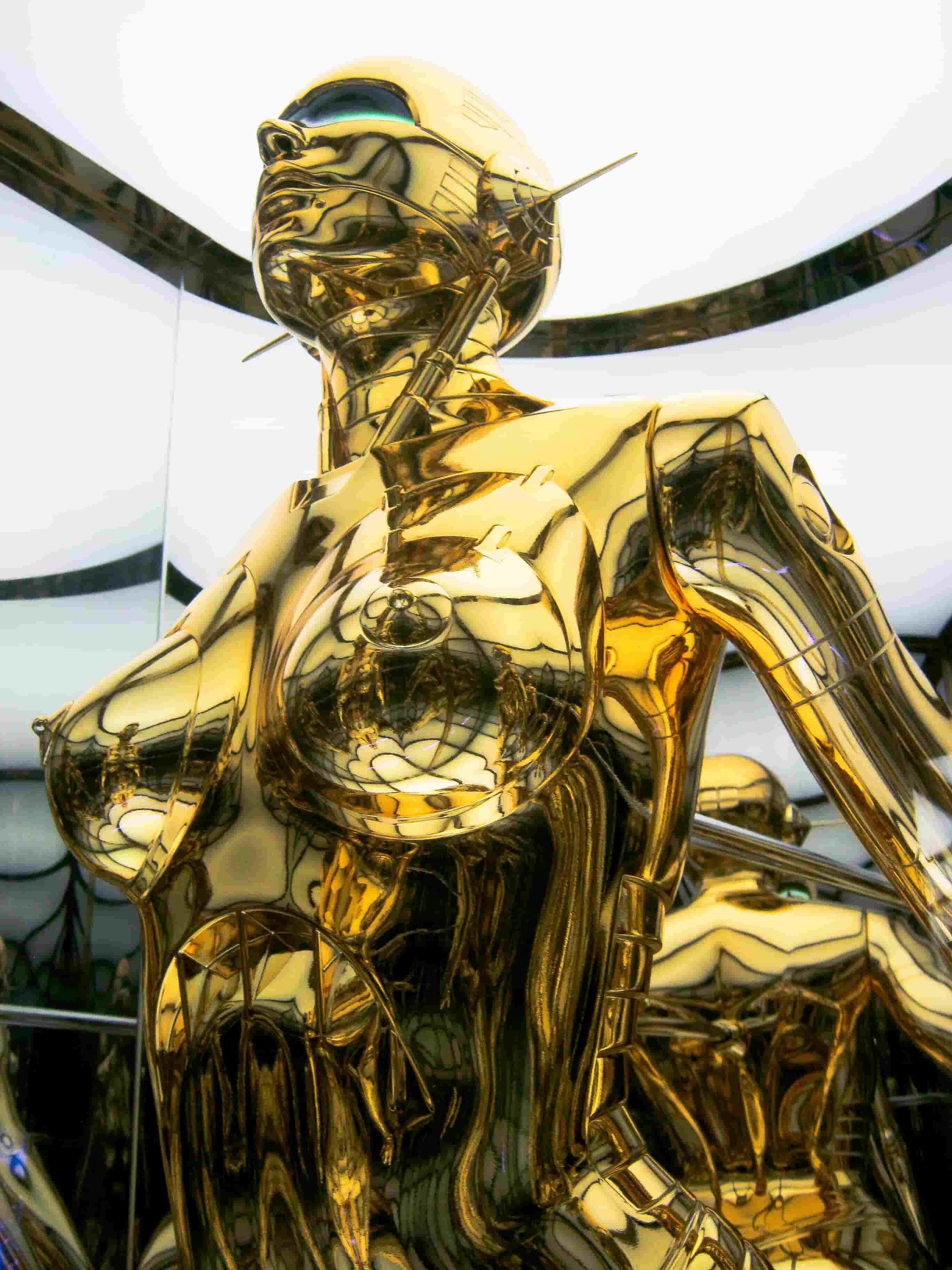
Behind the metallic skin of his robots lies an aesthetic sensibility rooted in Japan’s cultural history. Samurai armor, for example, was designed for warfare but crafted with extraordinary aesthetic care. Glossy lacquers, meticulously finished surfaces and an almost ritual attention to materials transformed armor into something that was both protection and symbol.
Sorayama seems to take this tradition and project it into the future.
If samurai armor protected the human body, his chromed androids appear to represent a new armor for the body of tomorrow.
The metallic surfaces of his figures also evoke another long-standing Japanese aesthetic tradition: urushi lacquer. In these objects the surface is never merely decorative. It is a visual field where light reflects, layers and creates depth.
Sorayama’s sculptures operate in the same way.
To look at them is to see the world reflected back.
Yet the cultural dimension of his work goes beyond craftsmanship. Beneath the chrome skin of these figures lies a spiritual element: the particular relationship Japanese culture maintains with objects and technology.
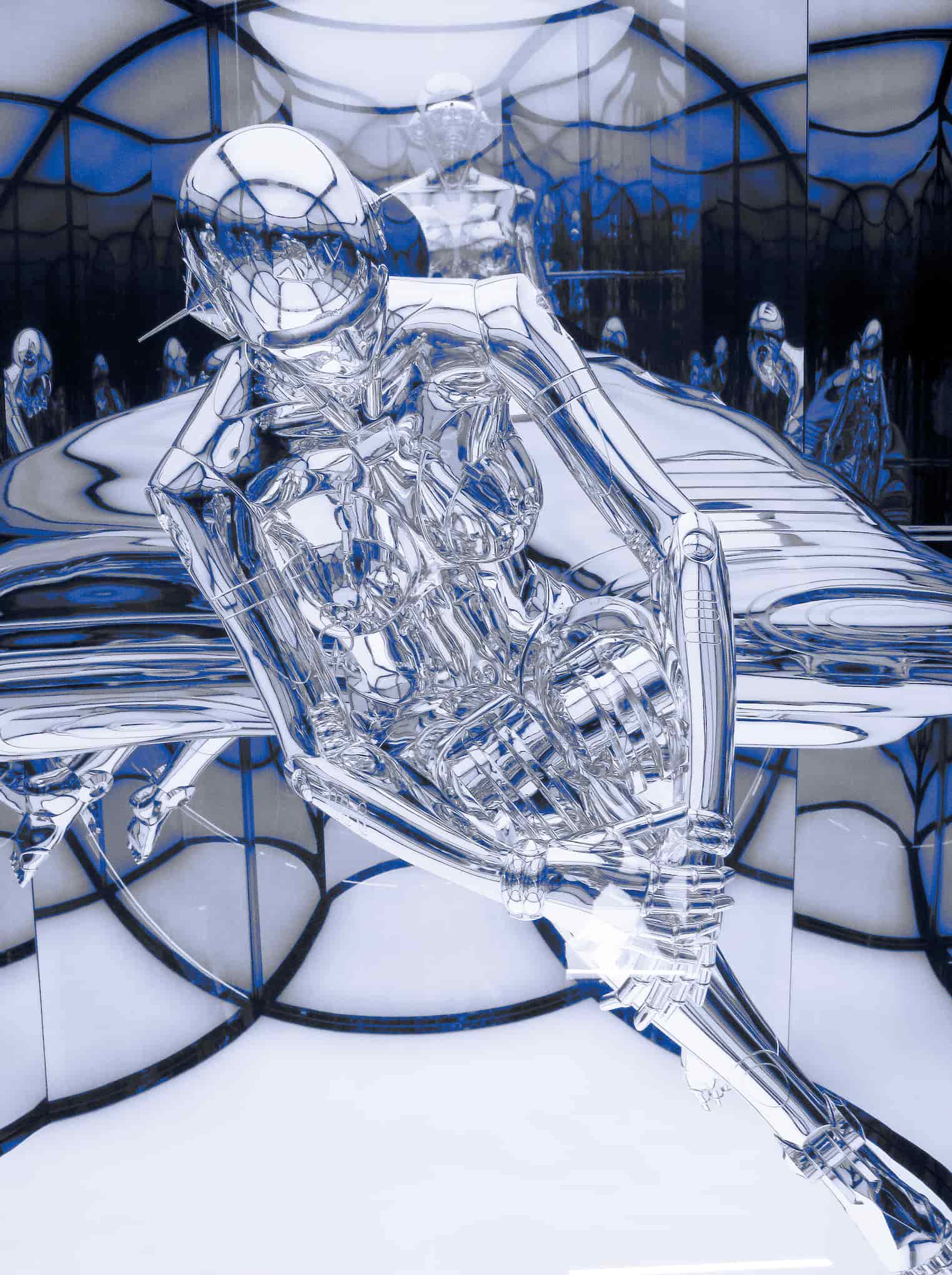
Within the tradition of Shinto, the world is not strictly divided between the animate and the inanimate. Objects, places and natural phenomena can host a spirit — a kami. This worldview creates a different relationship with things: objects are not merely tools, but presences.
In this sense, Sorayama’s robots do not feel like cold machines.
They appear almost like entities with their own form of existence.
It is no coincidence that in Japanese popular culture — from anime to science fiction — robots and androids are often portrayed as quasi-living beings capable of consciousness or emotion. Works such as Ghost in the Shell or Neon Genesis Evangelion have built an imaginary world in which the boundary between human and machine becomes increasingly fluid.
Sorayama works precisely within that ambiguous space.
His figures are sensual, almost provocative. The curves of their metallic bodies recall classical sculpture, yet they belong entirely to an artificial universe. These are designed bodies, polished to perfection.
They do not age.
They do not decay.
They are not limited by biology.
Looking at them, it becomes difficult not to think about humanity’s desire to transcend the limits of the body.
In this sense, Sorayama’s work is not only about robots.
It is about a possible future for humanity.
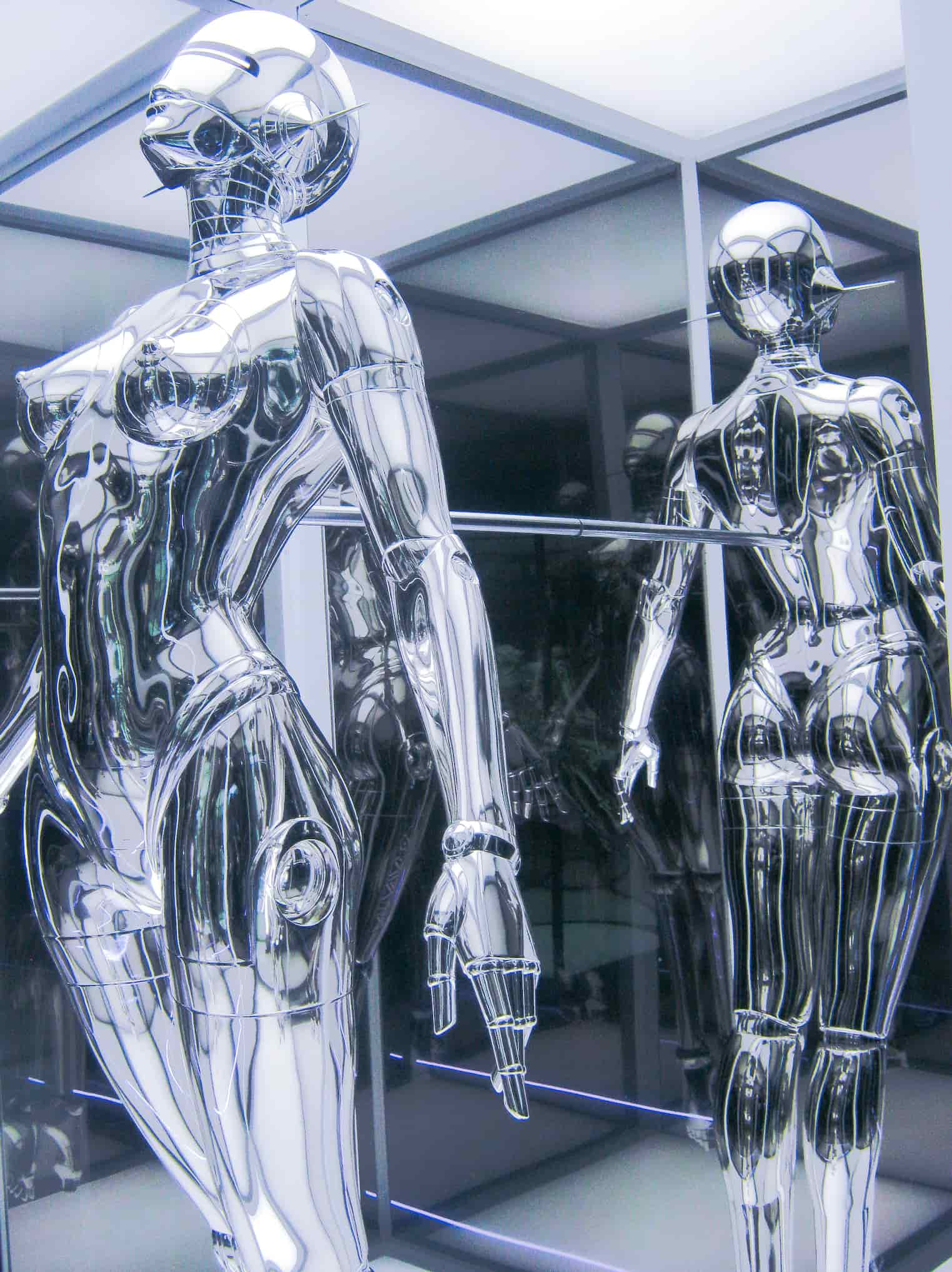
The mirrored surfaces of his sculptures play a crucial role. Viewers see themselves reflected within the metallic bodies of the figures. The visitor’s image becomes part of the android.
The artwork therefore does not simply represent a machine.
It represents us inside the future.
In a city like Tokyo, where glass, steel and light continuously reflect across the urban landscape, Sorayama’s sculptures feel almost like a natural extension of the city itself. His chromed robots could easily be inhabitants of tomorrow’s metropolis.
And perhaps this is the most fascinating aspect of his work: its ability to unite different eras.
Traditional craftsmanship, ancient spirituality, pop culture, industrial design and science fiction coexist within the same object.
Sorayama does not simply imagine the future.
He builds it from the past.
And in the polished surfaces of his robots a question inevitably appears:
when technology becomes part of our bodies, what will remain of the human?
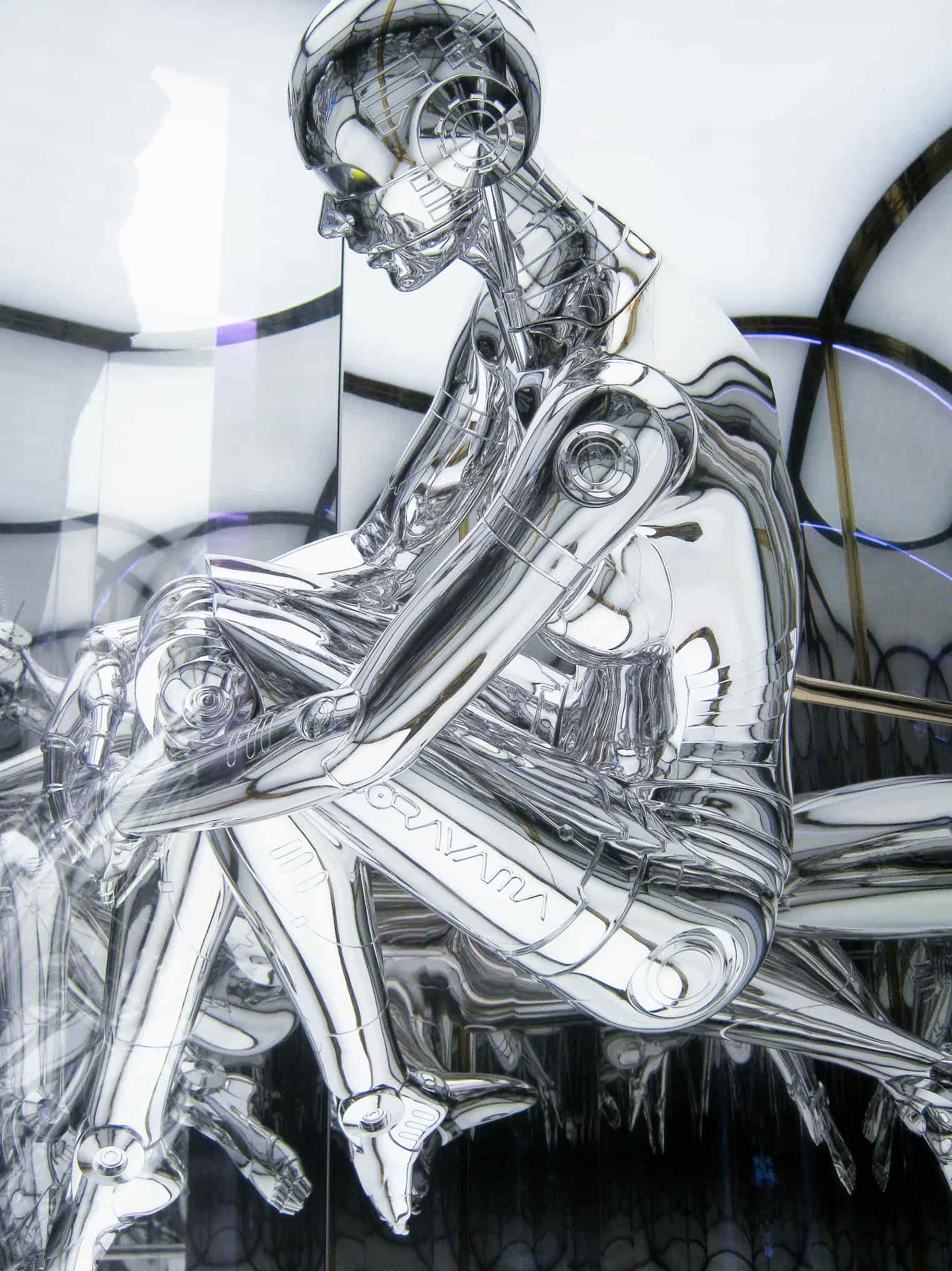
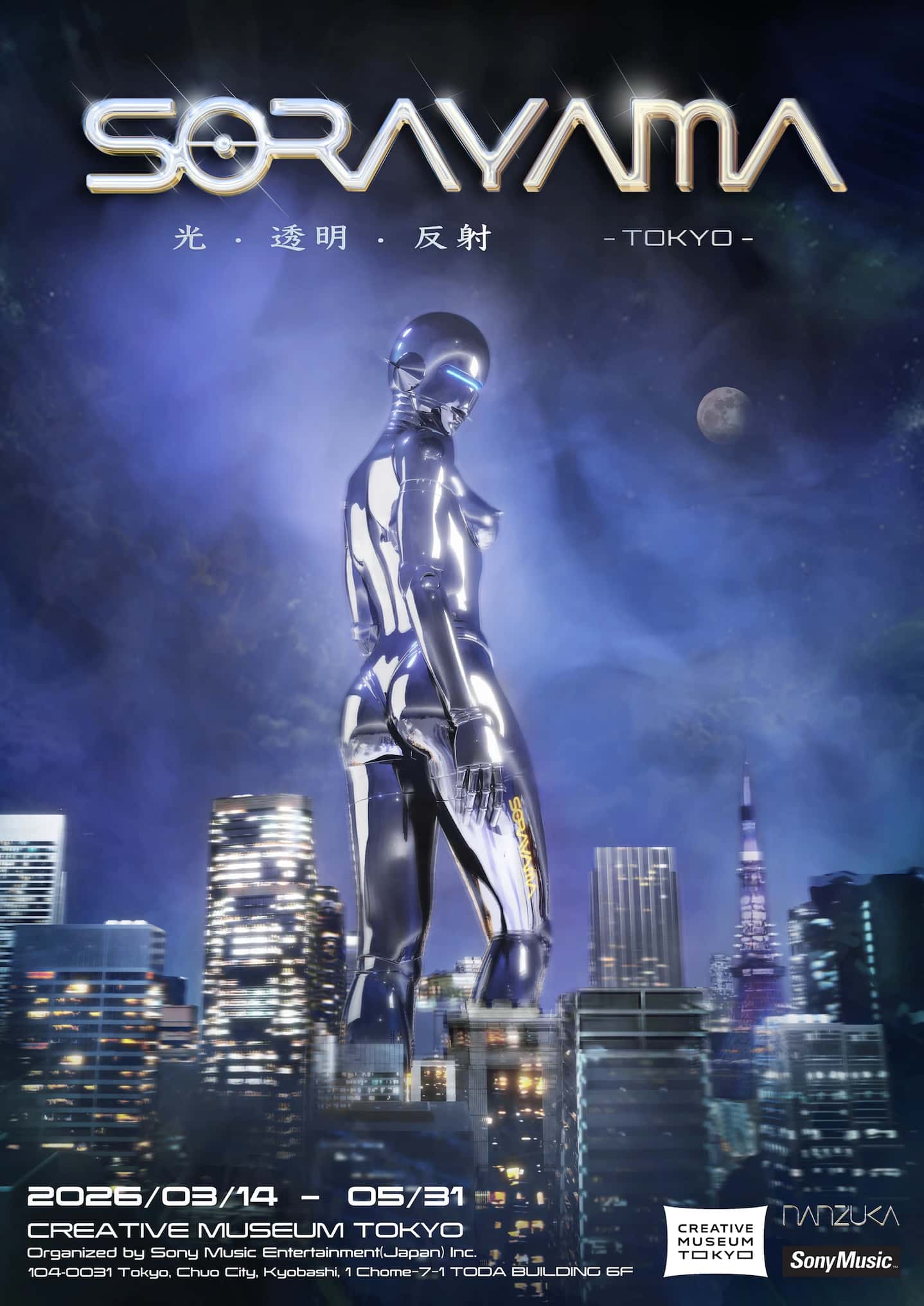
SORAYAMA: Light, Reflection, Transparency -TOKYO-, the largest retrospective ever dedicated to world renowned artist Hajime Sorayama. The exhibition will be held from March 14 to May 31, 2026, at CREATIVE MUSEUM TOKYO in Kyobashi, Tokyo.
Further Information https://sorayama2026.jp/