- Date
- 01 MAY 2026
- Author
- JAGRATI
- Image by
- DAFNE EDERVEEN
- Categories
- Interviews
Dafne Ederveen on AI Image-Making, Digital Couture, and the Future of Authorship in Fashion
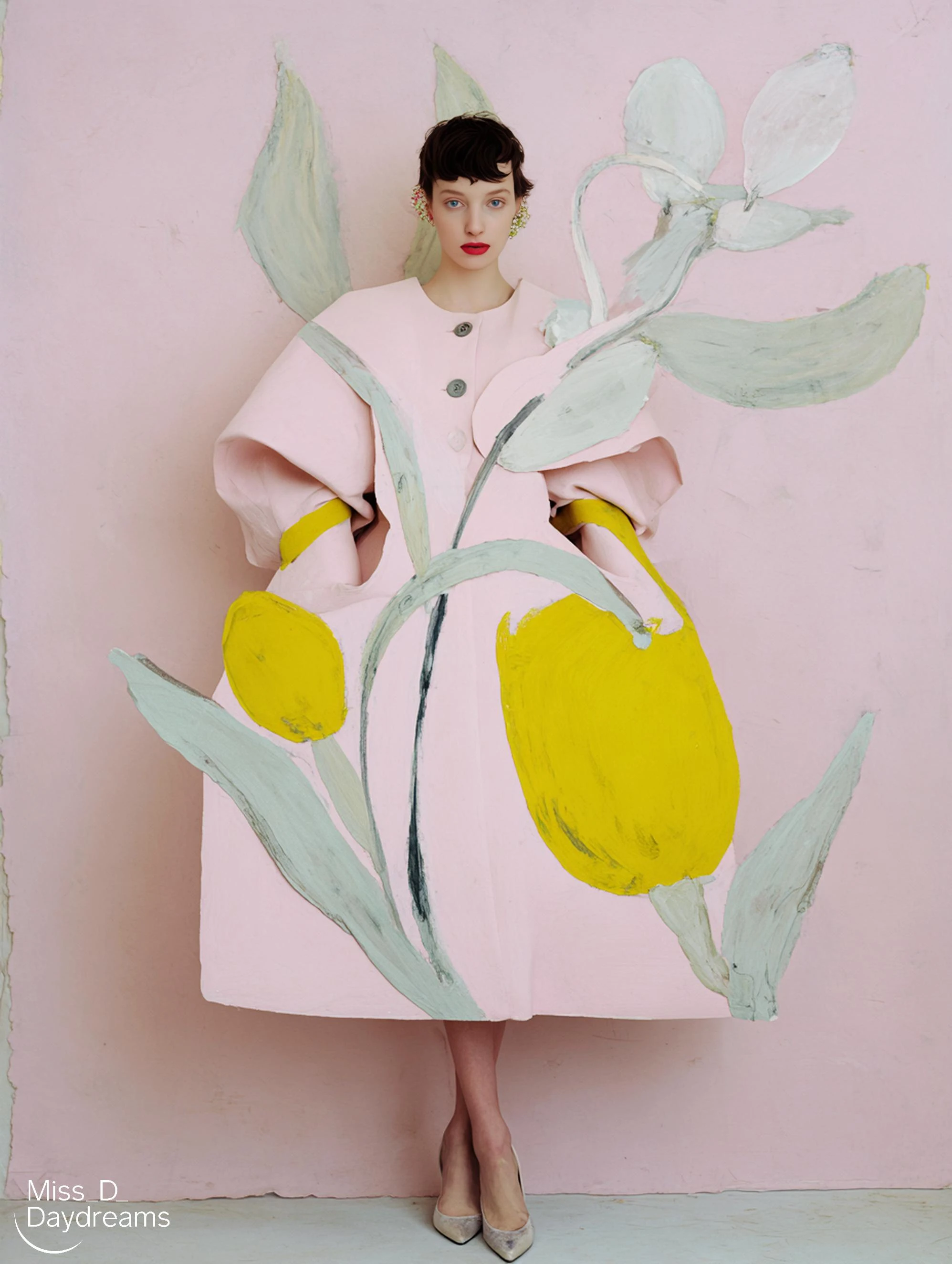
In an era where the boundaries between reality and simulation are increasingly fluid, Dutch artist Dafne Ederveen is shaping a new visual language at the intersection of fashion, image-making, and artificial intelligence. With a background rooted in photography and cinematography, her practice has evolved beyond the constraints of the lens, embracing AI as both a tool and a conceptual framework. What emerges is a body of work that feels simultaneously hyperreal and otherworldly — images that invite a second look, where textures defy physics and garments dissolve into digital matter.
Ederveen’s transition into AI-generated imagery is not a rupture but an expansion. Where traditional photography once imposed limits, generative systems now allow her to construct entirely new visual territories — spaces where imagination is no longer bound by material constraints. Yet, this technological shift also raises urgent questions: Who is the author in the age of machine learning? What does originality mean when images are shaped through datasets and algorithms? And how does one maintain artistic integrity within systems built on collective visual memory?
In this conversation, Ederveen reflects on prompt engineering as a new form of authorship, the delicate balance between control and unpredictability, and the emergence of what she describes as “digital couture.” As fashion increasingly engages with AI — from experimental editorials to campaigns by major houses — her perspective offers a nuanced understanding of how technology can elevate, rather than overshadow, creative vision.
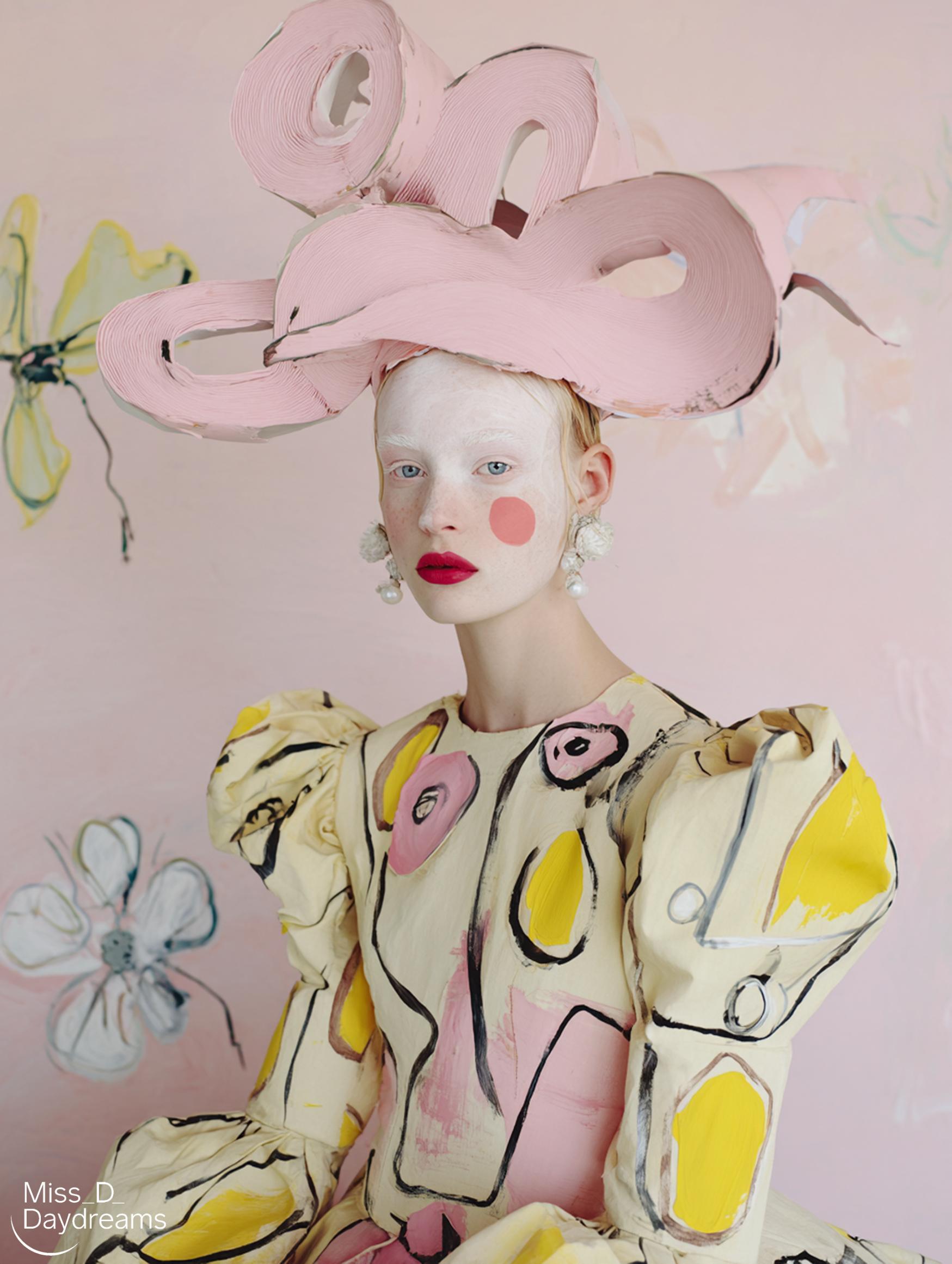
Your work sits at the intersection of fashion, image-making, and artificial intelligence. Your transition from photography to AI virtual image-making clearly is an extension of the world you imagine. When photography had limitations, AI assisted us in moving beyond. Please talk about this pivotal evolution of technology for creatives and artists. How is it both a bane and a boon from a technological standpoint?
The evolution from photography to AI imagery is, for me, an extension of my imagination; where the lens ended, AI now helps me go further. The shift from traditional photography to AI means that the camera has been replaced by language. Creating an image no longer happens through a lens, but through the precise construction of imagery, including through text. It is a blessing because it expands creative agency, but a curse because it fundamentally challenges the role of the author and the definition of originality. It allows for the creation of materials, textures, garments, and worlds that are physically impossible. The limitations are that there is always a degree of unpredictability in how a language model interprets text.
Prompt engineering has emerged as a new form of authorship within AI practices. How do you approach writing prompts — do you see them as instructions, poetic scripts, or a form of coded language shaping visual outcomes, perhaps a collection of fantasy books that you keep in secret?
It is a mix of everything: it is pieces of text, my own photographs, sketches, fabrications, mixing imagery, and the years of experience I have brought with me from my photography background and my work as a cinematographer. Where I grew up plays a role, my European background, finding my own style in photography, etc. Everyone has their own frame of reference, and I draw from that — watching films, reading books, observing nature and looking around in daily life; it is a continuous dialogue.
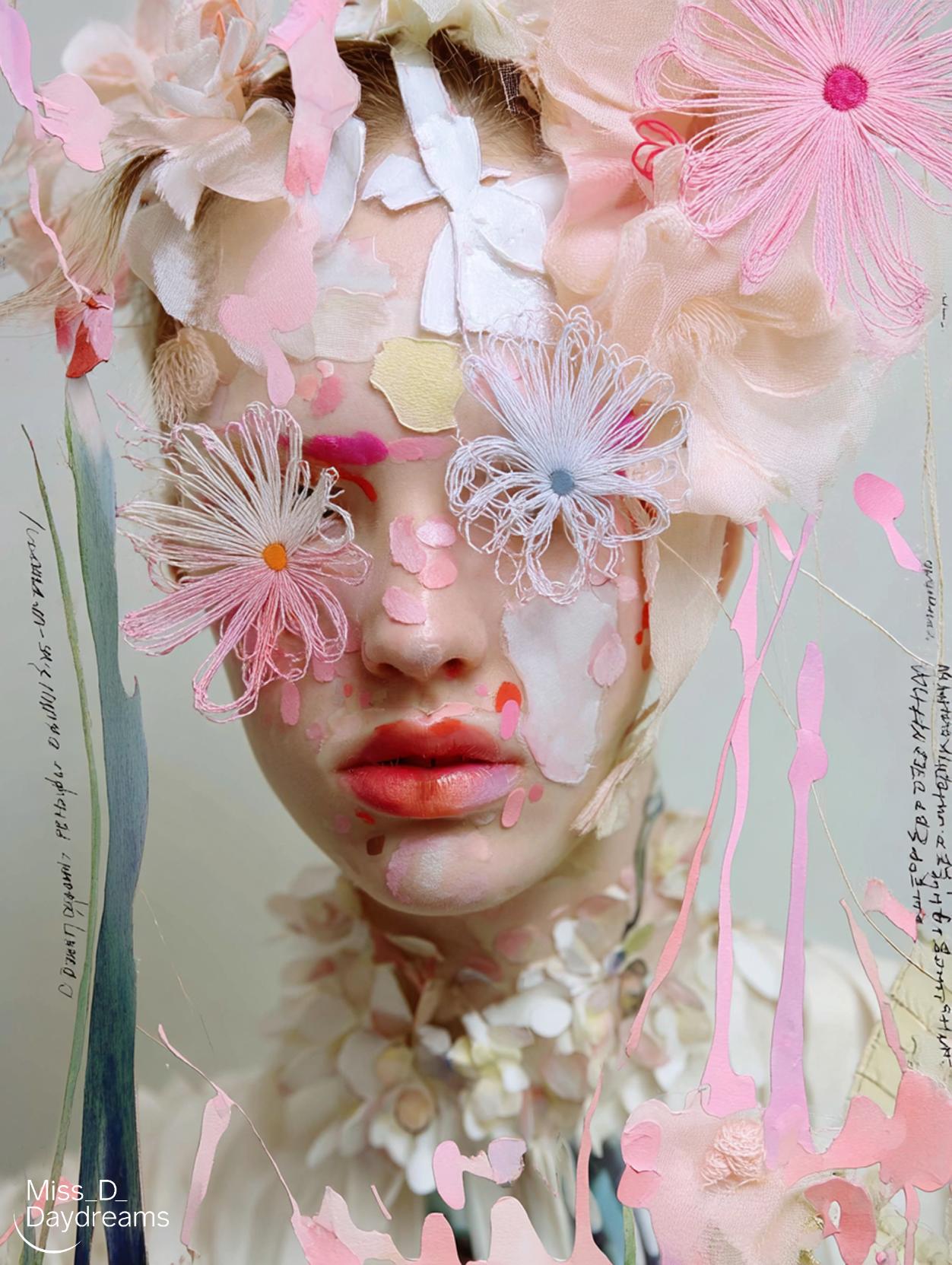
Working with language models and generative systems introduces a translation between text and image. How do you navigate this space where language becomes a visual form, and what possibilities or limitations does this transformation reveal? How would you describe this experience?
It offers the possibility to step beyond the physical limitations of photography and visualize worlds that previously only existed in the artist's "headspace." When I want to create something, I often already see what it should look like; the art is in coaxing it out of the AI models. Sometimes you are surprised, and sometimes you have to work very hard to get it out; that remains a fun interplay.
In your process, how much control do you seek to maintain over the final image, and how much do you allow for unpredictability within the system? Do moments of error or deviation become part of the creative logic?
You have to balance maintaining control over the end result and allowing for the "creative logic" that arises from the system's errors or deviations. I embrace surprises, mistakes, or things I never thought of myself but simply came into being. This shows that the human hand still determines the direction, even within an AI generation process.
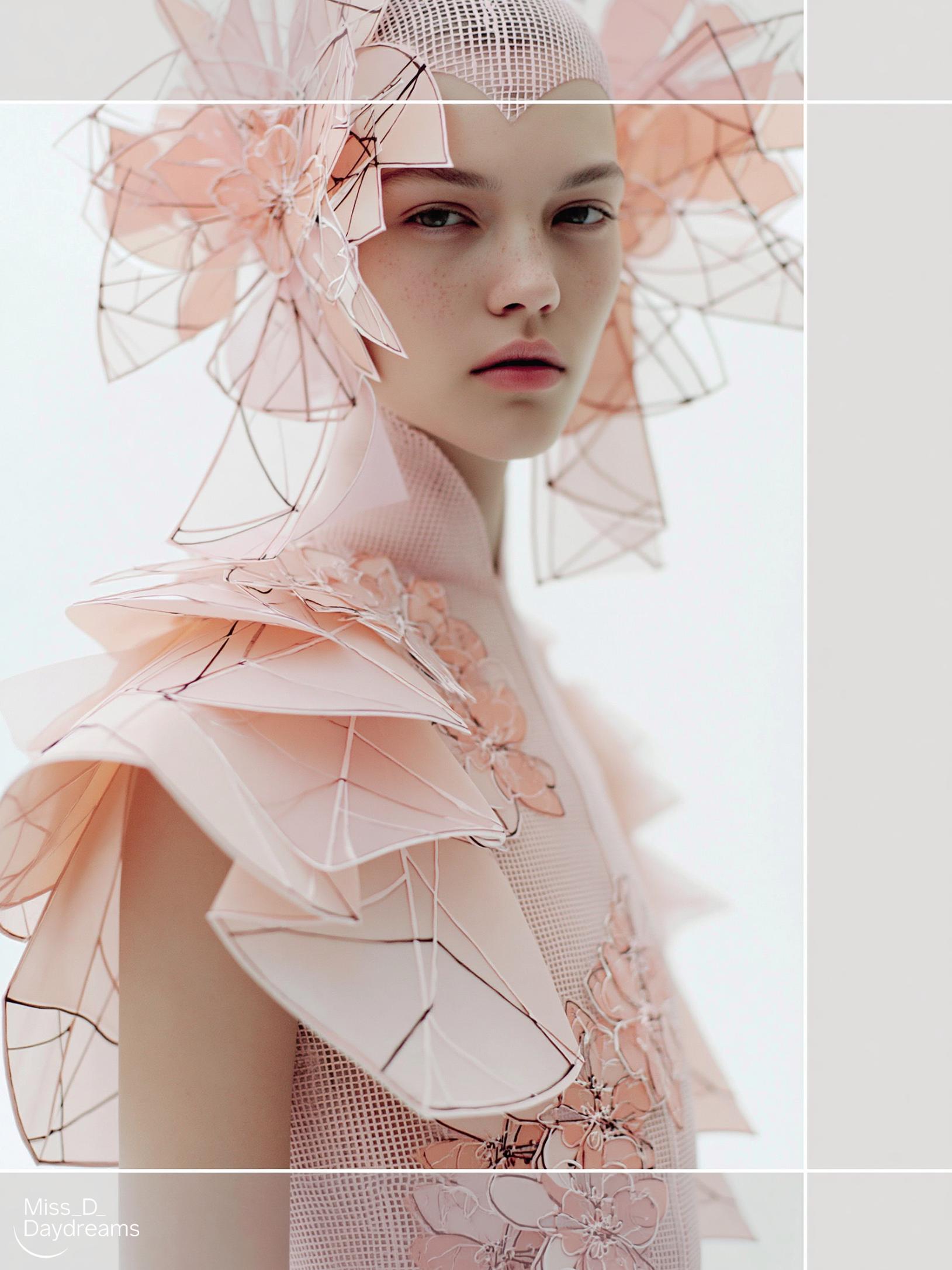
Your work often constructs hyperreal, stylised environments that feel both physical and virtual. How do you conceptualise the “space” of your images — are they extensions of reality, simulations, or entirely new visual territories?
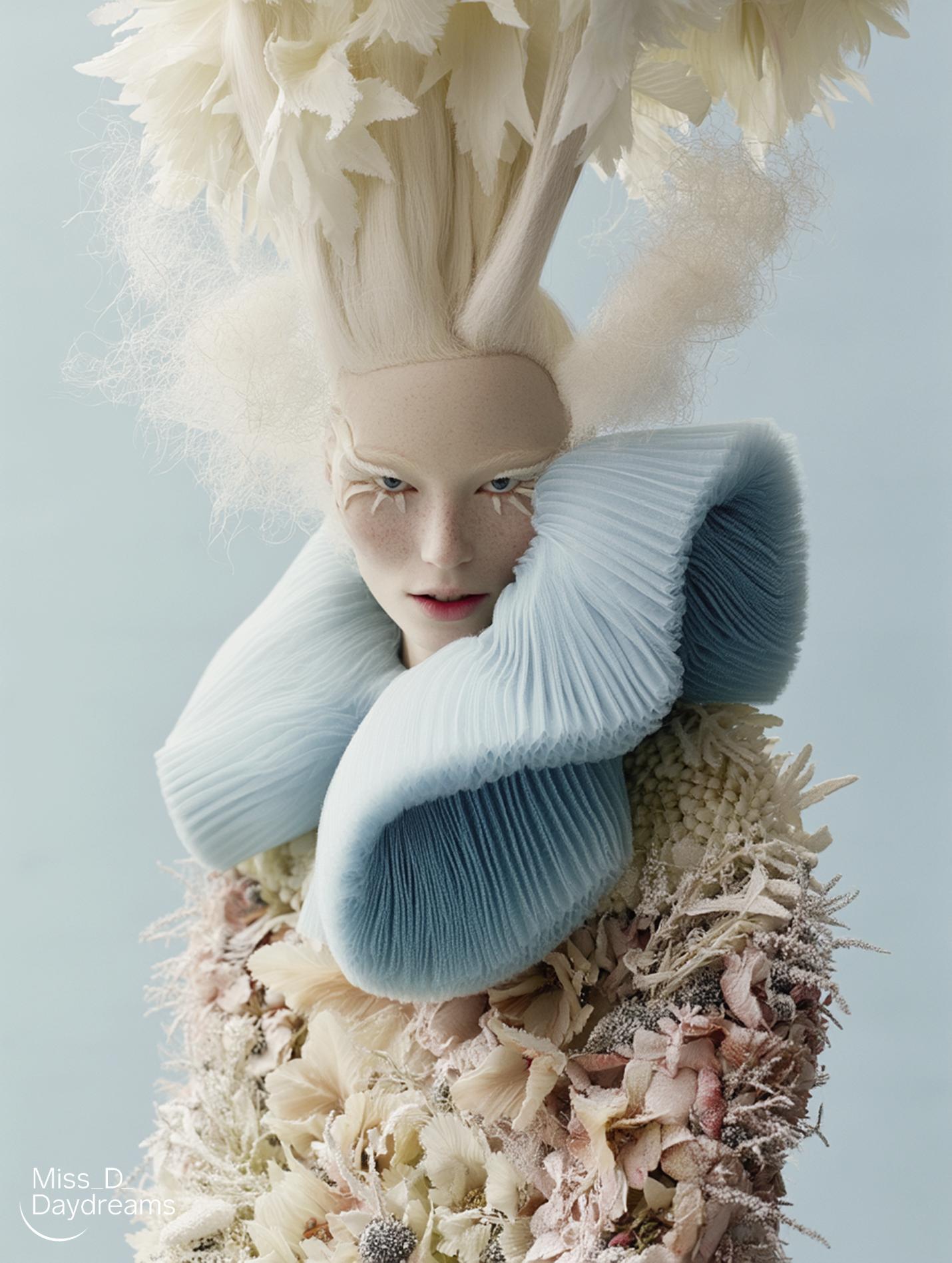
I try to explore new visual realms as much as possible. It mainly arises from how you approach a prompt, and from your own personal taste and style. I love it when people have to look twice; I find the combination of something realistic with something surreal interesting, precisely because that is often not possible in real life. They are indeed often entirely new realms; I don't like to recreate things that already exist, because that already exists and is not interesting to me.
The digital medium allows for the creation of bodies, textures, and garments that may not exist physically. How does this shift your understanding of materiality, especially in relation to fashion and embodiment?
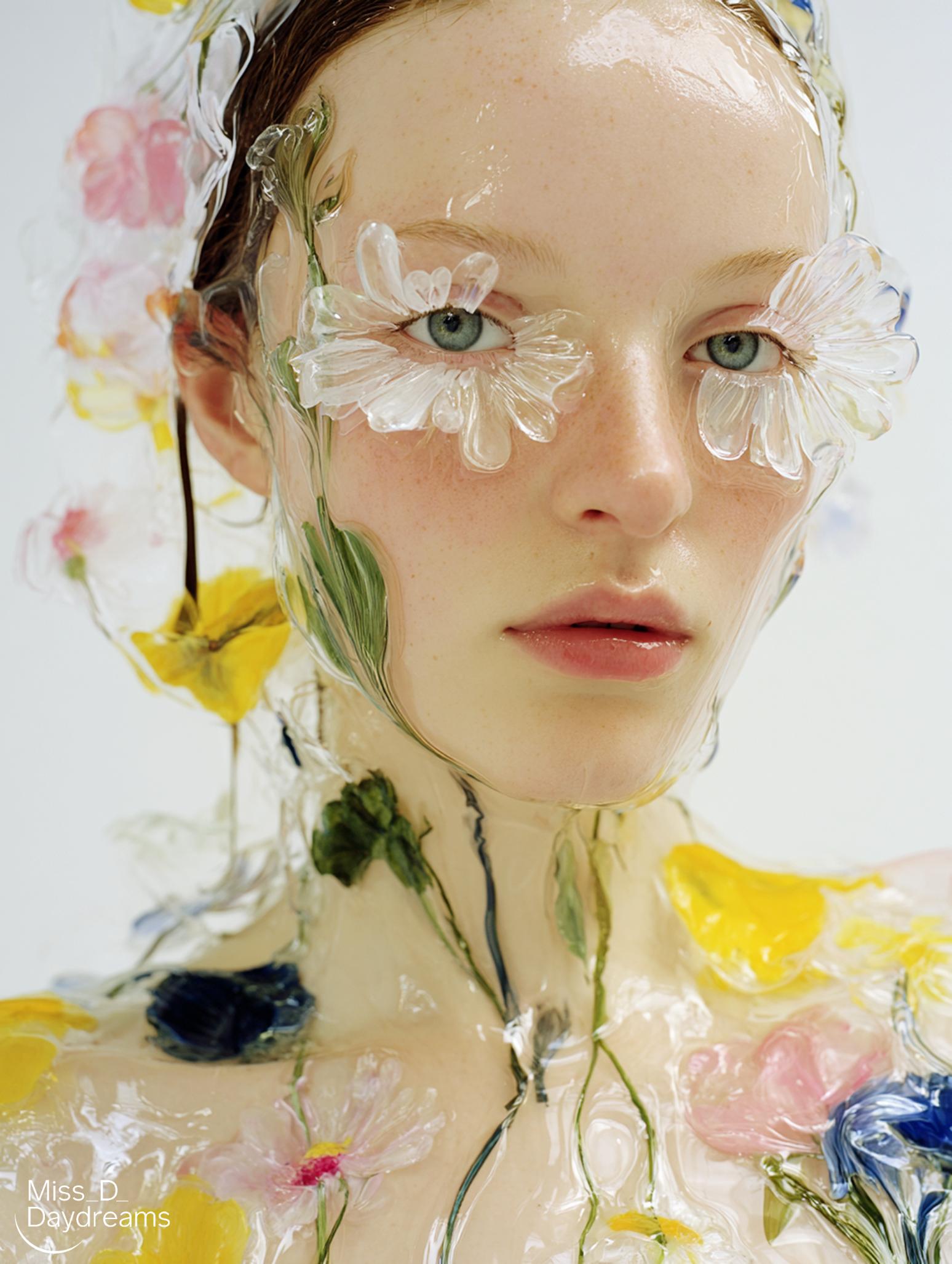
In the physical world, fashion is bound by the laws of gravity, the limitations of fabrics (think of how cotton or silk drapes), and the anatomy of the human body. Digital media and AI make it possible to create fabrics that can float, glow, or change, and to shape bodies that do not need to conform to human proportions. This process changes my understanding of fashion; it becomes a form of "digital couture" where the fabric and the body merge into one surreal experience.
When the generative art and designs are getting both positive and negative comments, if used by large fashion corporations for branding and advertisements, a recent example is the Gucci and Prada campaign. According to you, what are the factors that make the Gen Ai campaign successful?
When I look at the use of AI by major fashion houses like Gucci and Prada, I see that success does not depend solely on the technique, but above all on the balance between innovation and the brand's own identity. Success lies in seamlessly merging digital possibilities with the aesthetic of the fashion house. The AI must feel like a logical next step in the world the brand has already built. Successful campaigns are those that continue to move the viewer, rather than just impressing them with technology. In short: for me, a Gen AI campaign is only successful if the technology is not the goal, but the means to elevate the dreams and the identity of the fashion house to a new, unseen level.
AI-generated imagery raises complex questions around authorship, datasets, and collective visual memory. How do you position your practice within this network of machine learning, and what does originality mean in this context? Especially when IP rights are still undefined and are a major topic of discussion.
As for originality: in this age of AI, originality for me is no longer about "creating something from nothing." It is about intention and selection. There are millions of images available in datasets, but it is my specific vision, my "headspace," that determines which combinations, textures, and emotions come to life. It is human choice that transforms a cold dataset into a dream image with a soul. Regarding intellectual property rights: that is a complex legal landscape that is still very much in flux. I position myself within that by remaining transparent about my process. To me, it is about using AI as a tool, not as a replacement for my own artistic signature. As long as I maintain control over the atmosphere, the aesthetic, and the narrative, the work remains rooted in my own creativity, regardless of the tools we use. Ultimately, originality in AI art may well be the most personal human component: the ability to translate dreams that no one else has seen in exactly that way.
Technology is rapidly reshaping not only how art is made, but how it is distributed and consumed. What role do you think artists should play in critically engaging with these systems rather than simply adopting them?
Technology is programmed to be logical, but art often flourishes in the deviation. By embracing the "errors" and unpredictability of AI as part of our own creative logic, we retain our human voice. In short, the artist must be the "pilot" of the machine, not the passenger. If we remain critical and let our own vision be the guiding force, technology provides an expansion of our creative possibilities rather than a limitation of them.
As advancements in AI and immersive technologies continue, do you envision your work expanding into more interactive or virtual formats — such as environments that viewers can enter and interact with rather than just observe?
I foresee a future where my work is no longer limited to a flat surface or a still image. I want to create spaces where you, as a viewer, can truly step inside and lose yourself. I want to completely blur the line between "looking at" and "being a part of," so that the spectator is given their own role in the story I build with AI. The goal is to make my "daydreams" tangible and accessible. Technology allows us to stop treating the spectator as merely an observer, and instead as an active participant in the virtual worlds I create.
Looking toward the future, how do you see the relationship between art and technology evolving? Do you believe technological development will expand creative agency, or does it risk redefining authorship in ways that still challenge the role of the artist?
I see the relationship between art and technology as a continuous fusion, where technology increasingly becomes an extension of our own creative "headspace." Regarding the future, I believe we are moving in both directions: Technology enormously increases our creative agency. Where we were once limited by the physical world, we can now create worlds and materials that previously existed only in our imagination. At the same time, there is a real risk that our concept of "authorship" will come under pressure. Because AI works with collective datasets and shared visual memories, we are forced to rethink what is "original." I do not see this as a threat, but as a challenge. The role of the artist is changing: we are shifting from being mere "makers" to being "curators and architects" of these new visual territories. As long as we continue to steer the technology and let our personal vision be leading, the human role in art will only become more complex and interesting, rather than disappearing.