- Date
- 10 OCTOBER 2026
- Author
- MIRA WANDERLUST
- Image by
- PRESS OFFICE
- Categories
- Fashion
SANGUE NOVO at Lisbon Fashion Week where The New Voices ready to shape the future of Portuguese Fashion
Portuguese fashion calls for new voices, but also for the space they need to introduce different references, experiences and ways of thinking, questioning what has become repetitive and opening up possibilities for languages that have yet to find their place.
As creative processes accelerate and references circulate with increasing uniformity, a strong culture of authorship, built through research, intention and experimentation, becomes all the more important. SANGUE NOVO creates space for that difference, drawing on relationships with communities and place, collective memory and the transformations of the present as material for new creative languages.
In its first stage, ten proposals enter into direct dialogue with Lisboa Fashion Week, positioning their public presentation as a point of departure rather than a conclusion. For five of the Designers, the months that follow will become a period of guidance and creative development, during which the work presented now will be revisited, questioned and taken further.
The designers brought together through SANGUE NOVO approach clothing not simply as something to wear, but as a medium for asking questions: about the body and identity, the places that shape us, the memories we carry and the materials that surround us. Each project begins from a distinct point of view. Some draw on personal experience; others look to community, history, nature or the built environment. Together, they show how fashion can become a space for experimentation and storytelling—one where established codes are questioned and new creative languages take shape.
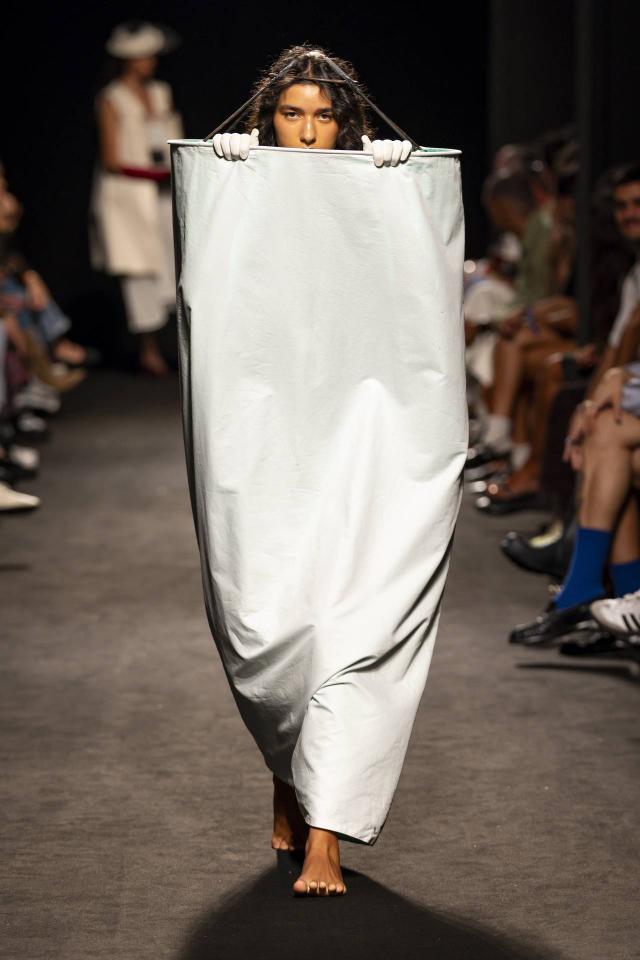
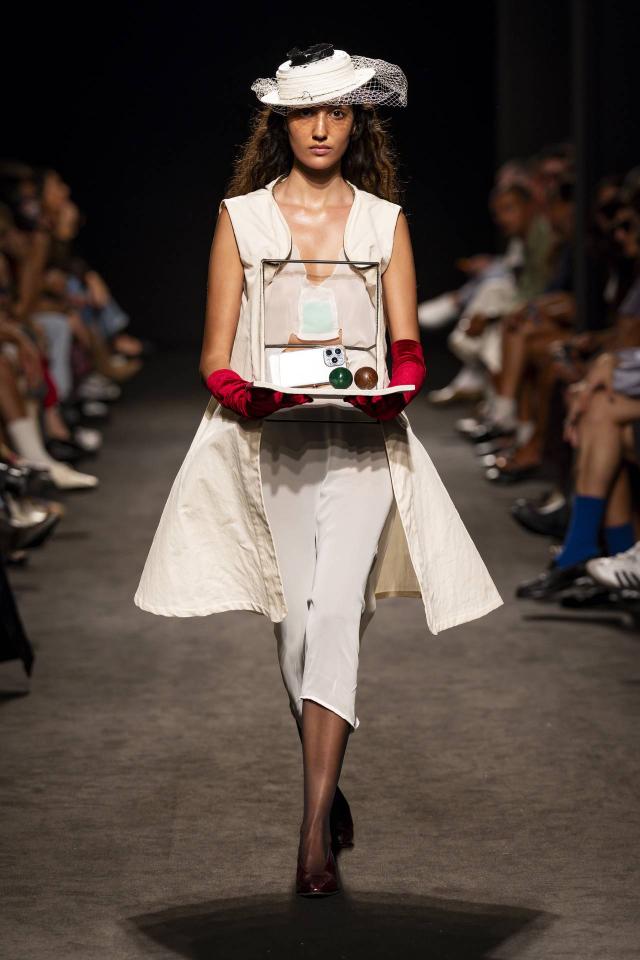
For Albert Porta, fashion, poetry and visual art are inseparable. His work crosses the boundaries between disciplines, treating a garment much like a poem: both can carry meaning, mood and ambiguity. In Porta BRANCO, six white figures move through a dark, imagined space. The collection unfolds as a sequence of signs, where a door becomes a wall, a silent mouth and a stone holding the memory of a body that once shone with light. Rather than offering a single explanation, Porta creates an atmosphere that invites the audience to look, listen and interpret.
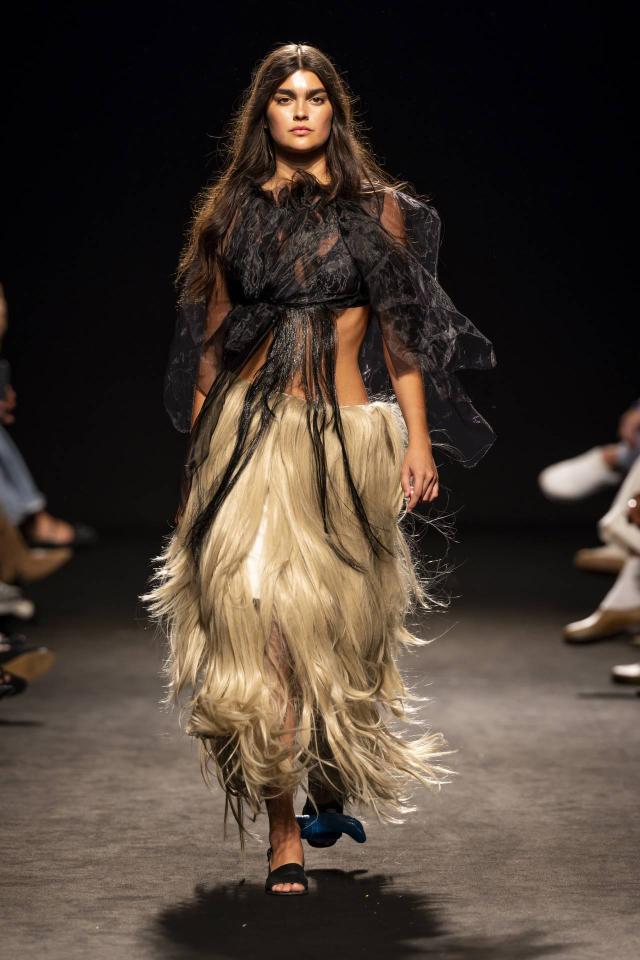
Alexandra Sousa’s EXTENDED explores clothing as an extension of the body. Hair, skin, texture, structure and deformation become part of a visual language that blurs the distinction between the body and what it wears. The garments function as a second layer: at once protective and expressive, familiar and strange. Through the reuse, deconstruction and transformation of existing materials, Sousa also considers how fashion might prolong the life of what already exists. The result questions the idea of clothing as a simple covering, imagining it instead as a changing space for expression and identity.
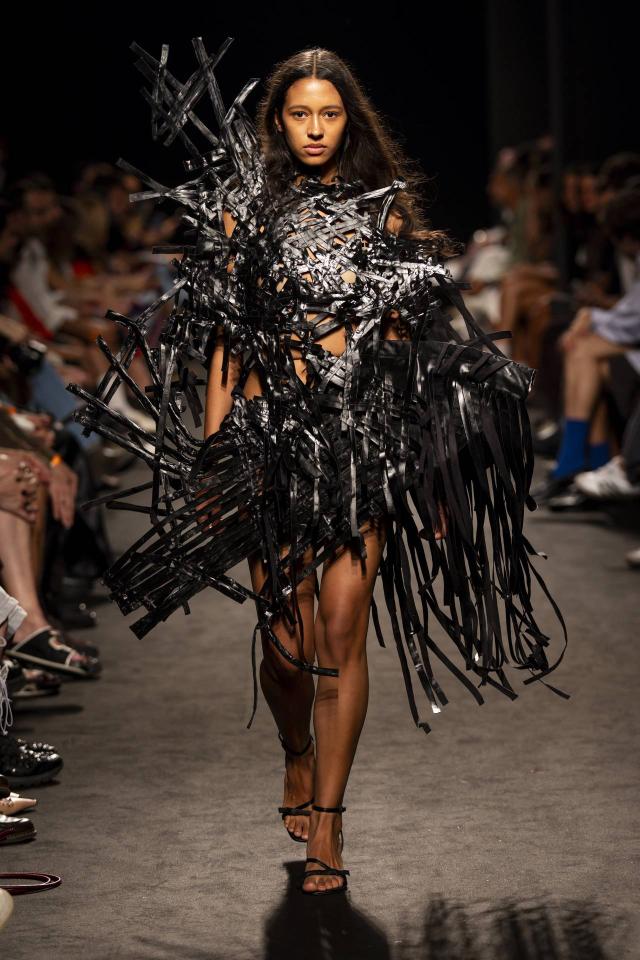
In DIÁFANA, Catarina Pica brings together materials, methods and ways of making that move at different speeds. DIY biomaterials appear alongside industrially processed materials, while traditional handwork meets the use of computerised machinery. The collection is shaped by contrasts between what persists and what disappears, what ages and what transforms. Layers, transparencies, circular forms and floating threads create a shifting visual landscape. Rather than imagining sustainability as a single solution, Pica proposes an ecology based on diversity, locality and the coexistence of different materials and techniques.
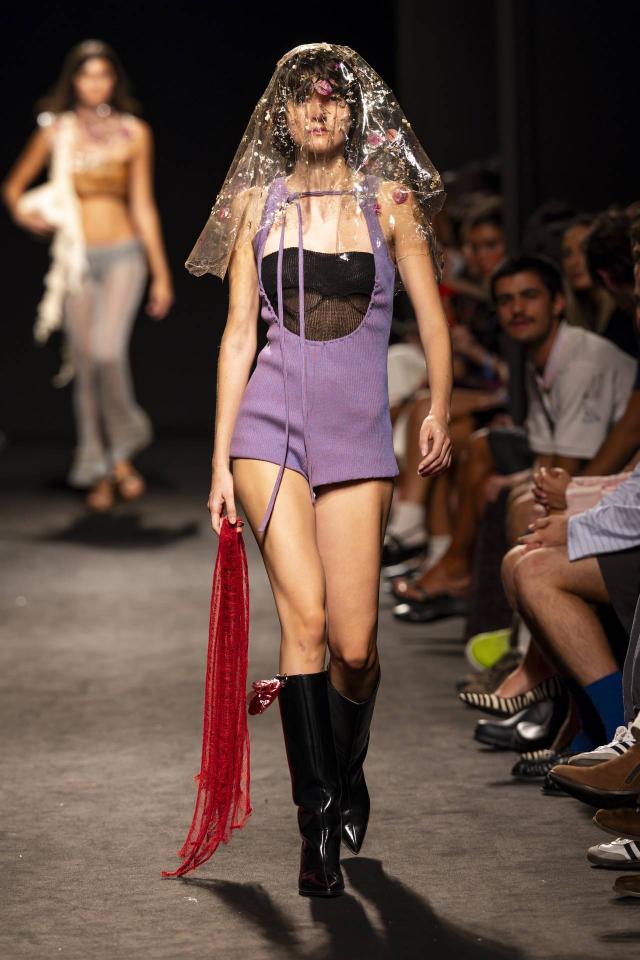
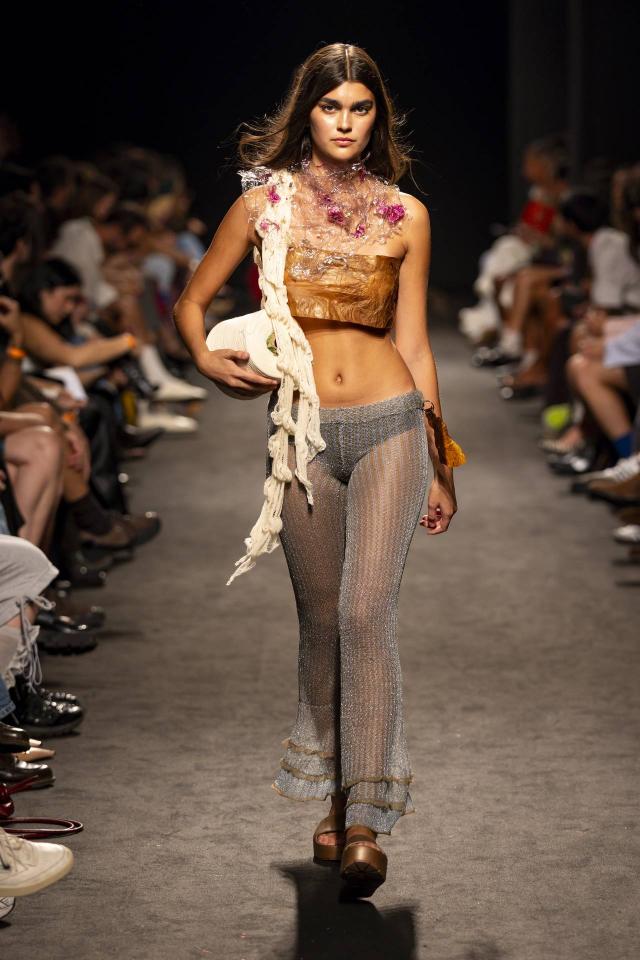
Élio Ramos, who develops his work through the project ELIO, uses fashion to examine the meanings attached to masculinity. LOSER begins with a personal difficulty: admitting failure, and the instinct to hide it behind the message, “Hold on. You’re a man.” From there, Ramos questions the codes of menswear, often associated with control, protection and emotional invulnerability. The collection brings traditionally concealed details to the surface, including underwear, parts of the body that are usually covered and tattoos that record experiences difficult to express in words. Made using deadstock fabrics, Portuguese suppliers and local production, LOSER gives form to the vulnerability Ramos learned to conceal in order to appear strong.
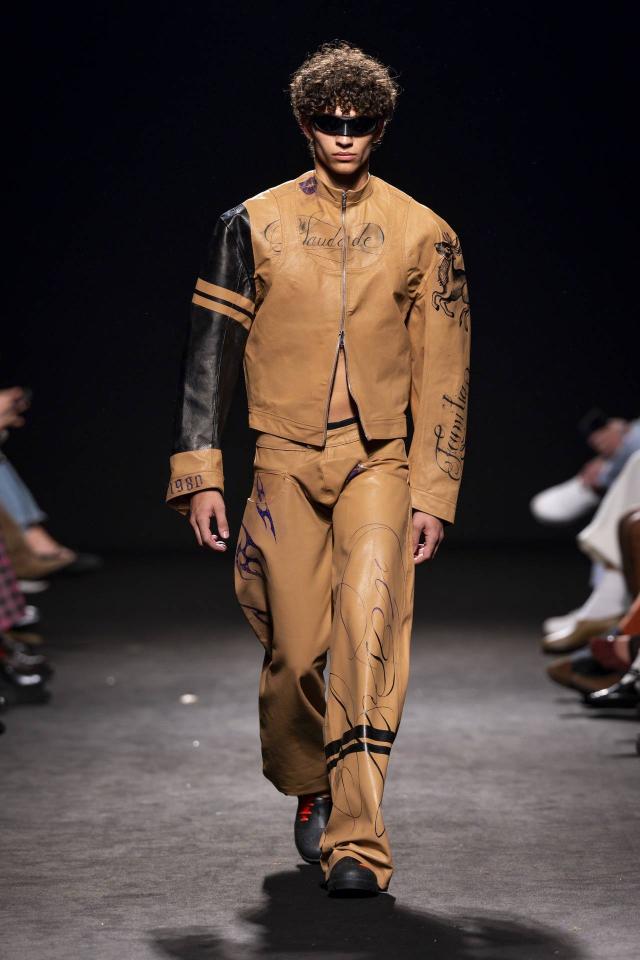
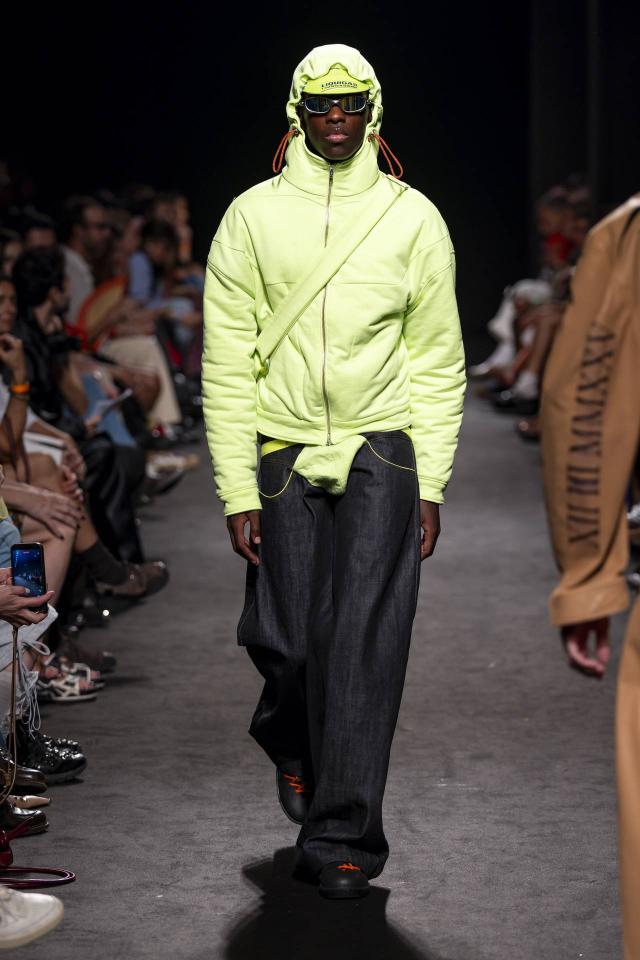
With TEMPO: ORGÂNICO | MECÂNICO, Francisco Martinho reflects on the opposing rhythms that shape contemporary life. The collection questions the belief that speed, rigidity and constant productivity are signs of progress. Against this mechanical pace, Martinho proposes a more organic rhythm: slower, more fluid and guided by what feels essential to human experience. His practice balances function and narrative, using construction, detail and material experimentation to make the tension between structure and movement visible. The project’s central idea is simple but provocative: what happens when the fluid disrupts the rigid, and movement unsettles a fixed structure?
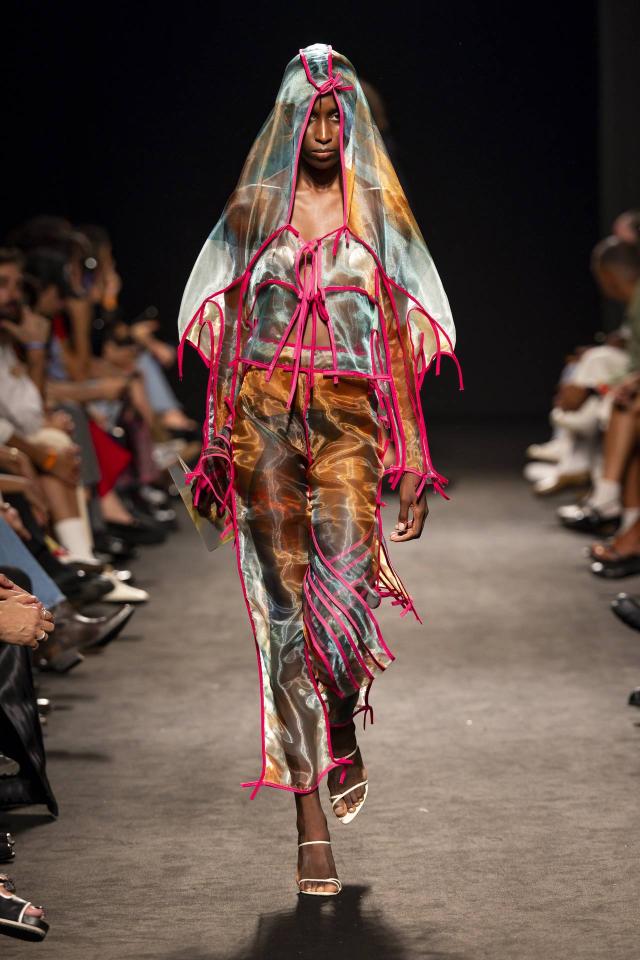
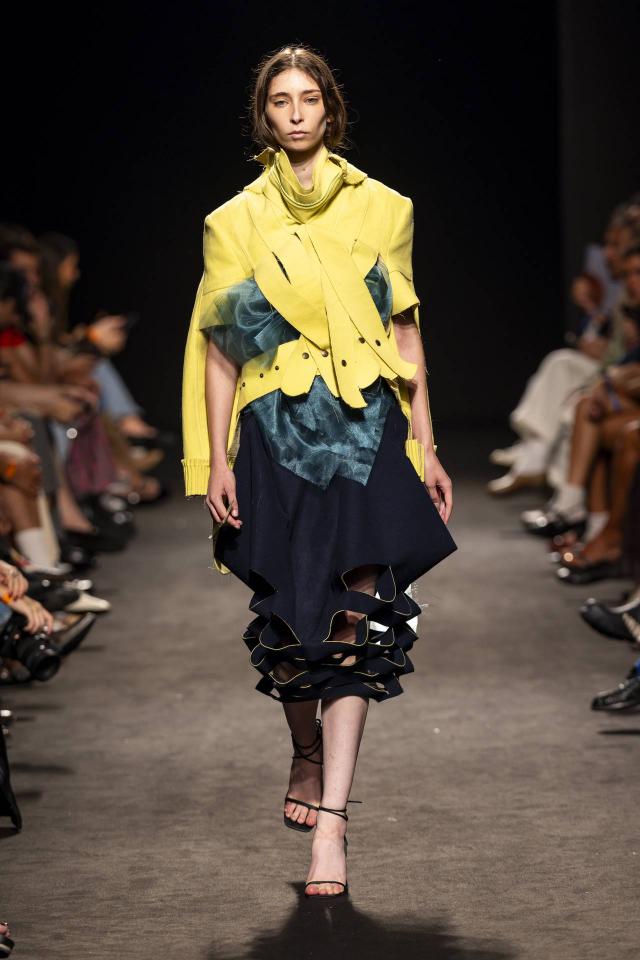
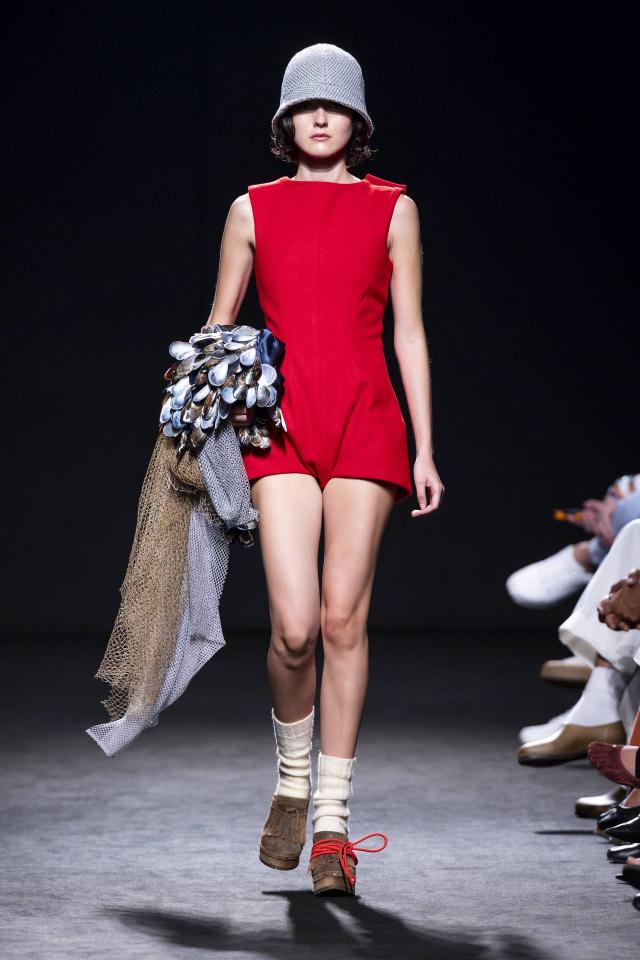
Marta Estrela’s ESPINHO 00 for GRANATUM Studio grows out of her relationship with the city of Espinho, where she grew up. A place shaped by the sea, it is remembered through what the water brought, carried away and left behind. Estrela draws on both personal and collective memory, looking to traditional fishing, religious faith and the social differences between those who worked barefoot on the sand and those who viewed the city from a distance. Nets, sardines, mussels, stripes, transparencies and military references appear as fragments, removed from their original context and reassembled. Through these details, the collection traces the marks a city leaves on the people who live there—and the parts of that place that remain within the designer.
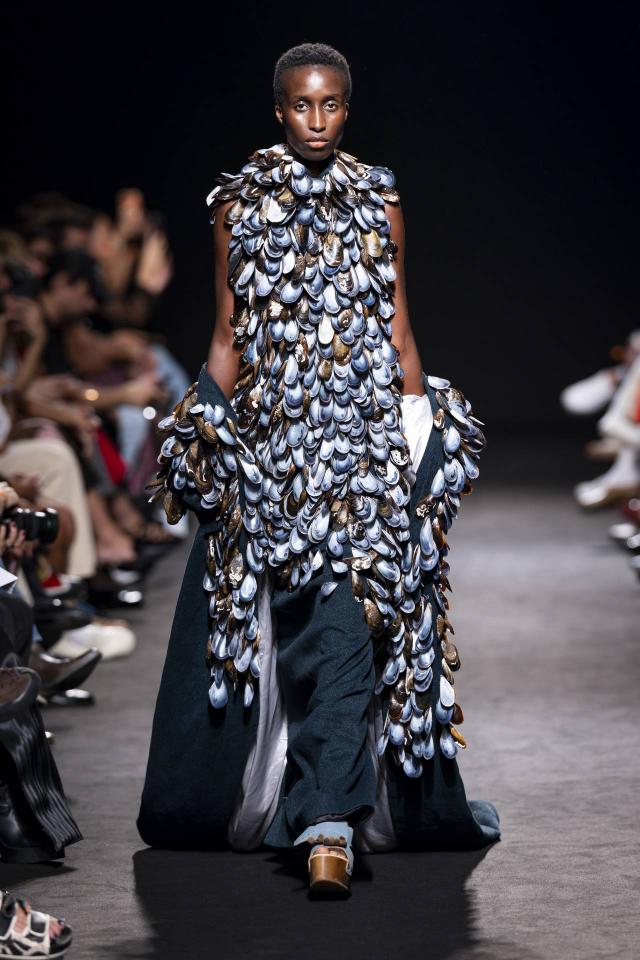
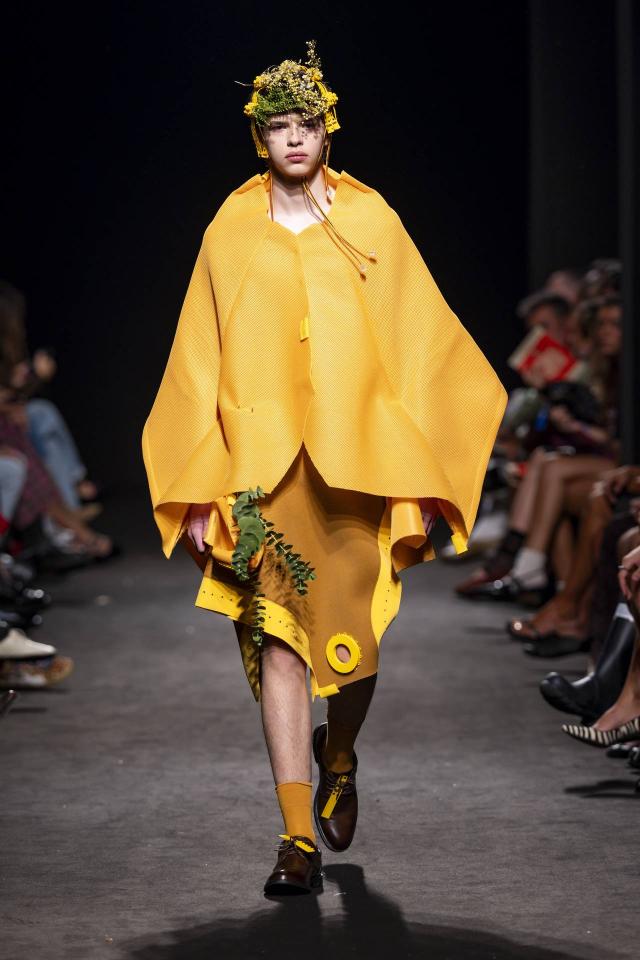
For João Pecuro, clothing offers a way to give shape to abstract feelings and memories. THE LAST TIME I HELD A BALLOON takes the balloon as a symbol of childhood: something bright and brief, which eventually drifts away, leaving only a string—and the memories attached to it. Pecuro draws on personal recollections through his choices of colour and material, bringing images of childhood into conversation with glimpses of old age. Rather than treating growing older as a loss, the collection asks how we might carry our younger selves forward. Its title leaves open the possibility that the last time we held a balloon may not have happened yet.
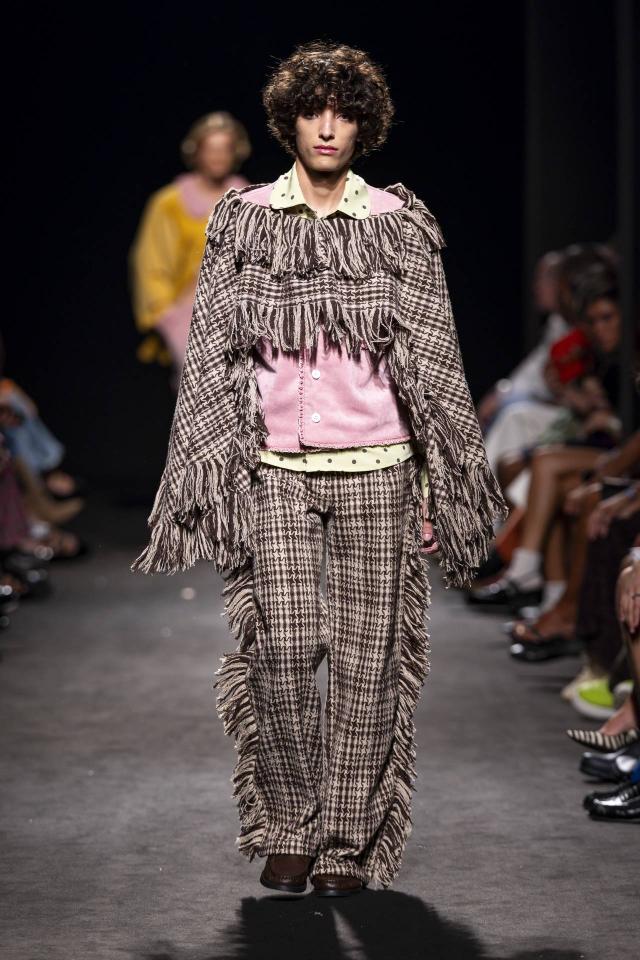
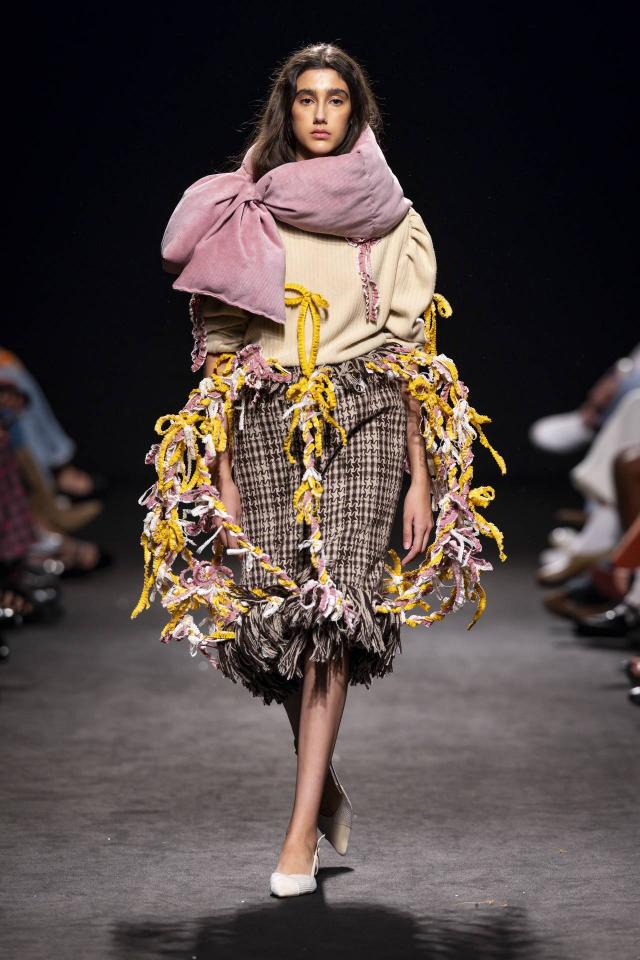
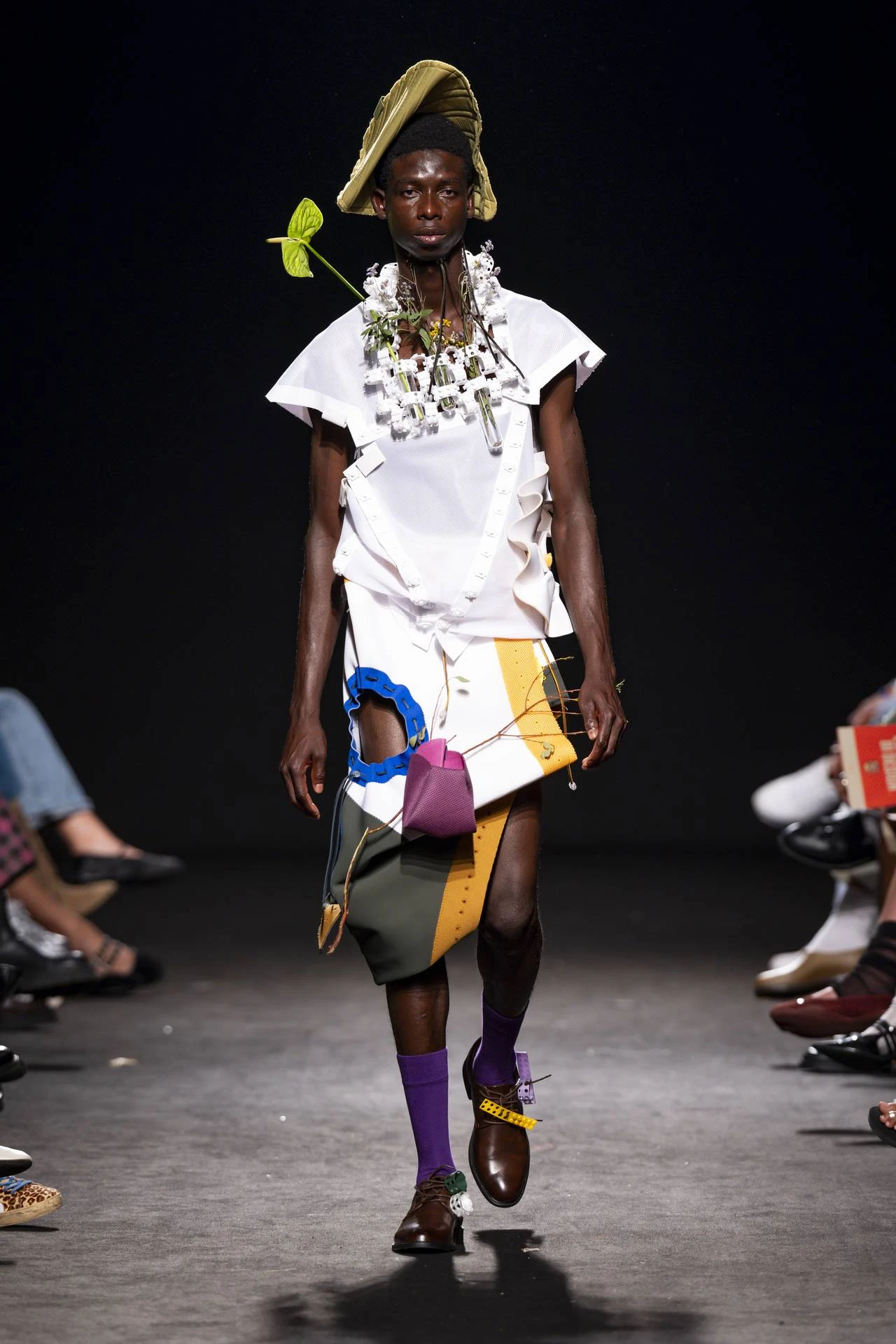
Marta Amorim’s X1: EXPERIÊNCIA 1 reconsiders the role of objects in everyday life. Inspired by the design principles of Bruno Munari, the project responds to the environmental consequences of mass production by imagining clothing as a means of supporting urban plant growth. Each look represents a capsule designed to cultivate plants, using modular systems or a single manipulated pattern. Technical materials are chosen for their function, while the palette draws from plants, fruit and vegetables. Intended for city environments, the project proposes bringing greenery into urban spaces and improving access to fresh air and food. At its heart is an idea of interdependence: human life and the natural world depend on a careful balance between the two.
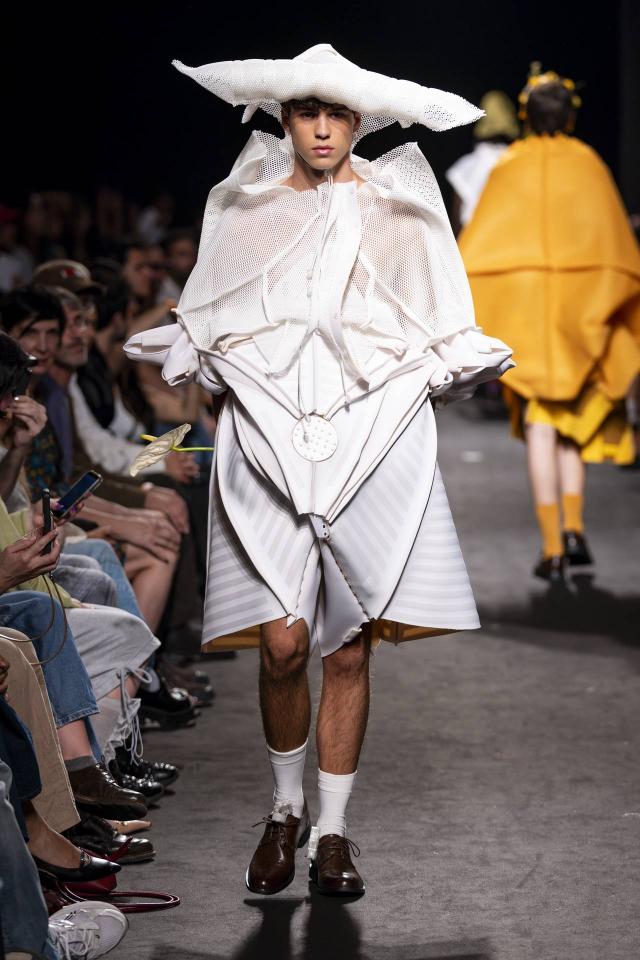
In METAMORFOSE, Matheus Dauzaker approaches design as an open process of creating, erasing and beginning again. The collection explores transformation through a dark, experimental aesthetic, rebuilding existing garments and materials into unfamiliar forms. Feathers, bones, chains, adhesive tape and bicycle inner tubes come together in unexpected combinations, shifting the meaning of each element. The clothes seem caught between what they once were and what they might become. Each look suggests a different stage in the development of a single changing organism, embracing imperfection and uncertainty as sources of possibility.
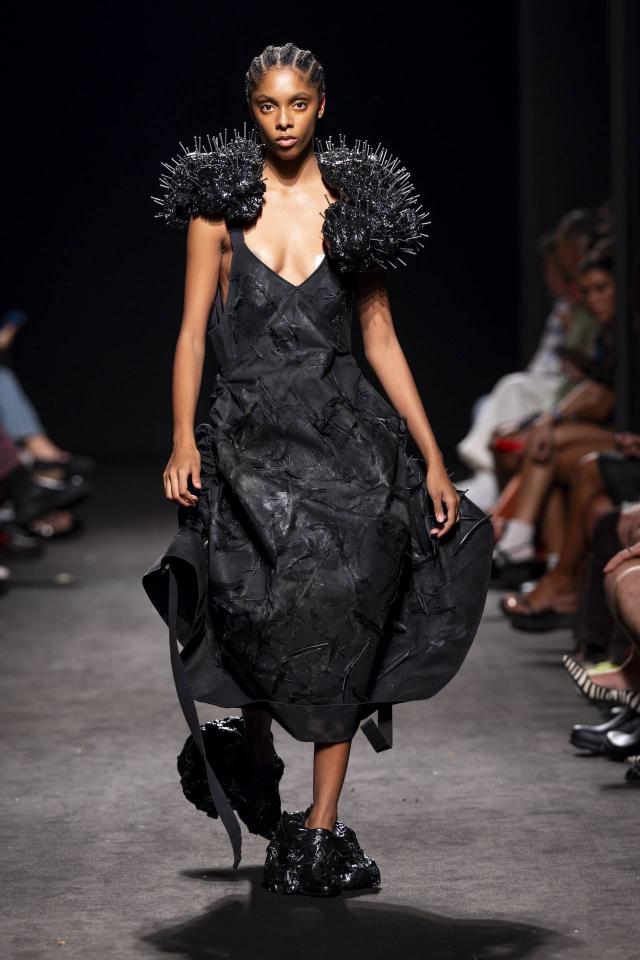
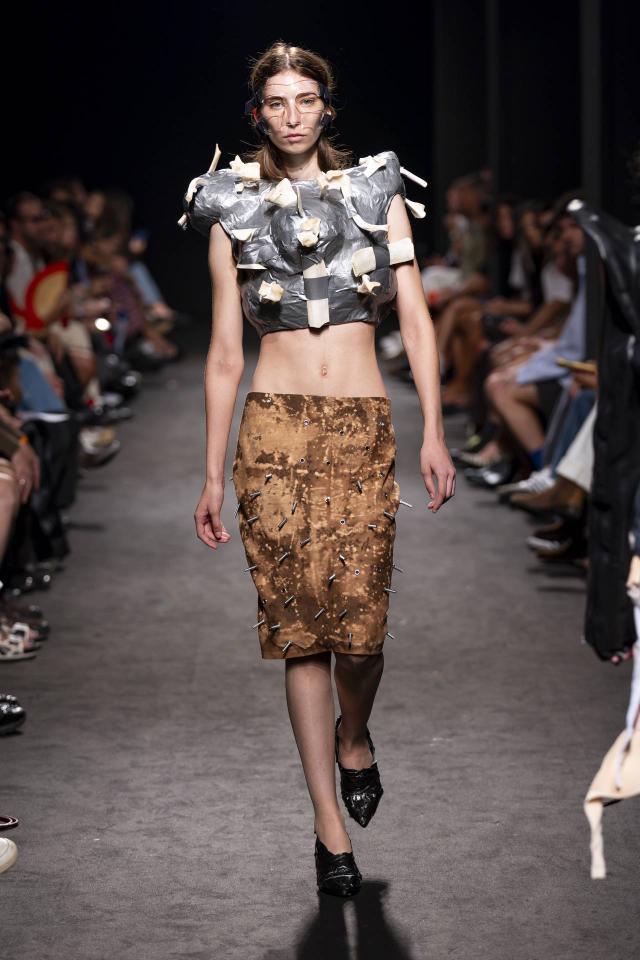
Ronaldo Pina’s D E V I R for RONNI presents identity as a process of continual transformation. The collection moves between past, present and future, assembling a body from fragments, memories and influences that are always changing. Pina confronts historical systems of power rooted in slavery and the dehumanisation of Black people, recognising how that violence continues to shape identity and experience. Drawing on Black subcultures, African dandyism, royalty, the figure of the enslaved person and hip-hop, he uses fashion as an act of resistance and reclamation. The project explores the tension of existing between worlds—being Black in white spaces, between oppression and affirmation, and between ideals of perfection and imperfection.
Taken together, these ten projects reveal the breadth of ideas that can be expressed through fashion. A garment can carry a memory of a city, expose an expectation placed on the body, imagine a greener urban future or question the histories that shape identity. The designers’ approaches differ, but each treats clothing as a space for investigation rather than a fixed answer.
For SANGUE NOVO, the public presentation is not the end of the creative process. It is a beginning: an opportunity for these ideas to meet an audience, develop through exchange and open up new directions. By making space for research, experimentation and individual authorship, the programme invites emerging designers to take their work further—and encourages fashion to keep changing with them.