- Date
- 04 MAY 2026
- Author
- GLORIA MARIA CAPPELLETTI
- Image by
- RED-EYE
- Categories
- Interviews
Adama Sanneh: The Future Is Now
The future rarely arrives as a clear image. It moves in fragments, intuitions, partial visions that only begin to take form once they are shared, questioned, and reworked in the present.
At RED-EYE these conversations start from perspective. We invite voices whose practices already operate inside the tension of what is emerging, people who are actively shaping change. The aim is to map a plurality of possible futures, and, through them, sharpen our ability to act now.
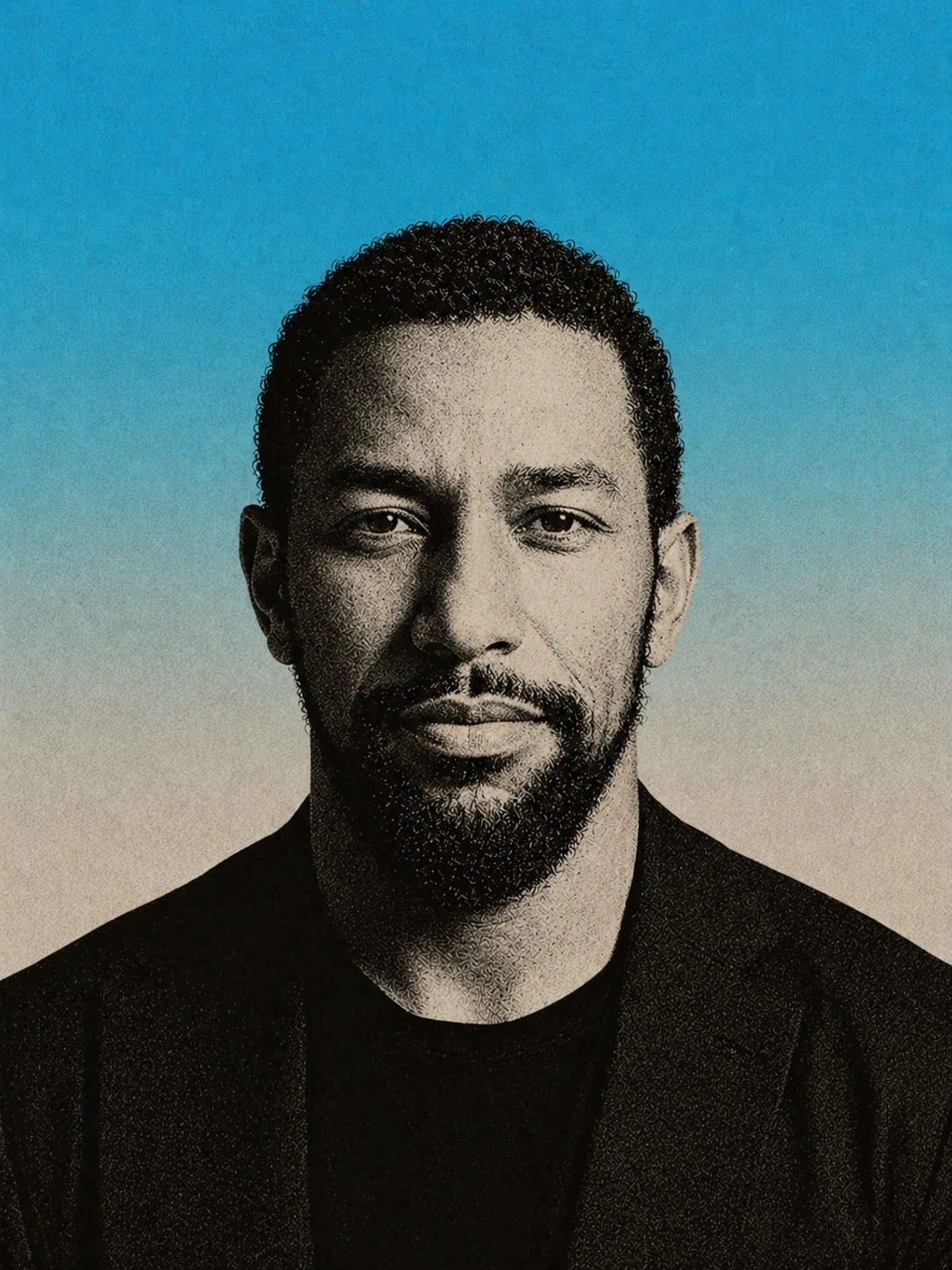
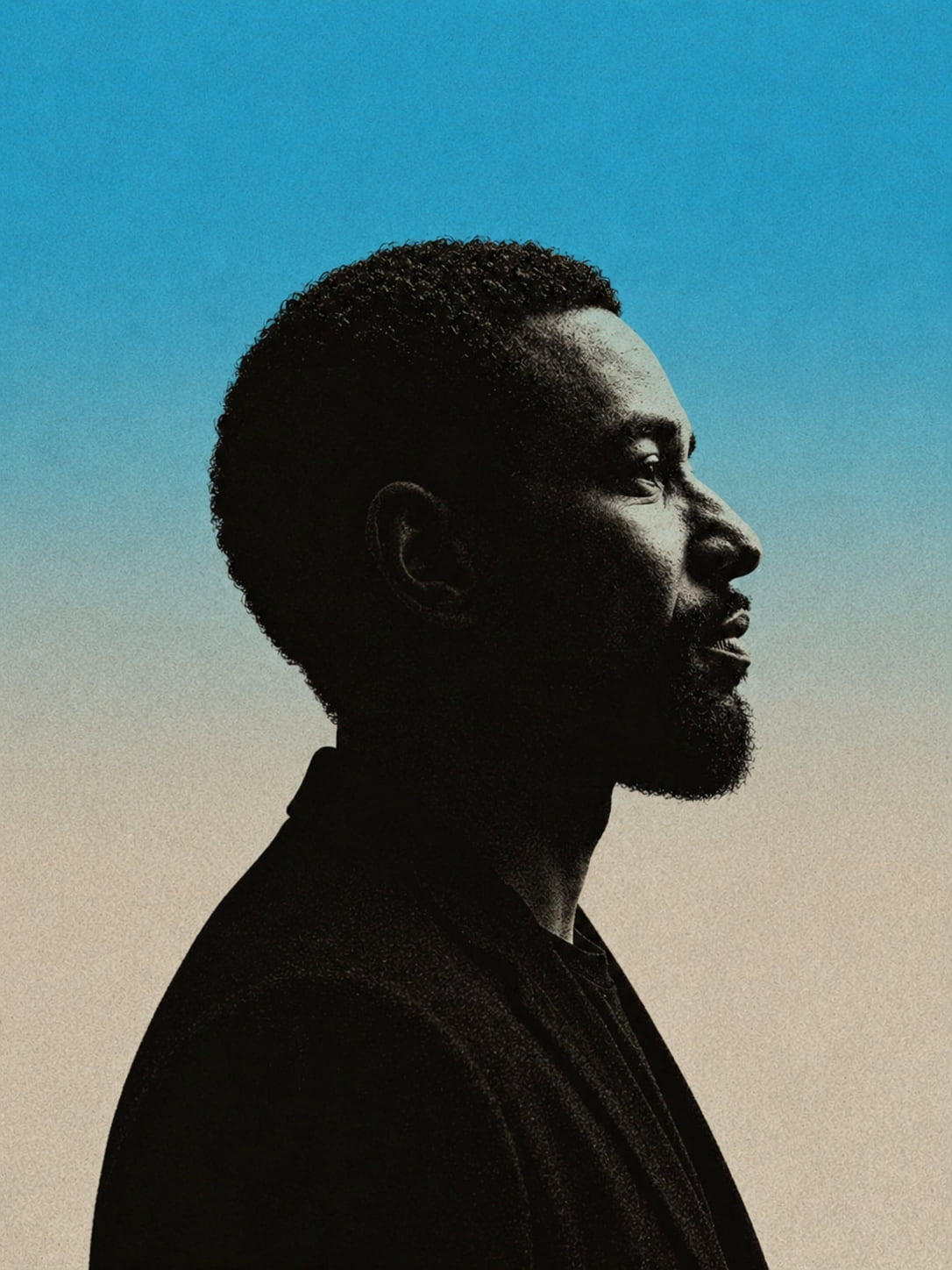
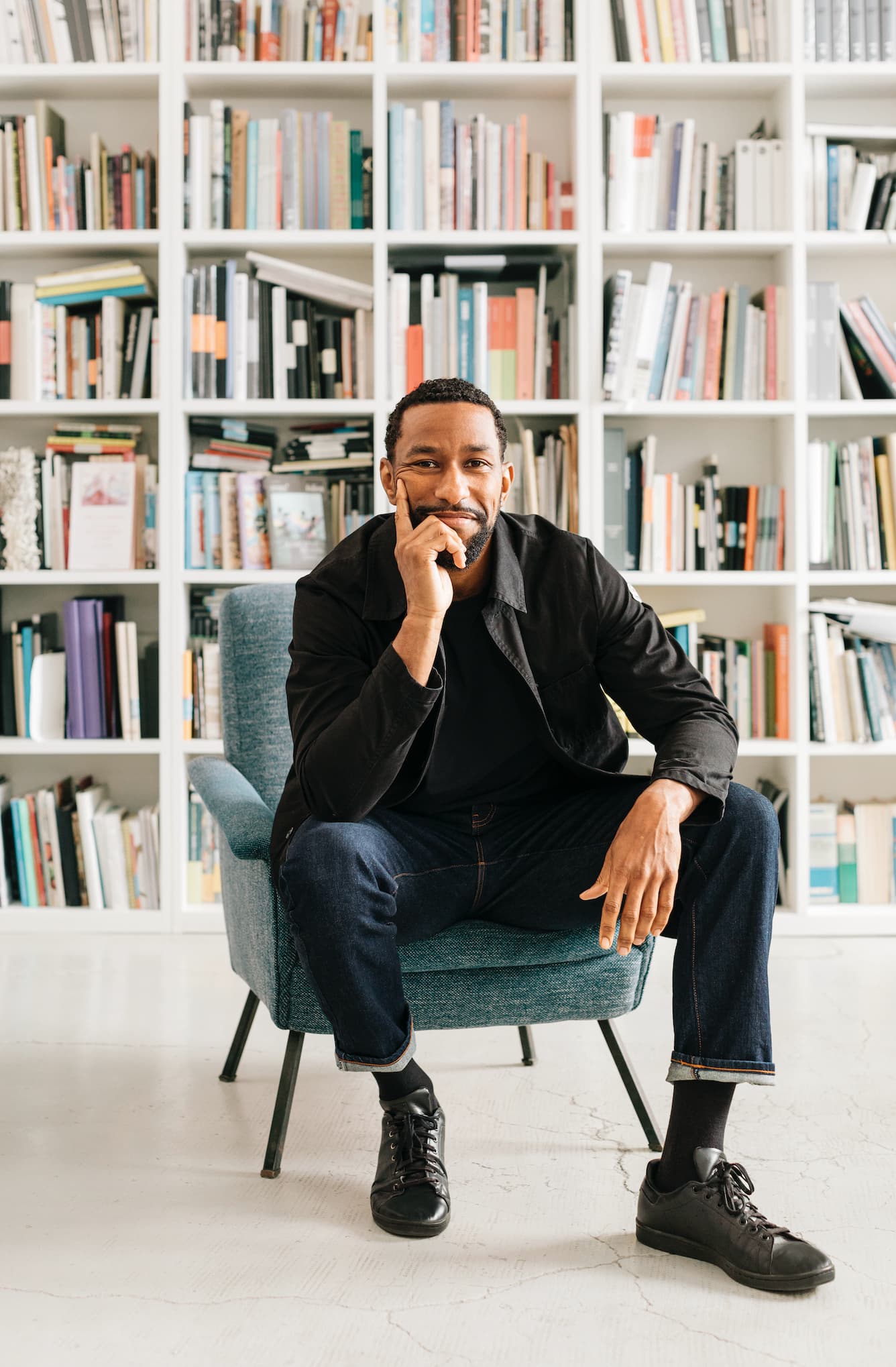
The dialogue with Adama Sanneh unfolds within this framework. As co-founder and CEO of the Moleskine Foundation, Sanneh brings a trajectory that moves fluidly between management, cultural mediation, and social innovation, a practice shaped across the University of Milan, Bocconi School of Management, and the University of Geneva, where linguistic and cultural studies intersect with public management and business strategy.
With nearly two decades of international experience spanning collaborations with organizations such as the United Nations and the World Economic Forum, his work has consistently navigated the space between institutional structures and human-centered transformation. This dual perspective led to the creation of the Creativity Pioneers Fund, a flagship initiative of the Moleskine Foundation, now one of the most extensive global networks of cultural and creative organizations working on urgent systemic challenges, from climate change and inequality to the evolving relationship between humans and AI.
Recognized internationally, including as the first recipient of the Bocconi University Changemaker Award, Sanneh’s work extends beyond institutional leadership into a broader inquiry on how imagination, ethics, and collective responsibility can be mobilized to shape more inclusive futures.
In a moment where technological acceleration continuously reshapes how we imagine and construct reality, Sanneh’s perspective offers something less immediate and more structural: a way of thinking the future as something that is practiced, collectively, in the present.
So, what about the Moleskine Foundation: how it started, what your mission is, and how it evolves today in such a fast-changing technological landscape.
We created the foundation in 2017, building on a previous foundation called the Lettera27 Foundation. It was originally created when Moleskine was sold to a fund in 2006. What we did was take that experience and transform it into the Moleskine Foundation, with bigger ambitions and larger opportunities.
The mission, to this day, is quite simple. It’s the idea of exploring creativity for social change. And we started with a question that is a little bit naïve: can creativity change the world? It’s a simple question, maybe even too simple. But the moment you take it seriously, it opens everything. You start asking: what is creativity? What does it mean to change the world? Which world? It becomes one of those questions that expands and becomes a guide for exploration.
We come from the experience of Moleskine, where creativity and culture have always been central. It’s one of the last cultural brands that truly places culture at the core of its purpose. From there, we started realizing that even at a policy level, looking at the UN, the Sustainable Development Goals, creativity was re-emerging as a concept. In particular, in Goal 4, quality education, creativity is at the center.
It’s no longer enough to just have students in classrooms. The question becomes: what are they doing? How do they become more creative? But then again, what does creative mean? It means being a critical thinker, having empathy, rational compassion, a change-making mindset, a creative approach to doing. And for the first time, institutions began to say: we understand creativity is important, but we don’t know how to work with it. Because creativity is not linear. It’s not like coding. It’s not about performance or standardized skills. So the underlying question became: is anyone interested in figuring this out? And we raised our hand, not because we had the answer, but because we had the curiosity and some experience to start the exploration. And also because asking the question is already part of the work. You have to keep the question alive.
So our mission is creativity for social change. Our aim is to understand how to democratize creative skills, and how creativity can become a recognized way to address global challenges, from climate change to democracy, to AI, to education, to human rights.
And in practice, how do you translate this into projects or initiatives?
The first important thing is that we don’t do projects. Projects are finite. They have a beginning and an end. There’s nothing wrong with that but social change doesn’t work that way. So instead, we create programs and initiatives that are long-term, ongoing.
The main initiative we’ve developed is the Creativity Pioneers Fund. It’s a philanthropic fund supporting creative change-makers globally. In the past four years, we’ve received almost 10,000 applications from over 150 countries, organizations that answered a simple question: Do you use creativity as a tool for social change? These are not only startups, they are nonprofit organizations operating at different levels. They can be very small, like a film festival in a remote island in the Philippines, or large institutions like the Bronx Museum.
What we realized is that we didn’t fully know what we were looking for and we stayed open. And from that openness, patterns emerged. Some organizations use traditional creative practices, theater, visual art, design, architecture, cinema, to drive transformation. Others are unexpectedly creative. For example, there’s an organization in Italy called XFarm. They are based in Puglia and run a farm. At first we thought: a farm? Really? But they explained that they started as a cultural association with artists and cultural practitioners and then won a grant for land confiscated from the mafia. They looked at each other and said: I guess we need to learn how to farm. But their creative mindset allowed them to build something extraordinary, combining biodiversity, art, social justice, and human rights.
So what we see is a very diverse landscape, but with a strong common thread: these organizations are highly intersectional, they are deeply local, yet globally connected, they focus on processes, not outputs, they center the human dimension and they stay with big questions. That last point is what fascinates me the most.
It’s very diverse, but there also seems to be a shared way of working, where the focus returns to people, to rebuilding a sense of self. For our readers, that is a global community of creatives, how can they connect with your work? What does the application process look like?
Every year, we launch a global open call. It’s open to nonprofit organizations that interpret creativity as a tool for social change. In the past few years, we’ve received almost 9,000 applications from 150 countries. By the end of this year, we will have selected around 250 organizations to be part of the platform.
And how does the selection process work?
It’s an important part of the work. First, we receive the applications, and we try to make the process as light as possible for organizations. There’s a first screening, partly supported by technology, just to ensure everything is in scope and properly submitted. Then, the key part: the selection is done by the existing Creativity Pioneers. We don’t position ourselves at the top deciding. We don’t want to be a gatekeeping institution. The fund is meant to be a space where things happen, not where someone defines what is valuable. So former pioneers select the new ones. We then do the final due diligence, but the core selection is peer-based.
I wanted to ask you something else. Younger generations will possible no longer be used to paper or writing by hand. Everything is on screens, keyboards, phones. And now, with AI, it feels like even interfaces might disappear, as voice could become the main interaction. There’s a possibility that future generations might not even read or write in the same way. Reading, writing, they open a space for thinking, imagining, dreaming. So what happens if that space disappears?
It’s a big question. On one side, I was smiling, because if you go back in history, before writing existed, philosophy was done entirely through dialogue. And when writing appeared, it was criticized. It wasn’t considered the right way to think. So there’s always a cycle.
What I’m more concerned about is not writing itself, but the capabilities we might lose. For example: our ability to contemplate, to pay attention. The issue is not preserving writing out of nostalgia. The issue is that writing is a practice, a praxis, that allows us to reflect, to slow down, to access parts of the brain connected to memory and emotion. If we lose the practice, we risk losing those capabilities. So the real question is: can we find new practices, through technology, that still allow us to cultivate contemplation, presence, abstraction? If yes, then I’m open. But that’s the key issue.
Another thing is that I don’t like making predictions about the future. For two reasons. First, because if you look at technological development over thousands of years, it was flat for a long time and now it’s exponential. So prediction becomes extremely difficult. Second, because even within the AI discourse, you hear everything and its opposite. Some say we’ll all lose our jobs tomorrow. Others say it’s hype driven by funding cycles. Even with technologies like self-driving cars, we’ve been talking about them for over 20 years, and we’re still not there. So yes, I’m concerned but I don’t think prediction is the right approach. What matters is responsibility in the present. The future is not a distant point anymore. What we do now is shaping it directly.
From our perspective as a foundation, the key question is this: If we build communities where people are connected, physically, creatively, where young people have access to sports, libraries, creative outlets, relationships… Then the same technology will have a completely different impact compared to a context where people are isolated, disconnected, alone. So for me, this moment is an opportunity. It’s time to double down or even triple down on our humanity. The goal is not to oppose technology. Of course, we need ethics, we need to challenge harmful incentives.
But the real question is: how do we strengthen the human capacities that allow us to engage with technology in a meaningful way. How do we expand spaces for imagination, critical thinking, listening, contemplation? These are often seen as secondary, outside the “productive” system. But now they need to move to the center, because that’s where the capabilities are built to face what’s coming.
So technology can also empower, in that sense.
Of course. But the discourse shifts. Because then it’s not about technology versus humanity, it’s about how prepared we are. If we double down on our humanity, then AI can become an incredible gift. Otherwise, it risks becoming something destructive. It’s like a classic narrative: there’s a powerful tool, and one side tries to use it without transformation, for personal gain. The other side goes through a process of growth, develops awareness, responsibility and only then is able to use that tool meaningfully. That’s the real question: how do we prepare ourselves?
Working with artists, I see that AI can actually expand creativity. For some, it brings back wonder and excitement in the process of making.
Exactly. Because creativity is not about the output, it’s about the process. And that’s a fundamental reminder. I often say: we invest so much in productivity, scalability, efficiency, but the question is: whose dreams are we scaling? My provocation is: for every dollar we invest in AI, we should invest four in hyper-local, community-based creative initiatives. It’s not about stopping technology, it’s about strengthening ourselves. I don’t know what the right future looks like. I genuinely don’t know. But the question is: how do we create the conditions today to imagine a future that is more inclusive, more just, more human? That’s the work.
I once asked this to Federico Faggin, whether meditation should be taught in schools, as a way to develop awareness and creativity. What do you think?
Meditation has had a big impact on my life as well. And more broadly, working on your mental health, in the widest sense, is essential. If you don’t understand your patterns, your blockages, if you don’t develop your own internal tools… then all the knowledge in the world has very little value. Because many of the issues we see, even at high levels, are deeply connected to mental health. So yes, I agree with the importance of those practices. But I think it’s important how we approach them, as a response to real needs. For example, one organization we support in South Africa started as a DJ school. Their students came from highly stressful environments, so they introduced breathing and mindfulness as a practical solution. Not as a philosophy but as something necessary. And I think that approach is powerful.
Ultimately, what matters is this: if we invest in developing presence, attention, listening, emotional awareness, then AI becomes a powerful ally. If not, it risks making us passive. If we manage to truly invest in our humanity, then technology becomes a partner. Otherwise, it becomes something that happens to us.
Interview and AI visuals by Gloria Maria Cappelletti
Image Courtesy by Metis PR
Special Thanks to Declan Eytan