- Date
- 01 JUNE 2026
- Author
- MIRA WANDERLUST
- Image by
- BORA
- Categories
- Interviews
Building Emotional Cathedrals: Bora on Queer World-Building and Radical Imagination
In a world increasingly defined by rigid categories and accelerated realities, artists Bora offers an alternative vision rooted in fluidity, transformation, and radical imagination. Working across digital worlds, sound, storytelling, sculpture, and performance, the artist's transdisciplinary practice resists fixed definitions, embracing instead a constant state of becoming. Queer, ecological, and deeply emotional, Bora's work inhabits the space between the personal and the collective, constructing immersive ecosystems where humans, animals, technology, and mythological creatures coexist. At the heart of their evolving practice lies the concept of the "emotional cathedral", a living architecture of feeling, vulnerability, and resistance that challenges dominant narratives around identity, belonging, and power. Their latest project, Birth Tales: Rooms for Resistance, expands this vision through multisensory digital environments exploring chosen birth, trans-species alliances, memory, and transformation. Drawing inspiration from nature, the ocean, dreams, and lived experience, Bora creates spaces that invite viewers not only to witness but to participate, becoming co-authors of evolving worlds where tenderness, imagination, and storytelling function as acts of activism. In this conversation with RED-EYE, Bora reflects on healing, world-building, queer futurities, and the transformative power of creating new paths where none previously existed.
Hello Bora, welcome to Red Eye. You describe your artistic practice as interdisciplinary and queer—how do these identities inform your approach to various mediums, and what unique perspectives do they bring to your work?
Hello Red Eye, thank you for inviting me, I'm very joyful to be here sharing with you.
The word transdisciplinary resonates a lot within me and what I create — "trans" as going beyond, passing through, transform, transcend, be in transit. This idea of being in movement, letting light pass through and giving life to shadow. Like a perpetual crossing, in a way the refusal to be fixed. It's this idea of fluidity, ever-going transformation and mutation: trust the process as it can open spaces that don't have a name yet or even don't need to be called. It allows me not to follow any rule within, to extract from systems and shapeshift through every medium because at the end they are not divided — they together form a unique language of expression. Like us as humans, we, with all our forms, are a unique expression. From there, I constantly meet myself in places I didn't expect to, or where I thought I would get lost. I also wish to deconstruct the binary and elitist notion of "master" or not "master" of a form, it vampirizes the joy, the joy of being playful which is key too. A lot of my practice is built on failing as a workflow, as a way to venture to the edge of the forest on paths that don't exist yet, where one can only see a few traces of almost invisible footprints - learn from other paths, and enter the adventure of creating your own path.
The concept of an "emotional cathedral" suggests a depth of feeling and complexity in your art. Can you explain how this metaphor encapsulates your artistic universe and how it reflects your journey over the past year?
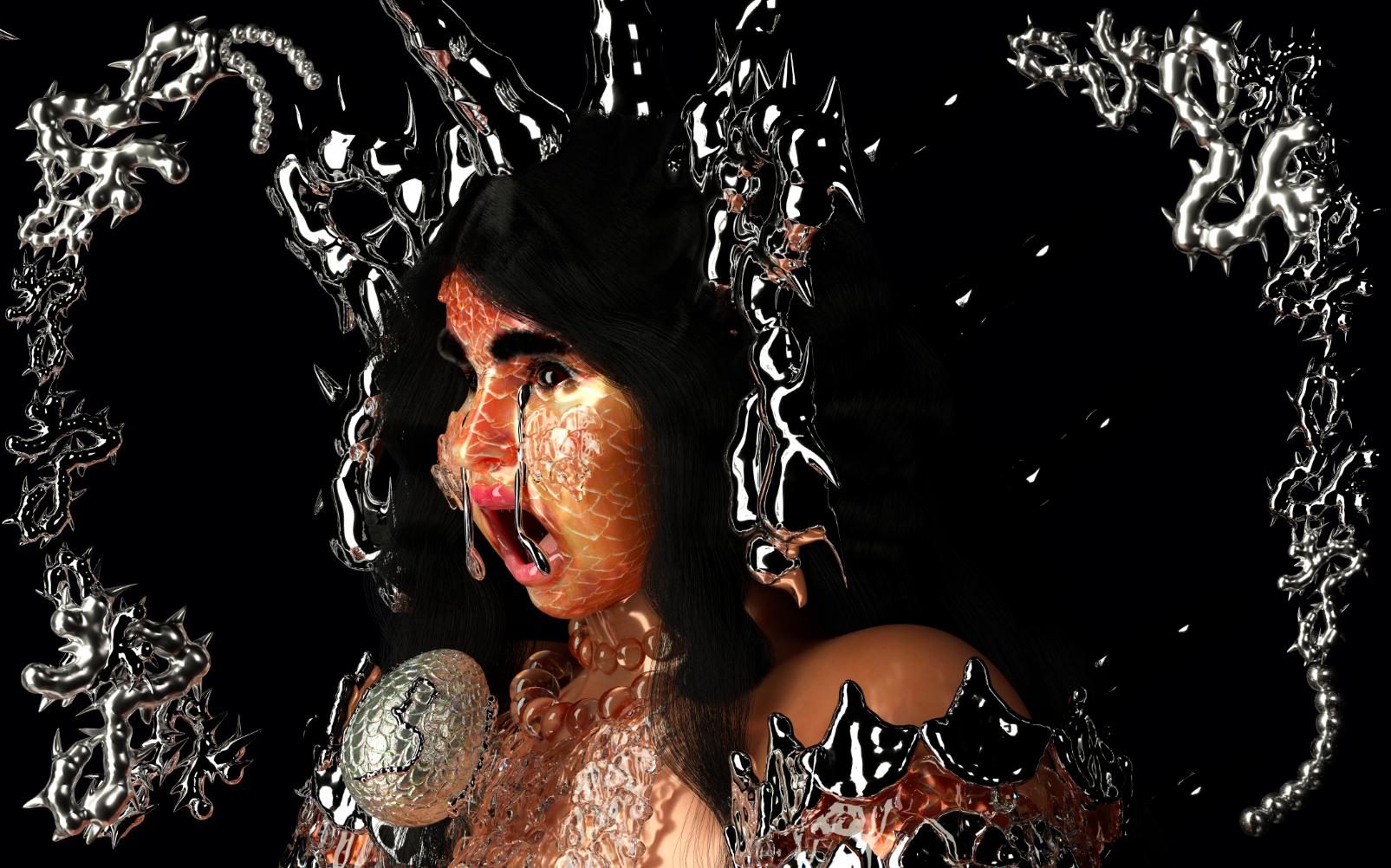
I remember visiting an outdoor damaged church with no roof when I was a kid in a very small village, it deeply resonates today still. Walls were there full of imprints yet grass and nature was lush and wild inside, voices still resonating with the echo of the walls. Birds. Opened to the sky. There's something pagan about this, that I find deeply sacred. At that moment I remember my body and soul felt like this cathedral, crushed yet full of possibilities of growth and expansion.
The cathedral as a vector to dismantle, a vessel to connect to the sky, to others: to create worlds, sometimes find refuge, and feel. You don't enter it alone, it is at once a space for oneself and a collective space where one becomes together.
Emotional is also political — in a world that crushes sensitivity and classifies emotions and their intensity in a spectrum, making emotion the heart of architecture, of construction, is an act of resistance. The cathedral is transmutable, it can be us, a place and a thousand other incarnations. I like to envision it as something that is impermanent and never ended, never done, never captured — alive with what passes through.
In what ways do you believe that imagination acts as a form of activism within your work, and how do you see this engagement evolving in your recent projects and themes?
I believe imagination is a form of activism. I enter it that way as part of my workflow — a confrontational space which manifests as a refusal of reality as it is imposed to us.
When I started creating, I was blown away by this capacity we have to imagine and felt its incredible potential. I realised it is actually quite serious and has a real impact on how we perceive ourselves and others.
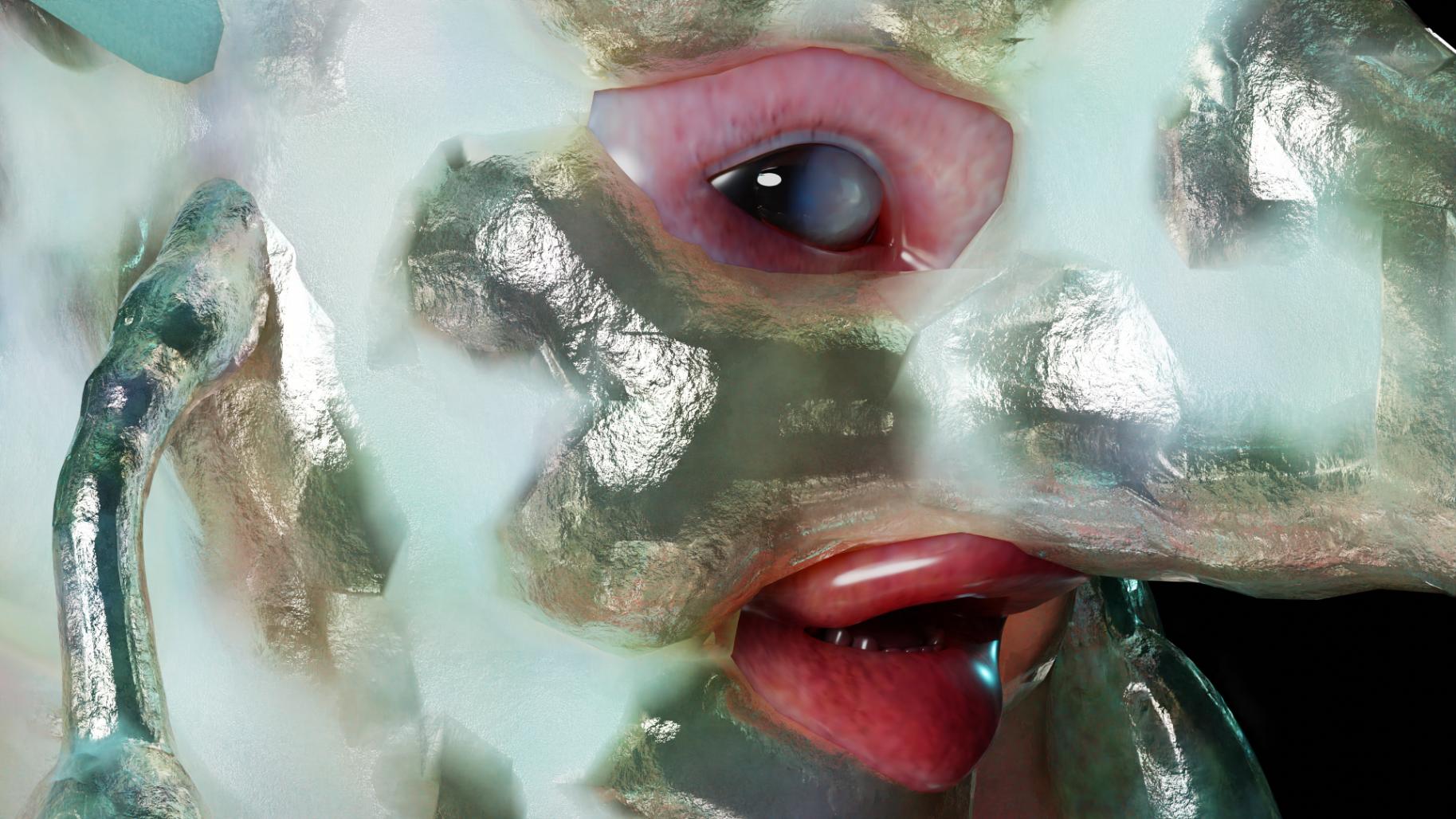
Imagination allows us to extract from reality, pierce through and stretch its limitations beyond utilitarian purpose, and opens spaces for building. It is such a magical ability — far from being naive, it allows us to craft rules outside of our material reality. It creates representations, it also makes us realise what non-representation and invisibility mean. To imagine is to vow that other worlds are possible, and that changes and influences something in reality: to name, to visualise something and invest it as a collective force when we imagine together.
Imagination has become a daily practice for me, it morphs every day. With my new current project Birth Tales, it took a very organic and multichanneled approach — a trans-species imagination, imagining with animals not for them — and it aims to become interactive ecosystems, sharing the power to imagine. There, interactivity and world building are perceived as an extension of imaginary activism, where imagination is not escape — it is how we change reality.
With your artistic practice evolving significantly over the last year, what key experiences or shifts have influenced this transformation, and how do they manifest in your current work?
Last year I unfortunately experienced a traumatic relationship of control and manipulation, from which I managed to get out. This experience, and the destruction that was chosen over everything, made me choose construction and growth over everything. Like the emotional cathedral image we mentioned previously, I had to collect myself and pierce through.
I went to live near the ocean, near nature. Through the tides and its windy landscapes I healed deeply and this allowed my practice to strengthen in its trans-species approach, and align deeply with my he(art). Nature here also allows me to encounter my non binary self and fluid identity in a more embodied and intimate way — like a shell — as I deeply believe it is a principle of nature, flowing through all species
Feeling here allowed a shift — to building worlds and using world-building as a ritual, as an incantation. A door toward nature, animals, and technology as collaborators. They anchored in my practice not as metaphors but as real presences.
All of these beautiful and deep adventures gave birth to the creation of a concept I had in mind for a long time — this idea of creating multidimensional, multisensory rooms where everything catalyses: my artistic path over the years entering sound, sculpture, 3D, performance, storytelling all in the same space.
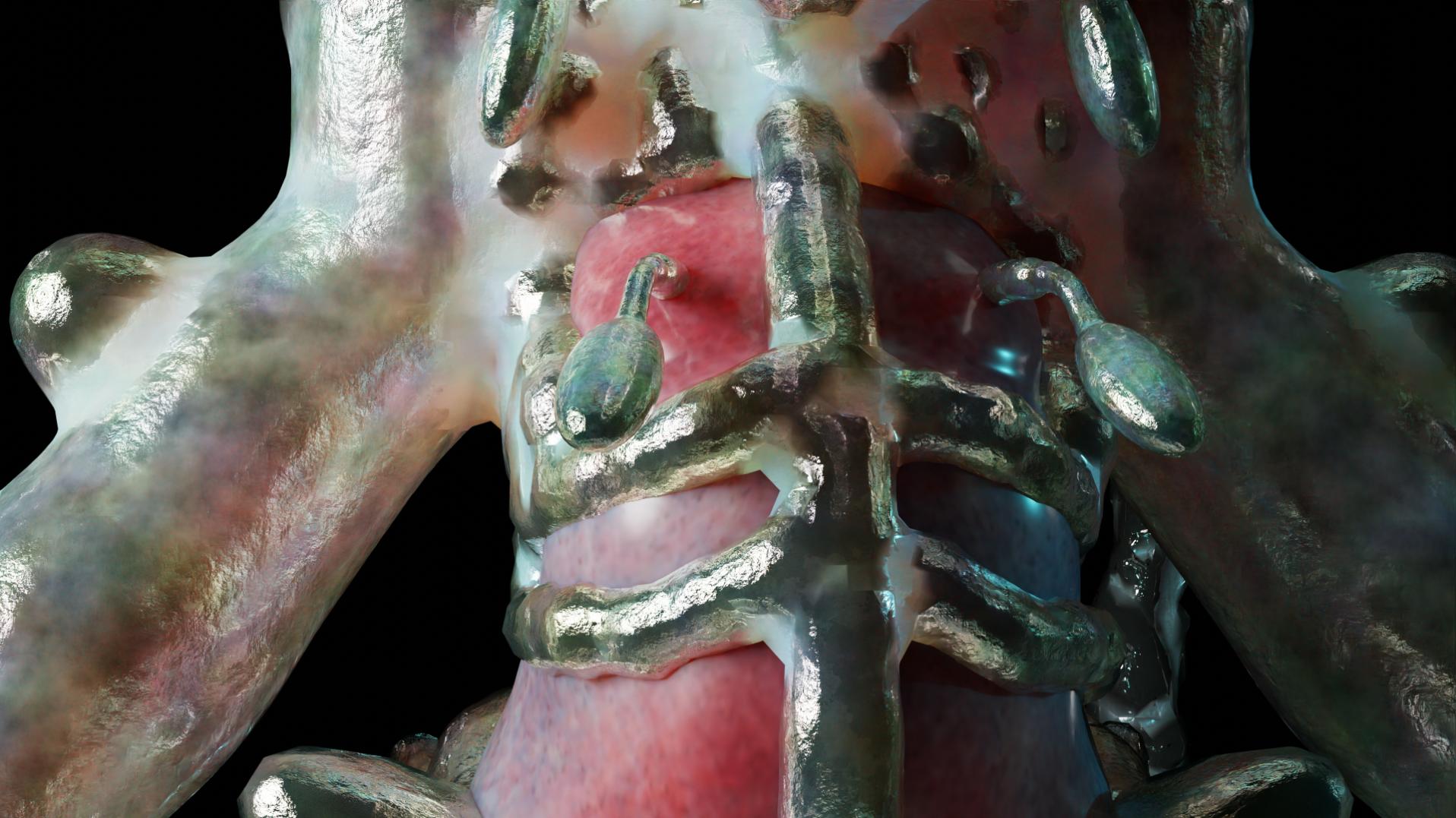
Your recent project, "Birth Tales: Rooms for Resistance," explores chosen birth within a queer and transspecies framework. Can you elaborate on what this concept means to you and how it shapes the thematic direction of this project?
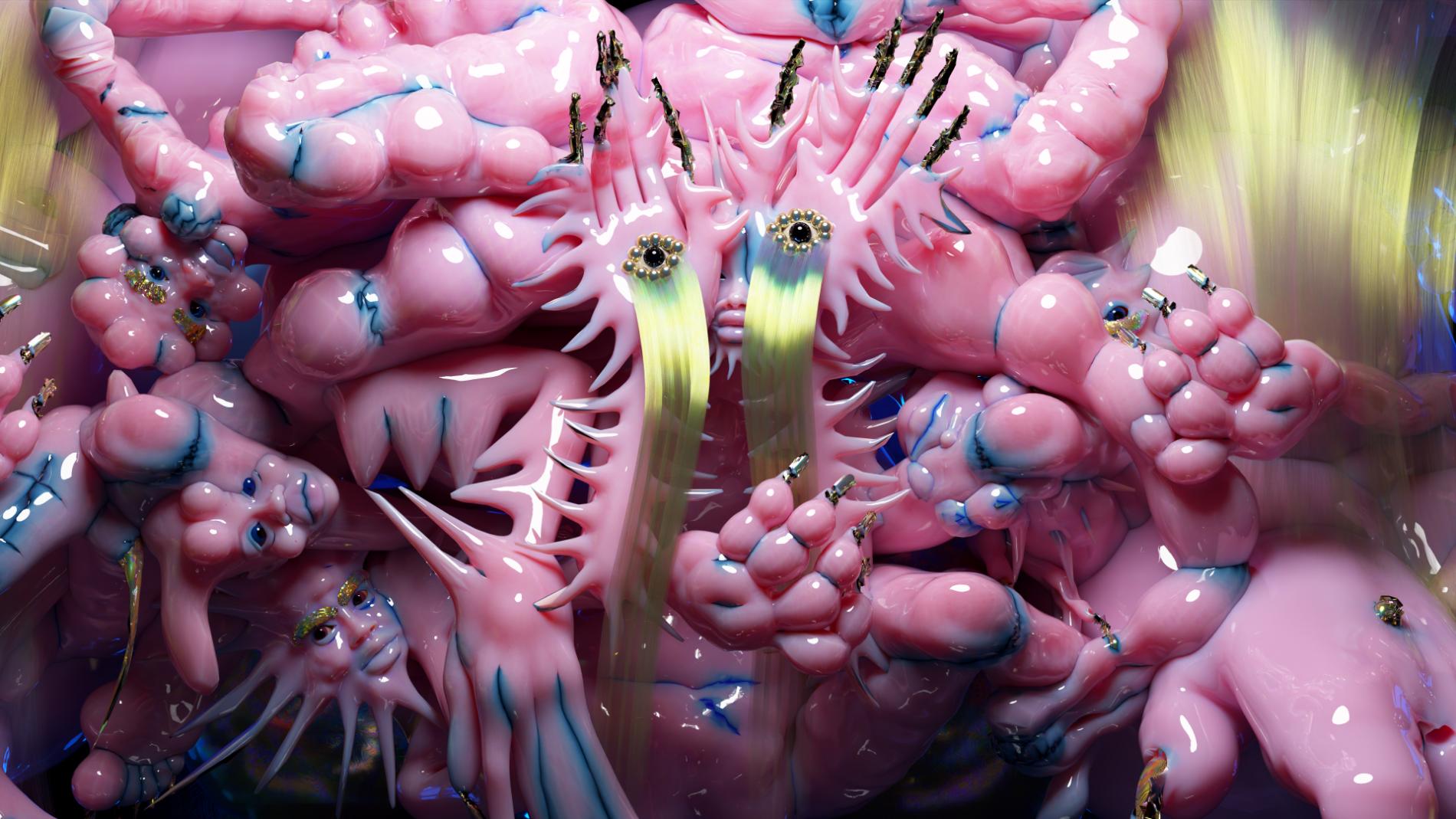
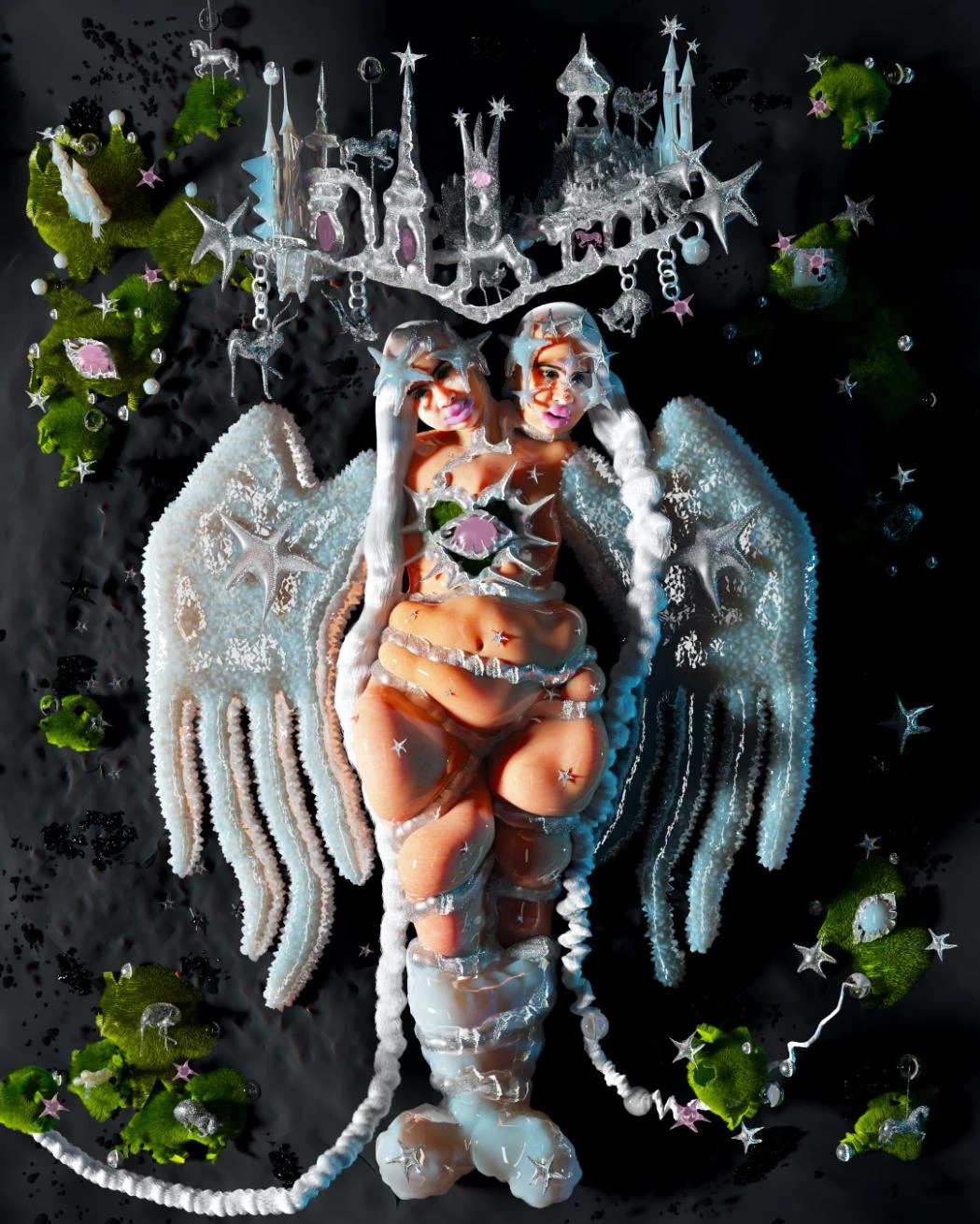
It is probably my most personal research and project. Rooms for Resistance aims in the future to develop into interconnected interactive rooms exploring different intertwined themes. Each room is conceived as a living ecosystem — immersive 3D worlds, soundscapes, sculptures, living forms, narratives, poems and fleeting apparitions — where animal bodies, nature, and queer bodies extract themselves from reality and form a common alliance. All deeply woven within a trans-species frame.
The first glimpses of this project sprouted when I was floating in the sea one summer evening, chest facing the sky, and I felt water as a womb-guide entity, carrying me, giving me birth. It was very strong. I started thinking about my own birth, I felt as if it had never existed, as if it had been taken from me in a way. As if I had always known there was another one, or multiple ones. This is how I started working on the first animated "tableau" of the room called "On a moonlight tide, I will collect my body, bathe in it like a birth" where tidal nests, cosmic wombs, spiralled beings, star caves and egg spitters evolve. I followed the thread, and chose to invest chosen birth as the exploration for the first room. I decided to call the extracts of these rooms the "Birth Tales": trans-species world-building, where water is a vector of memory and central metaphor — water remembers, whales remember too. Where tidal nests become shelters for transmutation during our gestations. Animals are also born without choosing the world they arrive in, without that world welcoming or listening to them. It's this idea of spaces of birth and rebirths: not one single birth but cycles, where our bodies are spirals. To give birth to oneself is to find again one's essence outside of what the world defines or assigns.
How do you create multidimensional and multisensory digital rooms in your artwork, and what role does technology play in enhancing the viewer's experience of these spaces?
For now I am building the first room in 3D, creating and crafting each creature and being, animation, environment, weaving the storytelling. Each room is conceived as a living organism, an ecosystem with its own breath and its different layers — 3D, sound etc. In the future, physical sculptures will extend the 3D world into embodied form — objects born from the digital universe that invite touch and interaction.
I have a dream notebook — in which I draw, collect ideas, impressions, textures and draw my storyboards. For sound research I like to have a sort of ongoing "laboratory", I call it Sonic Planet and I createsoundscapes for each story in a very spontaneous — I believe sounds are so sacred, they build the space in such a unique way. In the future I aim for each room to be fully interactive and become an immersive experience where the viewers become co-authors of the ecosystem. I aim for world-building in real time, environments that react, evolve with the people they encounter and never reset, like a spiral. Technology is here perceived as an extension of nature, a membrane that connects the digital and the organic, the material and immaterial too, the art and the viewers. In the future, people will be able to leave traces in the rooms if they wish — to connect, and participate in the writing of the ecosystem's story.
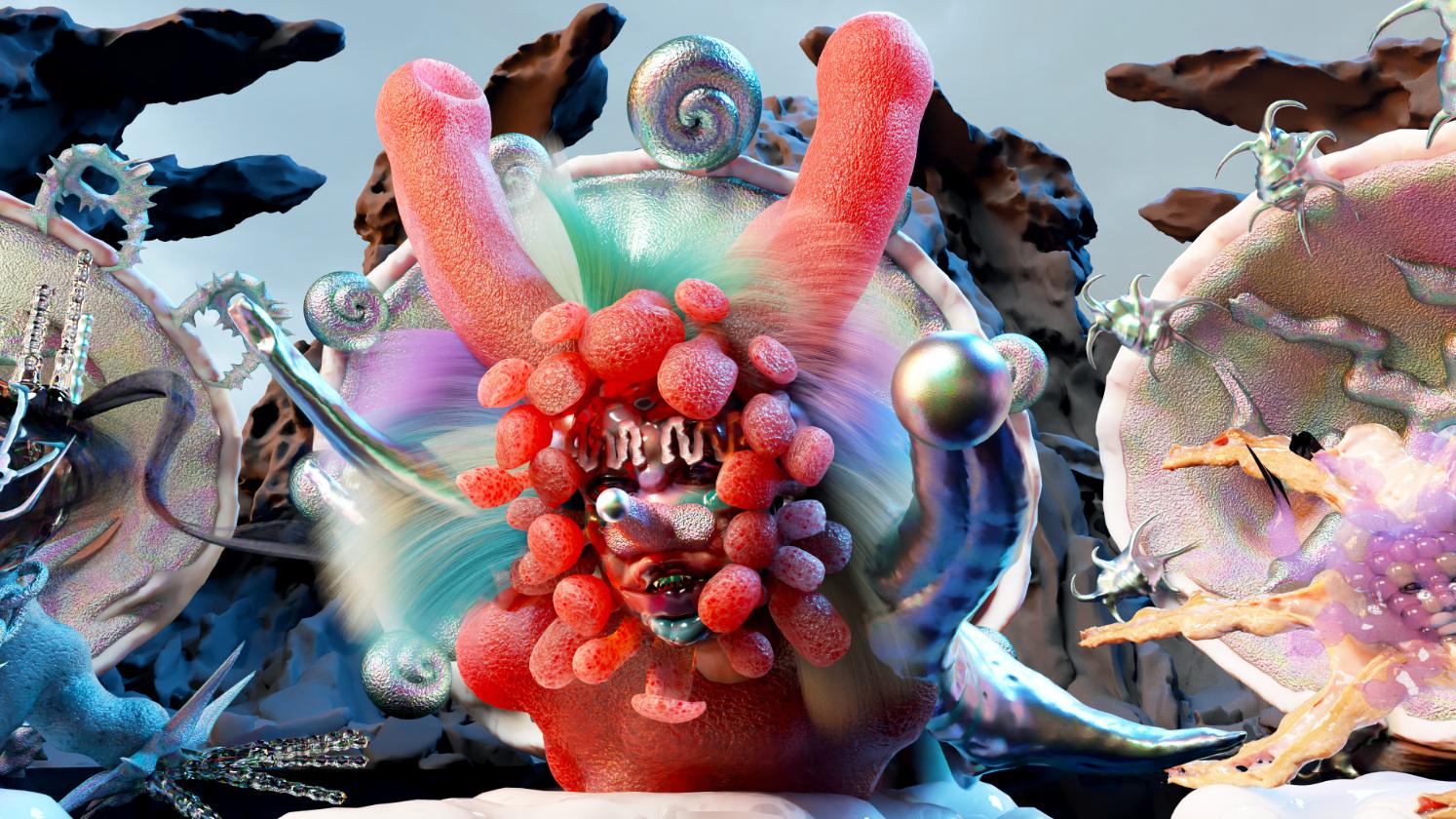
You mention navigating our reality with tenderness through your art. How do you define tenderness in this context, and what impact do you hope it has on your audience's perception of themselves and their narratives?
I perceive tenderness as an act of resistance in my Art— yet tenderness is a privilege within a political frame of systems of power.
It opens: who receives tenderness and based on what, who has access to tenderness? How do queer bodies and animal bodies relate to tenderness? I am trying to invest it in my body of work and enter tenderness within as an attempt of learning and listening: to listen to animals, to creatures, to recognise their existence.
I invest tenderness as a drive whose pendant is anger, revolt — the two are necessary, they coexist. Tenderness opens spaces where one can fail, grow, collapse, without the injunction to be indestructible, but vulnerable too. These spaces build horizons, directions, where these emotions and intuition are compasses. Building horizons together — that each being who enters the room adds something, that the impact is collective and cumulative, like an ecosystem that grows.
I hope this opens constellations of thought where we learn to recognise ourselves in what we cannot name, the unspeakable — that it can create spaces where we meet for who we are and not only for what we perform: giving the permission to be multiple — not a fixed identity — always in movement, always in becoming, learning and deconstructing.
The idea of deconstruction and acceptance is central to your practice. How do these concepts inform your installations and performances, and what specific messages do you hope to convey through this exploration?
I aim for my work to not be fixed — to deconstruct the gaze, the gaze that objectifies, to build worlds where we extract from colonial and patriarchal spaces. The link between deconstruction and world-building is there — the two are inseparable in my practice.
I also perceive acceptance as a collective act. The extraordinary beings I have encountered on my path have helped me with that — to enter mutual recognition, to accompany each other in meeting oneself on the way. To deconstruct binarity, linearity, the idea that we are statues, a final form, and to liberate movement. Reclaim the monstrous — in my world monsters are sacred, they are guardians and their stories need to be heard. Reconstruction is also an act of survival, where rewriting imposed narratives is a necessity. To deconstruct the hierarchy of species, where white human supremacy places itself above everything.
My rooms don't give answers, they try to create trial paths for us to search together. To deconstruct the relationship between public and artist too — in ecosystems that I wish to be interactive in the future where the viewer becomes a co-creator.
I also like to deconstruct the boundary between art and life, which is too an ecosystem — my works are not separated from who I am. Bora is a creature of Birth Tales as much as Birth Tales is an extension of Bora.
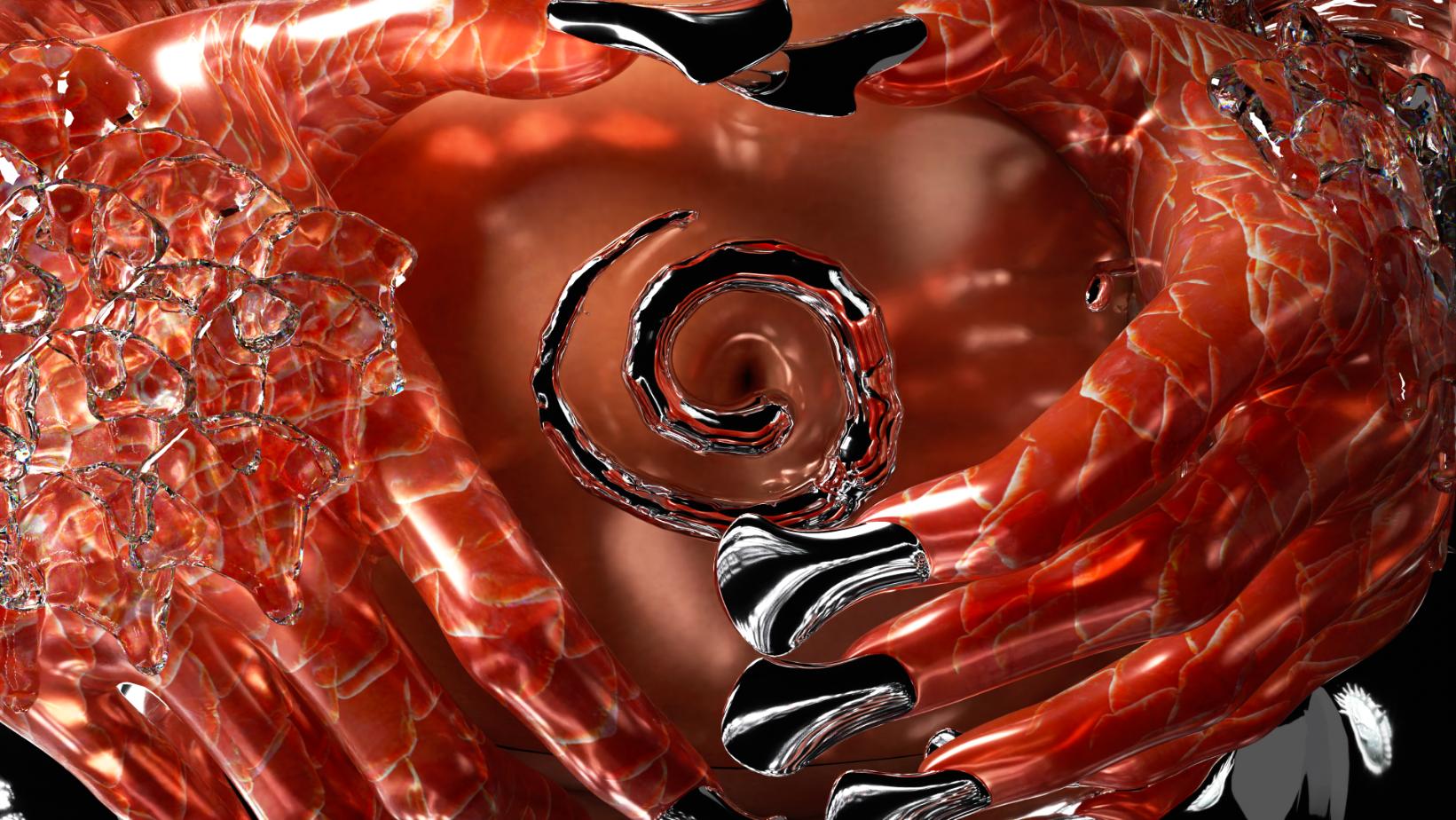
As you invite viewers to reconstruct and embody their own narratives, what strategies do you use in your artworks to encourage this personal engagement and reflection?
Our stories belong to us, they are ours. So many of them were stolen, erased, as if they never existed. Too often queer narratives, the stories of animals, of monsters have been written by others, for others.
I see storytelling and narratives as a constellation map — a living archive, a place where stories collide, intertwine, weave together and form a portal through time. I see the creatures in my work as weavers, who carry within them memories that reality has yet to make room for. I wish to encourage transmission as a strategy of building, of resistance: to share, to spread, to create webs of people that can recognise themselves in these stories, share and create their own. I perceive storytelling as a living organism — not a fixed narrative but something that evolves, transforms, welcomes new voices.
World-building is the main entry point for the viewer, I create worlds. Each being, creature, entity in these worlds carries a wound, a story, a quest, which becomes a way of existing, being and transcending. In my short film Soft Creatures, Moon flowers are untethered from the soil — rootless wanderers, they grew feet and learned to walk between worlds. Breathing out of soil, they found another way: each night they sing to the moon and the moon light became their soil.
Storytelling is the core of my Art, I hope it can inspire viewers to connect to their own narratives in their own way, to create new ones, to believe in their own metamorphoses through personal and communal universes.
Given the unreleased material from "Birth Tales: Rooms for Resistance" that you plan to share, what insights or experiences do you hope to convey through this work, and how do you envision it contributing to broader conversations about identity, chosen birth, and community resilience?
Birth Tales is still in its own tides of becoming — sharing extracts is an invitation to remain in process, an invitation into the process. I envision the work in progress as a space of vulnerability and honesty. And I love not knowing yet everything it will open and bring — I leave that space open.
What I hope to convey is that chosen birth is a universal political act — where vulnerability is not the weakness — but the heartbeat of beginning.
I hope to contribute to broader conversations by proposing something non-binary and non-linear, as a process where community resilience is an ecosystem — not individual but collective, like the rooms themselves that grow with each person who enters them. Birth Tales is not a closed statement — it is an open question, offered to everyone who needs it.
I also hope it can open a gaze toward animals, species and nature — as organisms to truly see, to listen to, and to protect. Not as a metaphor, but as living beings with their own stories, their own births, their own resistance.
That someone can recognise themselves when they enter these rooms, feel less alone — and that these rooms can become spaces where connections can birth.
A note to your future self.
Keep becoming :)