- Date
- 09 APRIL 2026
- Author
- GLORIA MARIA CAPPELLETTI
- Image by
- LORENZA LIGUORI
- Categories
- News
FineSettimana: Lorenza Liguori Imagines an Alien Bloom
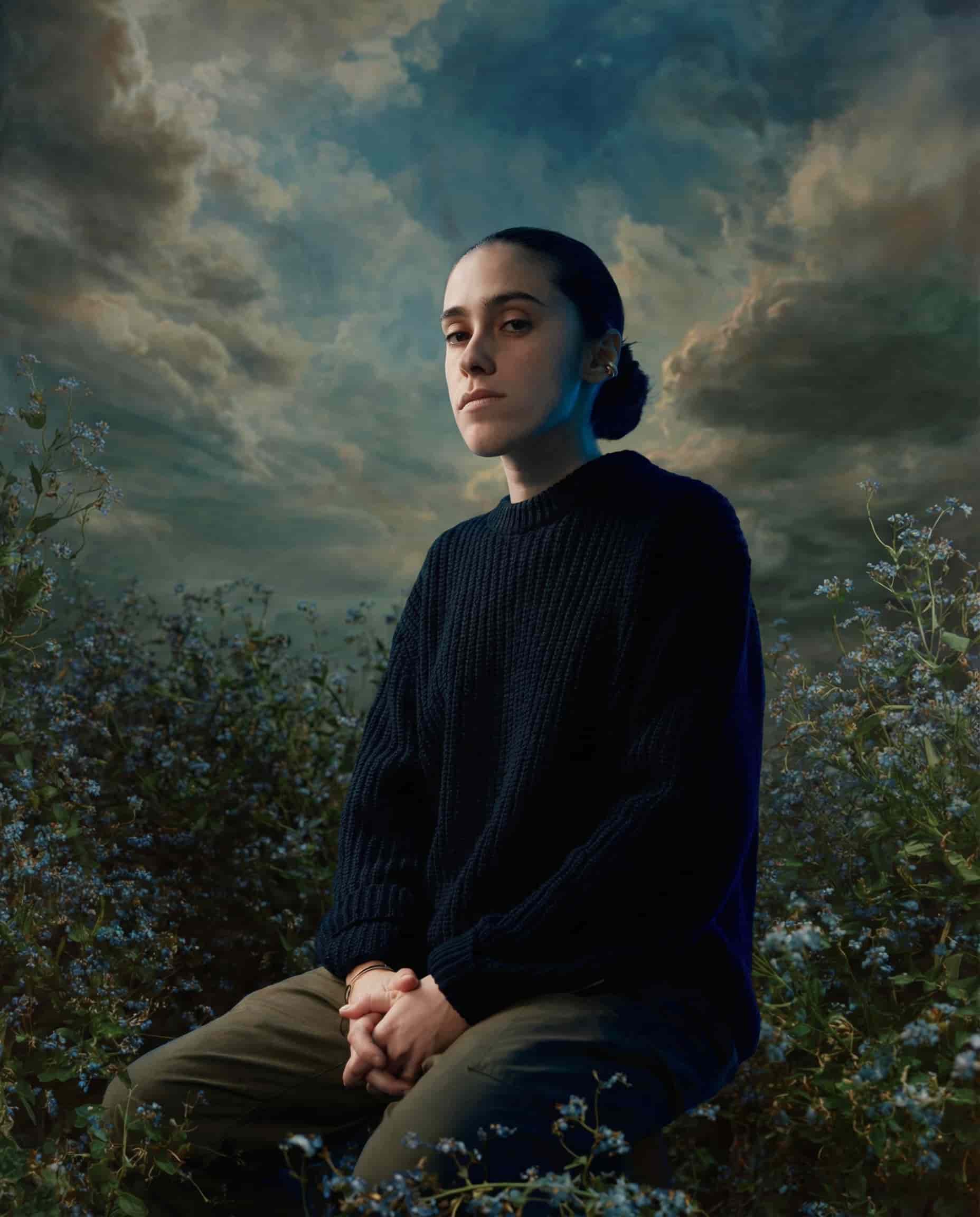
There is a particular kind of artist who enters into a sustained, transformative dialogue with new technologies, listening, questioning, and ultimately converting cold digital processes into something unexpectedly alive. Lorenza Liguori is that kind of artist. Based in Milan, her career traces a path through multiple disciplines: graphic design, art direction, streetwear fashion, 3D graphics, and most recently, artificial intelligence. This is a story of continuous expansion, as Lorenza is an artist who keeps adding new instruments to her toolkit because they allow her to say things she could not otherwise express.
After studying Graphic Design at RUFA and Visual Communication at Birmingham City University in 2016, Lorenza began her career as an art director and graphic designer, later specializing in the fashion industry with a particular focus on streetwear. Between 2020 and 2023, she developed a strong interest in 3D graphics, working with Cinema 4D and Blender to create commercial and product-oriented visual projects. Since 2024, she has been exploring the potential of artificial intelligence in visual creativity, integrating AI-generated imagery into both artistic and commercial work. This integration has expanded the narrative and aesthetic possibilities of her visual language, extending her practice into video productions for music and art. Throughout this evolution, one constant remains: a speculative imagination that asks not only "what does this technology do?" but "what worlds can this technology help me dream?"
That speculative imagination finds its fullest expression yet in Flos Aliena, the installation Lorenza has developed for the third edition of FineSettimana, the annual project by Thomas Zangaro Studio that opens its Milanese space to experimentation between art, architecture, and new technologies. Running from April 14 to 19 during Milano Art Week 2026, FineSettimana has become a recognized appointment in the city's cultural calendar, a temporary platform where creative languages enter into friction and harmony. This year's program, realized in collaboration with us at RED-EYE metazine, places Lorenza's work at its center.
Walking into Thomas Zangaro Studio, visitors will encounter a speculative landscape transformed. The essential, minimal architecture of the space becomes colonized by alien floral forms. These are not flowers as we know them. They have no petals. The environment feels uncanny and extraterrestrial, a nature that does not yet exist but that Lorenza renders strangely inevitable.
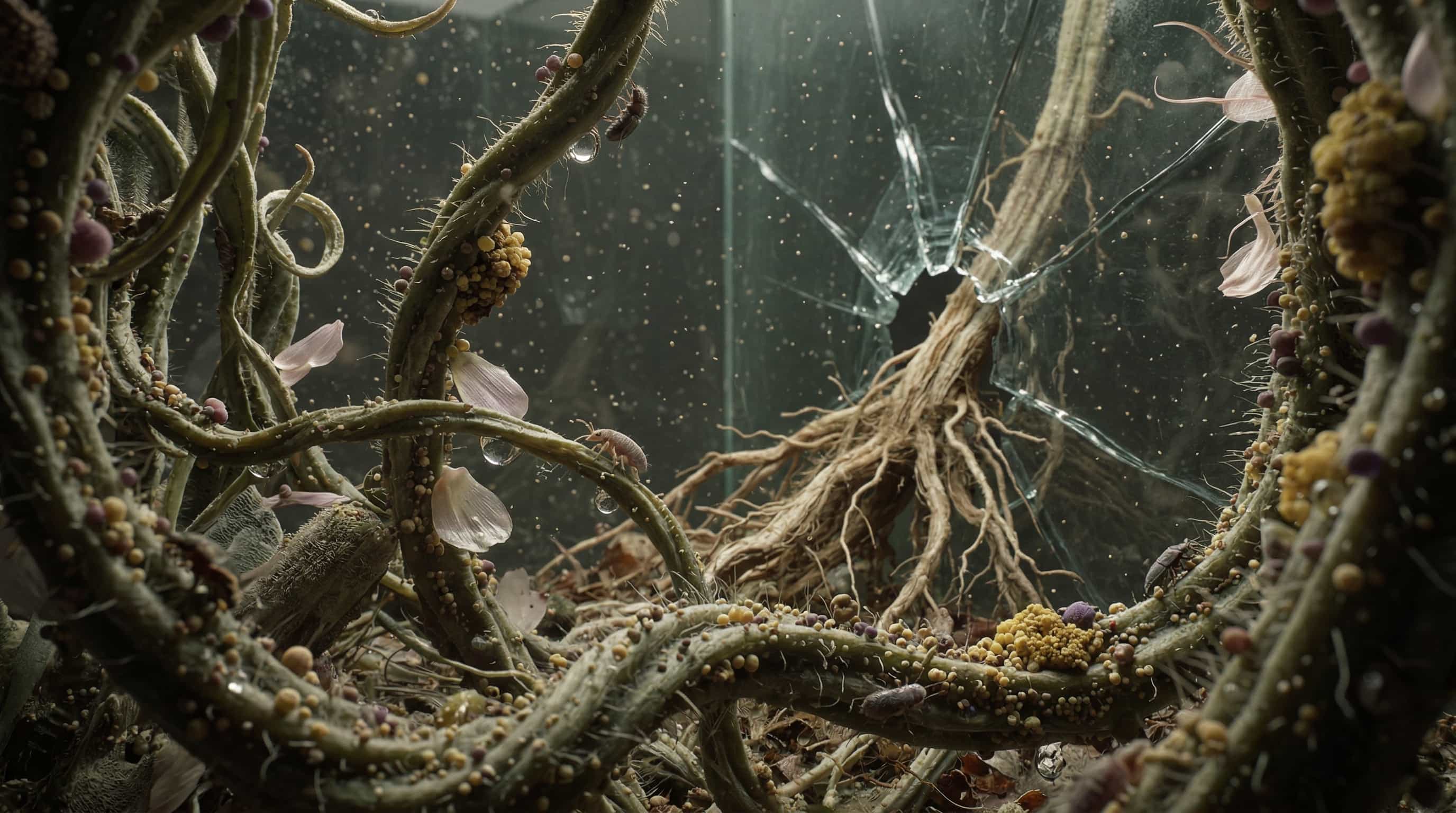
Yet Flos Aliena is not a static installation. Within the defined limits of the studio, the walls and the boundaries of the exhibition space, these digital organisms seem to live. They react. They communicate. They transform the environment around them. The limits function as membranes: filters through which these alien forms appear to emerge, grow, and reach toward the outside world. There is a constant tension in Lorenza's work, a sense that these flowers are always on the verge of breaking through, expanding into real space, contaminating it with their impossible presence. In this context, technology becomes a poetic medium capable of expanding how we imagine and inhabit contemporary landscapes.
We at RED-EYE are particularly interested in how her work explores the territory where organic imagination and technological language meet. Flos Aliena is born from the idea of transforming space into a sensitive ecosystem, a microcosm in emergence, suspended within defined limits that act as thresholds. Lorenza Liguori's practice, across design, 3D graphics, AI, and video, has always been about expanding the possible. With Flos Aliena at FineSettimana, she invites us to step inside that expansion.
Here is our interview.
FineSettimana is a project that Thomas Zangaro Studio dedicates to experimentation between art, architecture, and new technologies. How did your collaboration with Thomas come about, and in what ways did the dialogue with his studio influence the development of Flos Aliena?
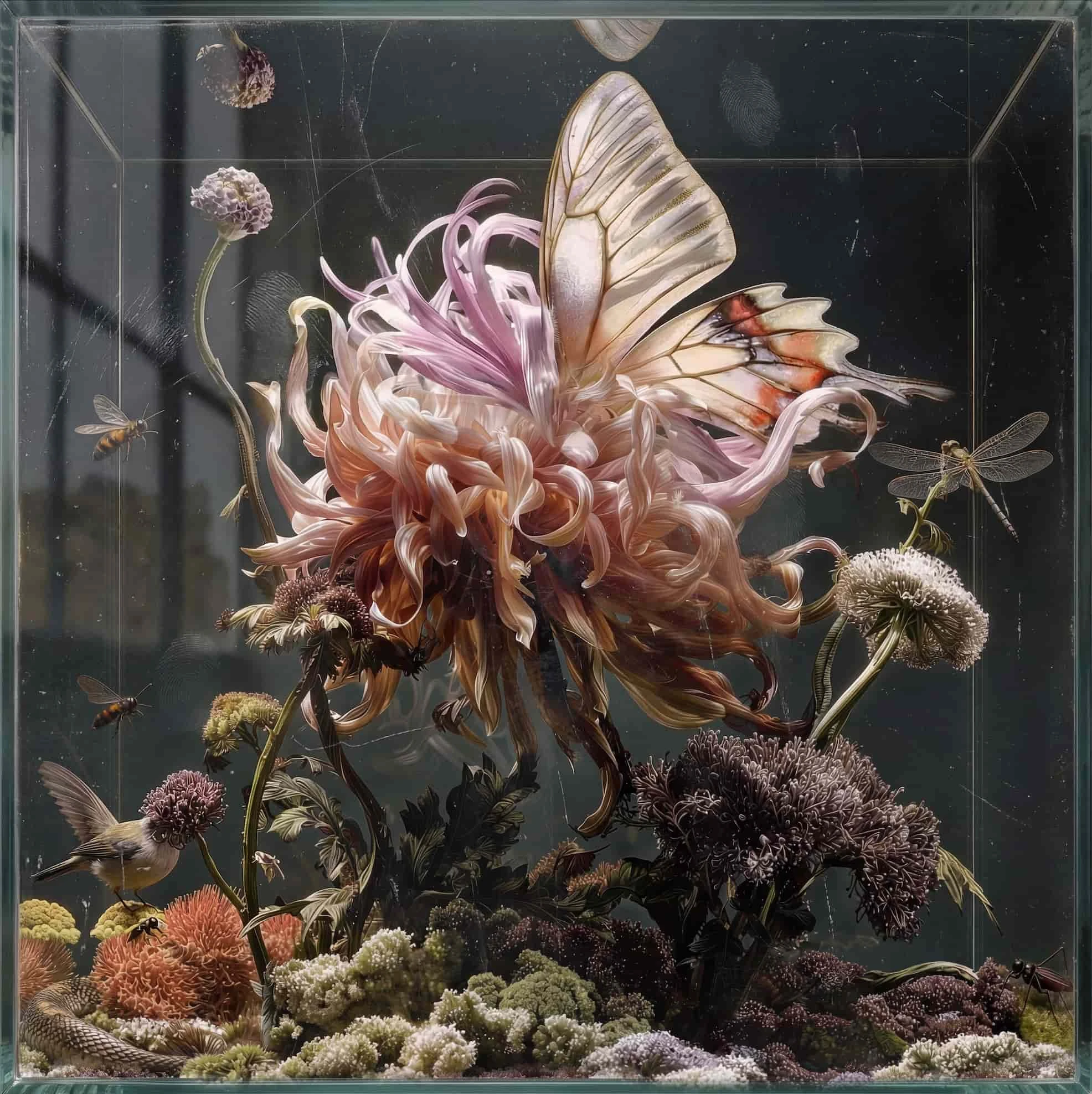
The collaboration with Thomas began very naturally, from a shared sensitivity toward spaces that are never just containers, but active devices. What interested me in the dialogue with his studio was precisely this possibility: to think of Flos Aliena not as a series of autonomous images, but as presences that inhabit a real environment. In the case of these vitrines, which contain highly detailed ecosystems, flowers that unfold like bodies, suspended insects, almost tactile surfaces, the relationship with architecture becamefundamental. It led me to imagine the works as something that enters into tension with space, almost as if what is inside the vitrine could also influence what surrounds it.
Your works will be hosted in Thomas Zangaro Studio, a deliberately essential space that transforms on this occasion into a temporary laboratory. How do you envision your virtual vitrines, these suspended, luminous ecosystems, entering into dialogue with the studio’s architecture? What does it mean for you that the exhibition space is also a space of habitual practice and design?
The essential nature of the studio creates a strong contrast with the visual density of the works. Inside the vitrines there is a proliferation of forms, petals curling, translucent wings, insects orbiting, micro-ecosystems that seem to be in constant transformation. In such a controlled environment, these images become almost anomalies, elements that introduce complexity and instability. The fact that it is a working design space, not just an exhibition space, adds another layer. It is as if these ecosystems enter into dialogue with other creative processes, within a place where things are conceived and constructed. I am interested in this coexistence between rigor and proliferation.
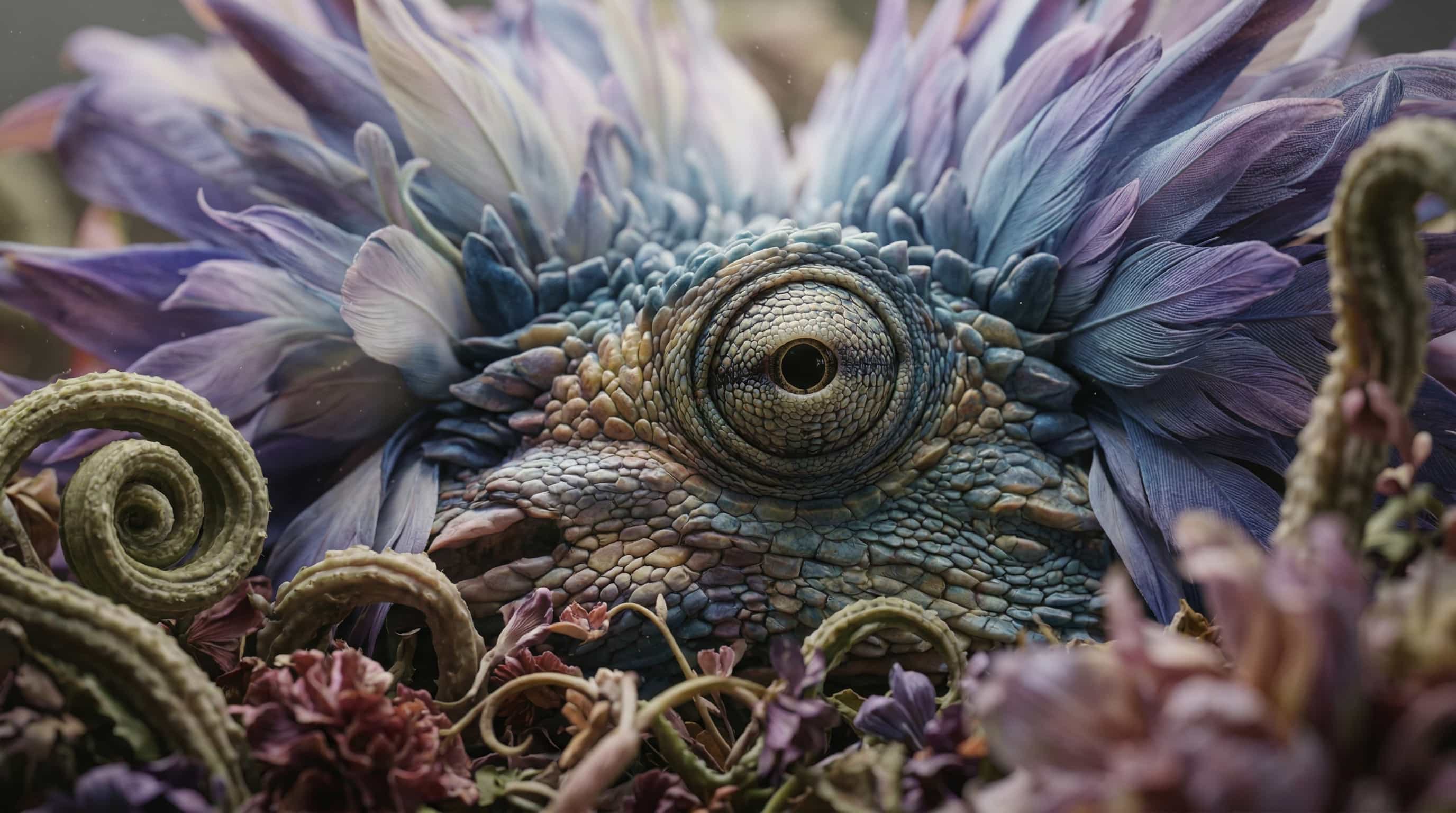
Flos Aliena imagines ecosystems suspended between the organic and the digital, enclosed within virtual vitrines that evoke at once the natural history museum and the imaginary terrarium. How did the desire to "contain" these hybrid worlds arise, and what does the glass that separates them, while simultaneously exposing them to the outside space, represent for you?
The desire to contain these worlds comes from the fact that they naturally tend to expand. In images like this, forms seem to grow, intertwine, and invade the space. The central flower is no longer just a flower, but a complex organism, almost animal-like, crossed by wings, veins, and movement. The vitrine becomes a device of containment, but also of observation. The glass is a threshold. It separates, but makes everything visible and exposed. At the same time it is a fragile boundary. The fingerprints, scratches, and traces on the surface suggest that this limit has already been questioned. I am interested in the idea that sooner or later that glass will be crossed, and that these ecosystems might escape or transform the external space.
Your works are inhabited by mutant floral forms and hybrid creatures that seem to belong to a kingdom never catalogued. You work with artificial intelligence as a generative tool: to what extent has AI allowed you to "discover" these forms, and to what extent has your own vision guided the process? For you, is this a form of co-creation?
Working with artificial intelligence has allowed me to access a level of formal complexity that would be difficult to construct manually. Forms like these, petals becoming membranes, wings merging with vegetal structures, insects appearing as part of the same organism, often emerge in unexpected ways. There is a strong component of discovery. But at the same time my gaze is always present. I select, correct, and insist on certain directions. It is a form of co-creation, built on a constantly shifting balance. Each image is the result of a negotiation between what I seek and what the machine proposes.
In your landscapes, recognizable elements like insects, petals and veins coexist with others that seem to elude any classification. Is there for you a pleasure in playing with this ambiguity, or rather a precise political or philosophical intention to challenge traditional categories of the natural and the artificial?
The ambiguity here is not just an aesthetic game. In an image like this, it is difficult to say where the vegetal ends and the animal begins. The flower is also a body, the wings seem to grow from organic matter, the insects are not external presences but part of the ecosystem. I am interested in destabilizing these categories. Not to deny them, but to reveal their fragility. There is also a philosophical dimension, the idea that natural and artificial are not clear opposites, but overlapping and interwoven zones.
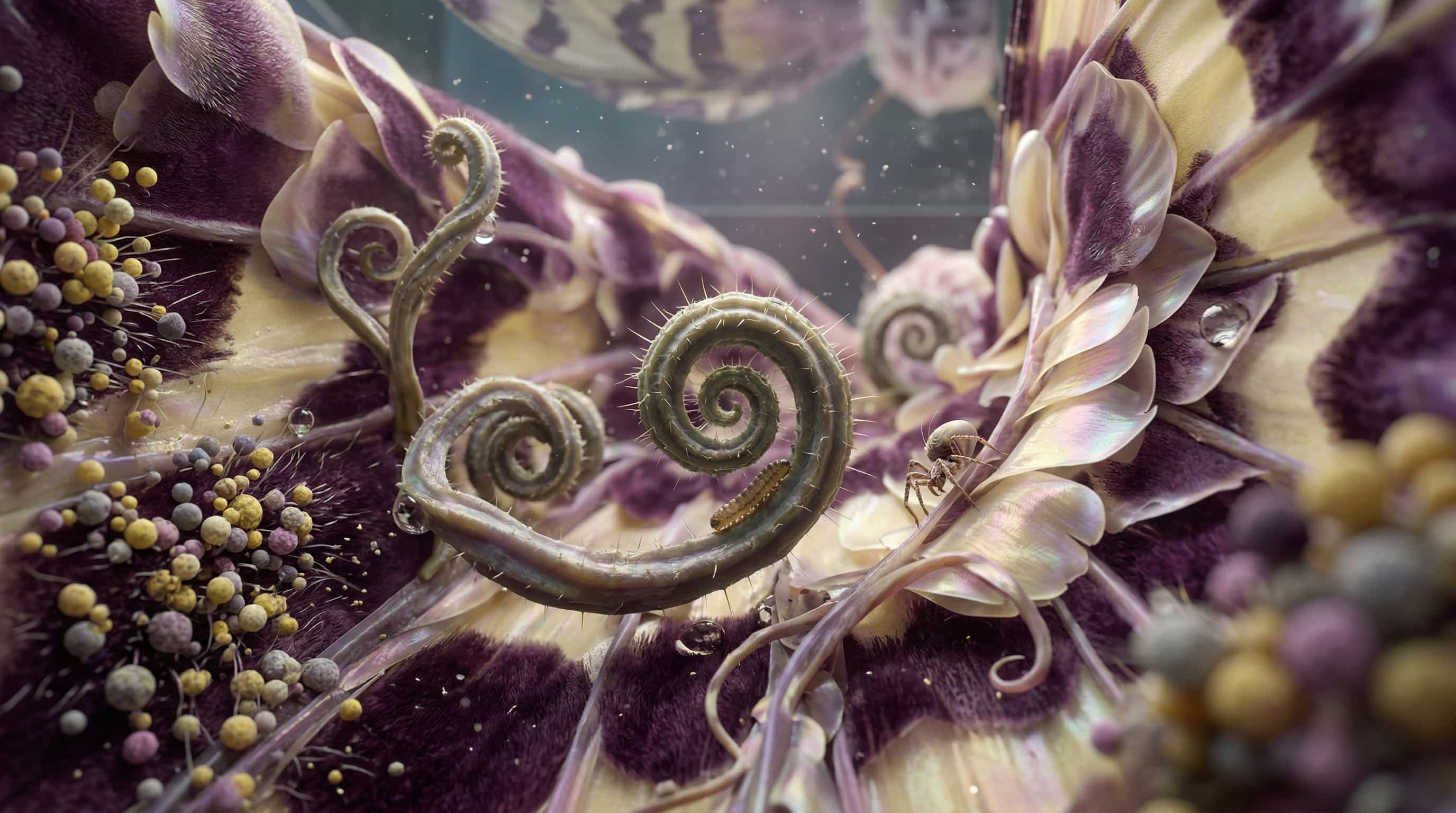
The virtual glass surfaces that enclose your works bear traces of fingerprints and scratches, as if someone had touched them, observed them for a long time, perhaps "tamed" them. Is this a presence you chose to leave visible? Who is this observer, and what does the dimension of care or manipulation mean to you in relation to your ecosystems?
The fingerprints and scratches on the glass introduce a presence. Looking at the work, one has the feeling that someone has already observed closely, touched, tried to approach these organisms.I do not define who this observer is. I am interested in keeping it ambiguous. These traces suggest a relationship, one of care, but also of control. Are we protecting these ecosystems, or are we studying them, manipulating them, perhaps domesticating them? The glass becomes the point where this relationship becomes visible.
The colors of your works, pale pink, peach, ivory, but also purple, deep blues and iridescences evoke a beauty that is almost baroque, yet slightly unsettling. How do you construct your chromatic palettes? Do they follow organic logics, or do they respond to a desire to create a specific emotional atmosphere?
The palette always originates from an emotional intuition. In this case, pale pinks, peaches, and ivories create a highly seductive, almost fragile surface. At the same time there are contrasts, wings with more intense accents, darker tones in the background, iridescences that introduce instability. I am interested in color never being purely decorative. It must attract, but also generate a subtle unease, as if that beauty were somehow unstable.
In Flos Aliena, technology is not used to simulate the real, but to generate new possibilities of relationship with the environment. Do you think artificial intelligence can expand our way of imagining nature, or is it rather forcing us to confront the fact that "nature" itself has always been a cultural construct?
In works like this, AI is not used to simulate nature, but to push it further. It allows me to imagine variations that do not exist, yet maintain an internal coherence. At the same time it makes visible that the idea of nature is already a construction. When we look at these forms, they feel plausible precisely because we recognize underlying structures, even if they are altered. This project is also the evolution of a research I began last year. It has changed together with the machine. As the tools evolved, so did my way of imagining and constructing these forms. In this sense, the creative process itself is continuously transforming.
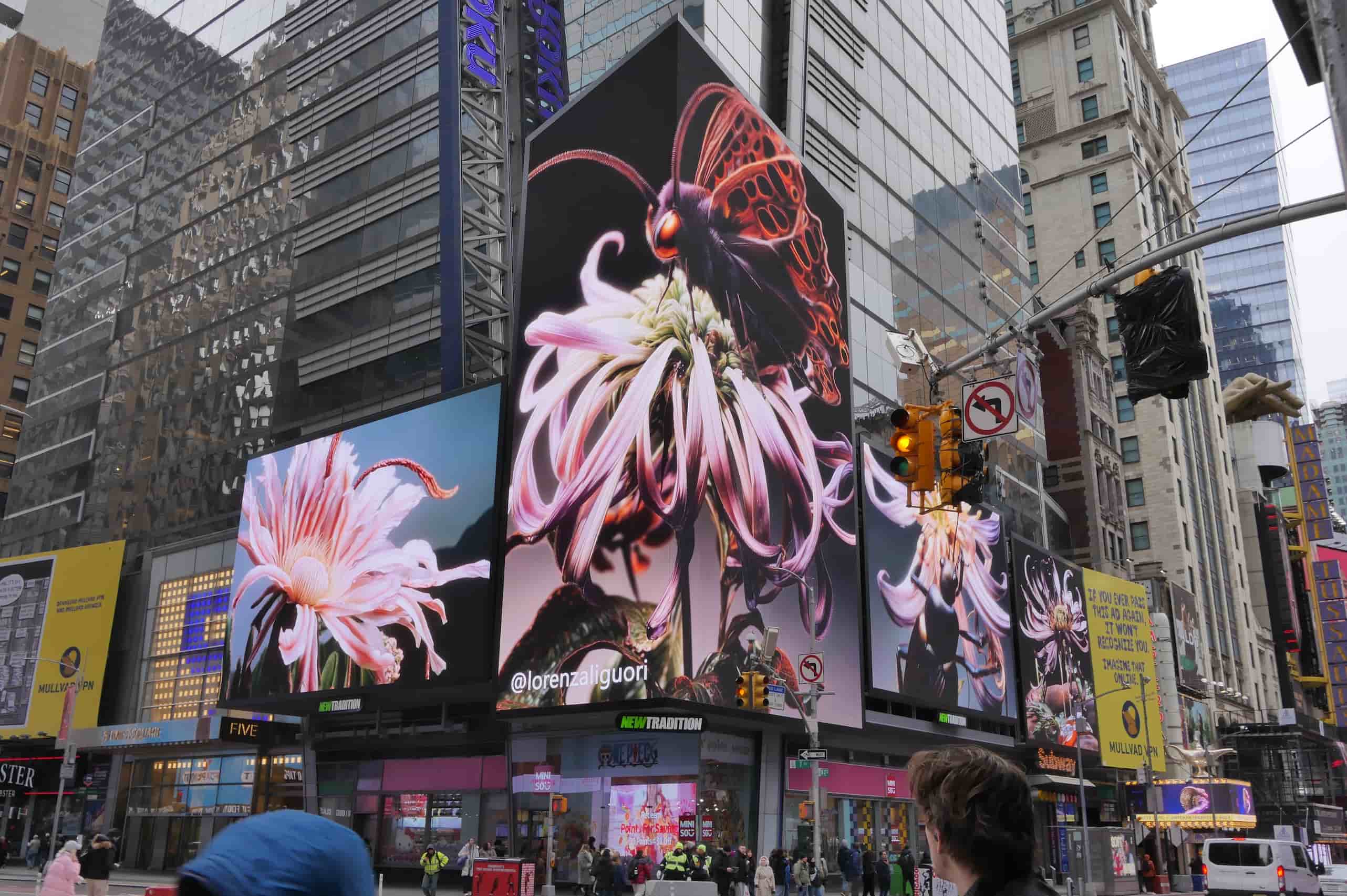
Your works are often described as "sensitive ecosystems." What does it mean for you that a digitally generated form can be "sensitive"? And in what ways do these forms interact with the space that hosts them?
When I speak of sensitive ecosystems, I do not mean biological sensitivity, but perceptual sensitivity. These are forms that seem to react, that suggest an internal life, even though they are digitally generated. Their sensitivity lies in their ability to activate a relationship with space and with the gaze. They are not static images, but presences that modify the perception of the environment in which they are placed. As one approaches, details emerge, textures, transparencies, micro-structures. The work changes depending on how it is observed.
Many of your works play with the idea of metamorphosis: forms that graft onto one another, hybrid creatures, flowers that become insects. Is there in this a reflection on transformation as a natural condition of the living, or are you rather imagining new possible forms of life, perhaps post-human ones?
Metamorphosis is central. There is no stable form here. The flower is already something else, the wings do not belong to a defined body, elements continuously merge into one another. I am interested in this intermediate state. It is not only a reflection on transformation in living systems, but a way of imagining forms that have not yet been codified. There is a dimension that approaches the post-human, but without defining it rigidly. It remains an open possibility.
If you were to imagine the ideal viewer of Flos Aliena within FineSettimana, what would you hope happens in the moment they find themselves in front of your virtual vitrines? Is there a specific emotional or perceptual dimension you hope to activate?
I imagine a viewer who approaches slowly. The vitrine acts as a device that invites close looking, attention to details, to the traces on the glass, to the internal stratifications. I am interested in creating a suspension, something that attracts through its beauty, but at the same time generates a slight disorientation. I hope to activate an almost tactile perception, even though contact is impossible. And I hope that an ambiguous sensation remains: between wonder and unease, between recognition and doubt. Within this process, sound also plays an essential role: it helps construct that suspension and makes the experience more enveloping. The collaboration with sound designer Nicolò Chenet comes precisely from this need, to shape an atmosphere capable of guiding the viewer intothe work and amplifying its emotional and perceptual dimension. If that happens, then the work continues to exist even beyond the act of looking.
Exhibition Info
FineSettimana 2026
Thomas Zangaro Studio
Via Carlo Vittadini 31
20136 Milan, Italy
Dates: 14 April – 19 April 2026
Opening Hours: 11:00 AM – 7:00 PM
Free Entry
More information:
www.thomaszangarostudio.com
Interview by Gloria Maria Cappelletti
Cover image: Flos Aliena – Chrysalis Somnium by Lorenza Liguori
Special thanks to PR & Press Office:
Chiara Rimoldi
Cristina Iannizzotto