- Date
- 13 MARCH 2026
- Author
- JAGRATI
- Image by
- INFINITE MANTRA
- Categories
- Interviews
Infinite Mantra: The Meditative Architecture of Becoming
Some artists construct images. Others construct atmosphere. Lindsay Kokoska belongs to the latter.
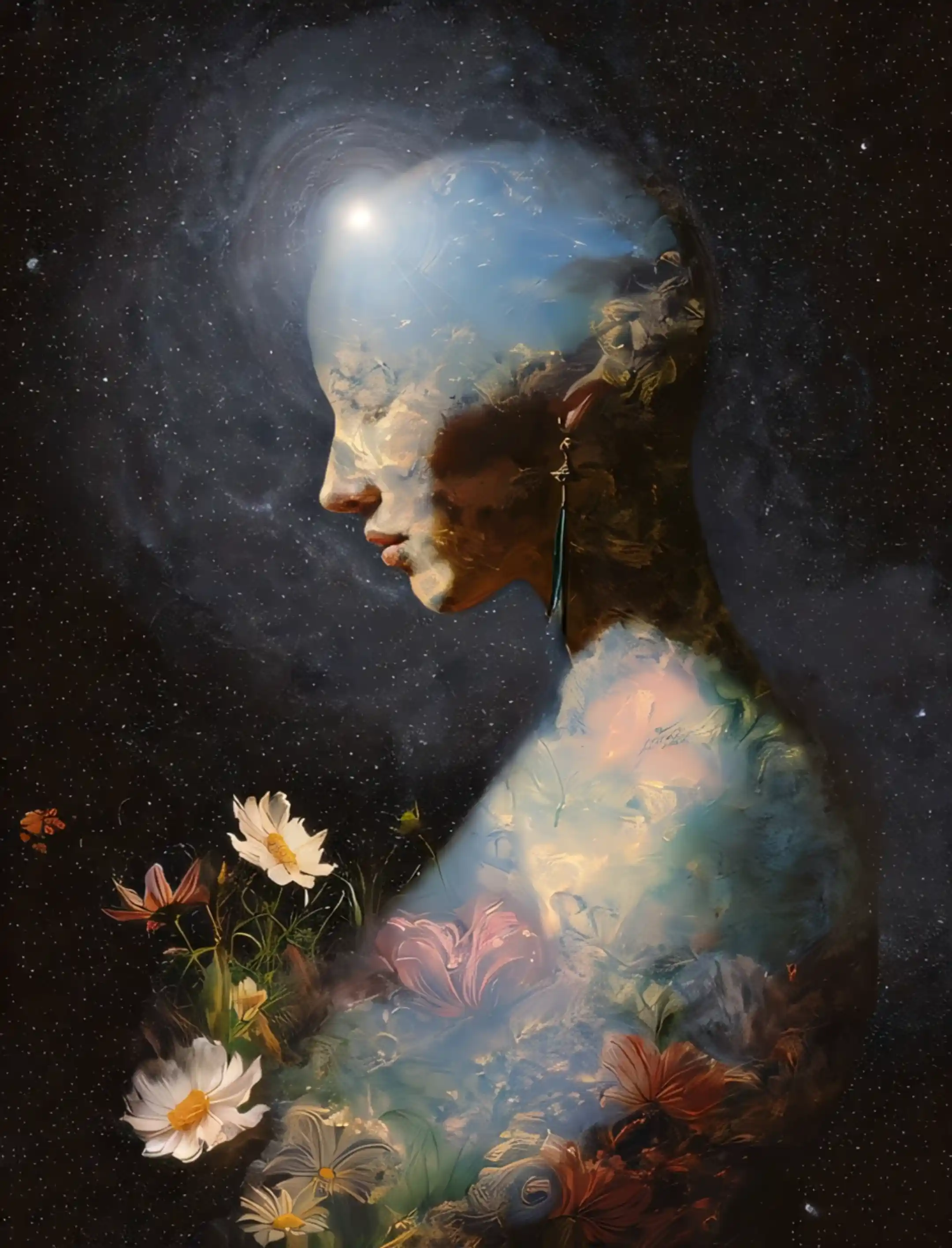
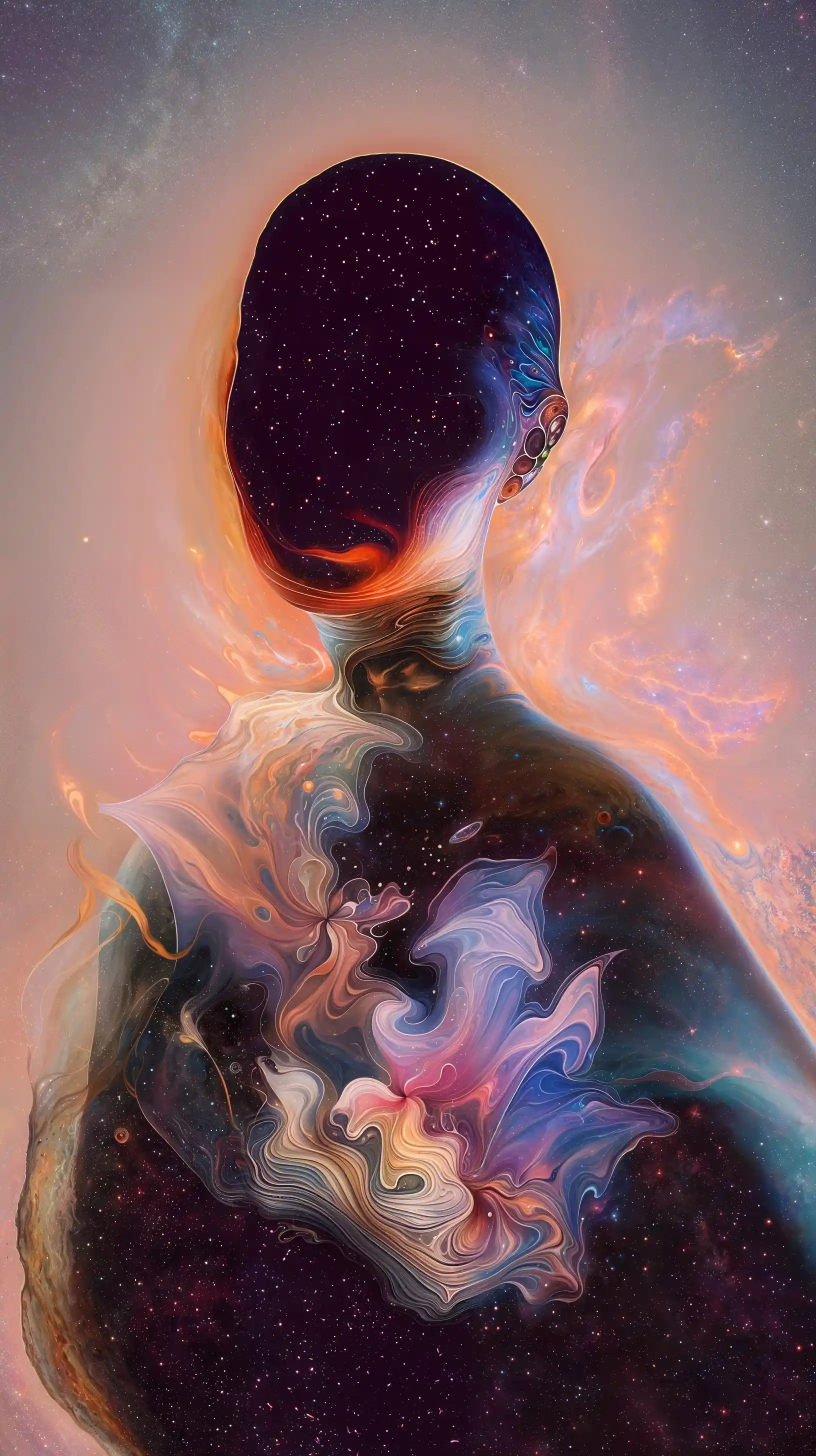
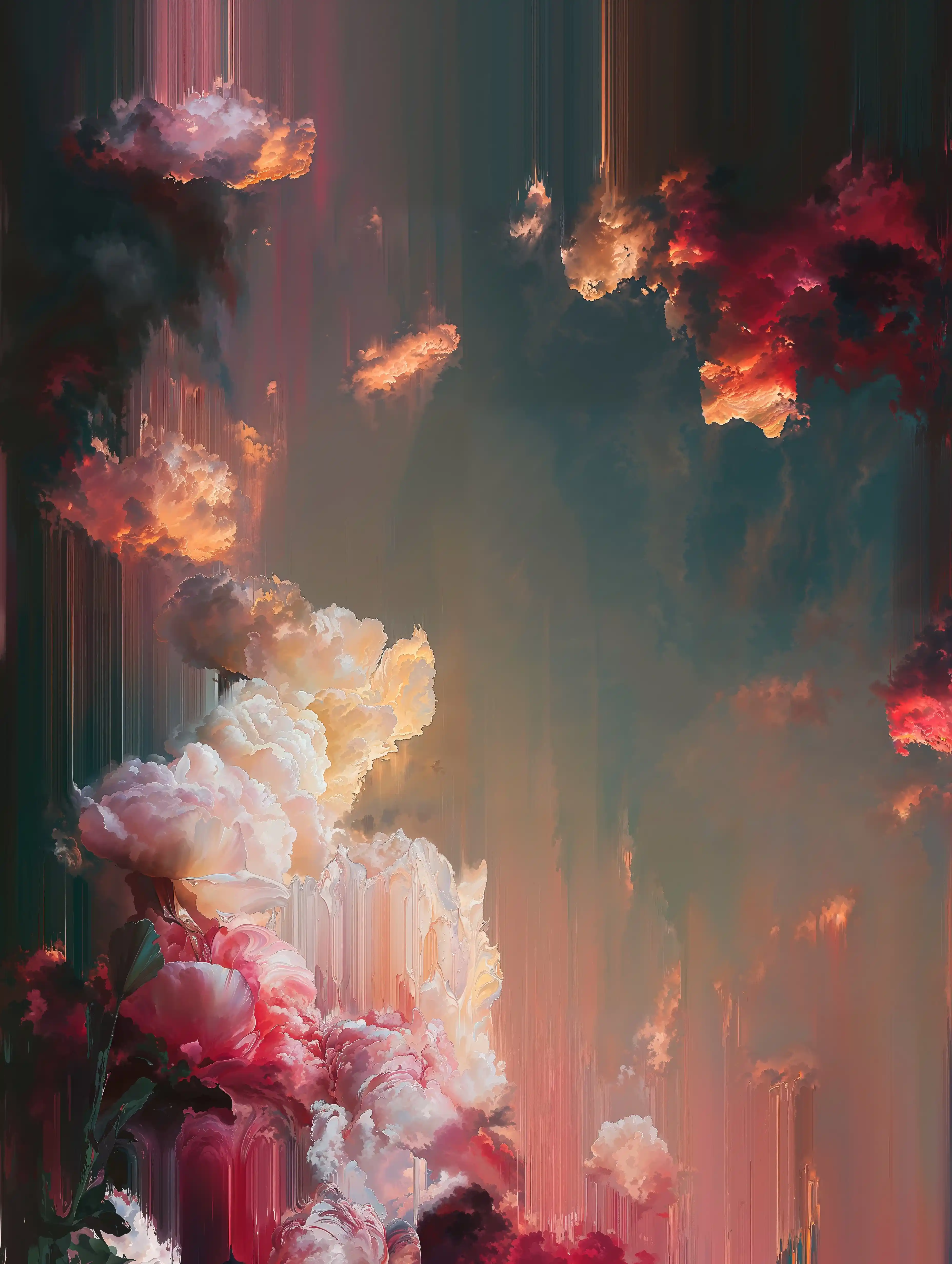
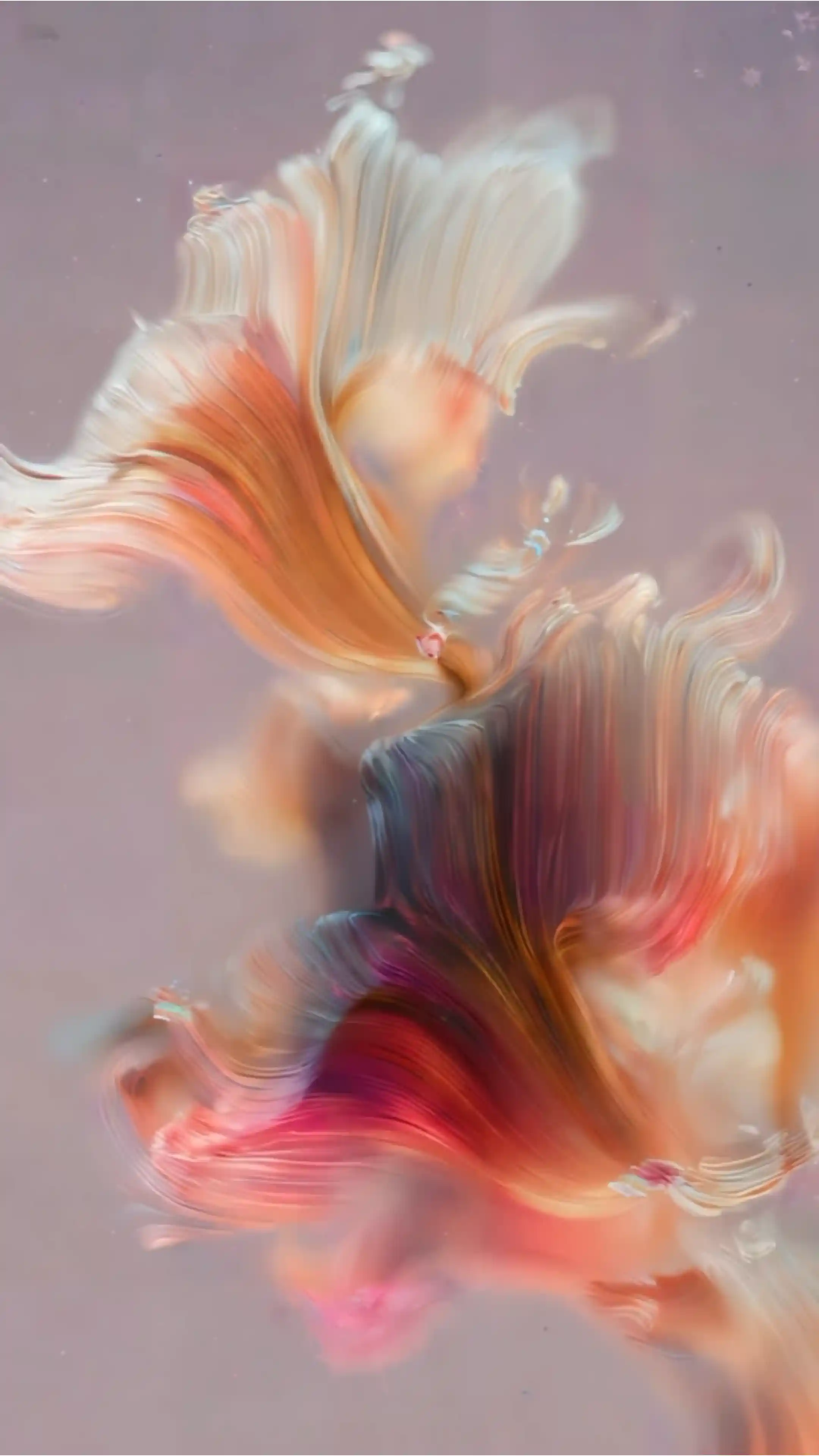
Working under the studio name Infinite Mantra, Lindsay has cultivated a visual language defined by movement, rhythm, and luminous abstraction. Her compositions often feel suspended between the cosmic and the cellular, meditative yet kinetic, expansive yet intimate. They do not insist on interpretation. They ask for presence.
Long before her work began to resonate widely online, her orientation toward the unseen was already taking shape. As a child, she immersed herself in encyclopedias, reading about astronomy, cultures, and spiritual systems beyond her immediate surroundings. She describes herself as more of an observer than a participant, someone who senses atmosphere and questions structure. That early attentiveness would later evolve into a creative practice centred not on representation, but on energy.
Though her foundation lies in traditional painting and illustration, her curiosity led her toward digital tools and eventually generative technologies. Rather than replacing intuition, these systems expanded her ability to iterate, layer, and explore light in elastic ways. Still, she resists singular labels. AI is one instrument among many, not the author, but a feedback loop within a broader ecosystem of making.
Central to her process is discipline: breath, movement, meditation, and long walks. Spirituality, for Lindsay, is not aesthetic. It is functional. It regulates her nervous system and anchors her decisions. If she is not grounded, she cannot create.
In this RED-EYE conversation, she speaks candidly about privacy, organic growth, authorship, algorithmic intuition, and why art remains essential to her coherence. What emerges is not just the portrait of an artist, but of a practice built on alignment and the quiet architecture of becoming.
Every artistic voice has a history behind it. Please share a little about your background and education, and how those early experiences shaped the way you see, think, and create today.
As a child, I was curious in a way that felt almost restless. I spent hours inside encyclopedias reading about astronomy, different cultures, religions, and places I had never seen. I was fascinated by what existed beyond where I was. I wanted to understand how other people lived, what they believed, how they saw the world.
I daydreamed constantly. My imagination felt expansive, almost like a portal. Even before I had language for it, I was drawn to what felt mystical or unseen. I did not think of it as consciousness then, but I was aware of something beneath the surface of things. An atmosphere. An energy.
I was more of an observer than a participant growing up. I watched people closely. I questioned systems. I sensed when something felt narrow or prescribed. Growing up, I often felt out of place in environments that seemed closed or rigid. Travel later became a revelation. Being in different countries allowed me to feel more like myself. Exposure to different perspectives made me feel alive and aligned.
Art was always present, but around eighteen, it became necessary. When I discovered abstraction, I realised art did not have to be about perfection or representation. It could be emotional. It could be intuitive. It could hold ambiguity. That realisation gave me permission to express rather than perform.
Studying education happened almost by chance, but it changed me profoundly. Seeing different educational systems made me more aware of how creativity is either nurtured or suppressed. I saw how rigid structures can push toward perfectionism rather than exploration. That awareness deepened my commitment to art as a space of freedom and inquiry rather than compliance.
Before Infinite Mantra became your chosen name and world, you were painting and illustrating. Take us through the transition and how working in varied mediums affects your expression. How did technological involvement help?
Traditional painting never felt limiting to me. It still does not. In fact, I continue to create traditional work that is deeply personal and not always shared publicly. Painting remains intimate and grounding.
My move into digital art was not a reaction against the canvas. It was curiosity. I have always been fascinated by technology. Even as a child, I would open early drawing programs and experiment for hours. It felt like carrying a sketchbook inside a machine. When computers became a more constant part of daily life, creating digitally felt natural.
Digital tools gave me something different, not better. They allowed iteration. I could layer, undo, reshape, test variations, and manipulate light and texture in ways that are impossible with paint alone. Digital space is elastic. You can build, deconstruct, and rebuild without fear of ruining the surface.
Movement and light were always present in my language, even before I consciously acknowledged it. When I look back, I see that fluidity and contrast have always defined my visual vocabulary. I was never interested in strict realism. I deeply respect artists who pursue precision and detail, but my instinct has always leaned toward atmosphere and motion.
Art, for me, was also an escape from rigidity. Growing up in structured systems, art gave me a space where I did not have to perform or comply. Whether on canvas or screen, the medium becomes a site of freedom.
I do not compare traditional and digital work. They are not in competition. They are different channels for the same impulse to explore, to move, and to remain open.
The name Infinite Mantra feels intentional and poetic. How did it come to you?
When I first began sharing my work publicly, I used my own name. Infinite Mantra emerged later, during a period when I was also teaching yoga and meditation and thinking more intentionally about repetition and inner states.
At the time, I felt drawn to creating a studio identity rather than positioning everything purely under my personal name. There was something freeing about that structure. It allowed the work to stand on its own and gave me space as a private person.
Over time, the meaning clarified. A mantra is something repeated with intention. It is rhythmic. It is grounding. Much of my work loops, flows, and feels continuous, whether in animation or in line work. The idea of infinity reflects that sense of ongoing movement, of something that does not resolve but evolves.
Today, Infinite Mantra functions as my studio, while I remain Lindsay Kokoska, the artist behind it. They are not separate identities. They are different frameworks for the same practice.
The name was not a dramatic reinvention. It was intuitive. It grew into itself, much like the work did.
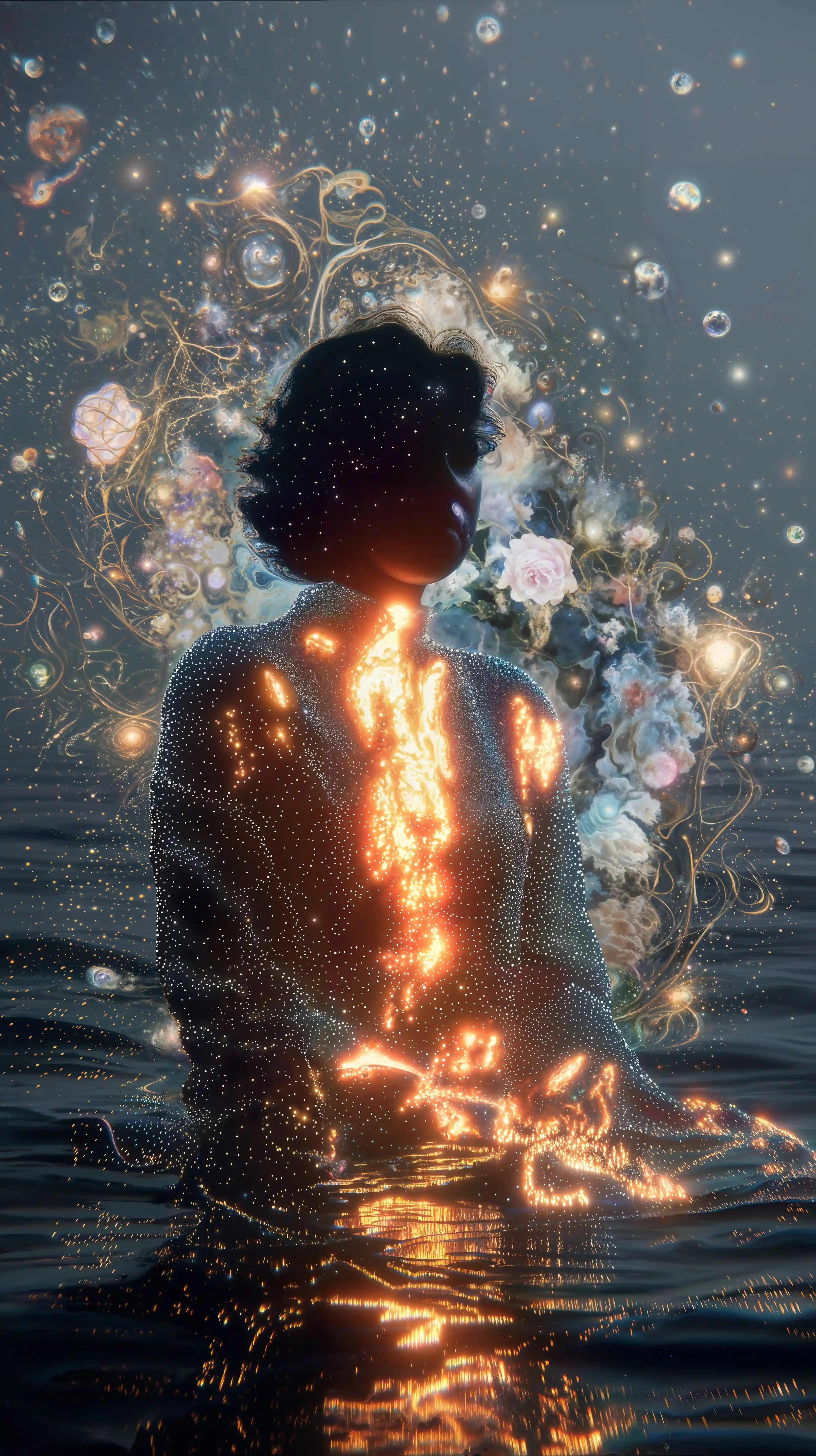
Your online emergence feels organic rather than performative. What does sharing your work publicly mean to you at that moment and now?
When I first started posting my work online, I simply wanted to share. I wanted people to know me through what was happening in my mind rather than through surface-level presentation.
In some ways, it was resistance. I valued creativity and thought more than image. Sharing art felt more honest.
Of course, there were moments when posts resonated widely and moments when they did not. Everyone feels algorithmic pressure at times. But I realised early that if I shaped myself to perform, I would lose the core of why I was creating. So I let that go.
Around 2022, I noticed a real shift. The work began resonating on a larger scale. The growth felt organic rather than engineered, which matters deeply to me.
I maintain strong boundaries. I am a private person. The platform is for the work. My life remains my own. That separation keeps me grounded.
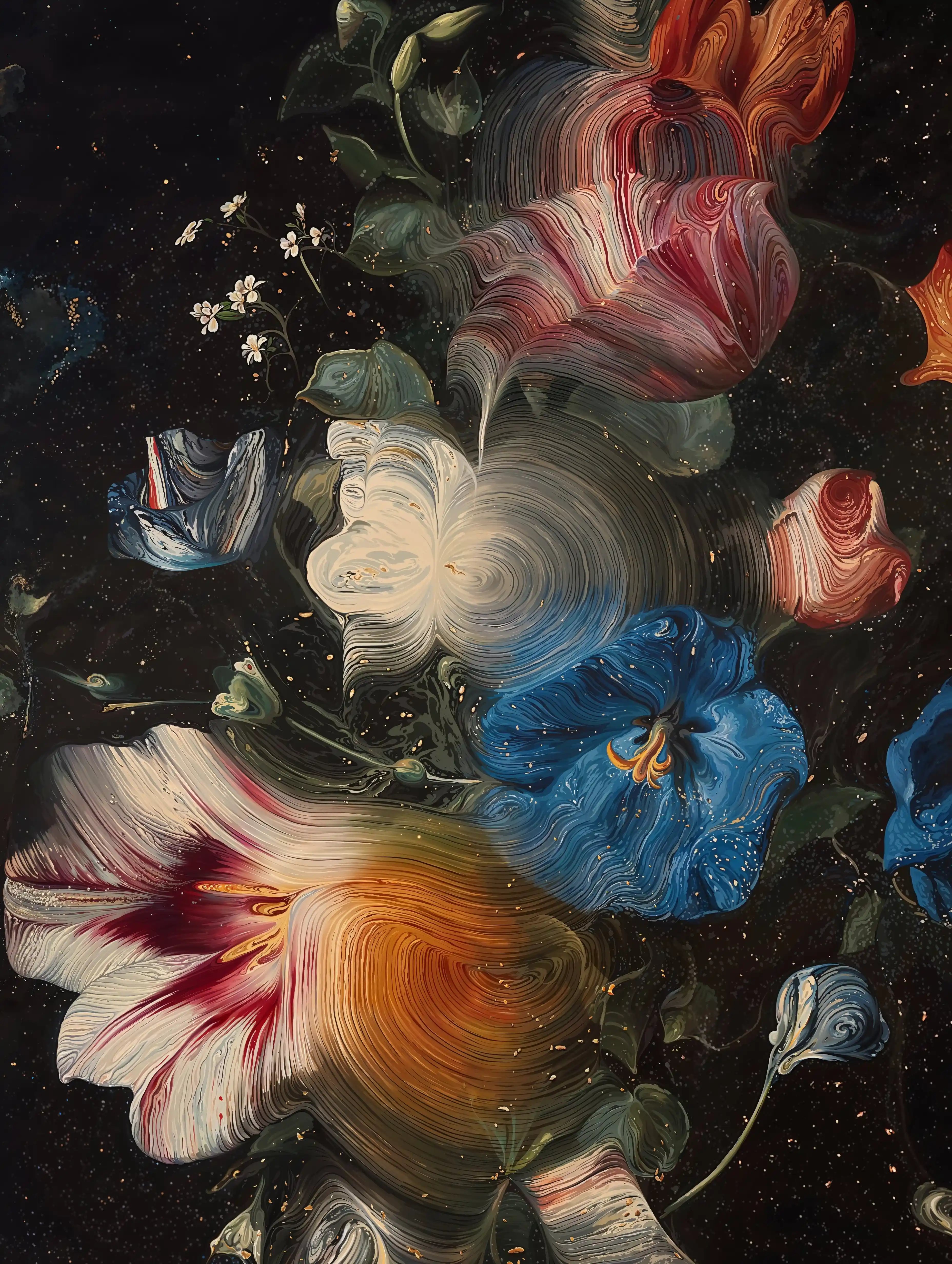
There is a strong spiritual and meditative undercurrent in your work. Why is it important for you personally?
The spiritual and meditative elements in my work are practical. I have a lot of energy, and without grounding practices, that energy becomes scattered.
Movement, breath, and long walks are essential. They help me process emotions, move through grief, and clear mental noise. They help me make clearer decisions. They keep me steady.
I cannot create when I am not grounded. It is not possible. Over time, I have made deliberate choices to protect the clarity. If I am not centred, the work does not come from an honest place.
Spirituality, to me, is awareness and discipline. It is knowing when I am out of alignment and having the tools to return.
These practices are not aesthetic. They are foundational.
Do you experience AI as a tool, a collaborator, or a reflective surface? How does this amplify intuition rather than replace it? How has this relationship reshaped your sense of authorship?
I have always had a strong relationship with technology. From early drawing programs to professional software, I experimented with every digital tool I could access. AI feels like a continuation of that curiosity.
To me, AI is a tool and a feedback loop. It helps translate complex visual ideas that are forming internally. It accelerates experimentation and expands my process.
The voice remains mine. My visual language developed long before generative systems. AI does not replace intuition. It extends it.
I do sometimes feel misunderstood when labelled solely as an AI artist. I respect those who identify that way, but for m,e it would be incomplete. My practice spans painting, collage, compositing, and generative work. AI is one instrument within a larger ecosystem.
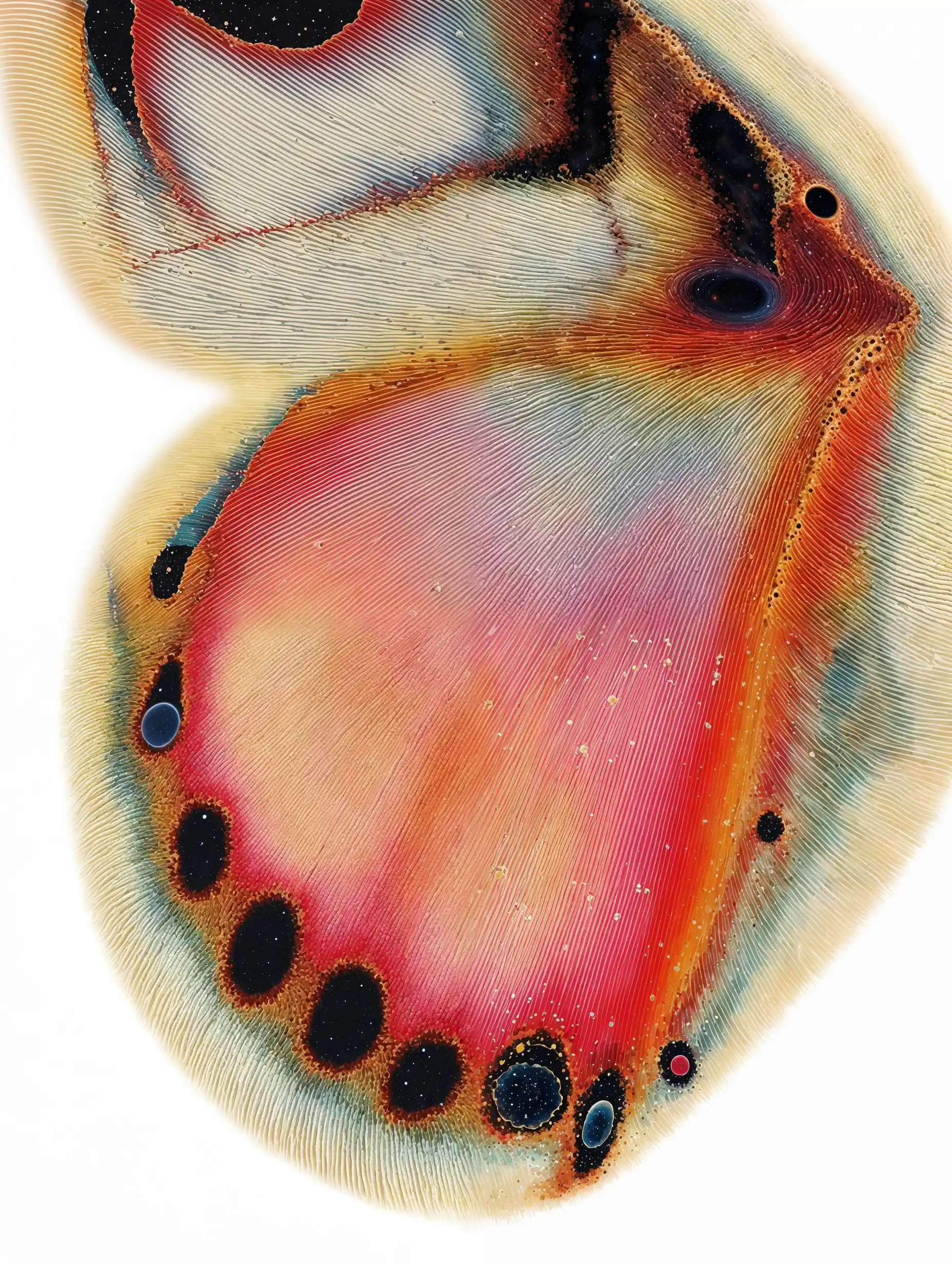
Your work seems to ask the viewer to slow down and feel rather than decode. What do you hope people encounter within themselves when they spend time with your art?
I want people to feel.Ideally, their nervous system slows. Their breath deepens. Something softens.
Many people have written to me during periods of grief, anxiety, or emotional intensity, sharing that certain pieces helped them find centre. That matters deeply to me.
We live in overstimulated environments. My work offers a counter space. A place of regulation and calm.
If someone spends even sixty seconds with a piece, I hope something shifts internally. Even a brief moment of quiet can be powerful.
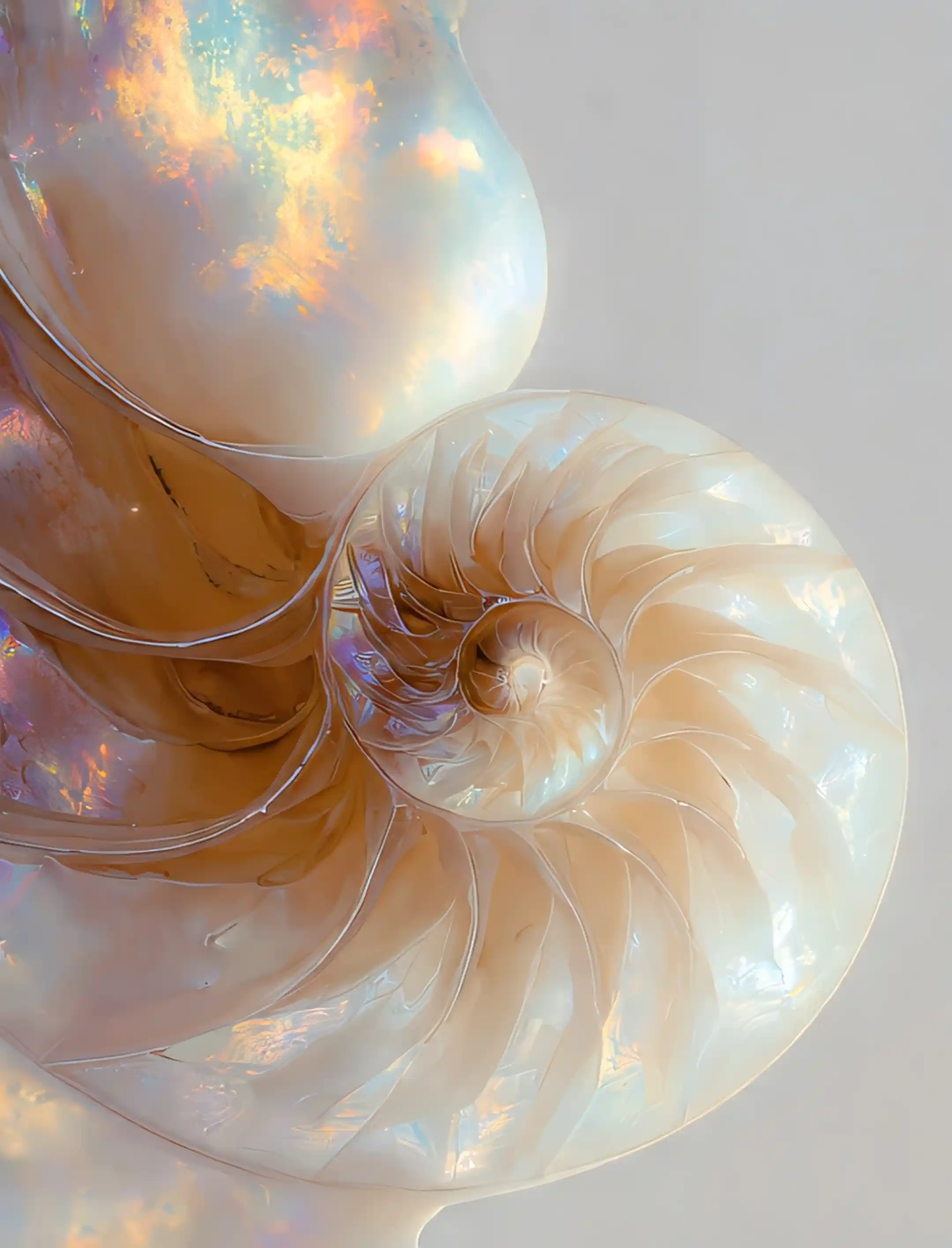
What does this work give back to you personally? In moments of doubt or intensity, why does this practice remain necessary for your own becoming?
When I sit down to create, I am regulating myself. It is very similar to what I hope viewers experience. The act of creating becomes a quiet place. It is somewhere I can go to build calm, to build something beautiful and intentional instead of absorbing pressure from the outside world.
There may be an element of escape in that, but I do not see it as avoidance. I see it as a necessary recalibration. We are constantly absorbing noise, expectation, information, and tension. Art allows me to reorganise that internally.
It has always been there for me. It has been a steady companion. It helps me process what I feel. It gives shape to things that otherwise remain abstract inside the body.
If I stopped creating, something essential would feel misaligned. I am always making something. Creation and movement feel deeply connected for me. They are both forms of flow.
As I evolve, the work evolves. I move between abstraction, collage, and figurative elements. What deepens over time is not just the style, but the reflection behind it.
Creating is not optional. It is how I stay coherent.
Many of your pieces evoke cosmic energy and inner transformation. Can you describe how your meditative practices influence the algorithmic choices you make in your digital compositions?
Art is always meditative for me. It is contemplative. I do not separate spiritual practice from making. When I begin working, I am already in a focused state.
My algorithmic decisions are intuitive and embodied. Pacing, density, rhythm, layering, and light respond to how something feels in the body rather than to formula.
There are many times when I start something and stop midway because it does not feel aligned. I experiment constantly. A significant amount of work remains unseen. Iteration is essential.
When something clicks, my body knows. There is a sense of settling. The movement feels natural. The rhythm feels balanced. The composition holds itself.
Even in digital space, the decisions are embodied.
In a world accelerating toward constant visibility and noise, Lindsay Kokoska chooses rhythm over reaction, alignment over performance. Through Infinite Mantra, she reminds us that technology can be contemplative, abstraction can be grounding, and creation can be a form of self-regulation rather than spectacle.
Her work does not shout for attention; it breathes. And in that breath, it offers something rare: a quiet space to return to ourselves.