- Date
- 02 OCTOBER 2026
- Author
- JAGRATI
- Image by
- COURTESY OF ARTISTS
- Categories
- Aesthetics
Rituals of Time: Nine African Artists Unmake the Western Clock at Load Gallery, Barcelona
There is a quiet violence in the way the West has taught itself to think about time: as a line, a ledger, an arrow fired once and never recalled. Rituals of Time, the group exhibition opening this week at Load Gallery in Barcelona, dismantles that ledger with something closer to reverence than argument. Bringing together nine artists of African origin and diaspora moving across photography, video, digital collage, artificial intelligence and textile sculpture, the show insists that time is not an arrow but a spiral: a rhythm of birth, death and renewal that reverberates through bodies and spirits long after the West has declared it spent.
The exhibition draws its conceptual marrow from the Mbari tradition of the Owerri-Igbo communities of southeastern Nigeria, a communal, ritual practice of building toward decay, in which the artwork is never a terminus but a threshold. Chinua Achebe once observed that the House of Mbari embodies "an aesthetic of process rather than result," each generation inheriting not a finished form but an impulse toward creation. At Load, that impulse is made architectural: the gallery's LED surfaces and spatial sound system convert screens from passive display into thresholds — proper sites where what has been, what persists, and what has yet to arrive are permitted to coexist, unresolved and unhurried.
It is an audacious curatorial wager for a gallery built, quite literally, of light. Across the nine practices gathered here, the wager is honoured.
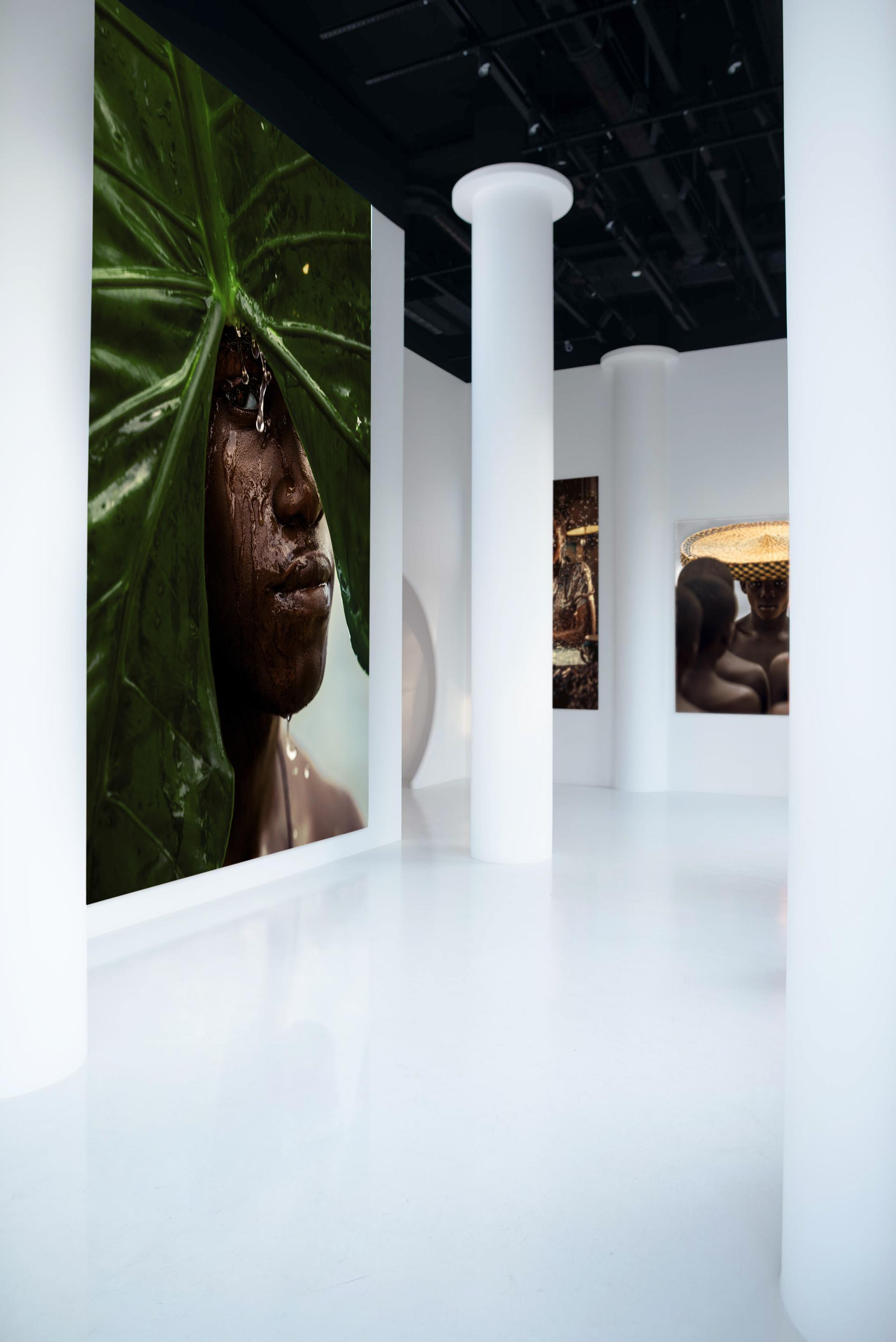
Ghana-based Nigerian photographer Michael Aboya opens the exhibition's meditation on cyclical time with Echoes of Time, digital works that transmute earth, air, fire and water into states of being rather than coordinates on a map. Each image renders a distinct "time-body": birth, growth, love, silence, renewal — through a vocabulary of light, gesture and texture, until stillness itself begins to gather duration, the way sediment gathers a riverbed. It is a continuation of the emotional cosmology Aboya first charted in his 2024 debut monograph, Journey to the Eight, and it announces early the exhibition's founding conviction: that a photograph can hold time the way a body holds memory, imperfectly and without ever fully releasing it.
That conviction deepens into a method in Alexis Chivir-ter Tsegba's At the Seams, Spilling. Tsegba, who moves between Nigeria and Canada, calls her working principle a "collage brain," a cross-temporal mode of thought built on assembling, disassembling, returning, recomposing, a rhythm she likens to the recursive, undulating logic of memory itself. Across works made between 2021 and 2025, past, present and speculative future are allowed to trespass on one another: bodies become porous thresholds, love becomes a unit of timekeeping, and ancestral knowledge behaves not as inheritance settled once and for all, but as a living current still shaping what comes next.
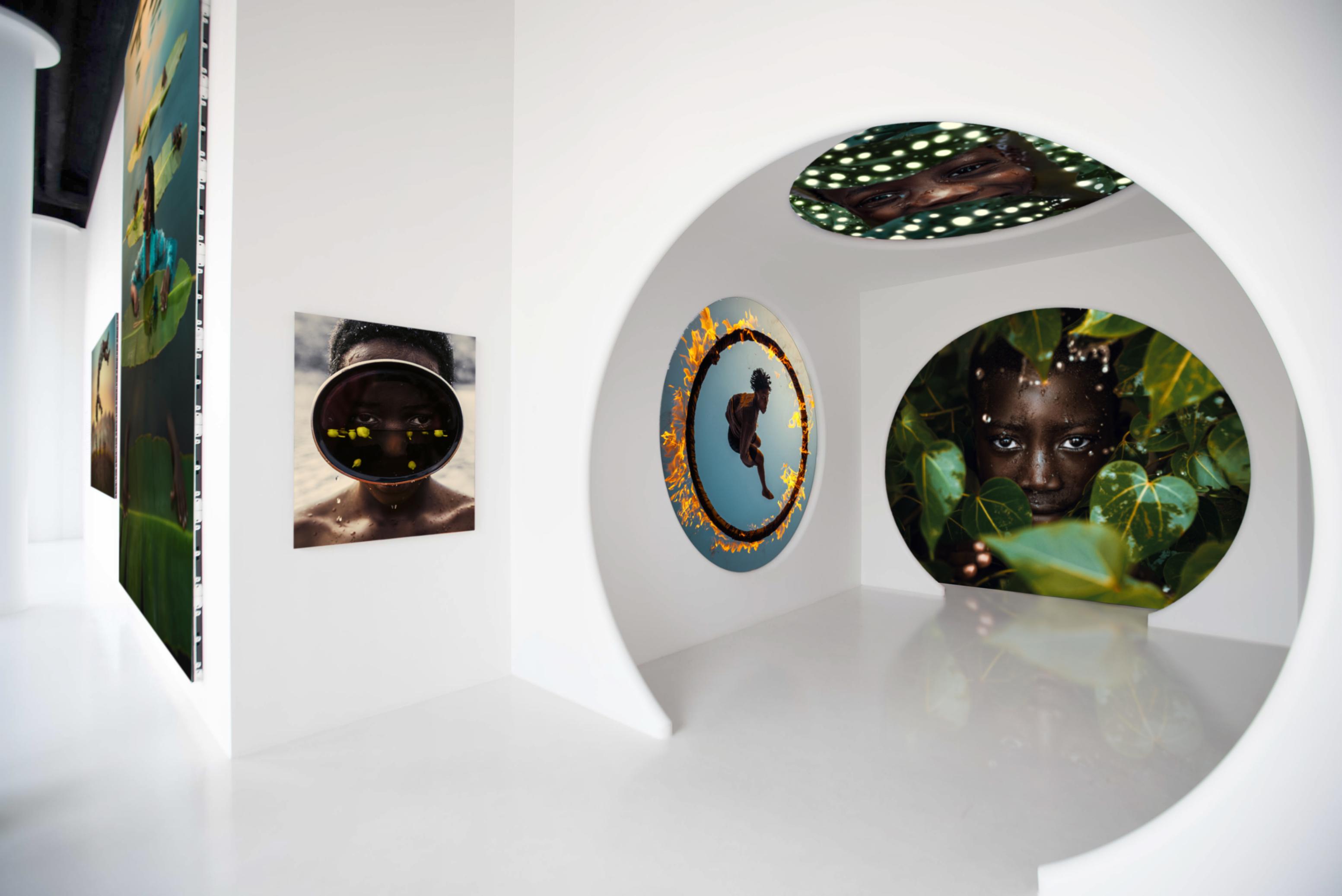
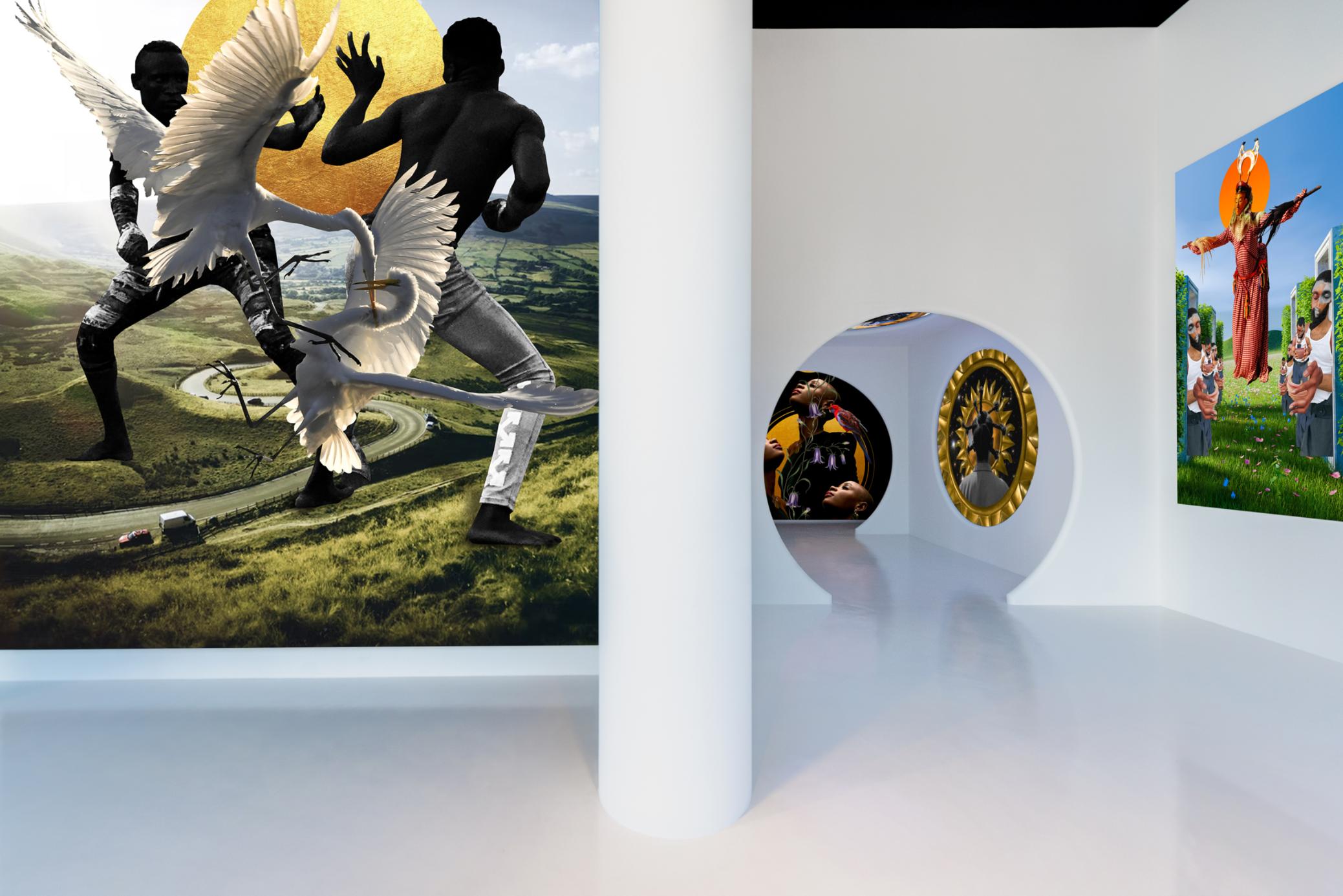
The exhibition's most quietly devastating gesture belongs to Àsìkò, whose What Was Lost Between Worlds stages the slow undoing of the Egúngún the Yoruba masquerade tradition that carries ancestral breath through cloth, gesture and rhythm, an encoded knowledge system as much as a costume. In a dawn-lit sacred grove, the embodied figure of the Egúngún begins to fray, giving way to a spectral trace of colonial architecture as its knowledge scatters into Adire patterns, Ifá binary marks and abstract data points suspended, unresolved, between disappearance and persistence. Àsìkò, born in the United Kingdom and raised in Nigeria, has long worked the fault line between those two inheritances; here he poses the question underwriting the entire exhibition in its starkest register when embodied knowledge is severed from its land, does it vanish outright, or does it merely mutate into another mode of being?
An answer, of sorts, arrives through Melissa Simon-Hartman's Ancestral Frequency, a wearable sculpture conceived in direct creative dialogue with Àsìkò's piece. Woven from reclaimed textiles, shells, and beads, the work by an artist of Trinidadian and Ghanaian heritage draws on the visual grammar of Egúngún without attempting its reproduction, rearticulating instead through contemporary craft. Where Àsìkò renders the dissolution of a living archive into particulate light, Simon-Hartman restores that same archive to weight, contour, and physical presence. The two works do not illustrate one another so much as offer twin, irreconcilable answers to a single question of transmission proof that in this exhibition, meaning accrues as much in the space between works as within any one of them.
Oceans, Interiors, Software
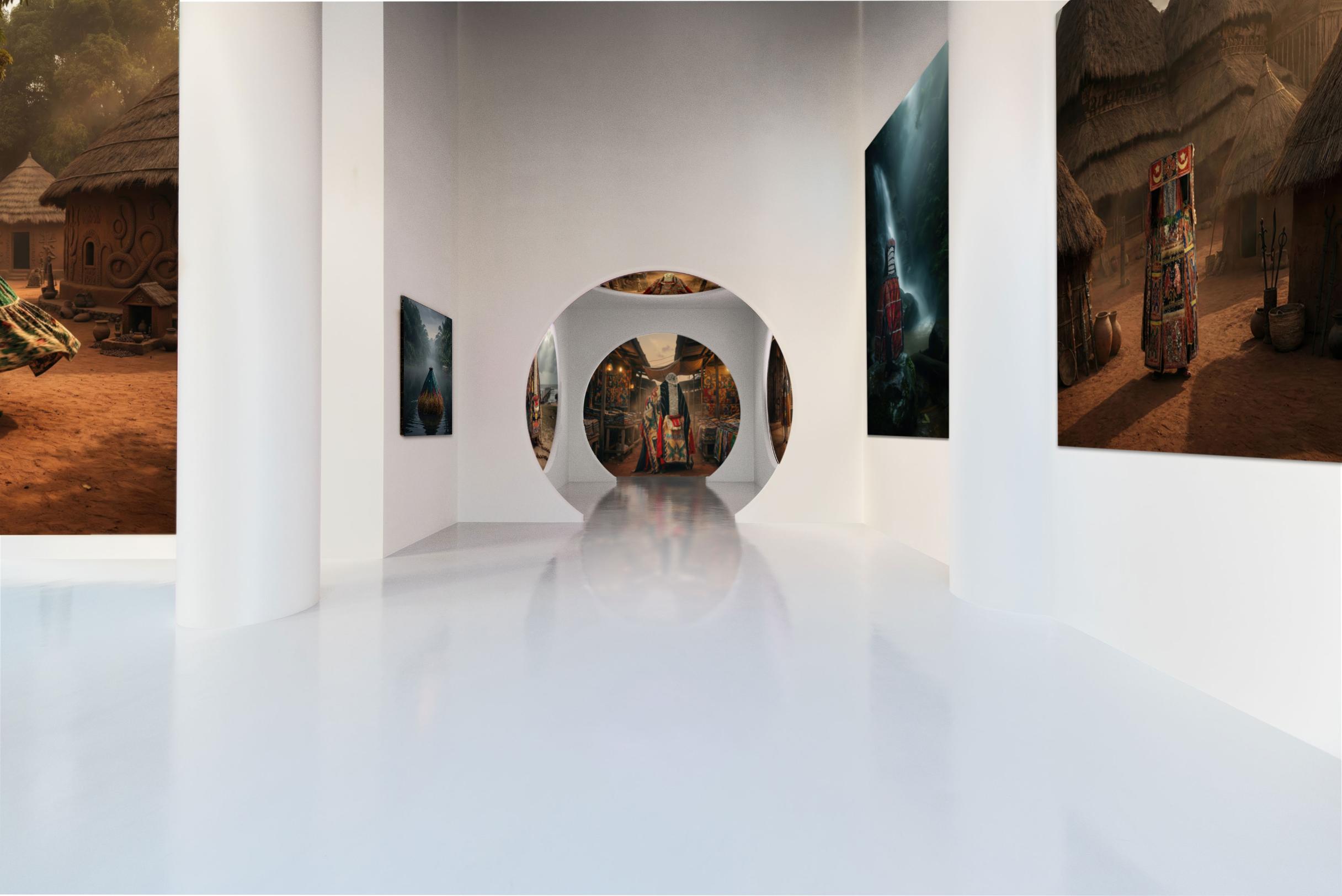
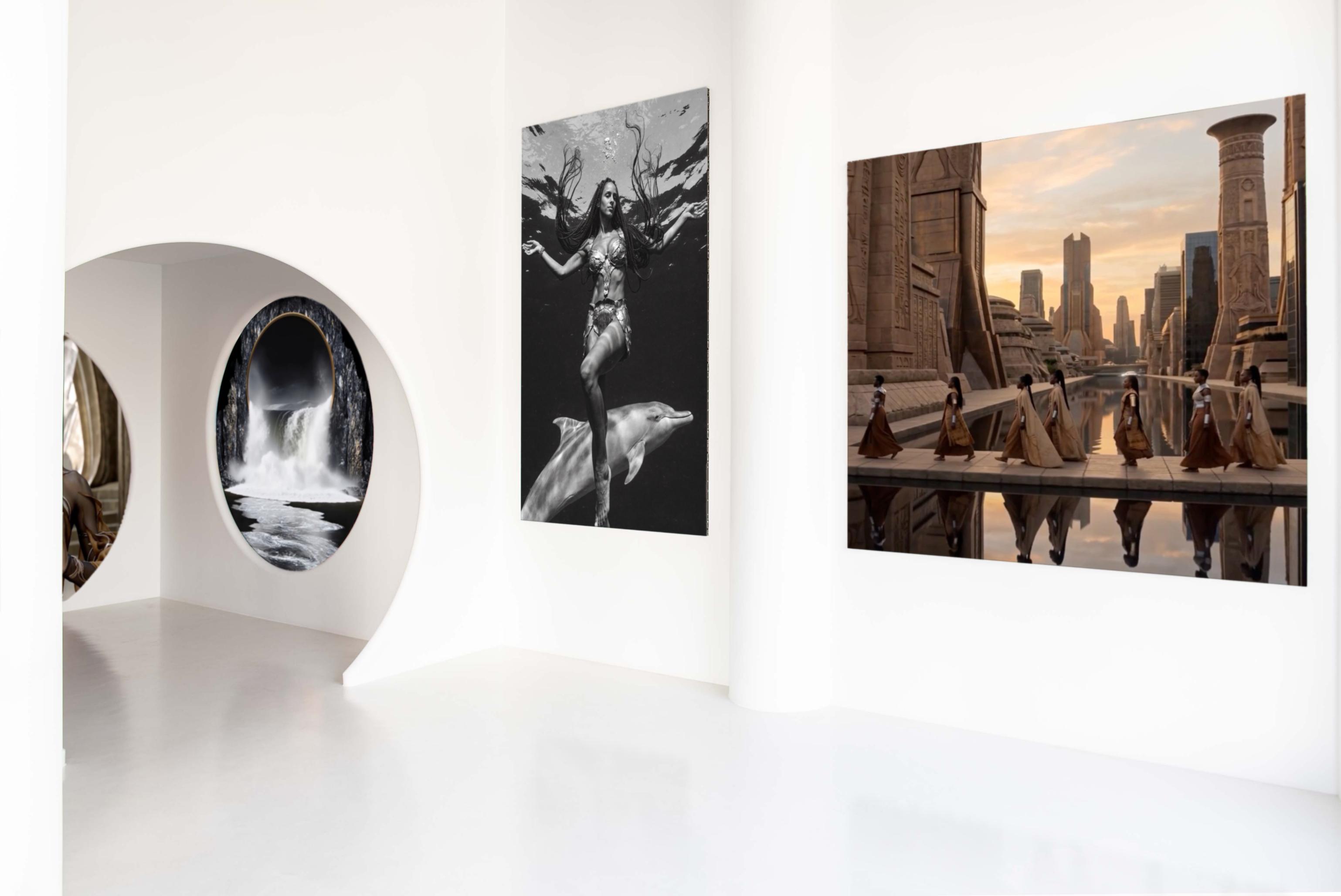
Delphine Diallo's TA-NETER: The Atlantic Kingdom an extension of her ongoing Motherverse cosmology takes the exhibition's most audacious imaginative leap, recasting Atlantis not as Western myth but as a misnomer for something far older: a submerged ancestral civilisation, Ta-Neter, guarded by water, breath, sound and gold, where Oracles and marine intelligences have waited beneath the ocean for humanity to remember them. The Franco-Senegalese artist, working across photography, collage and artificial intelligence, treats the image less as illustration than as instrument, a tool of inquiry, transformation and remembrance proposing, with genuine conviction, that water might hold memory the way gold holds frequency, and breath might function as command.
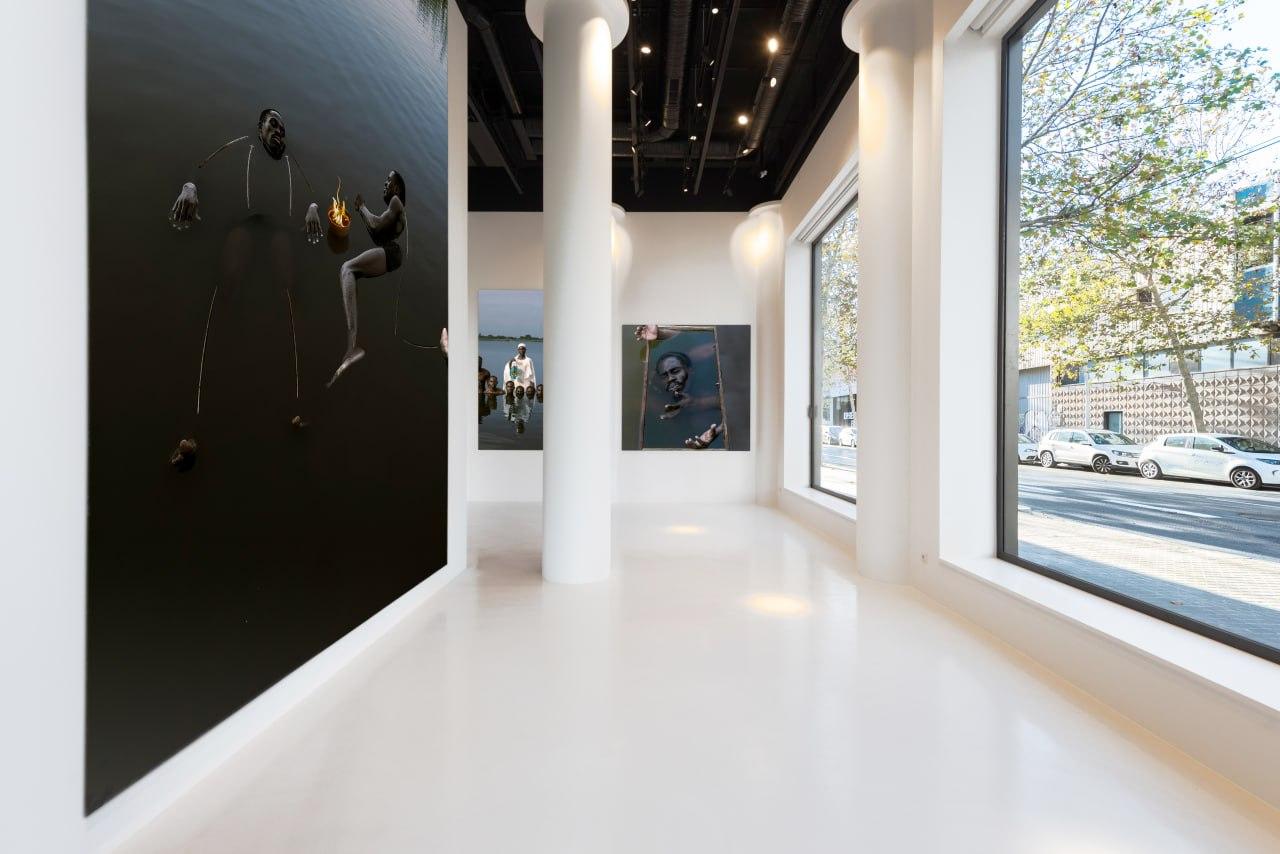
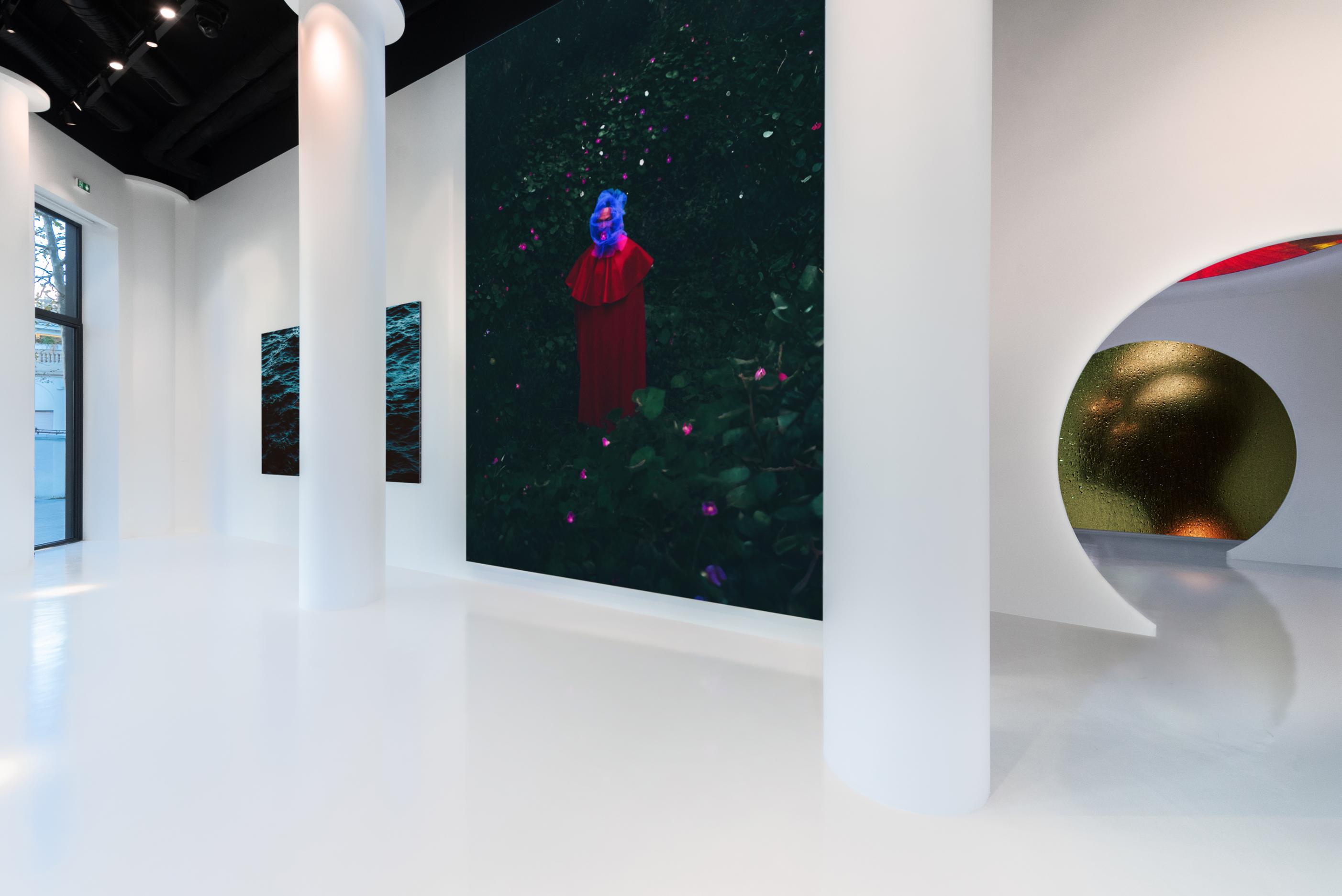
Closer to the register of stillness, Nana Frimpong Oduro's Messages from the Threshold wields light as both material and metaphor, building an emotional cadence the Accra-based artist wants felt the way music is felt a slow, deliberate unbraiding of nostalgia, longing, and the four elemental forces, until the boundary between spirit and matter begins, almost imperceptibly, to give way. John Baloy's Feel the Sincerity of the Intention to Evoke Emotion turns instead toward the body as reliquary: figures wrapped in red, held in postures of protected vulnerability, insisting that identity be lived rather than exhibited. The Johannesburg-based artist, a former automotive electrician who discovered photography through Instagram in 2013 has built an entire practice around rendering Black subjects, in his own words, as "living works of art."
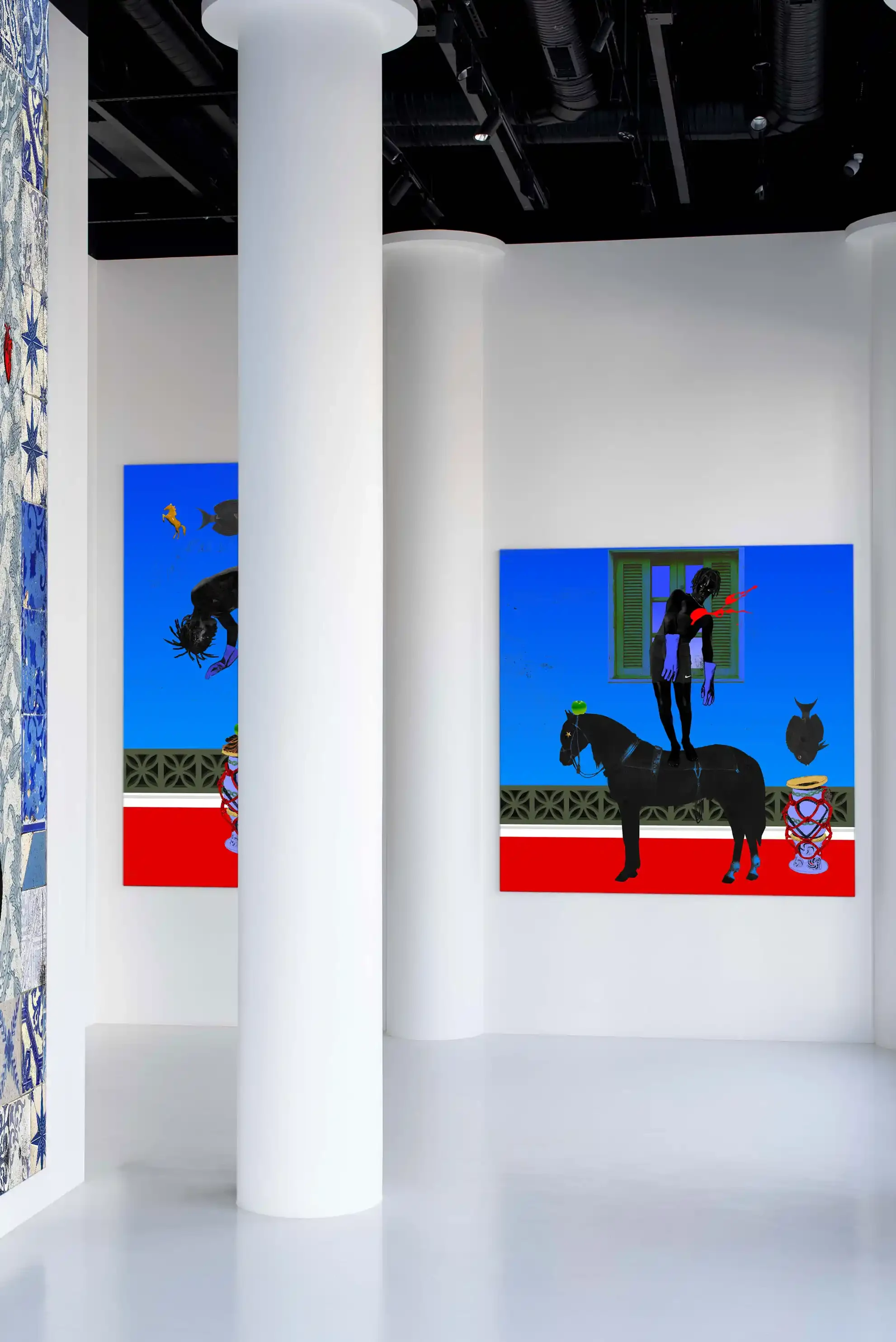
Perhaps the exhibition's sharpest formal provocation belongs to Osinachi, the Lagos-based artist who has spent nearly two decades coaxing a figurative visual language from the unlikeliest of canvases: Microsoft Word's vector tools. NKECHI gathers work made between 2019 and 2025 domestic interiors, Afrofuturist visions, scenes of Nigerian popular culture and takes its title from a 2025 portrait, loosely descended from the Mona Lisa, of a robot who has ceased to be tool or servant and become an irreplaceable member of a family, its memory deemed worthy of the same reverence owed an ancestor. It is a deft, faintly vertiginous closing note on the shape inheritance takes when even the instrument of its making is borrowed.
The exhibition closes its circle with Abdulrahman Adesola Yusuf's Relax, Yesterday Is Gone, in which imagery scavenged from the public domain is redrawn, fractured and reassembled the artist likens the process to a long game of Tetris — into allegorical collages that trace how economic and political pressure settles, almost without one noticing, into the architecture of private memory.
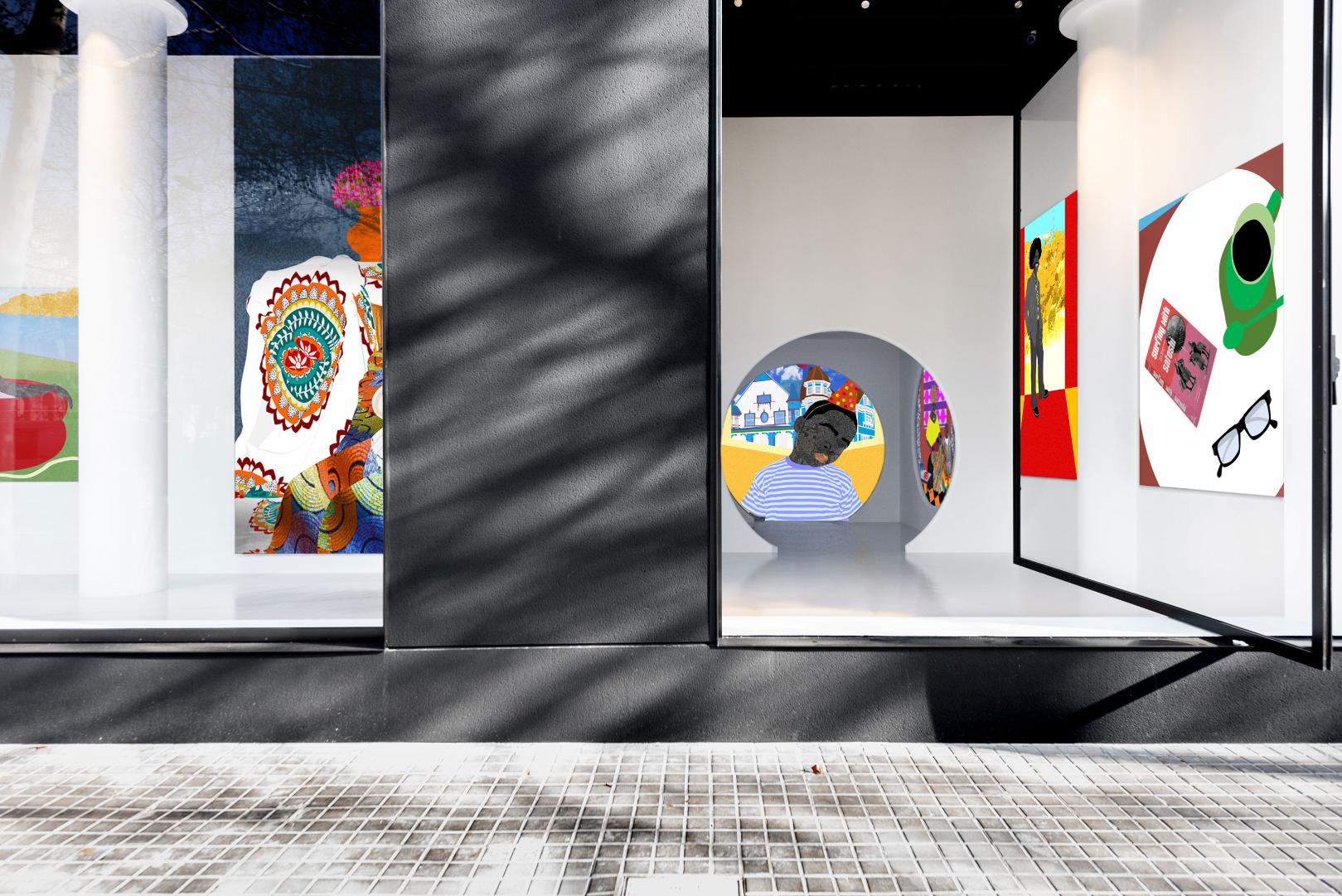
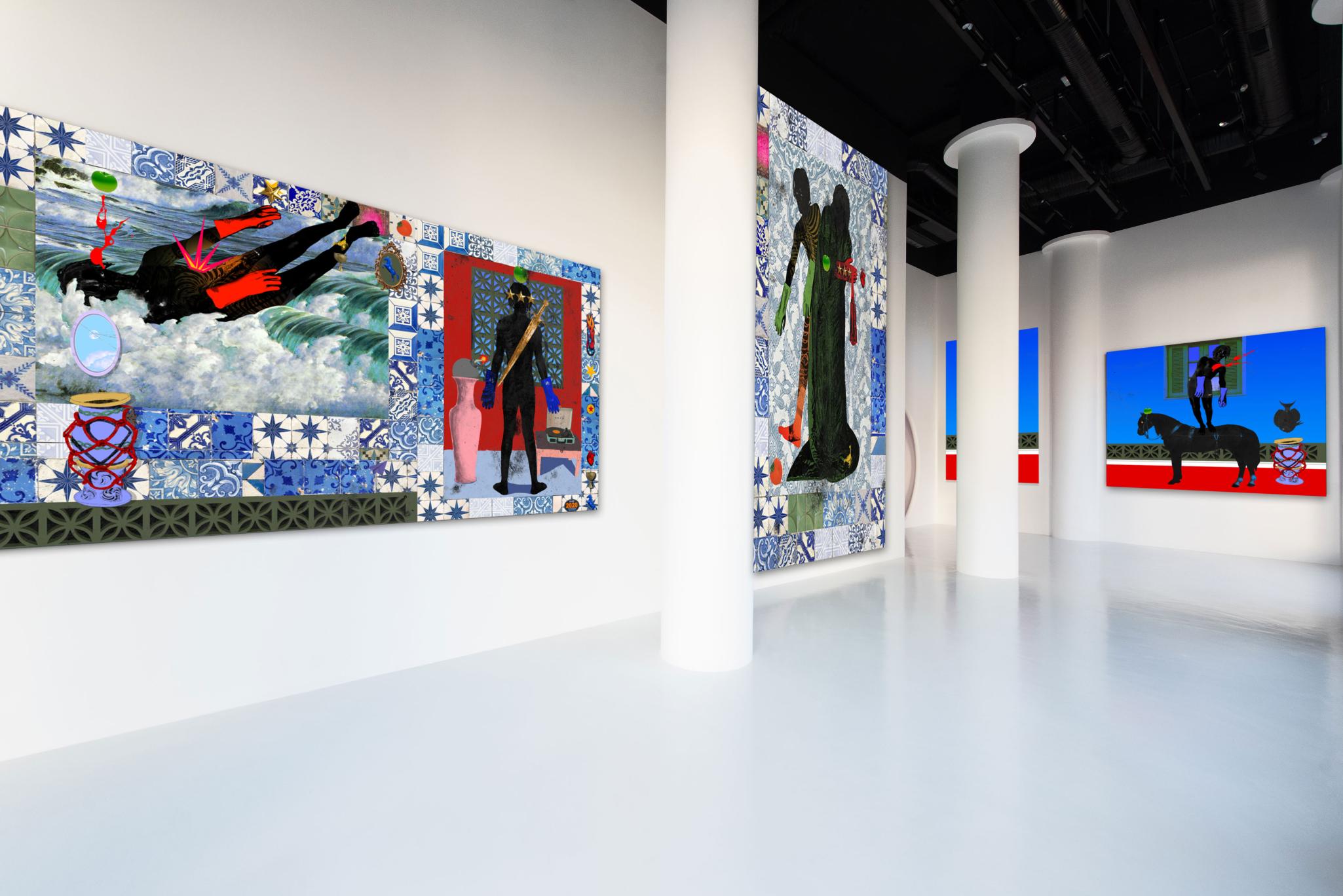
What Rituals of Time ultimately proposes across nine wildly divergent practices, bound by a shared refusal of linear time is that the future is itself a species of memory not yet arrived, and that nostalgia, properly understood, is less a retreat into the past than a method of reaching forward into what may yet be born. It is an ambitious claim for a gallery still young in its remit, and Load largely earns it: this is an exhibition that trusts its audience to dwell inside contradiction, to let a single image be memory and prophecy in the same breath.
Rituals of Time opens 16 September 2026 at 19:00 and remains on view through 16 January 2027 at Load Gallery, Carrer de Llull 134, Poblenou, Barcelona.