- Date
- 09 NOVEMBER 2026
- Author
- MIRA WANDERLUST
- Image by
- SHELL ORACLE
- Categories
- Interviews
Shell Oracle and the Uncanny Beauty of Wearable Art
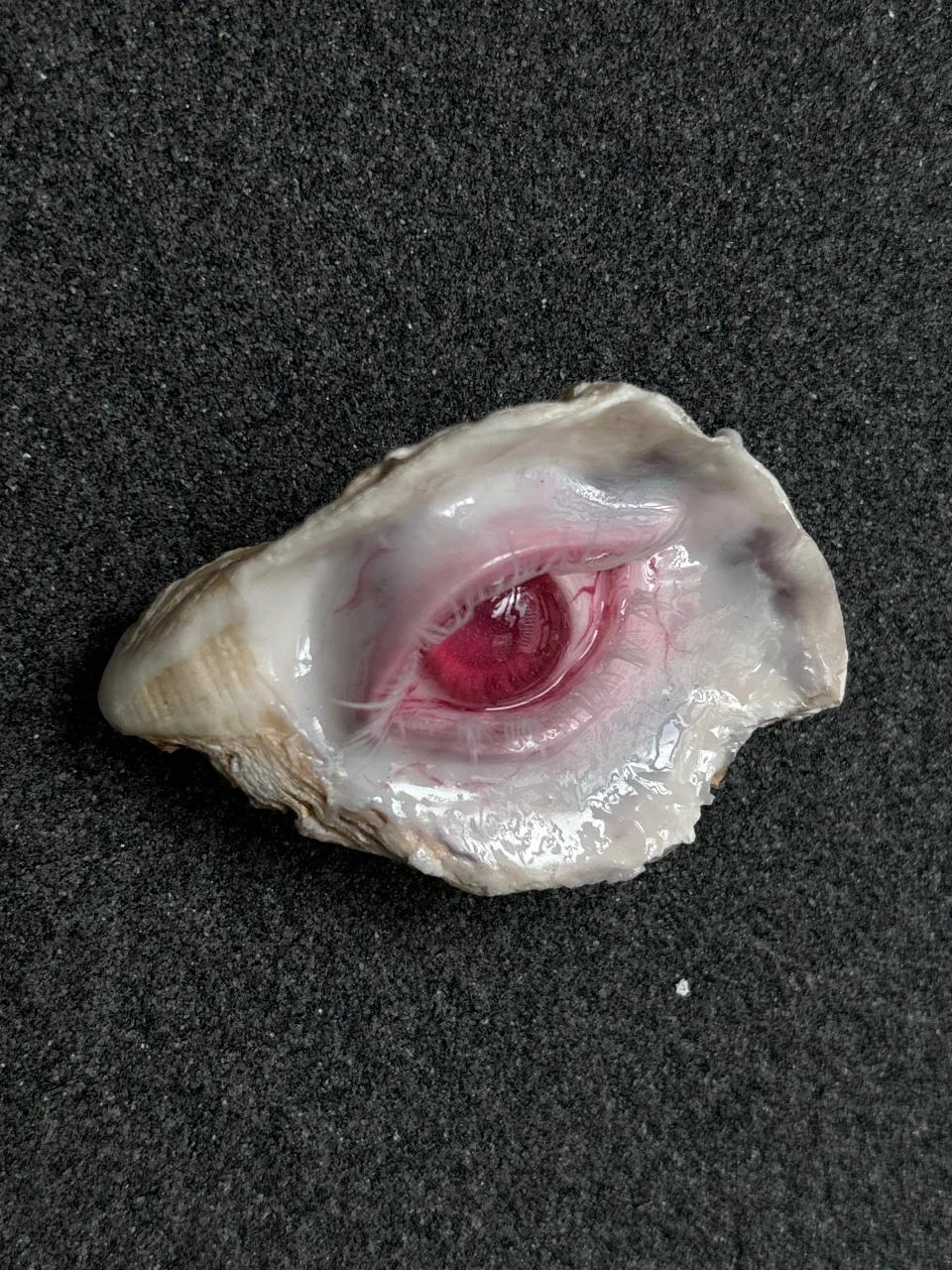
A shell with an eye is an object that immediately unsettles its own purpose. Once associated with protection, the shell becomes something watchful, while the eye introduces an unexpected sense of intimacy, curiosity and unease. This is the starting point of Shell Oracle, a creative studio bringing together handmade objects, wearable jewellery and sculptural forms that exist somewhere between the natural and the uncanny.
Founded by Angie and Yoori, Shell Oracle developed from an initial experiment combining natural shells with sculpted eyes. What began as an exploration of parasitism has gradually evolved into a more nuanced investigation of longing, voyeurism and the complicated relationship between the observer and the observed.
Their respective practices inform the work in different ways. Yoori approaches each piece through emotion, image and the relationship between an object and the body, while Angie draws on her background in cultural heritage conservation and restoration to consider material behaviour, construction and permanence. Rather than merging their approaches into a single process, the two allow their individual expertise to meet through a shared understanding of form and material.
The result is a body of work in which irregular shells, hand-shaped eyes, metalwork and visible traces of making retain their own identities. Neither entirely decorative nor simply functional, each object occupies a space between attraction and discomfort, inviting the viewer to question who is looking, and who is being watched.
We spoke with Shell Oracle co-founders Angie and Yoori about the origins of their collaboration, the emotional language of the eye, the role of imperfection in their making process, and how their shared practice continues to evolve across sculpture, jewellery, film and performance.
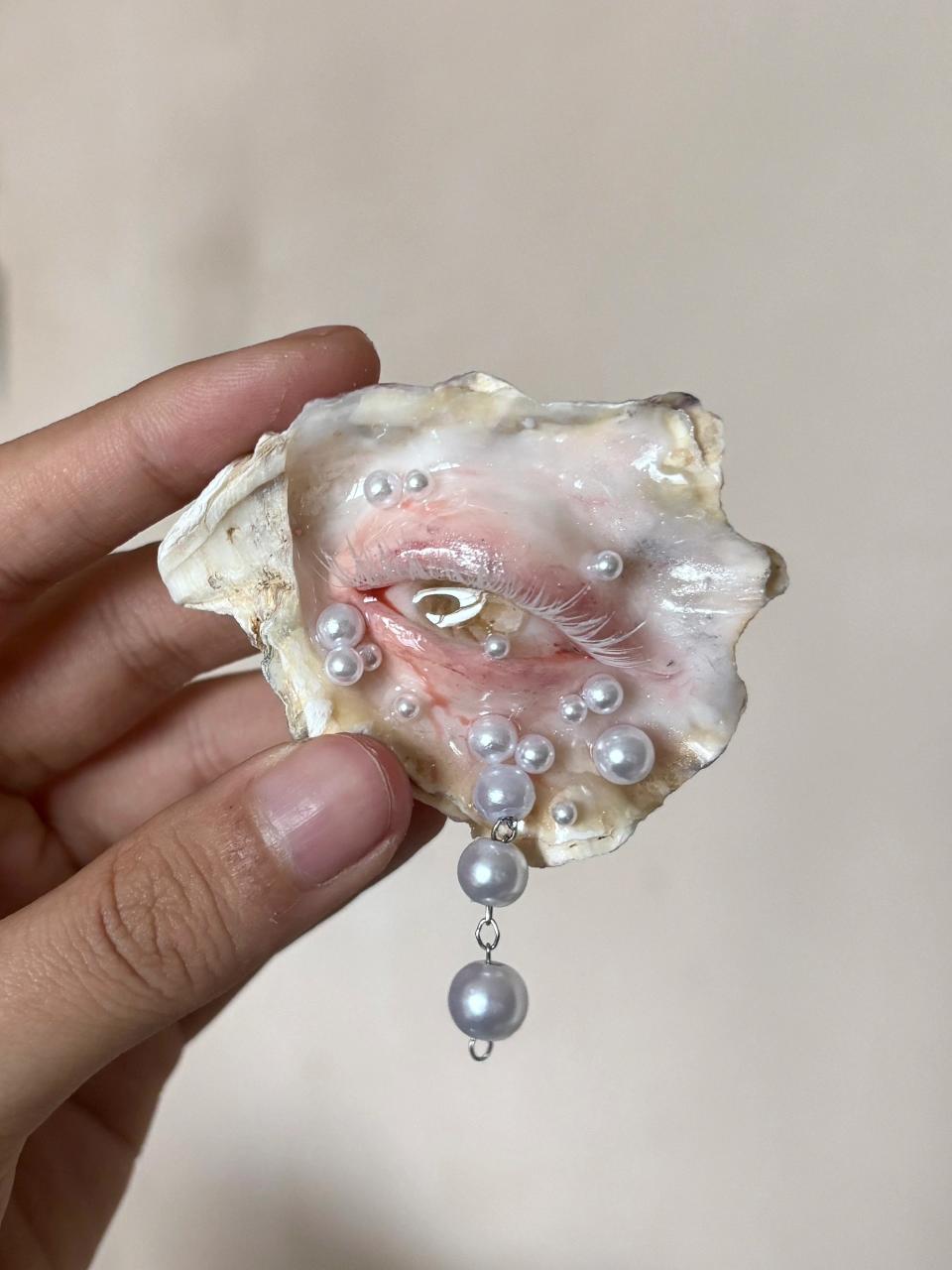
Shell Oracle brings together handmade objects, wearable jewelry, small sculpture, and pieces that seem to carry their own stories. How did you arrive at this in-between form, and what do you hope people feel when they encounter one of your works?
This form wasn't something we planned from the beginning. It grew naturally out of the way we collaborated. At the time, Angie and I were both independent handmade designers working in our own styles and fields. Angie reached out to me about collaborating, and she was the first to suggest creating something on shells and incorporating the eyes I made into them.
After we created our first shell eye, the work naturally found itself somewhere in between different forms. It had the material presence of a handmade object, the relationship to the body of wearable jewellery, and the sense of being watched that belongs to a small sculpture.
In the beginning, we placed more emphasis on the concept of "parasitism". Now, we're more interested in exploring the emotion of longing, and the relationship between voyeurism and parasitism. What we hope viewers experience isn't a work that has already been completely explained, but a subtle mixture of unease and attraction.
Something like: "It seems to be looking at me, and I'm peeking at it too."
The shell-eye was the first work you created together. Could you take us back to the beginning of that collaboration and describe how the original idea developed into a physical object?
Yoori: It began with Angie suggesting that we create something on shells and incorporate my eyes into them. We were both working independently as handmade designers at the time. After she proposed that direction, we simply started making our first shell eye. Initially, our ideas focused more on parasitism. Later, they expanded into longing and the relationship between voyeurism and parasitism. Turning the idea into a physical object wasn't a process of completing a drawing first and then following it step by step. We started creating directly inside the shell.
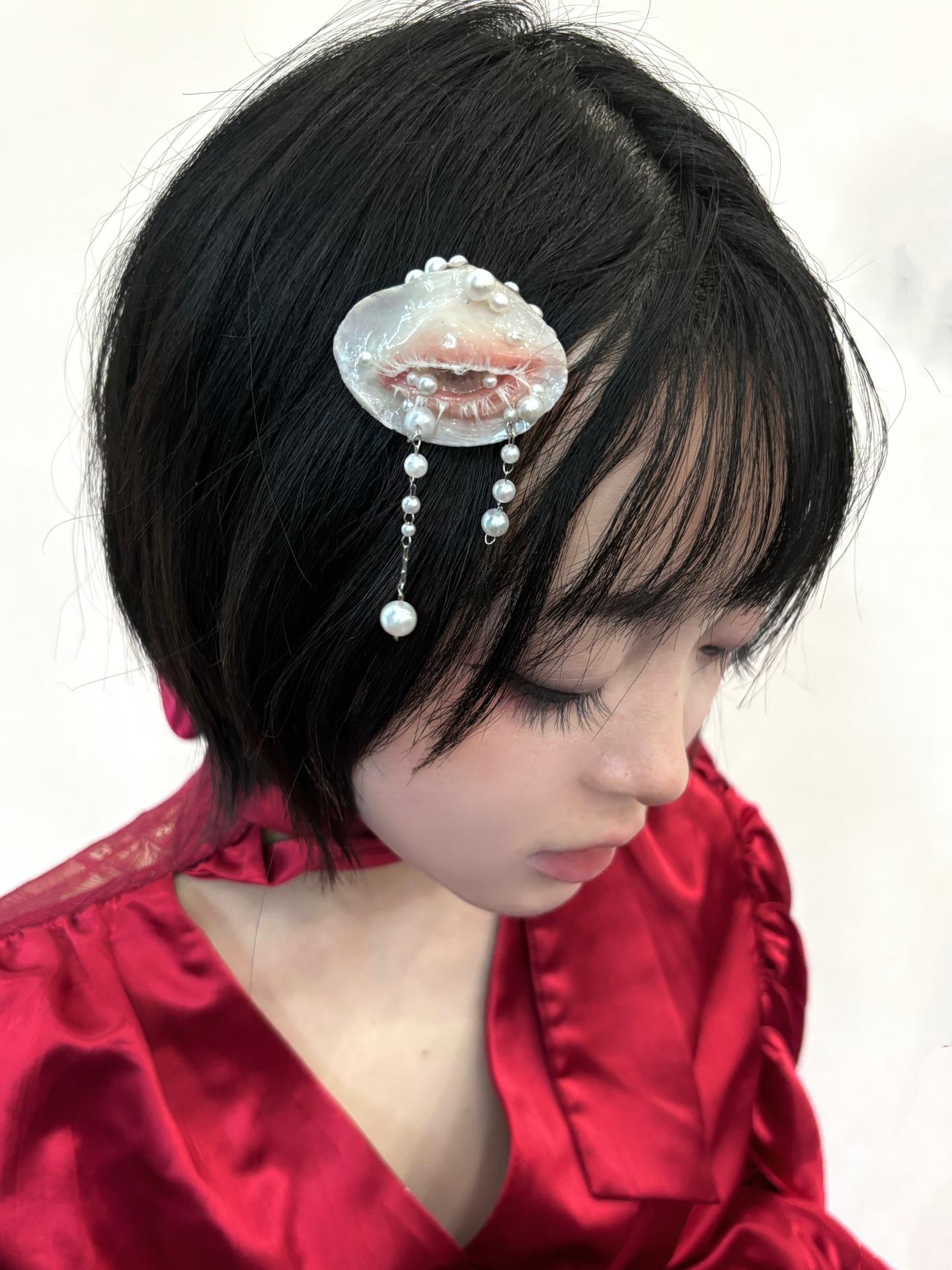
Your practice is described as reciprocal, with Yoori’s focus on concept and image meeting Angie’s material judgment and construction. How does that exchange happen in practice, and can you recall a moment when one of you changed the other’s initial idea?
Both: We never interfere with each other's creative output. Instead, we cooperate, support, and appreciate each other. I don't try to change Angie's decisions about materials and construction, and she doesn't try to change my concepts or visual direction. Our collaboration is more about each of us bringing the part we're most confident in, and connecting those parts in the right place. Rather than one person changing the other's original idea, the result emerges naturally through our cooperation. Perhaps we simply have a natural understanding of each other.
Yoori, your studies in art and fashion design shaped your attention to silhouette, proportion, and the way an object meets the body. How do those concerns influence the form and wearability of Shell Oracle’s creations?
Angie: My artistic training taught me to begin with emotions and visual relationships, while my fashion design background made me pay attention to what happens when an object is placed on the body. Silhouette and proportion aren't only about whether something looks right from the front. They're also about how the piece relates to the shoulders, neck, neckline, and movement of the body when worn. I spend a lot of time observing how the area around people's eyes changes when they experience different emotions, so that I can convey the emotions I want to express as precisely as possible. These observations also influence the curvature and direction of the eyes I create, as well as the sense of distance they establish when worn. For me, the experience of wearing a piece isn't an additional consideration. It is part of the emotional expression of the artwork itself.
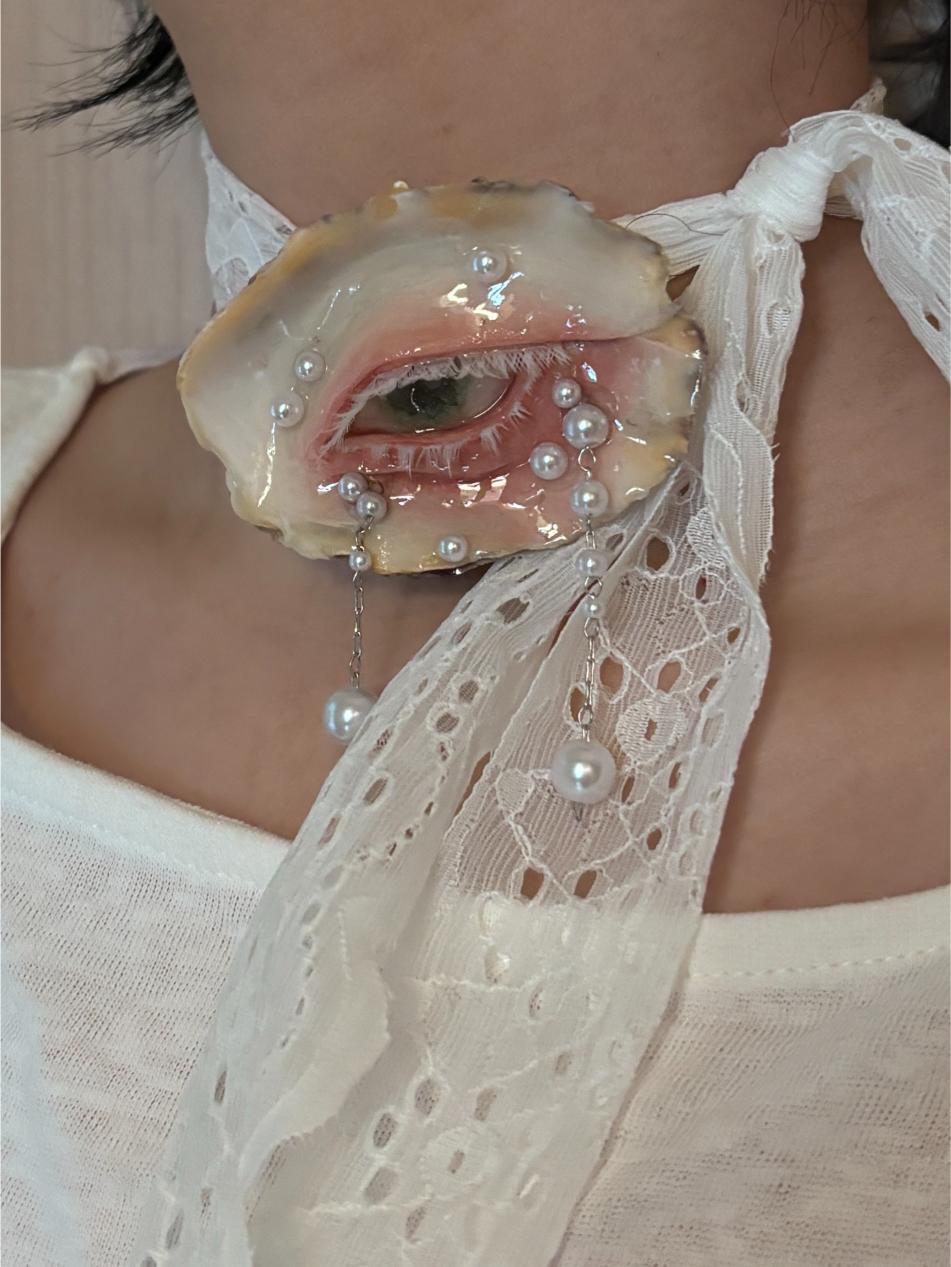
Yoori, eyes and moths appeared repeatedly in your early visual explorations, alongside experiments with clay. What draws you to these forms, and how have they evolved into the visual language of Shell Oracle?
Yoori: I've always been interested in the forms of eyes and the emotions they convey. Eyes are also a visual element I return to repeatedly in my work. Moths and eyes share a similar visual logic: being attracted to something, moving closer, and being unable to stop. That's why both appeared so frequently in my early creations. Experimenting with clay allowed me to transform the eye from a flat image into something with volume, eyelids, and depth. Later, I transferred this approach to sculpting eyes onto shells, and it gradually developed into the visual language I use today.
Your work carries a sense of melancholy, distance, and tension without becoming overtly decorative. How do you create that atmosphere through shape, material, and detail—and how do you know when a piece has the right balance?
Yoori: don't think this atmosphere is created by any single element. It's more like the traces left behind when different materials haven't entirely reconciled with one another. The edges of a shell are irregular, while the eye has a clearly defined structure. Clay, metal, and surface treatments each retain their own visual language rather than merging into one seamless illusion.
The balance lies in not allowing either side to overwhelm the other.
The eye shouldn't become so realistic that the work turns into a display of the grotesque, but the natural character of the shell shouldn't be completely suppressed either.
It should look as though the shell itself has grown an eye, rather than an eye simply being installed into it. The narrow space between "it looks as though" and "it isn't quite" is where the atmosphere exists.
Angie, your background in conservation developed a sensitivity to material behavior, structural stability, and precision. How does that training affect the way you approach the construction of an object, especially one that is meant to feel mysterious or uncanny?
Angie: My background in cultural heritage conservation and restoration primarily changed the way I anticipate how materials will behave and change over time. Every natural shell has a different thickness, curvature, edge strength, and internal stress. Before working with a shell, I consider whether its structure can support its own weight over the long term and withstand the forces involved in wearing it. I also consider whether the heat from soldering might affect the stability of nearby parts of the shell, or whether a connection that looks beautiful now might eventually become a weak point where the work could break. Precision isn't about making something look "perfect". It's about making sure the structure is genuinely reliable. The handmade character of a work must be built on a sound structure.
You’ve described wabi-sabi as an important influence, while also exploring soldering and metalwork. How do age, imperfection, and visible traces of making shape your decisions about materials and finishes?
Angie: I don't use wabi-sabi as a stylistic label that can simply be applied to a work. However, soldering and metalworking have given me a practical understanding of "imperfection". Soldering leaves seams. Metal changes shape slightly as it heats and cools. Parts shaped by hand will never be exactly identical to those produced by a mould. The important thing isn't to polish away every trace of the process. It's to judge which traces should remain as evidence of construction, and which ones would disrupt the overall relationship of the work. A sense of age isn't something that can simply be created through artificial distressing. When metal visibly supports the structure, and the process of making hasn't been completely concealed, the work begins to carry an expression of time.
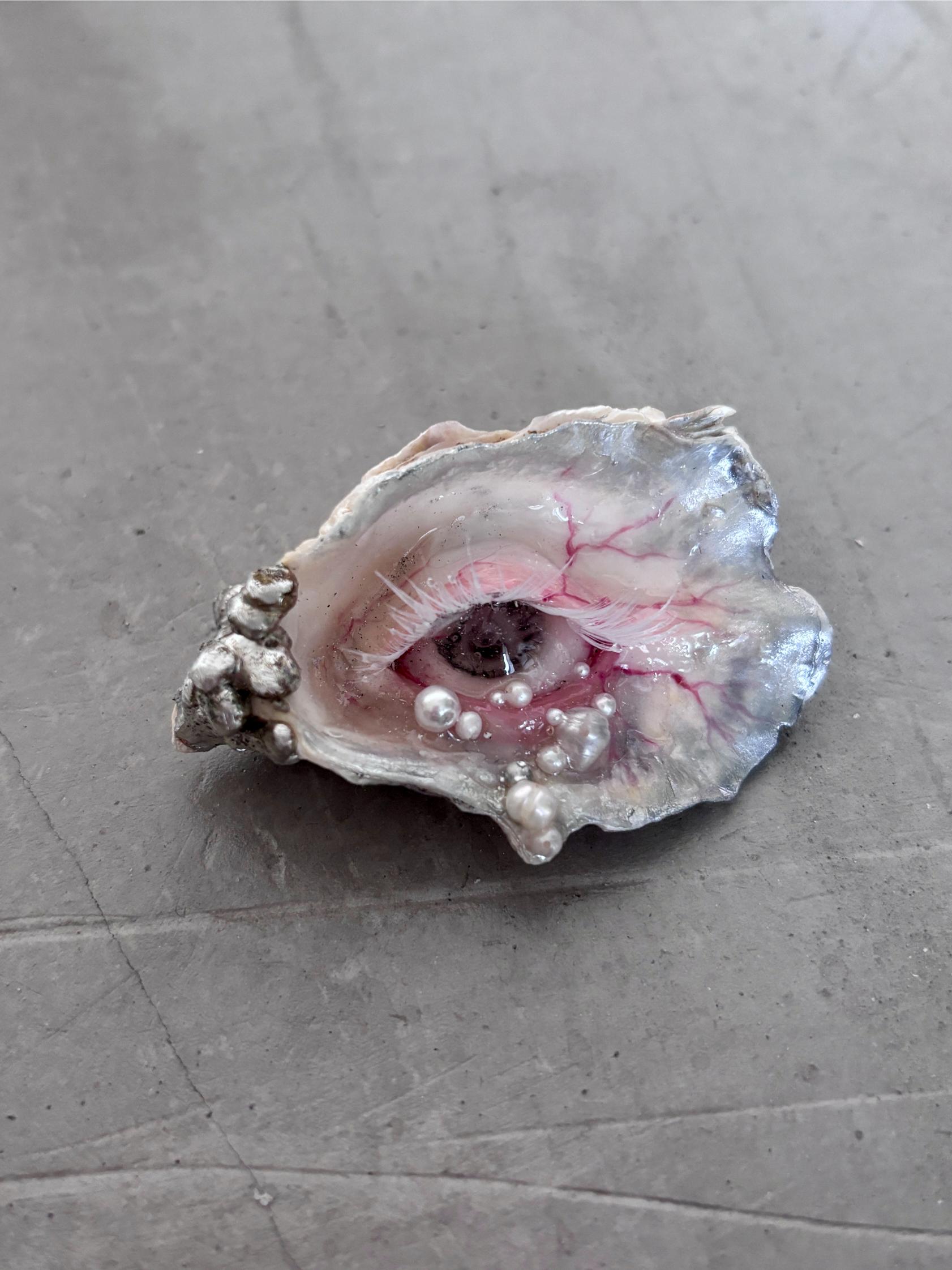
The eye in Shell Oracle is both receptive and projective, while its attachment to the shell is described as parasitic. What does this relationship mean to you, and how does it bring together longing, elegance, and the grotesque?
Angie: To me, the eye itself has something parasitic about it. It lives quietly inside the body without the brain being aware of it. If the brain were to discover it, the immune system would attack it. The gaze works in a similar way. The observer and the observed are like a parasite and its host. The nourishment the observer takes is a portion of the observed person's life that they have managed to glimpse. I personally have a strong desire to observe and pry into things. My artworks aren't intended to spy on any particular person. They're simply projections of my own desires and expressions of my aesthetics.
Embedding an eye inside a shell transforms the shell from a closed, protective structure into something with an opening.
Longing, elegance, and the grotesque can then coexist.
It watches, and it is watched.
It resembles a parasite, but it also resembles a host.
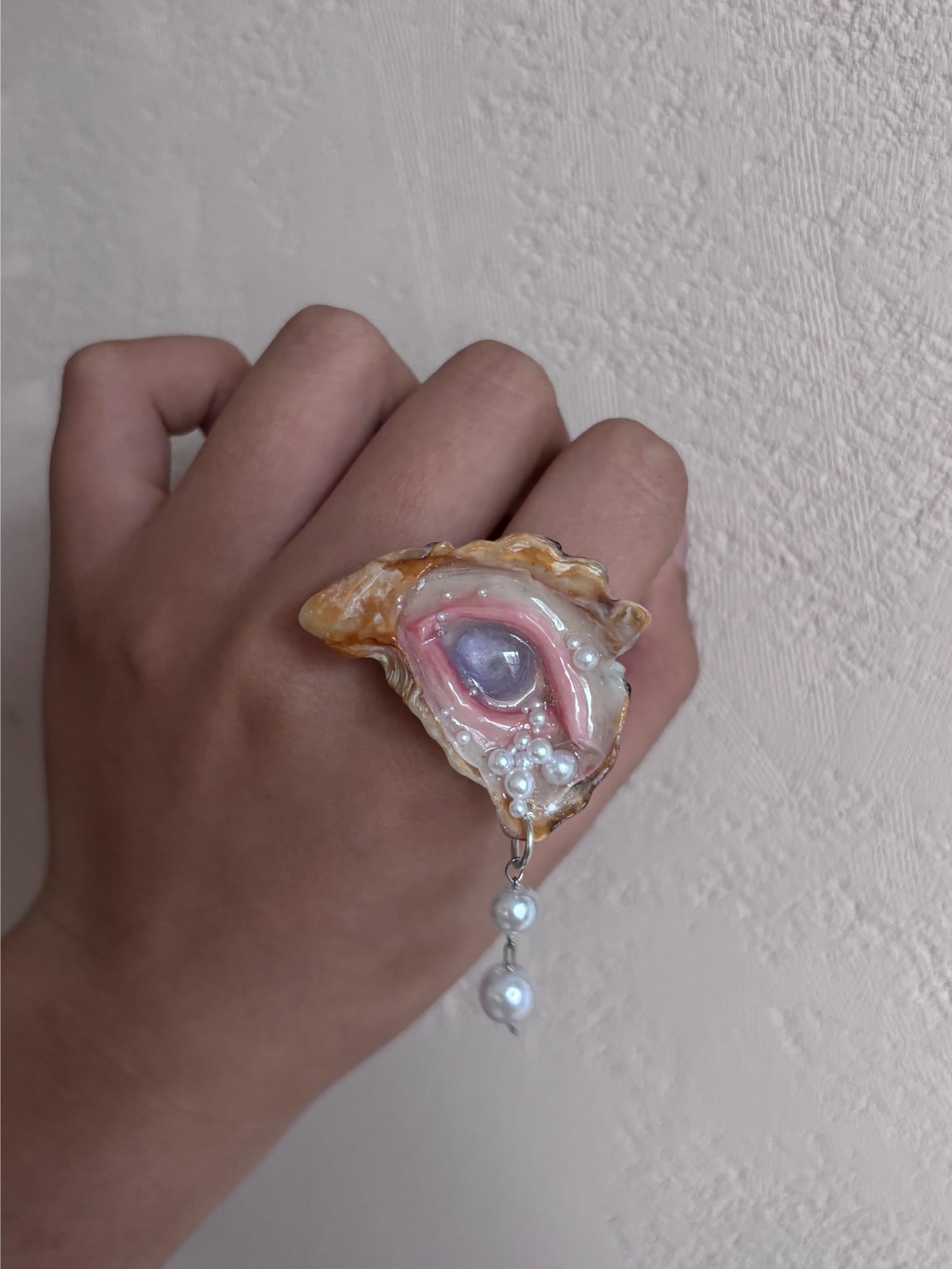
Do you imagine that each shell-eye object has a particular character, history, or world around it? If so, how do you develop that story, and do viewers’ interpretations ever change the meaning of a piece for you?
I don't really think of each piece as having its own independent personality. However, every eye I create does convey a different emotion. As the saying goes, a thousand people can see a thousand different Hamlets. That's why I prefer not to provide too much explanation for each individual work. Viewers may interpret the same work differently, and their interpretations can change its meaning. I have no problem with that. For me, the artwork is a place where emotions and relationships of observing and being observed can emerge, rather than a closed answer.
Shell Oracle grows through new works, stories, films, and collaborations, and regarding this perspective, what questions or possibilities are you most interested in exploring next—and how do you hope the studio’s shared practice will continue to evolve?
I'd like to explore more forms of artistic expression and experiment with different materials. Recently, I've been interested in creating an installation that incorporates performance art. As for our collaboration, we'll continue working in the way we always have. We don't interfere with each other's creative output. We cooperate, appreciate each other's work, and bring together the parts of the creative process we're each most confident in.
A short note to your future self.
Angie: I hope you still remember how carefully your hand first touched a shell. Remember the smell and light of metal during soldering, and those nights when something went wrong and you had to start all over again. Don't let the desire to make things faster or more complete override what your hands know. Seams, slight deformations, and marks that haven't been polished away aren't enemies. They're the breath of time left upon the work. And don't forget those quiet moments sitting at the table with Yoori, looking at a shell together, repeatedly considering whether it should be drilled, or which direction a part should be bent. The most precious part of collaboration often isn't one person persuading the other. It's two people waiting together for the material to speak.Be gentle with imperfections, but never compromise on reliability.
Yoori: Keep observing. Observe how eyes change under different emotions. Observe where your own desire to pry and look into things comes from, and how it can be transformed into aesthetic expression rather than becoming an act of intrusion into any particular person's life. Keep parasitism and the gaze at the heart of your work. Don't lose that core simply because the materials or artistic forms have changed. Keep observing, and keep allowing your work to be observed.
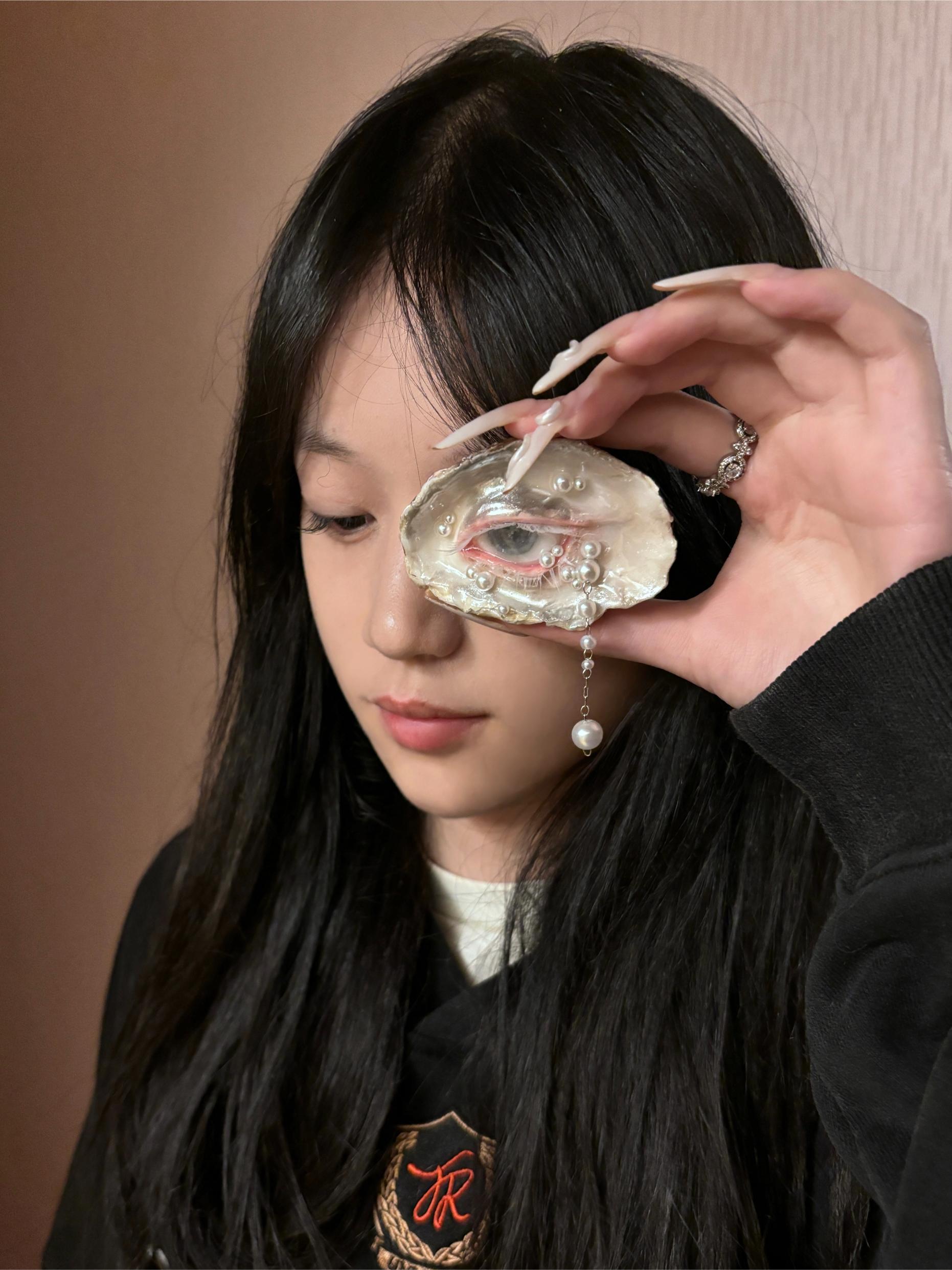
Discover the brand at https://shelloracle.com/