- Date
- 20 MARCH 2026
- Author
- GLORIA MARIA CAPPELLETTI
- Image by
- PRADA PRESS OFFICE
- Categories
- Fashion
The “I” as Interface: Prada and Jordan Wolfson
Prada has always treated fashion as more than clothing. Each collection, each campaign, feels like a question rather than an answer, a space where images don’t just show something, but stand in for something else. In semiotic terms, meaning is never fixed. What you see is only part of the story.
This approach runs through Prada’s entire visual language. Casting, styling, posture, even silence, everything operates as a sign, open to interpretation. Nothing is ever completely resolved.
The Prada Spring/Summer 2026 campaign takes this idea further, pushing it into a more unstable, almost uncanny territory.
The collaboration with artist Jordan Wolfson becomes key here. Known for creating hyperreal, unsettling figures that blur the line between digital and physical, Wolfson introduces a new presence into Prada’s world, one that doesn’t simply complement the image, but disrupts it.
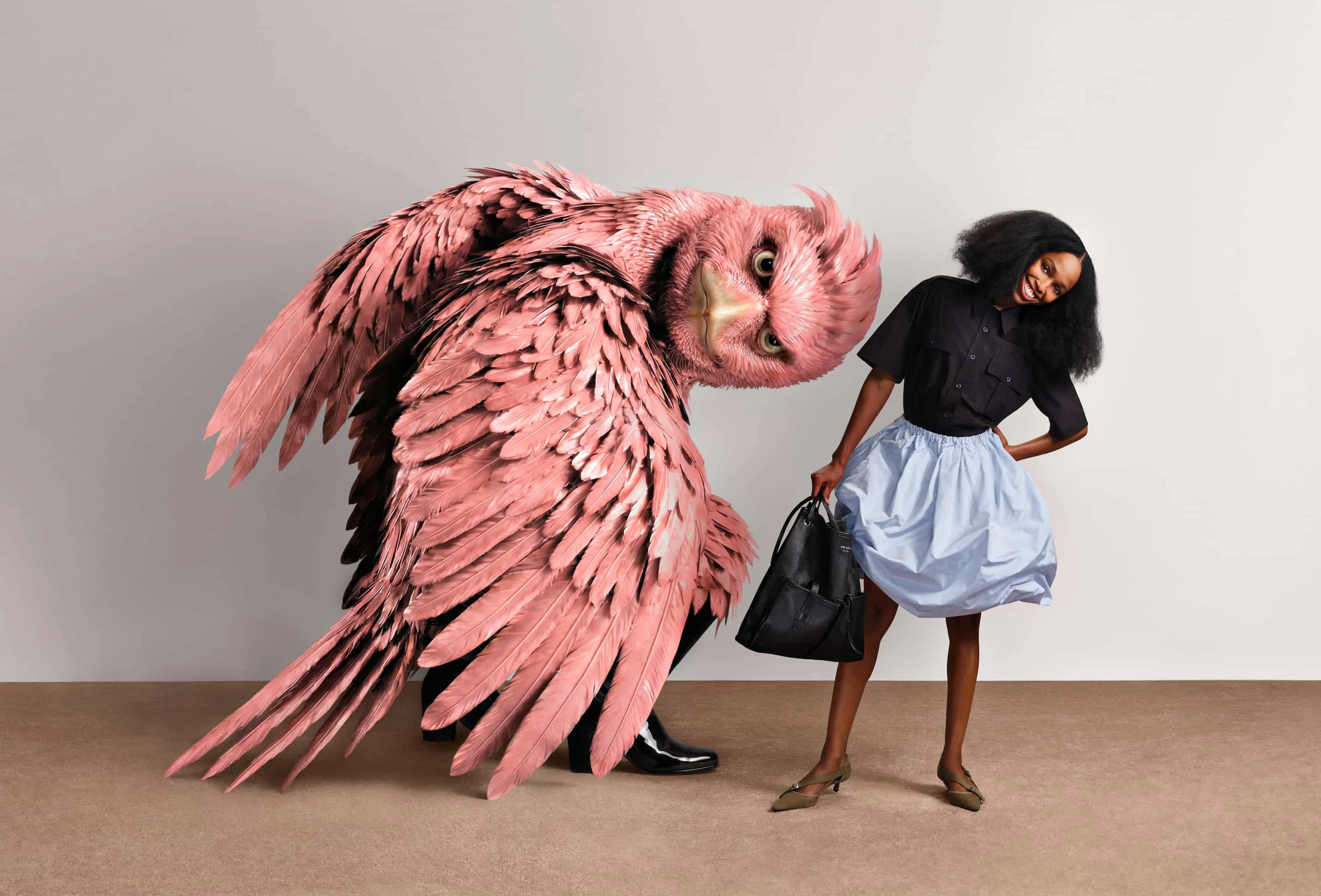
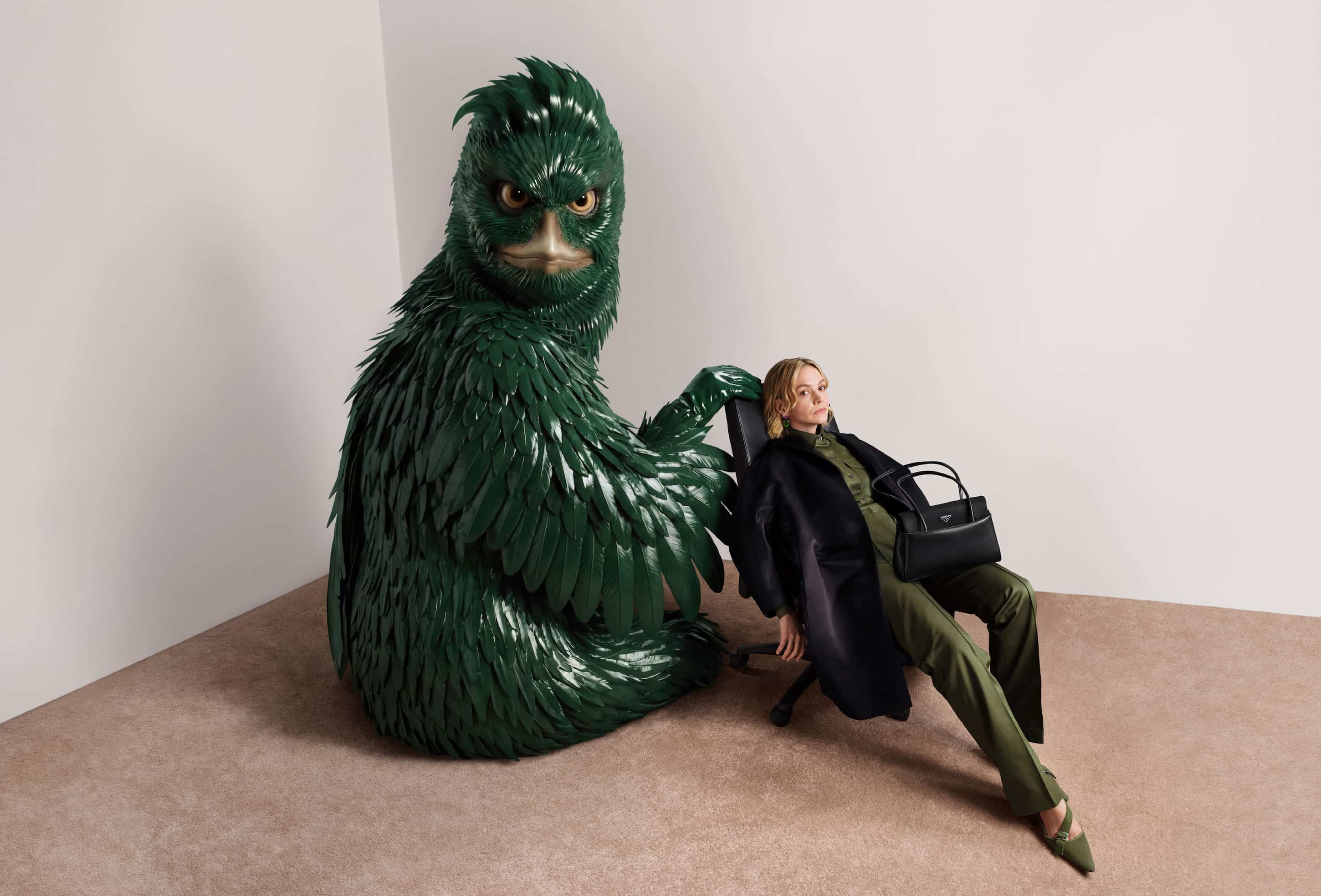
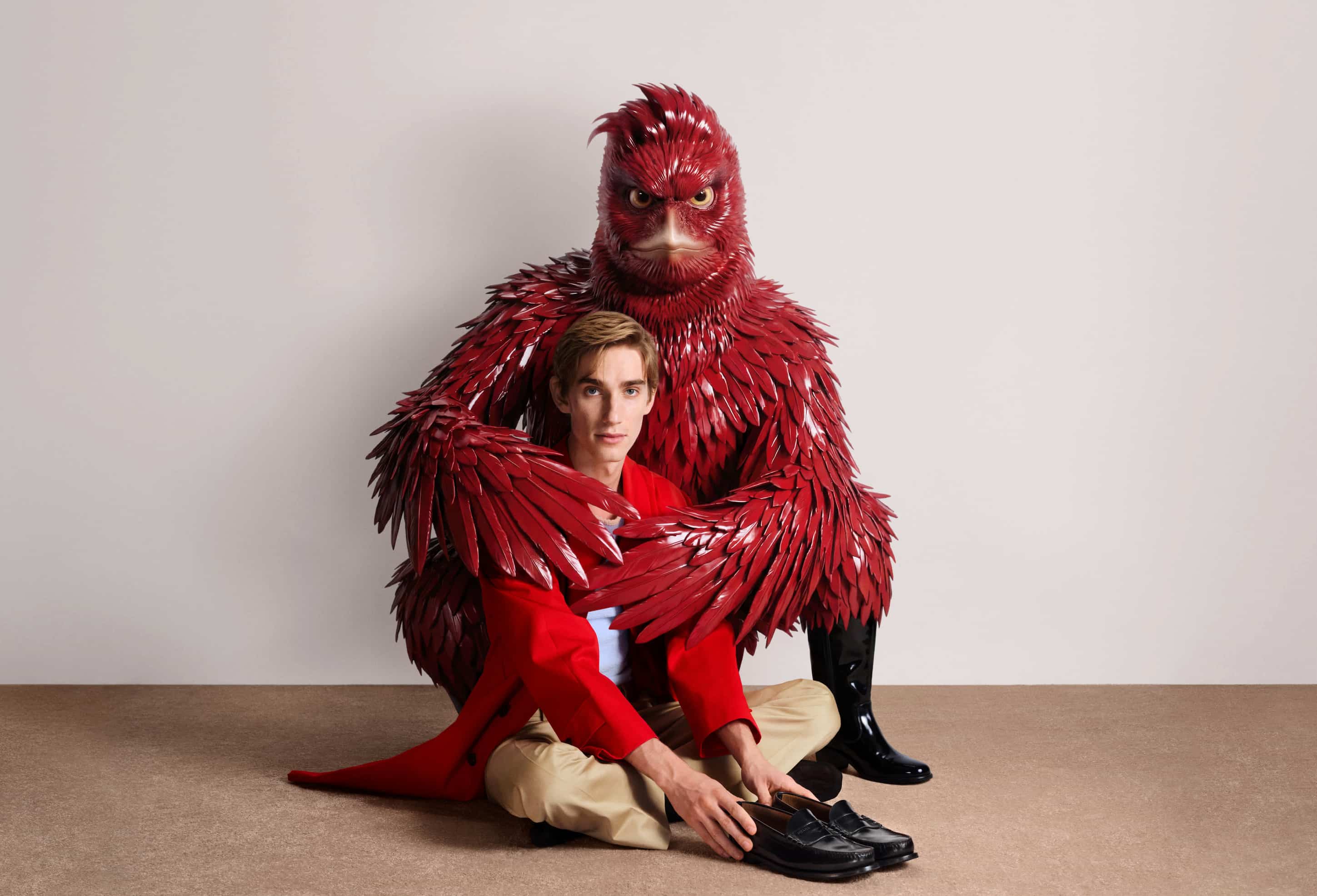
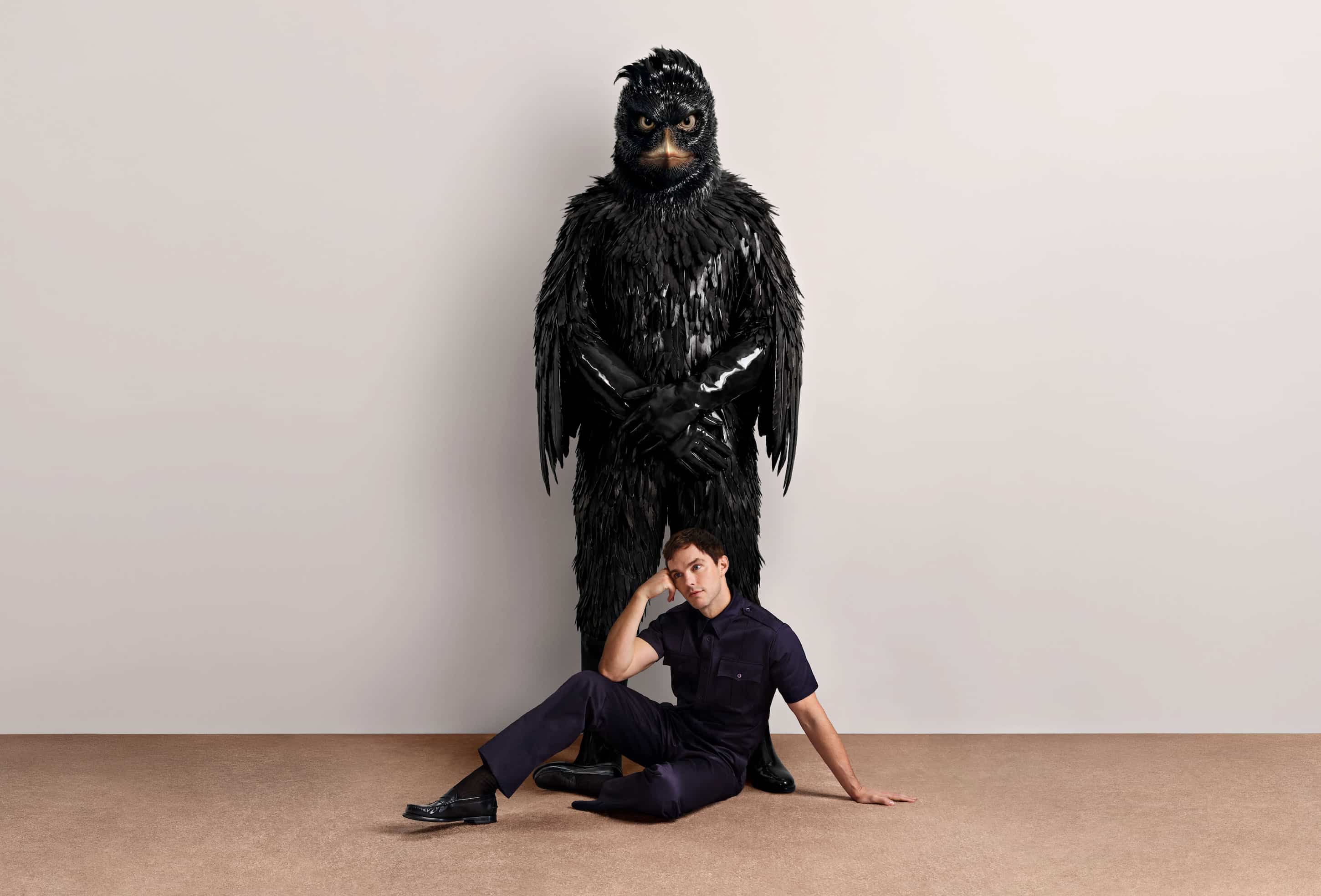
In the campaign, models sit, stand, exist in composed stillness. Around them, strange creatures appear, hybrid, bird-like, hyper-detailed, almost too real to be believable. They move gently. They touch the models. They lean into them, hold them, interact with them in a way that feels intimate, even caring.
And yet, something feels off.
The models never look at them. They never react. It’s as if the creatures don’t exist, at least not for them. But the creatures clearly see the models. They know them. They reach toward them.
This creates a quiet but powerful tension.
Two realities coexist in the same frame, but they never fully meet.
There is, perhaps, a distant echo of Where the Wild Things Are, the 1963 children’s book by Maurice Sendak, where a child encounters strange, hybrid creatures within an imagined world. But where that story stages recognition, a shared imaginary space between child and creature, Prada’s world with Wolfson introduces a subtle inversion. Here, the creatures are present, tactile, playful and tender, yet they remain unacknowledged. The encounter is one-sided. The human does not enter their world.
At this point, in the video, the repeated phrase “I, I, I, I am…” starts to take on a different meaning.
At first, it sounds like a simple statement of identity. A way of saying: this is who I am. But the repetition breaks that certainty. The “I” keeps restarting, as if it’s trying to stabilize itself and can’t quite get there. It becomes a loop.
The repeated “I” starts to shift. What sounds, at first, like a simple declaration of identity begins to lose its ground. The word repeats, hesitates, almost searching for itself. It no longer fully belongs to the one who speaks it. Instead, it feels shaped by something else, by language, by images, by presences that surround and precede it. The self begins to appear less contained, less certain, as if it were always in relation to something outside itself, something that speaks alongside it.
In Prada’s campaign, this idea becomes visual.
The creatures start to feel like that external force, something that surrounds the subject, touches it, influences it, but isn’t fully acknowledged. They exist in the same space, yet remain outside conscious recognition.
Almost like a presence you might feel, but don’t see.
There is also something very contemporary in this dynamic.
Today, identity is constantly mediated by screens, by algorithms, by images that circulate faster than we can process them. We perform versions of ourselves, repeat them, refine them, project them outward.
“I, I, I, I…” the rhythm feels familiar.
But what if that repetition doesn’t create clarity, what if it creates only fragmentation?
What if the self is less a fixed point, and more a surface where different forces meet?
Prada subtly shifts the center of the image.
The human figure, usually the focus of fashion campaigns, becomes present, but slightly detached. The creatures, on the other hand, carry intention. They initiate contact and move the scene forward.
In the end, the campaign doesn’t offer a clear message. It creates instead a space where identity feels open and unstable. Where what we see is only part of what is happening. Where the “I” is always accompanied by something else, something unseen, but deeply present.
And maybe that’s the point.
These are only some of the thoughts that emerge in front of the Prada Spring Summer 2026 campaign. The more one looks, the more the campaign seems to unfold, new details, new tensions, new possibilities of meaning. It resists closure.
The only certainty is this: the self is never alone, even here, where the creatures are fully visible, yet never truly acknowledged.
Perhaps that is why it feels so precise for the moment we are in, which is a time that is at once surreal and searching, yet strangely blind to what stands plainly in front of us.
A pensive campaign, for pensive times.
Text by Gloria Maria Cappelletti
Creative Direction
Miuccia Prada, Raf Simons
Artworks
Jordan Wolfson
Cast
John Glacier, Levon Hawke, Nicholas Hoult, Damson Idris, Carey Mulligan, Hunter Schafer, Liu Wen
Campaign Creative Direction
Ferdinando Verderi
Photography
Oliver Hadlee Pearch
Special Thanks
Prada Press Office