- Date
- 25 MAY 2026
- Author
- JAGRATI
- Image by
- FUSE
- Categories
- Interviews
Poetics of Code: The Evolving Vision of Fuse Studio
For nearly two decades, Italian art and design collective Fuse Studio has explored the evolving relationship between technology, emotion, and human perception through immersive installations, audiovisual performances, and data-driven artistic experiences. Founded in 2007, the studio emerged from instinctive curiosity rather than rigid ambition, gradually becoming one of the most internationally recognised voices working at the intersection of contemporary art, generative systems, live media, and technological experimentation. Yet despite the increasing complexity of their projects, fuse continues to remain rooted in a deeply human question: how can technology help us feel more connected rather than more distant?
In conversation with RED-EYE Magazine, the collective reflects on the transformation of digital culture over the past two decades, discussing the shift from early technological optimism to a more critical and ethically aware creative practice. Drawing from science, philosophy, nature, collective memory, and human fragility, their work transforms complex systems into poetic and contemplative experiences that invite audiences to slow down and reconnect with presence, empathy, and wonder. As conversations around AI art, machine learning, immersive installations, and generative creativity continue to accelerate globally, fuse* offers a rare perspective that resists technological spectacle for its own sake. Instead, the studio proposes a more reflective future for creative technology, one where emotional depth, ethical responsibility, and human sensitivity remain central to the artistic process.
You founded fuse* in 2007. Looking back now, what were the original aspirations you had in the studio, and how have those evolved? What remains at the core unchanged, and what has shifted most radically?
When we founded fuse* in 2007, we were driven more by a strong, instinctive and almost naive curiosity than by a clear idea of what we wanted to do. We intended to create a job for ourselves that would allow us to do something meaningful for us and that could also resonate with others.
Over time, many things have changed: the scale of the studio, the projects, the people, the contexts. But the core and the intention with which we try to do things have remained the same — or at least, we try.
Looking back at our journey, I think the biggest transformation has perhaps been this: in 2007, technology still had an air of “innocence” to our eyes, as if it was automatically synonymous with the future and progress. Today, that is no longer the case. We live in a time when digital tools are incredibly powerful, but also loaded with implications: control, attention dependency, constant acceleration, and consumption. And this awareness has changed our relationship with technology. If before we were mostly curious about “what can we do,” today we also ask ourselves: what effect does this have on people? What kind of imagery does it build?
So yes: the poetic drive remains, as does the desire to generate curiosity, wonder, and contemplation. But what has grown immensely is our sense of responsibility, our need for depth and coherence.
Coming from backgrounds in computer engineering and chemistry/business, how did your early academic and professional experiences shape the unique multidisciplinary identity of fuse*? And how does that diverse foundation still influence your work today?
Actually, our way of working is the result of the collaboration between two very different but complementary people. This approach has since extended to the entire team, and even today, we strive to encourage the meeting and cooperation of different perspectives, sensibilities and backgrounds. I believe this approach is neither simple nor obvious, but it can work when there are shared values and principles at a deeper level than just “what we do” and “how we do it.”
In any case, the academic path we’ve taken is just one of the elements that shape our personalities. Even when we choose our collaborators, we look beyond their educational background. We are much more interested in personal aspects, aesthetic sensitivity, attitude, and above all, the ability to work together. The identity of our studio is highly influenced by aspects that often have little to do with academic background, and the projects themselves reflect the people who work on them.
Even today, this idea of escaping labels and predetermined paths greatly influences our process in many ways. Perhaps it’s also why many of fuse*’s works seem to bridge different disciplines and worlds: trying to be poetic while maintaining a scientific foundation. They are emotional, yet built like systems. They are contemplative, yet often grounded in real data.
Your works often explore human, natural, and social phenomena. What motivates you to explore those themes, and what kind of message or feeling do you hope to transmit?
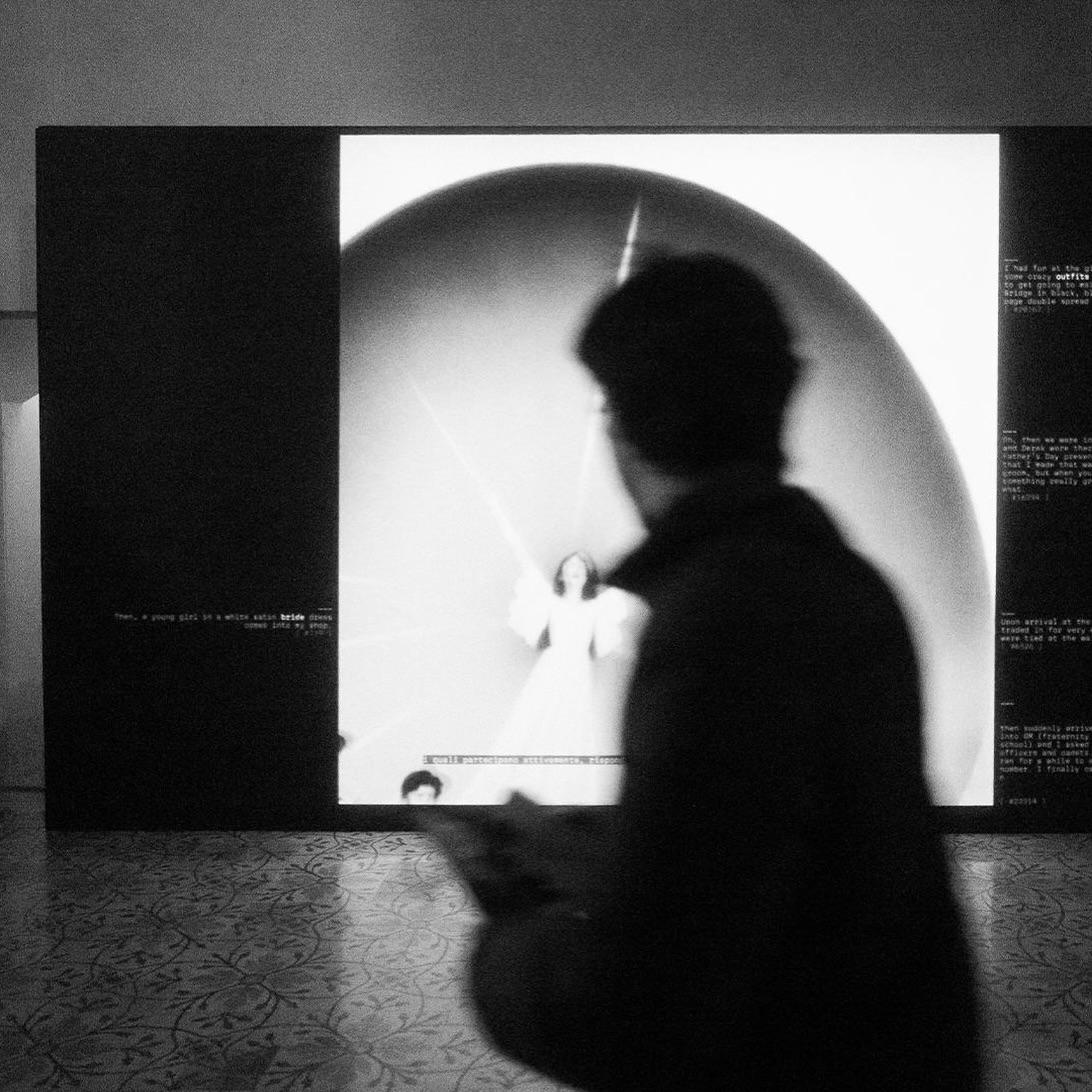
We are only interested in what deeply concerns us as individuals. That’s why our artistic productions arise from personal passions, interests, and experiences. We are drawn to exploring the relationship between ourselves and everything that defines our human experience: nature, technology, collective memory, and the sometimes invisible forces that shape how we live and relate to ourselves and others. We often start from real scientific, biological, or social phenomena because we are fascinated by how something extremely concrete and measurable can become a metaphor or inspire philosophical reflections. At that point, something that seems distant becomes intimate, capable of igniting and transforming us.
We have never intended to deliver a didactic or moral message. Instead, we aim to spark a sense of curiosity in people toward life and the unknown. We want to foster a different kind of attention, one that encourages people to see the world with less sleepy eyes and to focus more on what unites us rather than what divides us.
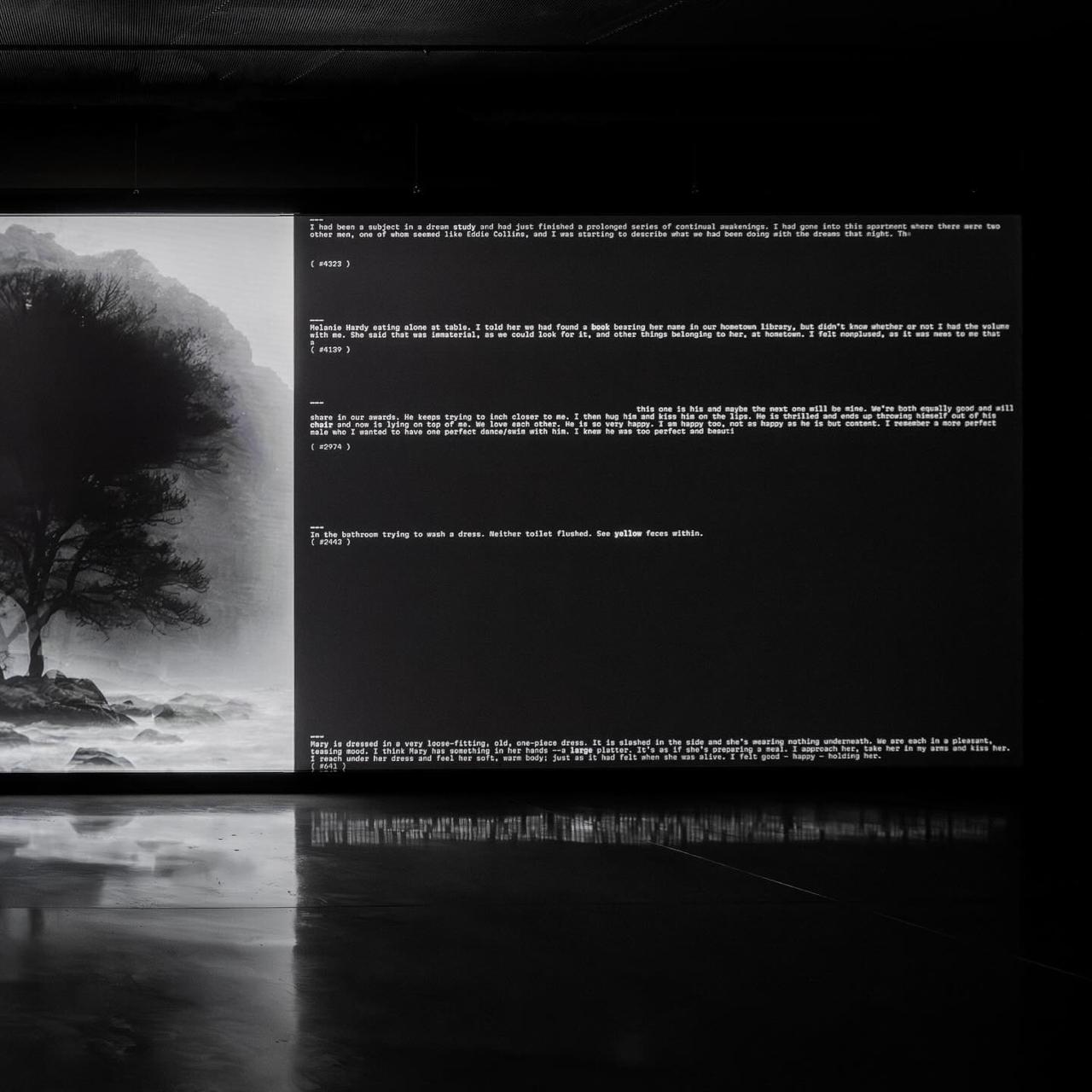
Fuse* has embraced machine learning and generative systems in projects such as Artificial Botany and Onirica. How do you view the ethical and philosophical dimensions of using AI in artistic creation? Does it alter your role as artists?
AI operates through synthesis, averages, and convergence. It is extraordinarily effective at reinforcing what is consistent, recognisable, and statistically significant. But for this very reason, it risks sidelining the most fragile, divergent, and minority visions: those that do not easily integrate, those that often come from people who experience the world in nonconformist ways. And yet, if we look at history, we know that humanity has not advanced solely through logical, efficient, or rational choices. It has also advanced thanks to lateral visions, incongruous intuitions, and perspectives that seemed “out of place.” Artists, mystics, scientists, explorers, people who had the courage (or the necessity) to step outside the furrow.
If AI accelerates the synthesis of existing knowledge, the risk is that it will make the world faster but also more uniform. More orderly, but less hospitable to what falls outside the parameters. In this sense, yes: our role as artists changes. We are not interested in using AI to delegate creation or to multiply output. We are interested in using it as a space for critical listening, a place where voices that are usually left out can also enter.
This is not simply about asking the machine to produce images. It is about deciding and choosing what to let it listen to, what we want to share, and what we want to protect. Above all, it is about what we refuse to simplify. From my perspective, none of this can be delegated to the machine. If the direction of AI is, in part, inevitable, then we feel compelled to try to ensure that divergent visions, even if vulnerable, are not forgotten. Those who do not aim solely at efficiency, but also at meaning. Those that may not help optimise the world, but can help make it a little more habitable and human.
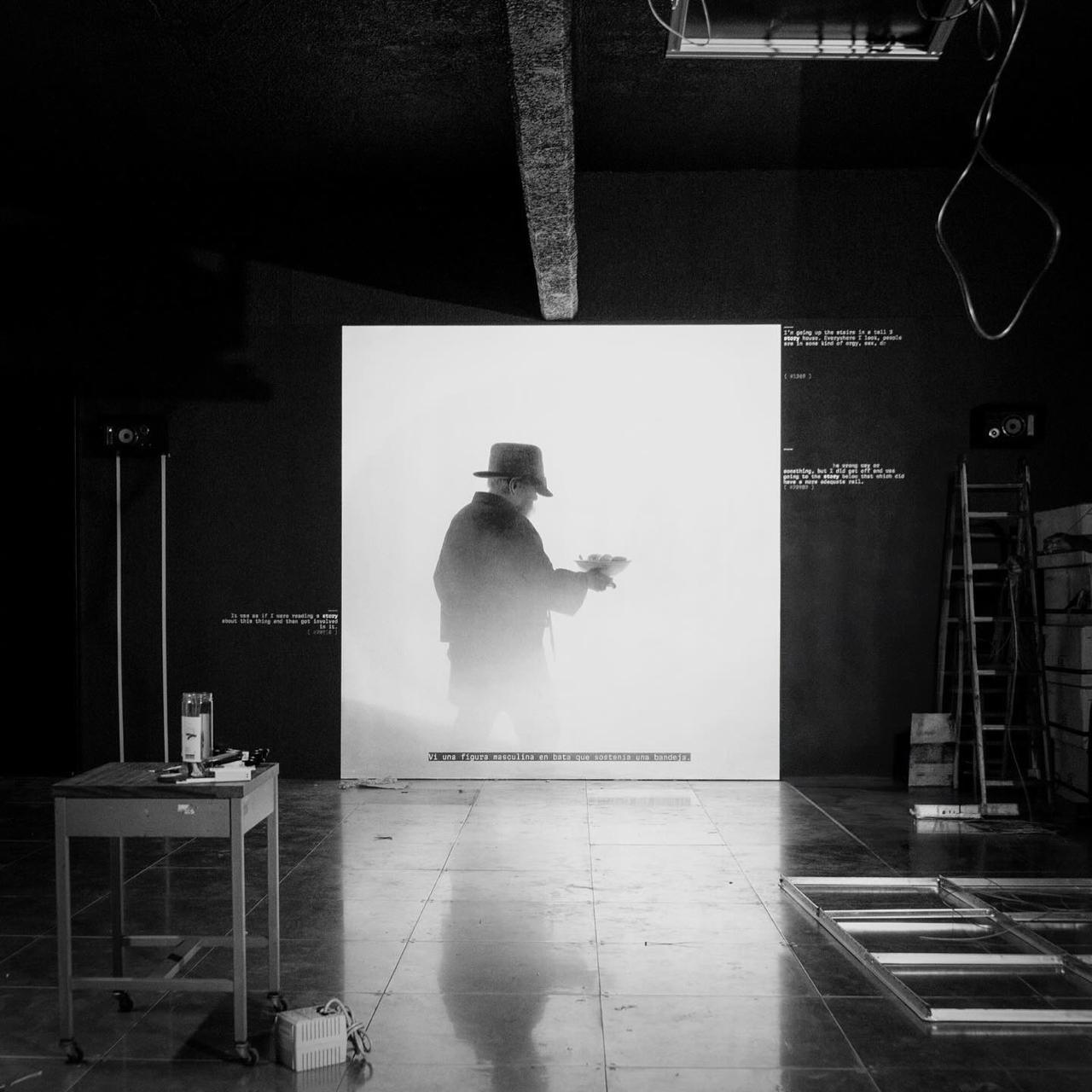
Collaboration seems essential to fuse*. Could you describe a partnership that opened an unexpected creative pathway?
For us, collaboration has never been just about “bringing skills together.” It’s a way of thinking. fuse* exists because we believe that when you involve people with different sensibilities and languages in the process, something happens that you could never achieve alone. Take, for example, a complex project like Sàl (2025), which combines artistic languages such as dance, music, and visual creations; technical, scientific, and engineering expertise; as well as philosophical, ethical, and spiritual perspectives. Personally, I believe that this project, which has developed over nearly eight years, has been shaped by various encounters, events, and even some losses, all of which have defined its creative journey and, consequently, its final identity. But there are two partnerships in particular that I think have influenced us deeply. The first is our collaboration with astrophysicist Fabio Bacchini, through whom we were able to explore the theme of black holes from a scientific perspective, reaching a depth we could never have achieved on our own. The second is our collaboration with biologist and mindfulness expert Roberto Ferrari, who helped us delve into themes such as impermanence, our relationship with the unknown, and the act of accompanying. This kind of collaboration not only opens up new creative paths but also offers the opportunity to evolve as individuals.
How does presenting your work globally influence its meaning or reception?
Presenting a work in different cultural contexts is always an interesting experience because it makes you realise that a piece of art never lives solely within your intention — it also lives within the gaze of those who encounter it. That said, we don’t often adapt our projects based on the audience or cultural context. Our goal is not to craft a tailor-made message for a specific culture, but to find a language that can transcend differences. We strive to work on what defines us as unique individuals while also uniting and connecting us as human beings. Many of our works explore phenomena that belong to everyone: time, fragility, memory, dreams, nature, wonder, fear, and the desire for connection. Cultural codes may change, but the emotional layers often remain readable.
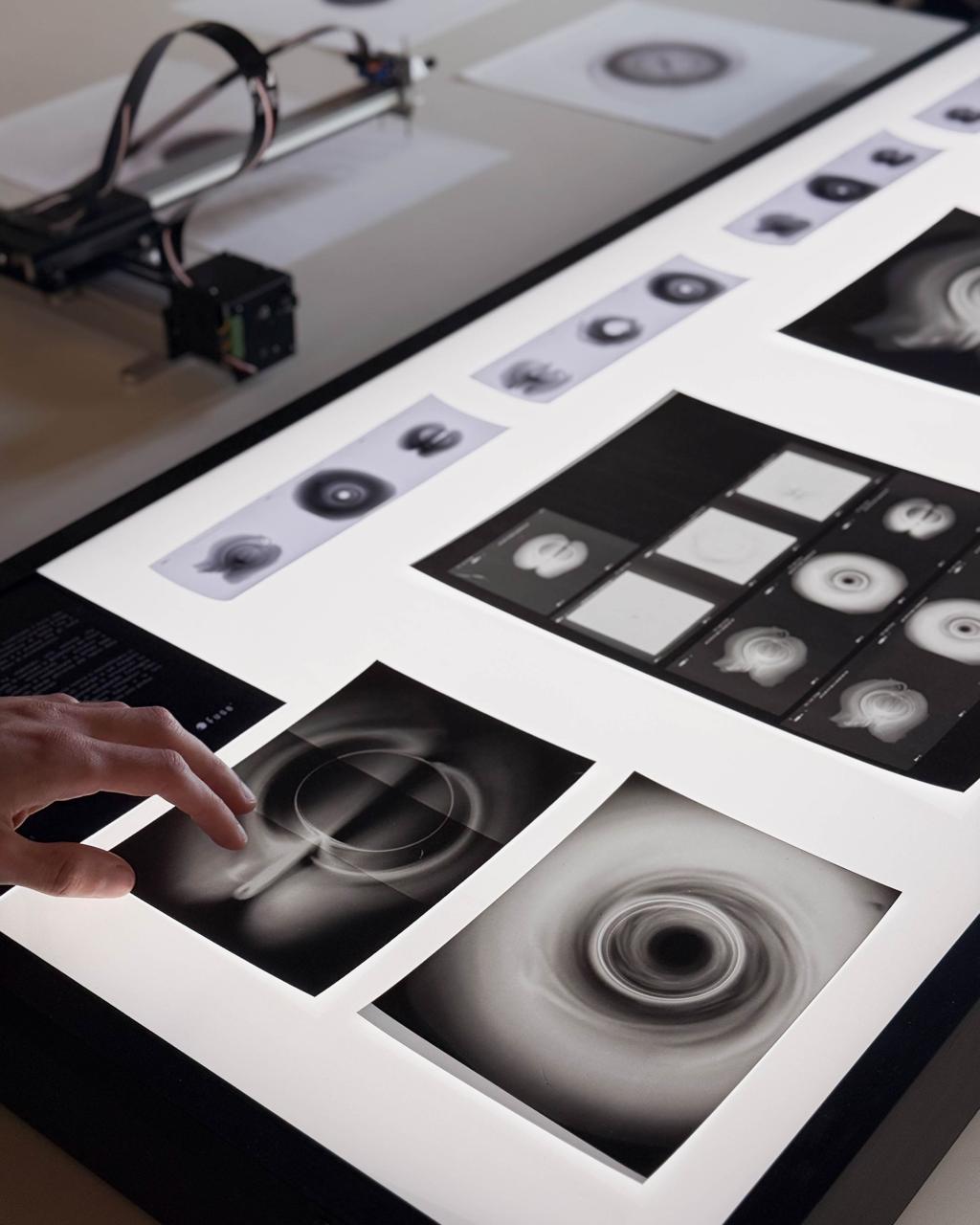
As co-producers of the festival NODE (2016–2024), how has that experience shaped you as artists?
NODE was born in the same years as fuse*, and in 2010, we presented one of our earliest installations at the festival. Thanks to NODE, we met artists who inspired us profoundly in our early years, including Ryoji Ikeda and Ryoichi Kurokawa. Later, when Filippo Aldovini, the founder of NODE Festival, joined fuse*, we decided to support the festival as co-producers — to give back what it had given us. The experience made us deeply aware of the cultural and social impact our work can have on communities. This awareness continues to inform our artistic and cultural initiatives.
What is your creative process when conceptualising a new project?
Each project has had a different genesis. The initial drive always comes from curiosity — the desire to explore something that attracts us but remains unknown, both humanly and scientifically. Projects often develop in unexpected ways because, during the creative process, you discover something new, meet people who open new possibilities, or experience personal events that reshape your understanding of a theme. I wouldn’t define this process as improvisation, but rather as serendipity. As the project progresses, openness to the unexpected gradually gives way to a more planned phase, equally important to achieve the desired quality.
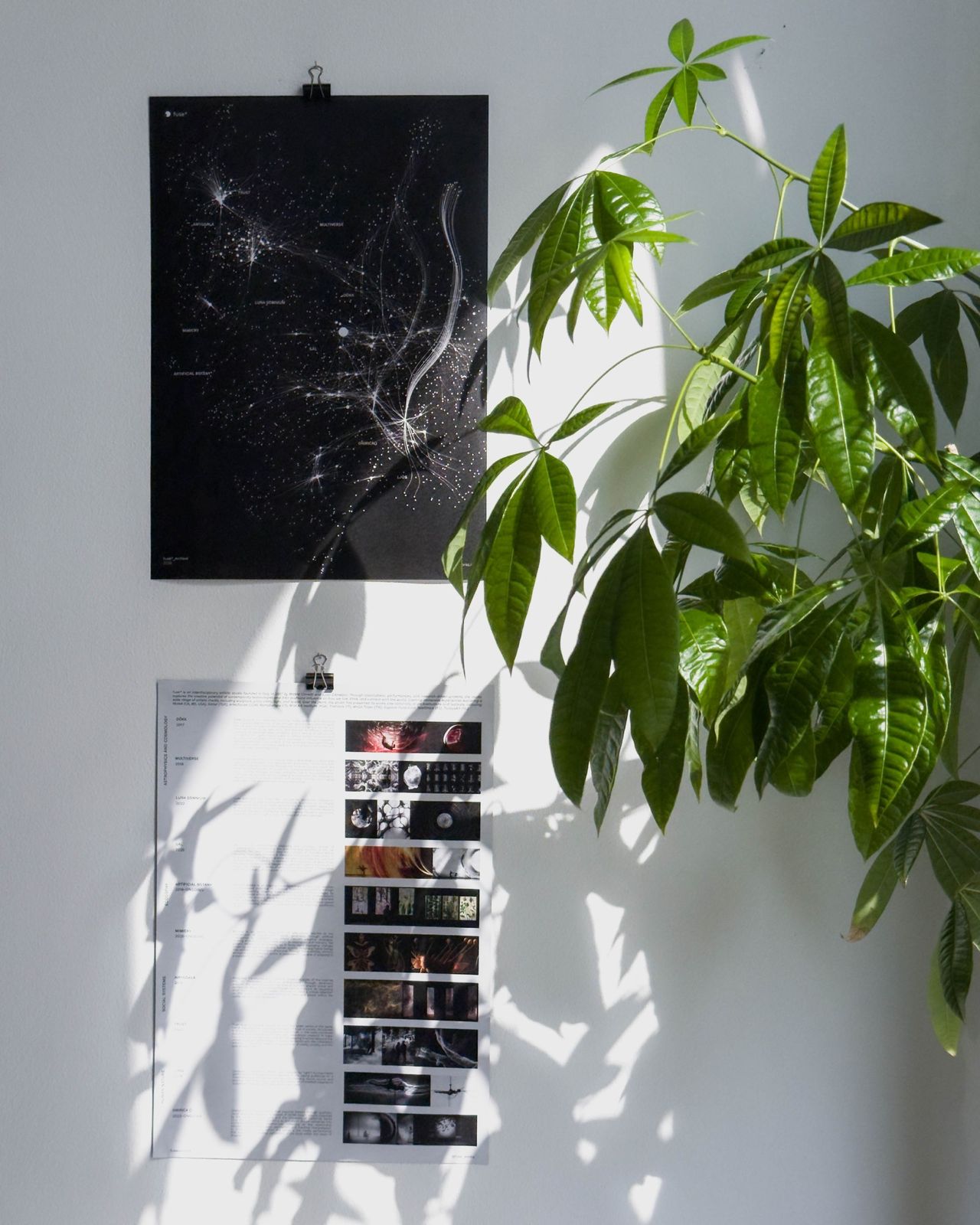
Looking ahead, what new directions or challenges are you most excited to explore?
With the speed at which technology is evolving, infinite possibilities open up daily. While fascinating, this acceleration also risks disorientation — especially as machines become capable of performing activities once considered uniquely human. This compels us to ask: what makes us human? Personally, I am not particularly intrigued by technological developments in themselves. Technology is a means. What truly interests me is its impact on our perception of ourselves, on our identity, and on how we relate to others and to the world. The most important challenge of the coming years will be to remain attuned to what cannot be automated: our capacity to feel, empathise, care, and be present. As artists, we feel responsible for exploring precisely this fragile and deeply human space.
How does fuse* stay conceptually and ethically anchored, avoiding trends for their own sake?
It’s a question we ask ourselves constantly. Working with technology exposes you to the risk of confusing the means with the end. For us, everything begins with the desire to encounter something new — never with a tool. Novelty alone does not generate meaning; it can even be a distraction. If a work relies solely on technological effect, it ages the moment that technology ceases to be new. We try to remain anchored to what evolves more slowly: human experience, perception, time, nature, and relationships. Technology becomes meaningful only when it allows access to these deeper territories in new ways. We often allow time to pass between encountering a technology and actually using it. We don’t feel the urgency to be first. We want coherence. We want resonance.
When technology becomes invisible, it means it has found its place.
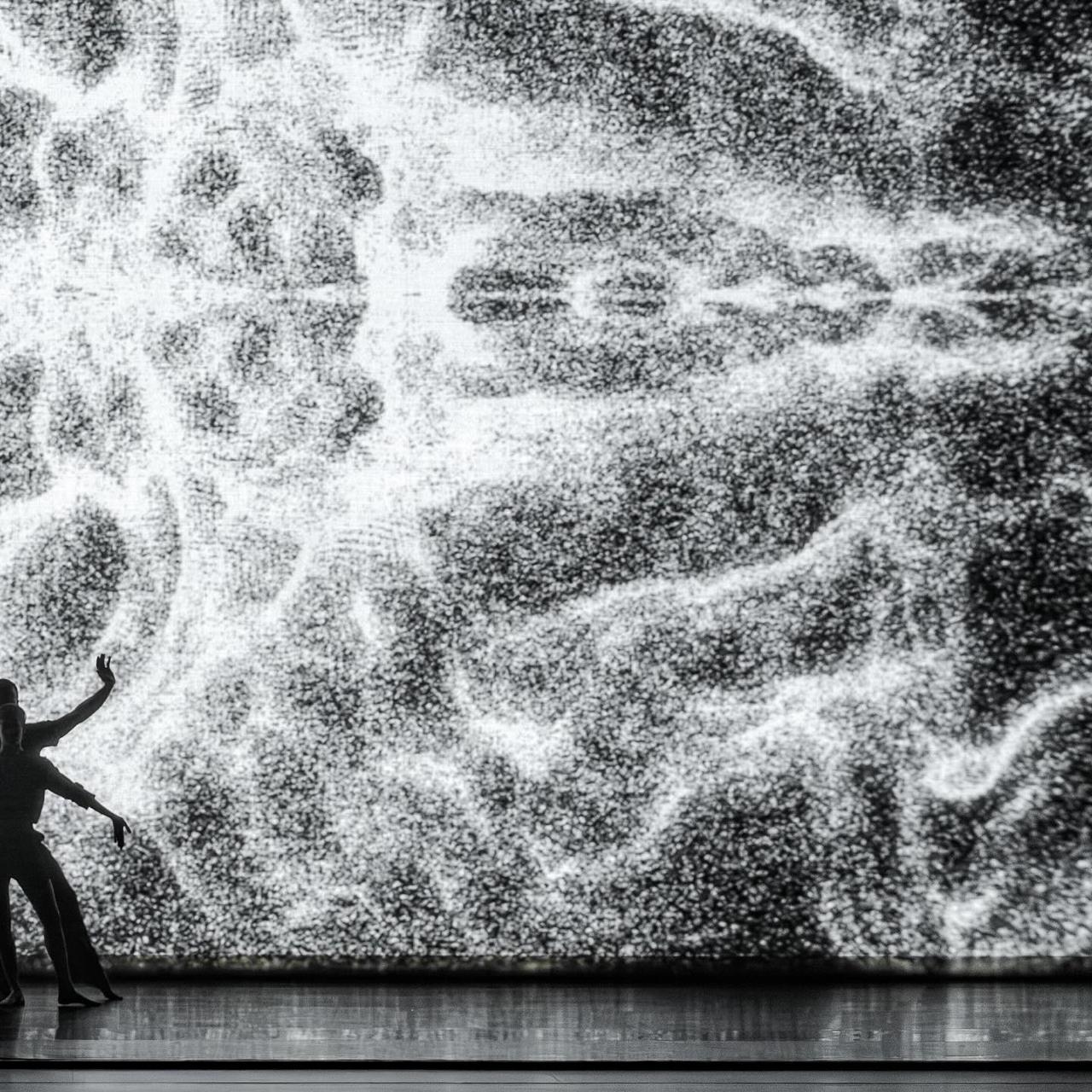
Finally: What do you hope will be the legacy of fuse*?
This is a very beautiful question, because it concerns not what we do, but what remains. We don’t think in terms of a monumental legacy. We are more interested in having contributed, even subtly, to experiences that leave a trace in the people who encounter them. When someone passes through one of our works, we hope they can slow down. Step out of the logic of consumption and efficiency. Enter a space of presence where they are not required to understand everything, but simply to feel. If there is an impact that matters to us, it is helping people perceive their existence and their relationship with the world in a slightly different way — more open, more sensitive, more aware.
If fuse* were to leave something behind, we would want it to be this: not works, but experiences that help people feel, even for an instant, more deeply human.