- Date
- 15 SEPTEMBER 2026
- Author
- GLORIA MARIA CAPPELLETTI
- Image by
- COVER BY CRIS WAR
- Categories
- Aesthetics
DOLCE XOXO: THE AFTERIMAGE
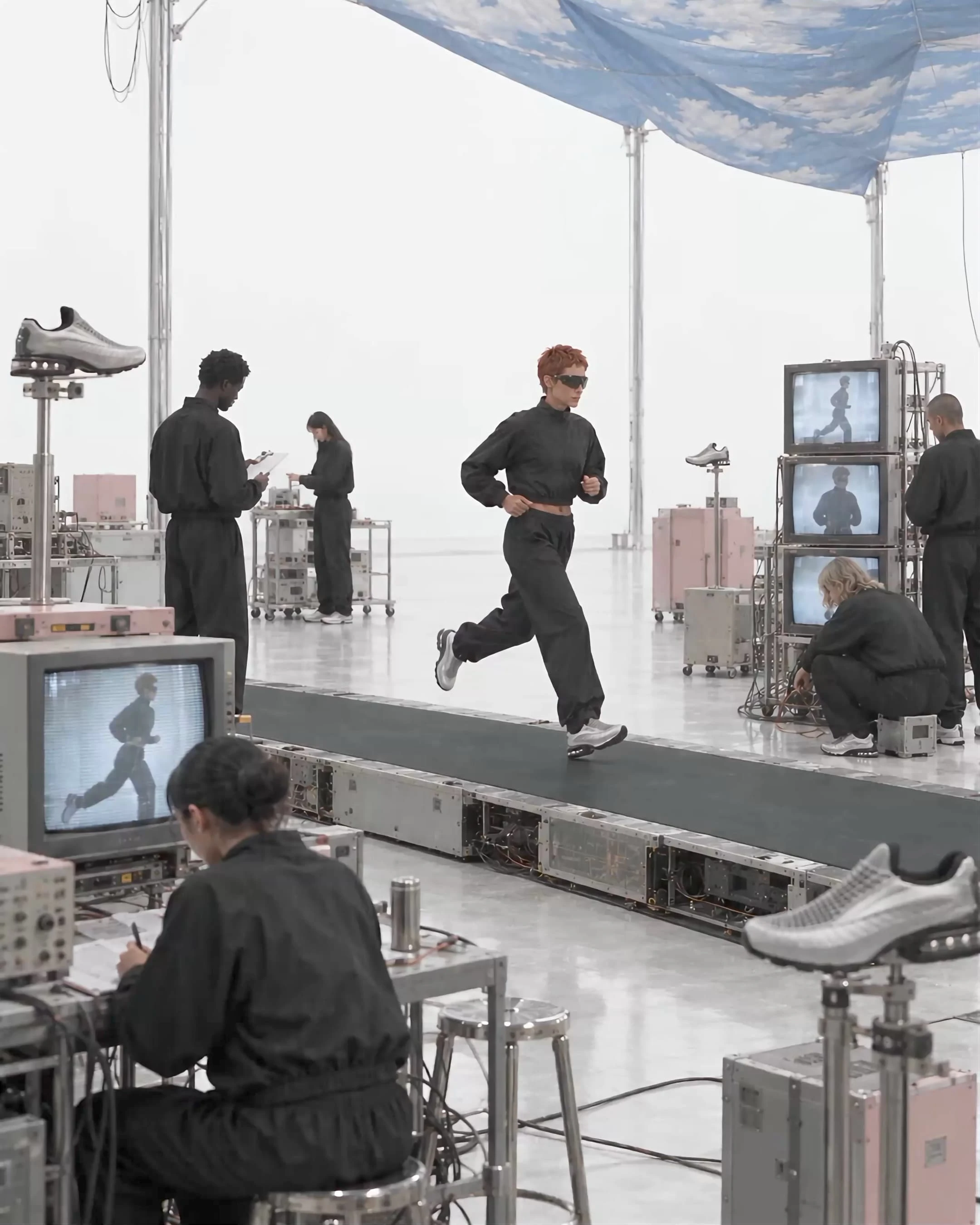
For twelve hours, Dolce XOXO powered by SNKRS turned Milan into a space where images, sound, fashion, bodies and internet culture could exist on the same plane. What began as a group exhibition moved into the night as an afterparty, shifting from looking to listening, from screens to bodies, from references shared online to a community coming together in the same physical space.
And then, like every event, it ended.
But images have a different relationship with endings.
They stay open in tabs. They get saved, screenshotted, reposted, cropped and sent to someone else. They disappear into camera rolls and resurface months or years later. They accumulate new references, lose their original context and acquire another. Online, an image rarely stays where it began.
This logic of circulation was already embedded in Dolce XOXO: a project shaped by a generation that learned to communicate through images and digital codes, to build identities through references, and to experience the internet less as a separate destination than as an extension of everyday life. The exhibition brought that language into physical space; the afterparty gave it a body, a rhythm and a collective pulse.
For RED-EYE, the conversation continues after the event itself.
We invited three digital artists Cris War, Taniguchi Mao and Aleksandra Bokova to create new works inspired by the world of the Nike Air Max Dolce. Rather than documenting what happened at the DOLCE XOXO event, their images extend its visual language into new territories, treating the project itself as material to be absorbed, distorted, remembered and remixed.
Across their very different practices, the screen becomes a place where reality can mutate. Images collide with memories, digital objects acquire impossible textures, fragments of personal experience coexist with visual codes circulating across the internet. The polished meets the accidental; the intimate meets the hyperreal; nostalgia is pulled out of chronology and dropped back into the present.
There is something distinctly early-internet in this freedom to combine things that were never supposed to belong together but also something completely contemporary in the speed, density and emotional intensity with which those combinations now happen.
It resonates with the Nike Air Max Dolce sneaker itself: a silhouette carrying the memory of another digital moment into the present, where its codes can be read, styled and imagined again.
Cris War, Taniguchi Mao and Aleksandra Bokova each approach this condition from a different direction. One looks at what happens to reality after it passes through digital systems. Another treats the image as a container for a fleeting emotional moment, building an internet-native memory album. The third constructs exuberant synthetic worlds where color, objects and bodies seem to have escaped the limitations of physical matter.
Together, their works suggest that digital culture is a system for keeping things in motion.
Dolce XOXO happened in Milan. Its afterimage keeps circulating.
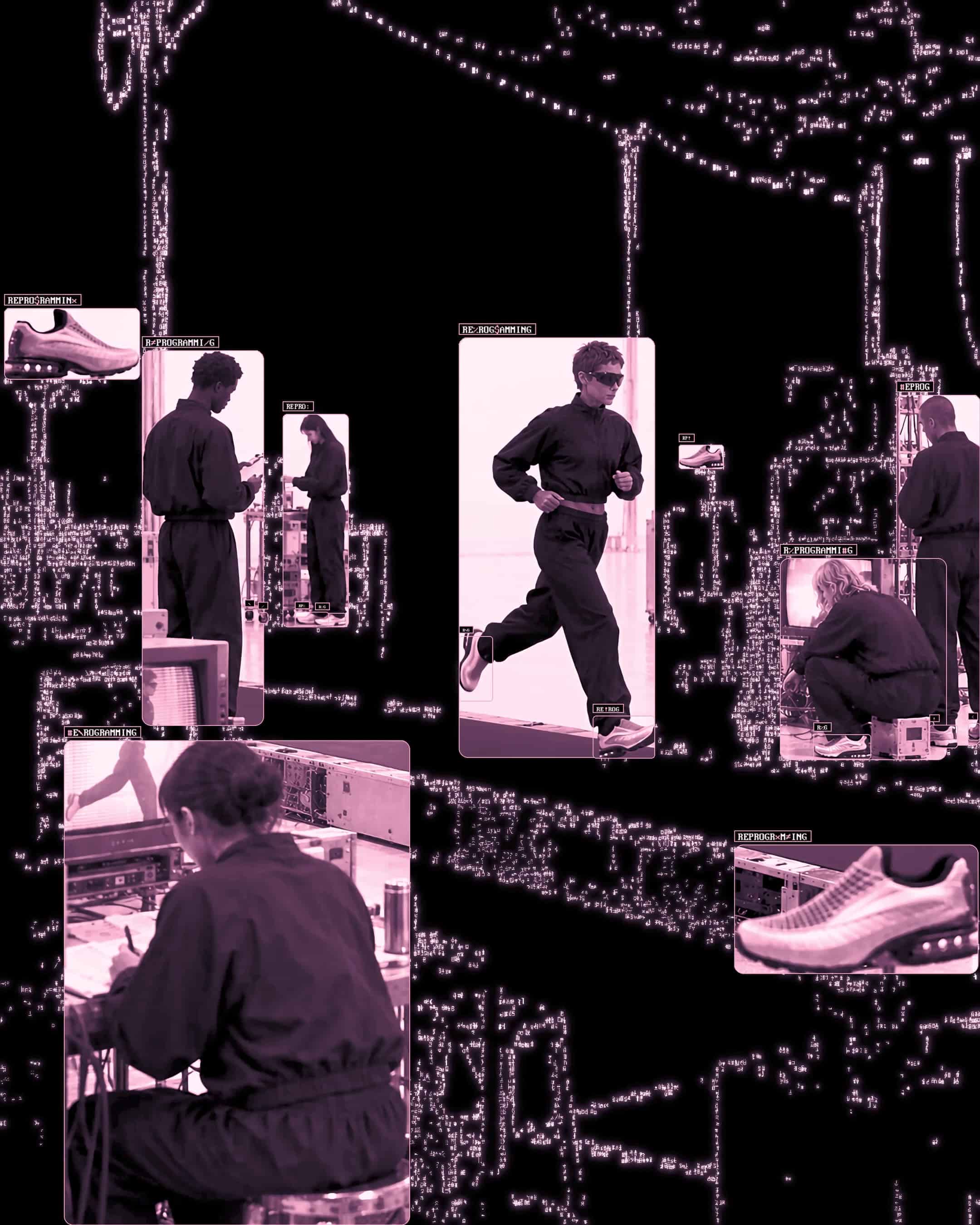
For Cris War, the distinction between online and IRL is becoming increasingly irrelevant. Thinking of them as two separate worlds creates the illusion that such a separation still exists. Digital culture has become so deeply embedded in the way we see, communicate and build relationships that it is now part of reality itself. His work emerges precisely within this hybrid space, where images, codes and physical matter continuously move through one another and change along the way.
Rather than using digital tools to represent what already exists, Cris War is interested in what happens to reality once it has passed through them. “I don’t use digital technology to represent reality. I’m interested in what reality becomes after passing through it.”
The screen becomes less of a surface and more of a passage: a space capable of transforming images, meanings and perceptions before sending them back into circulation.
Within this constant circulation, time also begins to behave differently. Digital time accelerates, pauses, archives, loops and continuously brings images and references back to the surface. Something can feel new, disappear, then return years later carrying an entirely different meaning.
It is a dynamic that resonates with the Nike Air Max Dolce sneaker, a model rooted in the visual and digital sensibility of the early 2000s and recontextualized for the present. For Cris War, however, being part of your own time means something very different from constantly chasing its speed.
“I try to be contemporary without becoming temporary.”
His attention is drawn instead to what, within all that acceleration, has the capacity to remain. Cultural and technological shifts often appear radical when they first emerge, until they become so deeply integrated into everyday life that they turn almost invisible. His practice occupies precisely that threshold: recognizing transformation while it is happening, before it simply becomes reality.
But if images can move at potentially infinite speed, what matters is also what they activate along the way.
“An audience watches. A community recognizes itself.”
For Cris War, putting a work into circulation means leaving behind a question strong enough to survive beyond the image itself. The how? can capture attention; it is the why? that creates the space for a conversation.
And perhaps this is where the relationship between digital and IRL becomes most interesting. A community begins to form when an image, an idea or a question starts to be shared, reinterpreted and carried somewhere else, when something that once belonged to the artist enters someone else’s language.
At that point, the work continues to move on its own.
And its circulation becomes a form of connection.
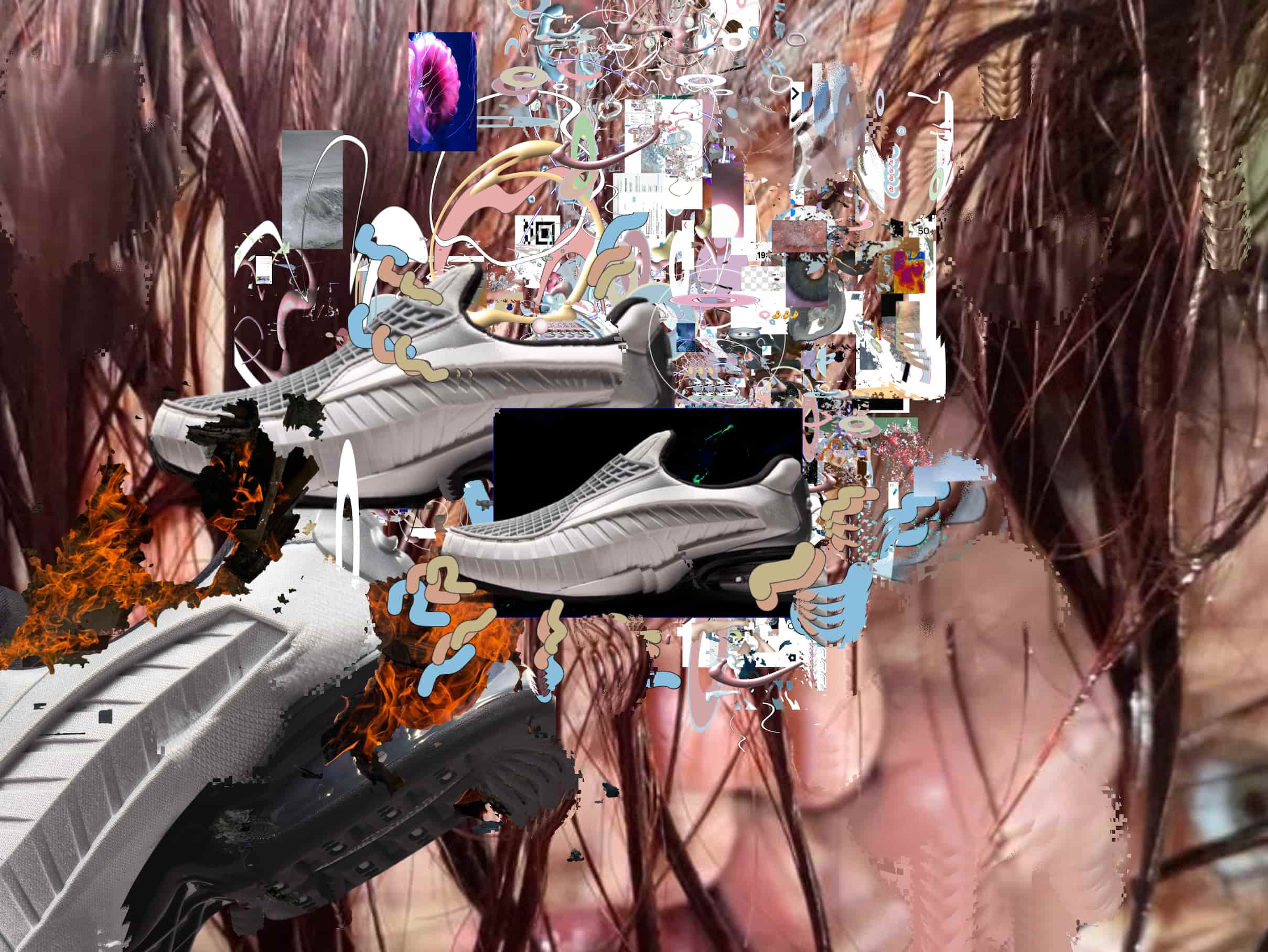
A memory, an image, a feeling in Taniguchi Mao’s world, each can move from physical life to the screen and back again. Digital and physical experience coexist in the same space, crossing distances and carrying images, emotions and fragments of a life from one place to another.
“My art is a worldview built on the internet.”
Created in Japan and transmitted elsewhere through the network, Taniguchi’s work seems to inhabit this condition naturally. Her compositions accumulate photographic fragments, abstract forms, graphic traces and digital artifacts into dense visual fields where distinctions between memory, image and interface begin to dissolve. The physical and the digital feel, in her words, “like the same kind of thing” yet an image can still travel invisibly across distance and leave something intensely personal behind.
There is a sense of accumulation throughout her work, but also of immediacy. Each composition seems to hold many temporalities at once: something seen, something remembered, something downloaded, something felt. Rather than trying to organize these fragments into a linear narrative, Taniguchi allows them to exist simultaneously, much like memory itself.
“My art represents that moment.”
For her, making an image is close to taking a photograph. It captures an emotional instant that can later be revisited, turning the digital archive into something resembling a personal memory album. Looking back at an older work means encountering a previous version of her own experience.
This relationship with time feels particularly resonant within Dolce XOXO, where references from different moments of digital culture are continuously brought back into the present. Online, images rarely disappear completely. They pause, circulate, are saved, forgotten and rediscovered. What once belonged to a specific moment can suddenly acquire another life.
Taniguchi’s work embraces both sides of this rhythm: the immediacy of capturing the present and the possibility of returning to it later. The image becomes a container for a moment, while the internet gives that moment the ability to keep moving.
Yet circulation, for Taniguchi, remains deeply personal. “My art expresses a special feeling that belongs only to me.” When someone encounters one of her works and calls it beautiful, she experiences that appreciation almost as something directed toward her own life. The artwork and the person behind it remain intimately connected.
This vulnerability gives sharing a different meaning. Publishing an image online means allowing something private to enter a collective space, where it can be seen, felt and eventually transformed by other people.
And perhaps the most interesting transformation happens when looking becomes making. Taniguchi hopes that encountering her work might make someone else think: “I want to try making one too.”
In that gesture, an individual visual language begins to travel beyond the person who created it. One image inspires another; a private memory becomes a shared impulse; expression generates expression.
The internet becomes both memory album and transmission system, a place where a moment can be preserved, sent elsewhere, and become the beginning of someone else’s.
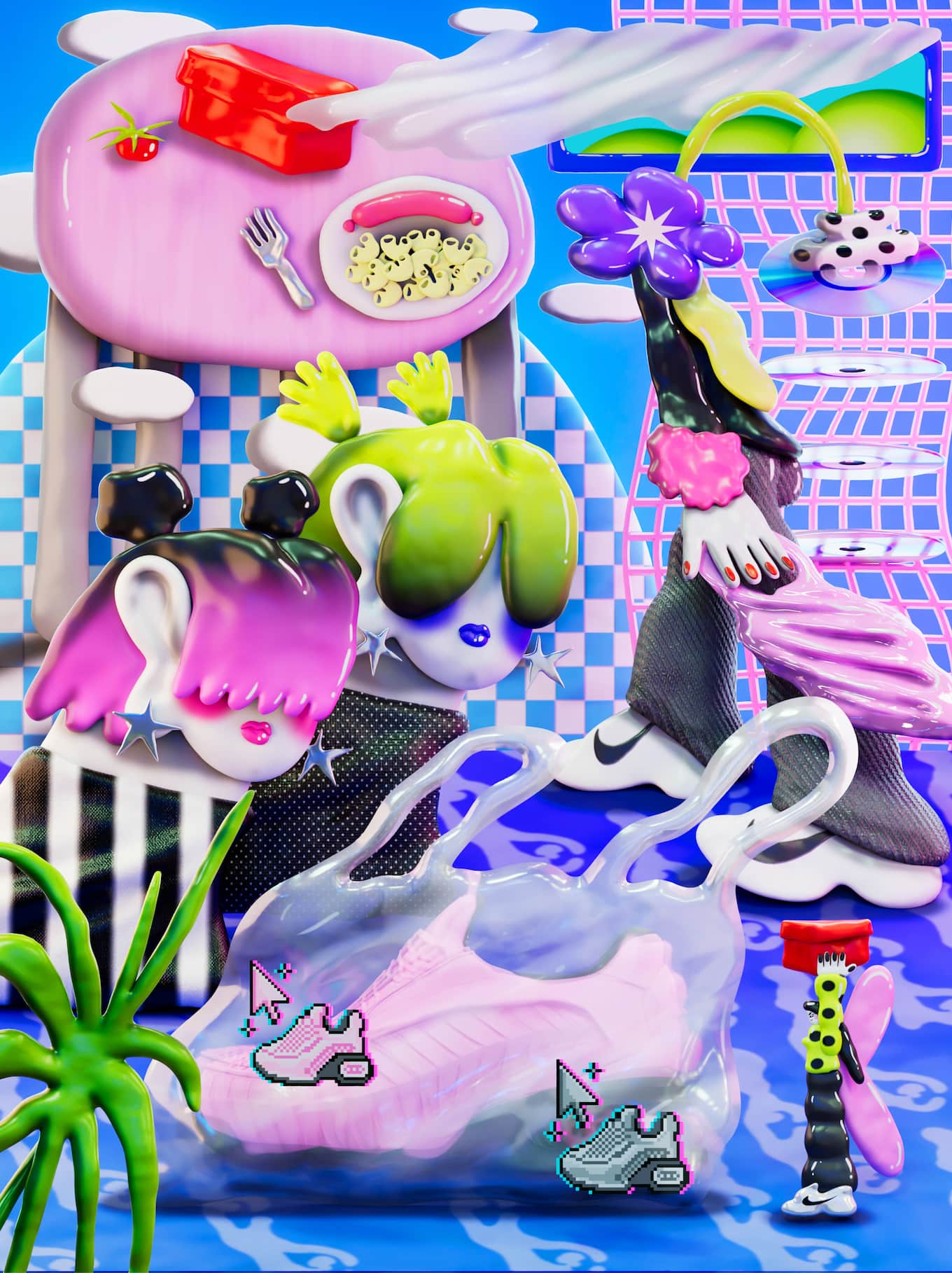
For Aleksandra Bokova, the early internet is inseparable from memory. Her work looks back at a moment when screens and early social media were beginning to change how a generation perceived itself, its bodies, its image, and the ways in which identity could be constructed and shared.
It was the beginning of a new kind of vulnerability, but also a period Aleksandra remembers as playful and experimental. Digital media was slowly becoming intertwined with how she and her friends spent their time, communicated and presented themselves to the world. Yet what she remembers most vividly is its ability to bring people closer together.
“Digital media often felt like something that brought us together rather than something that separated or isolated us.”
That tension between intimacy and exposure still runs through her practice. Aleksandra’s hyperreal digital worlds may be synthetic, glossy and deliberately exaggerated, but beneath their surfaces are memories, insecurities and deeply personal references. The digital becomes a way of revisiting formative experiences and reshaping them through the visual language of the present.
Time, however, moves differently online. Trends accelerate, aesthetics mutate and the pressure to remain current can become relentless. Rather than surrendering to that rhythm, Aleksandra tries to construct one of her own.
“I think I try to invent my own tempo.”
While working within contemporary culture means remaining attentive to what is happening around her, she also protects what she calls her own “cozy corners”, constellations of interests, memories and references that do not need to change every time culture does. They give her practice continuity and allow it to remain recognizably hers within an endlessly shifting visual landscape.
This makes the return of the Nike Air Max Dolce sneaker particularly resonant. Fashion has always moved through cycles of rediscovery and reinvention, but in digital culture those cycles feel increasingly compressed: silhouettes, aesthetics and references can disappear and suddenly return charged with new meaning. Growing up in the early 2000s, Aleksandra remembers a world in which everything seemed constantly new. More than twenty years later, she finds a different kind of pleasure in seeing familiar forms return, transformed by the present, and by the person encountering them again.
Seeing an object from that period reappear in the present is both familiar and strange: the object may return, but the person looking at it has changed. As she puts it, you encounter it again “with a completely different brain.”
Rather than nostalgia, Aleksandra sees pleasure in this kind of cultural recycling, in watching references loop back, acquire new contexts and become available for another generation, or another version of ourselves, to interpret again.
The same principle extends to how her own work circulates. Aleksandra does not approach an image with the expectation that it must generate a conversation or manufacture a community. What she shares is often much smaller and more personal: something she finds funny, a memory, an observation, a fragment of how she experiences the world.
Projects like Dolce XOXO become interesting precisely because those individual fragments can enter a shared space. “You make something from your own memories and references, put it into circulation, and then other people recognise completely different pieces of themselves in it.”
For Aleksandra, that recognition alone does not automatically create a community. Community emerges through participation: making things, exchanging ideas, sharing interests and contributing individual perspectives to something larger.
She sees herself simply as one of the people adding something to that ongoing exchange.
A memory returns while the context changes. We change with it and suddenly something familiar can become new again.
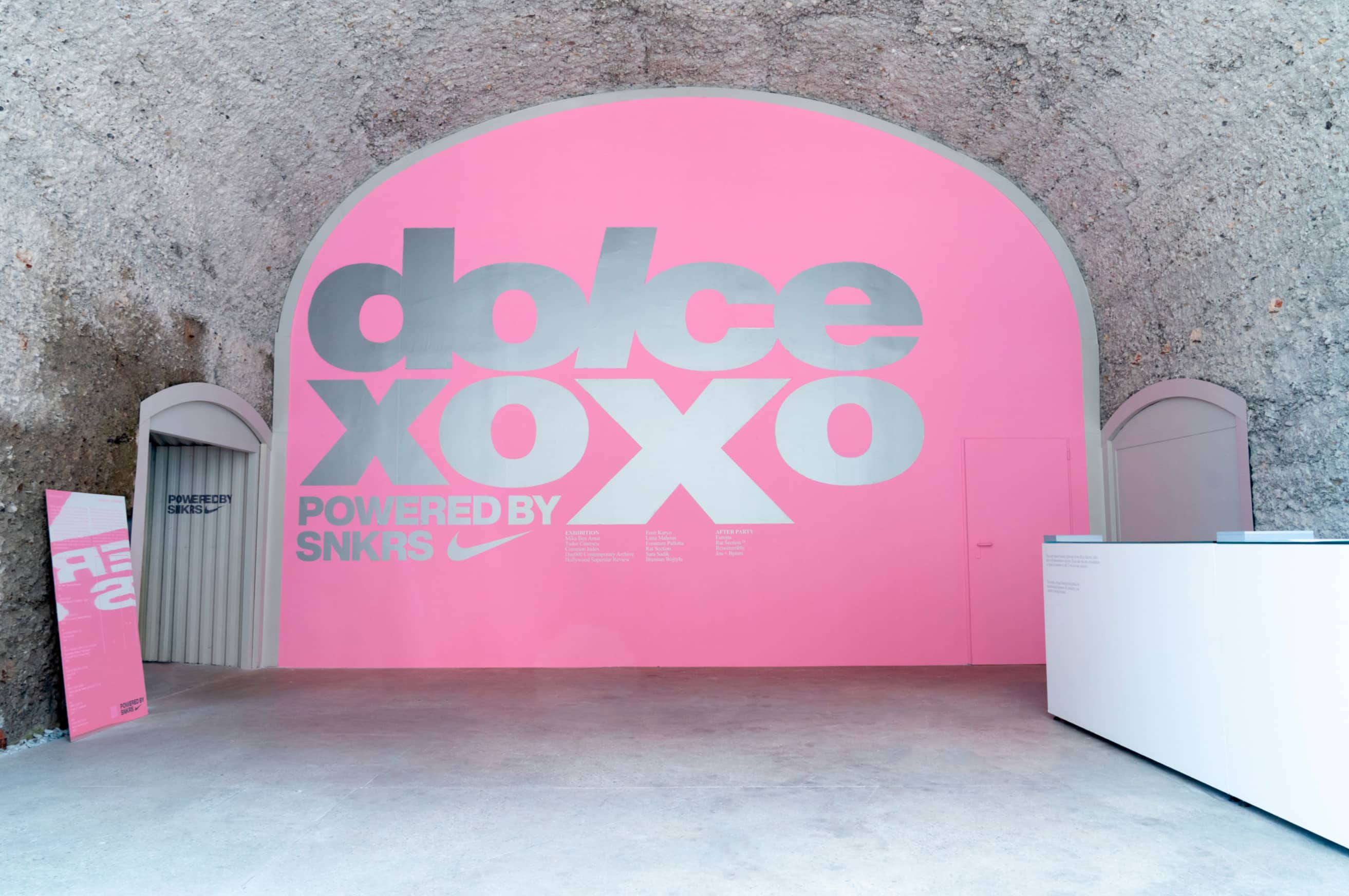
Want to explore the world of Dolce XOXO further? Discover the project, its connection to the Nike Air Max Dolce, and the ideas behind the Milan experience powered by SNKRS.
Explore Dolce XOXO on Nike SNKRS →
Words: Gloria Maria Cappelletti
Original Artworks: Cris War, Taniguchi Mao, Aleksandra Bokova
Photography: Aria Ruffini, Courtesy of Nike
@nike
#DolceXOXO