- Date
- 26 SEPTEMBER 2026
- Author
- GIORGIA IMBRENDA
- Image by
- LAURA BUECHNER X NEW LINE ACADEMY FIRENZE
- Categories
- Beauty
Laura Buechner × New Line Academy: Beauty in the Age of AI
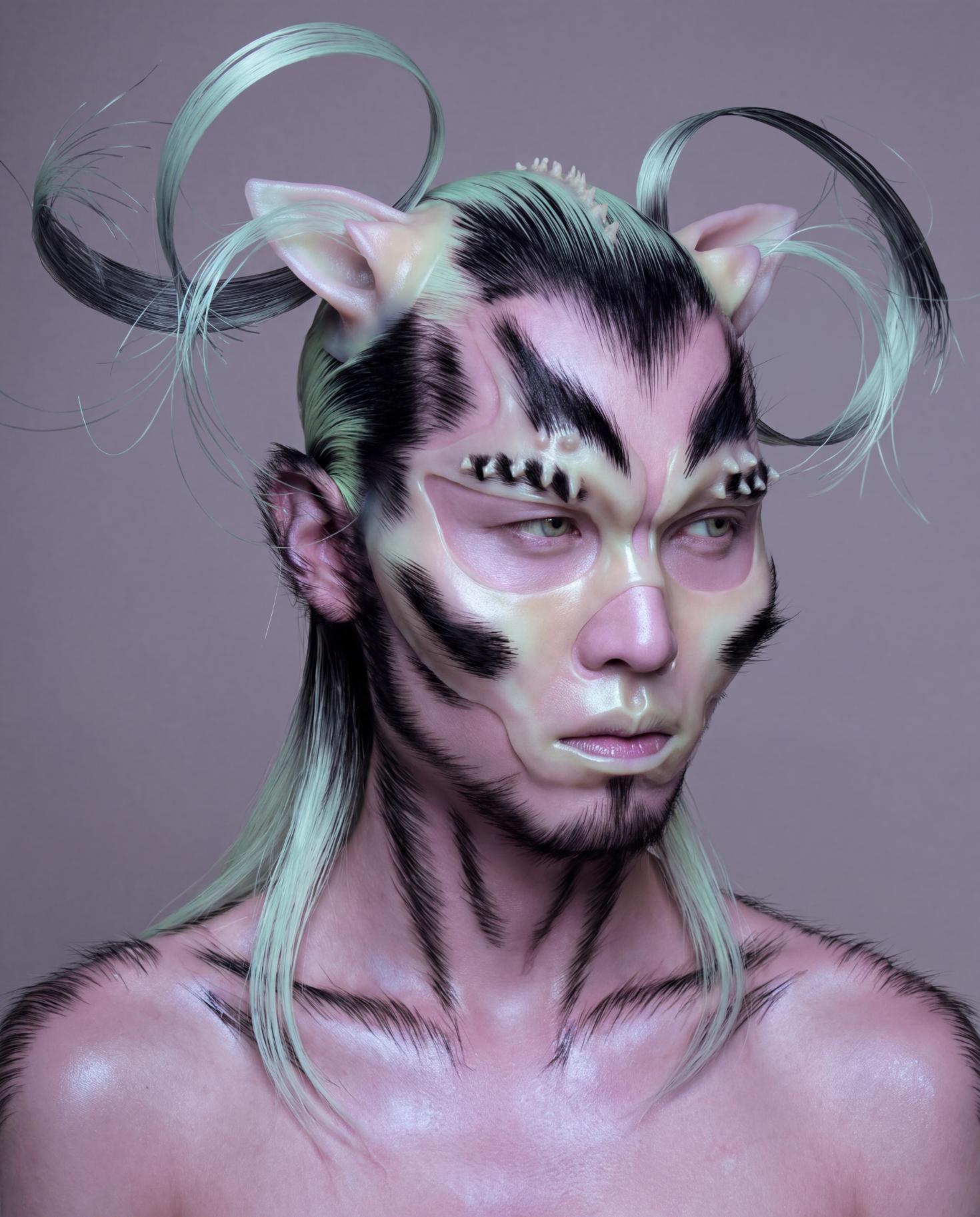
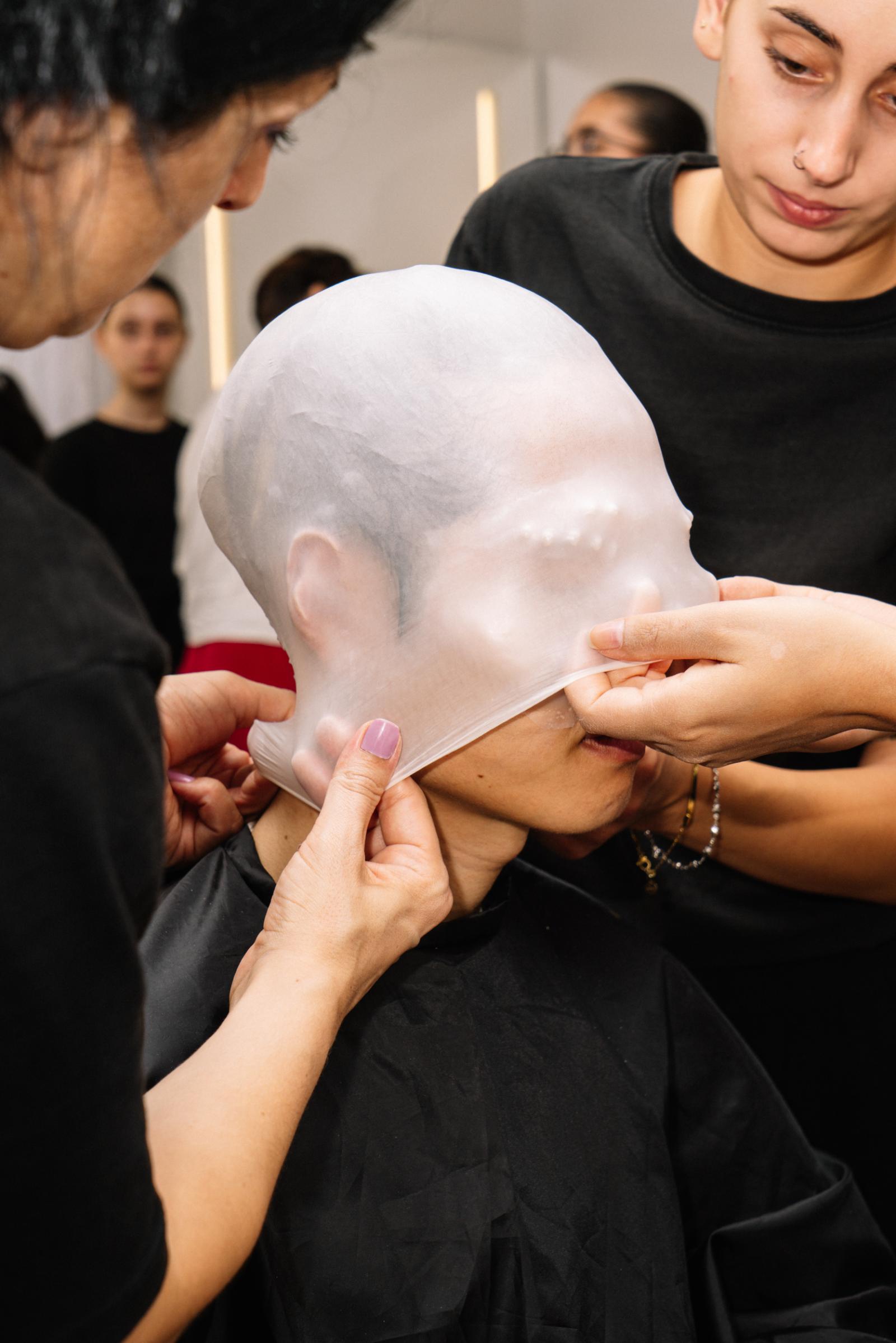
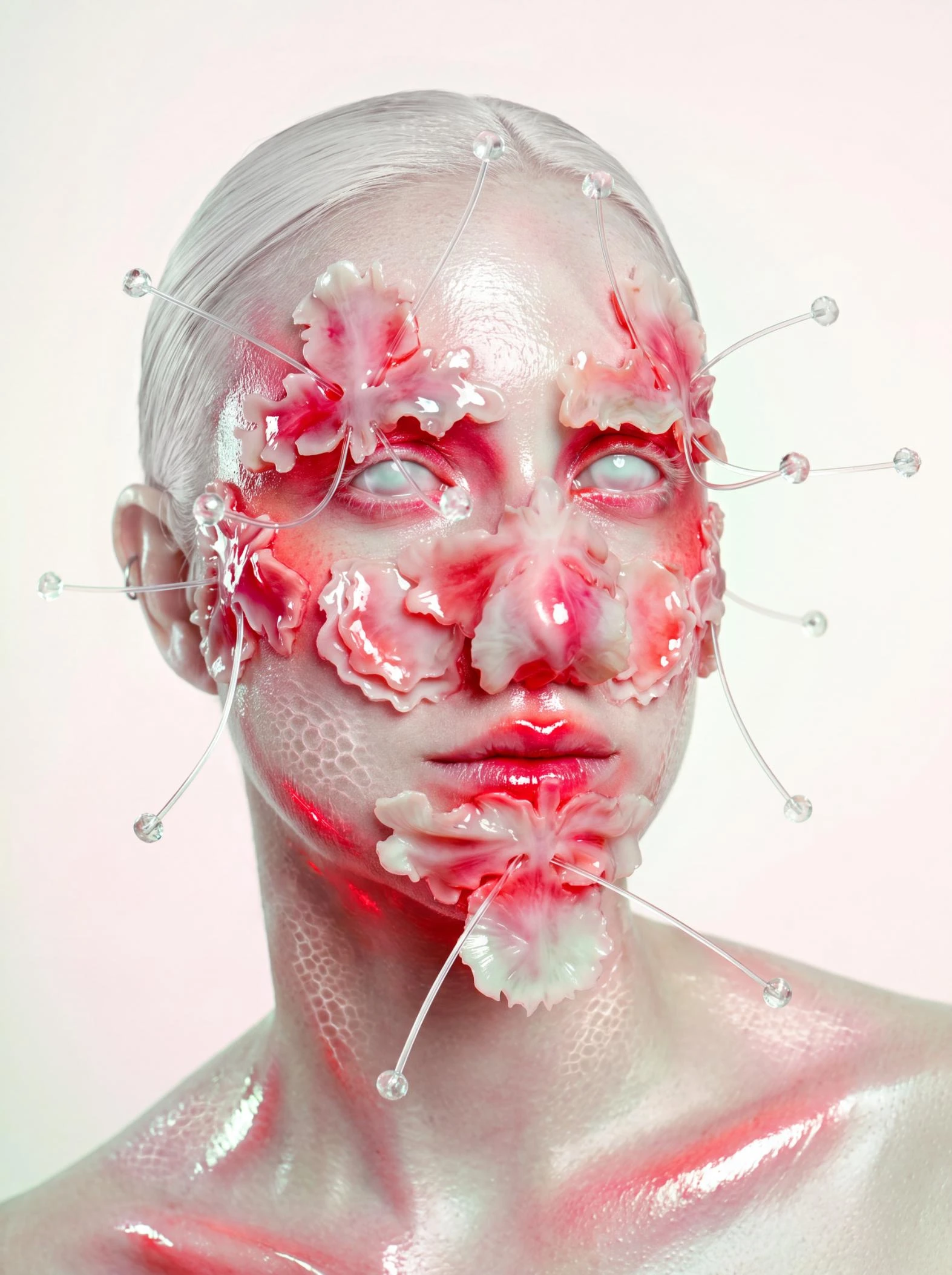
For Laura Buechner, the boundaries between fashion, art and technology have always been fluid. Her practice explores how bodies, materials and forms can move between physical and digital worlds, using generative AI as a tool to extend imagination rather than replace human creativity. This approach became the starting point for her collaboration with the students of New Line Academy Firenze. Working from their handmade prosthetic make-up creations, inspired by phytomorphic and zoomorphic forms, Laura reinterpreted each look through her own visual language, exploring new textures, colours and imaginary anatomies while preserving the identity of the original work. The result is a creative dialogue between two generations and two ways of making images: the students’ hands shaping physical matter and Laura’s digital experimentation expanding it into new possibilities. A meeting between craftsmanship and AI, where technology becomes not the final destination, but another space for creativity.
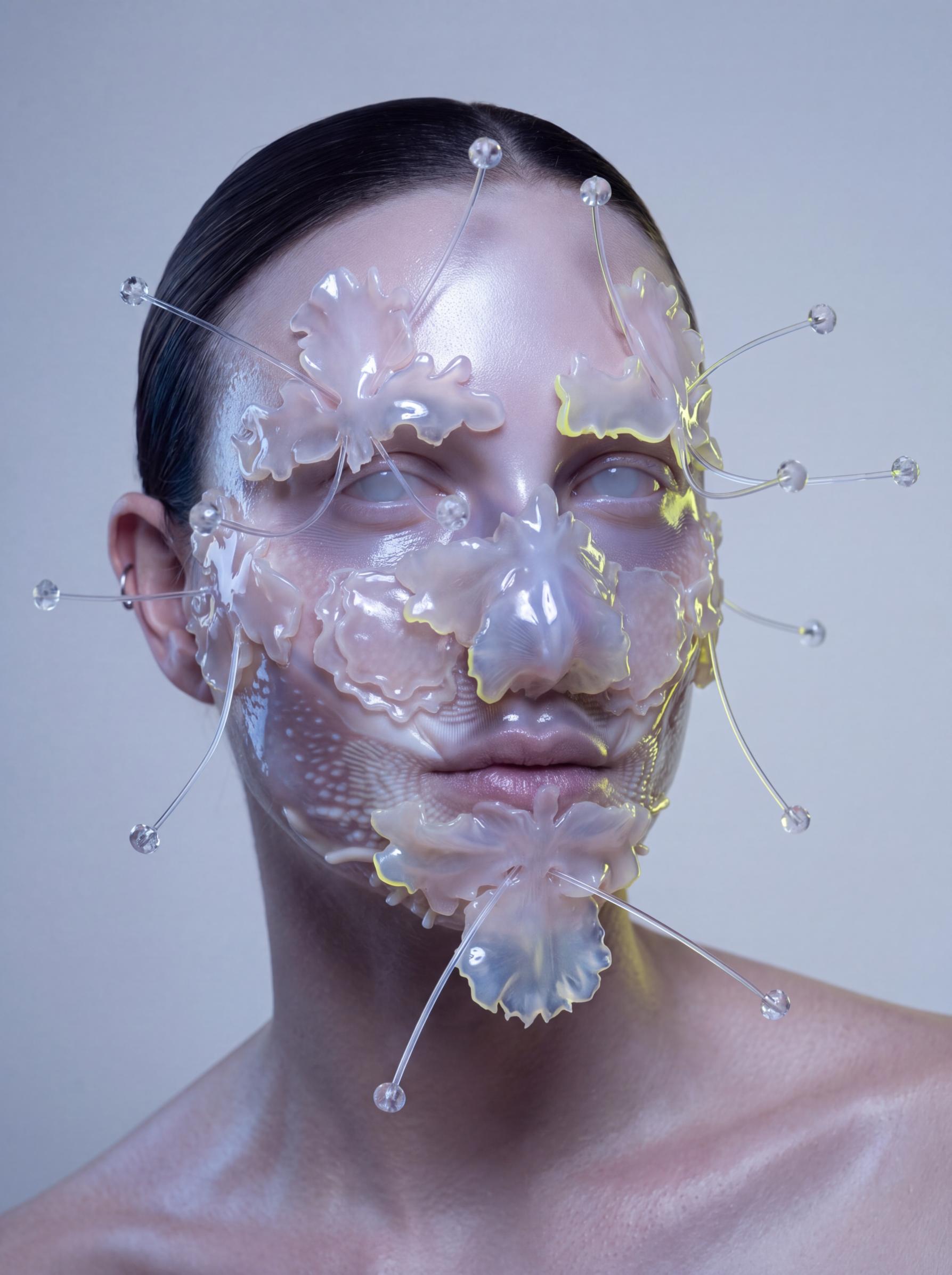
The project stems from the encounter between two seemingly opposing languages: the tactile, handcrafted dimension of the prosthetics created by the students and the immaterial nature of AI-generated imagery. How did you translate this physicality into a new digital artwork while preserving the identity of the original work and, at the same time, bringing it into your own visual universe?
Coming from a fashion background, and working a lot with AI-generated imagery for the fashion and beauty industry, I’m used to working very precisely with images and maintaining specific elements like a product or garment.
For this project, I wanted to use that approach to preserve the identity of the original prosthetics while exploring my own visual language through materiality and colour. I experimented with different expressions of materiality and colour within my text prompts, exploring many combinations of surfaces and textures until I found a matching combination that felt visually right and connected to my aesthetic.
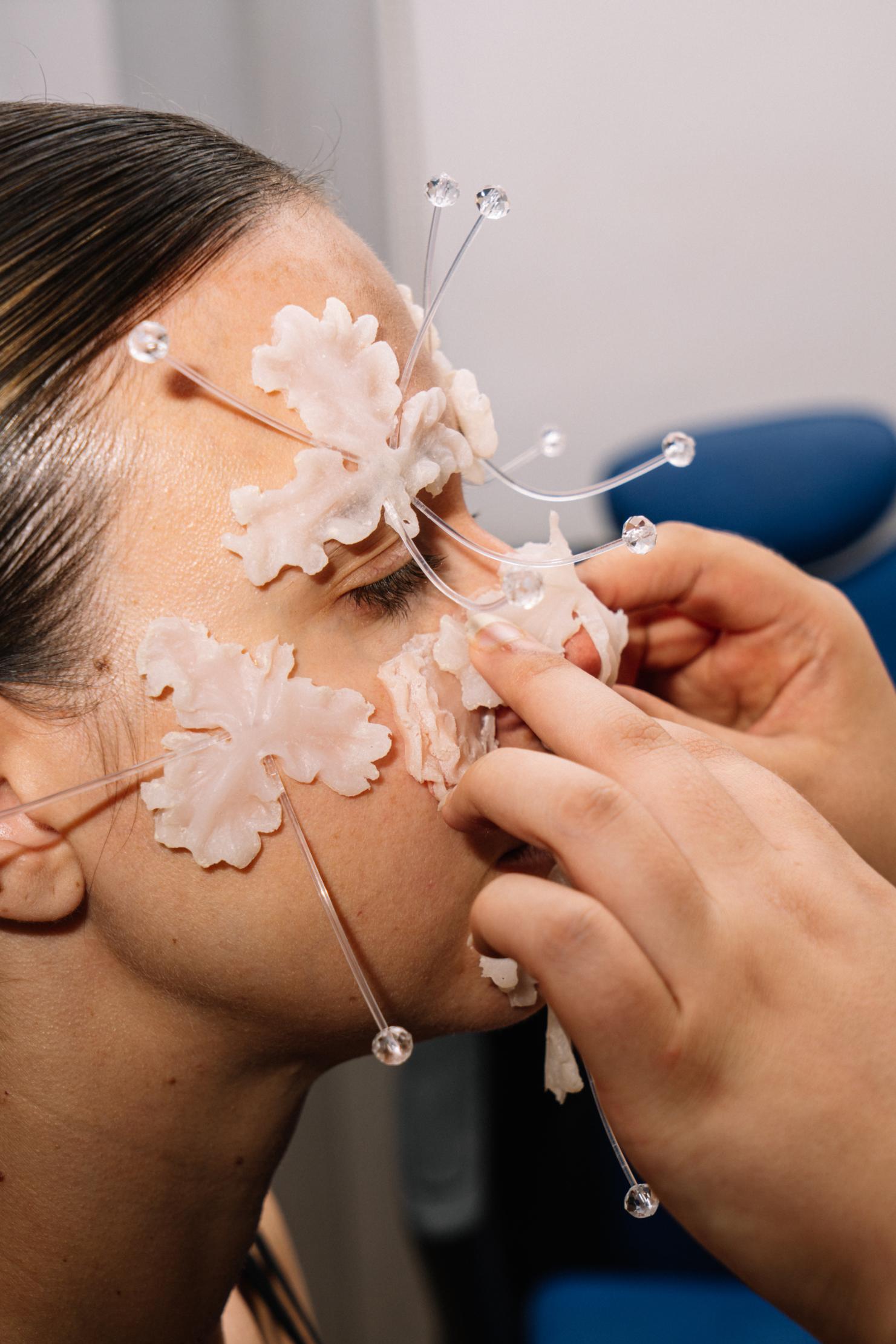
The four looks explore phytomorphic and zoomorphic forms, transforming references from the plant and animal worlds into new anatomies. Within your creative process, what kind of dialogue emerges between human intuition and artificial intelligence? How much of this transformation comes from you, and how much emerges through your interaction with the technology?
I love the idea of combining human elements with phytomorphic and zoomorphic forms. The idea and starting point always come from me — AI mainly becomes a tool to explore and visualise different variations of what I have in mind. The interesting part is seeing how the technology interprets my direction and sometimes takes it somewhere I didn’t initially expect.
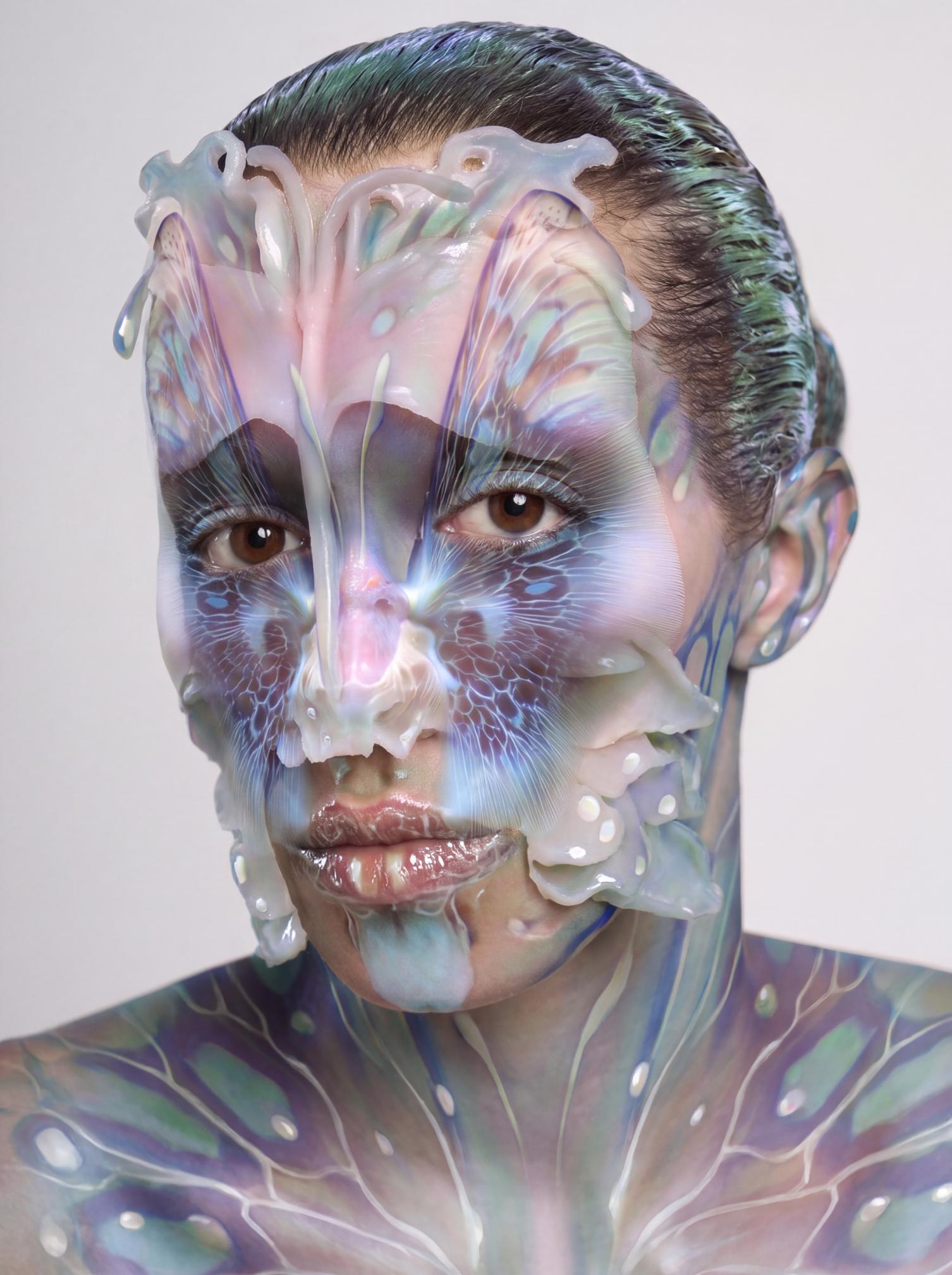
When you begin constructing an image, do you already have a precise vision of the final result, or do you prefer to leave room for the unexpected? Are you interested in that moment when AI deviates from the initial idea and suggests something you had not imagined?
When I craft imagery for the fashion and beauty industry, I usually have a very clear idea in my head of what I want the final result to be. With more artistic and personal projects, I enjoy leaving more room for exploration. I sometimes give AI more freedom to interpret an idea and suggest variations that I might not have imagined myself. That unexpected element is often what makes the process interesting.
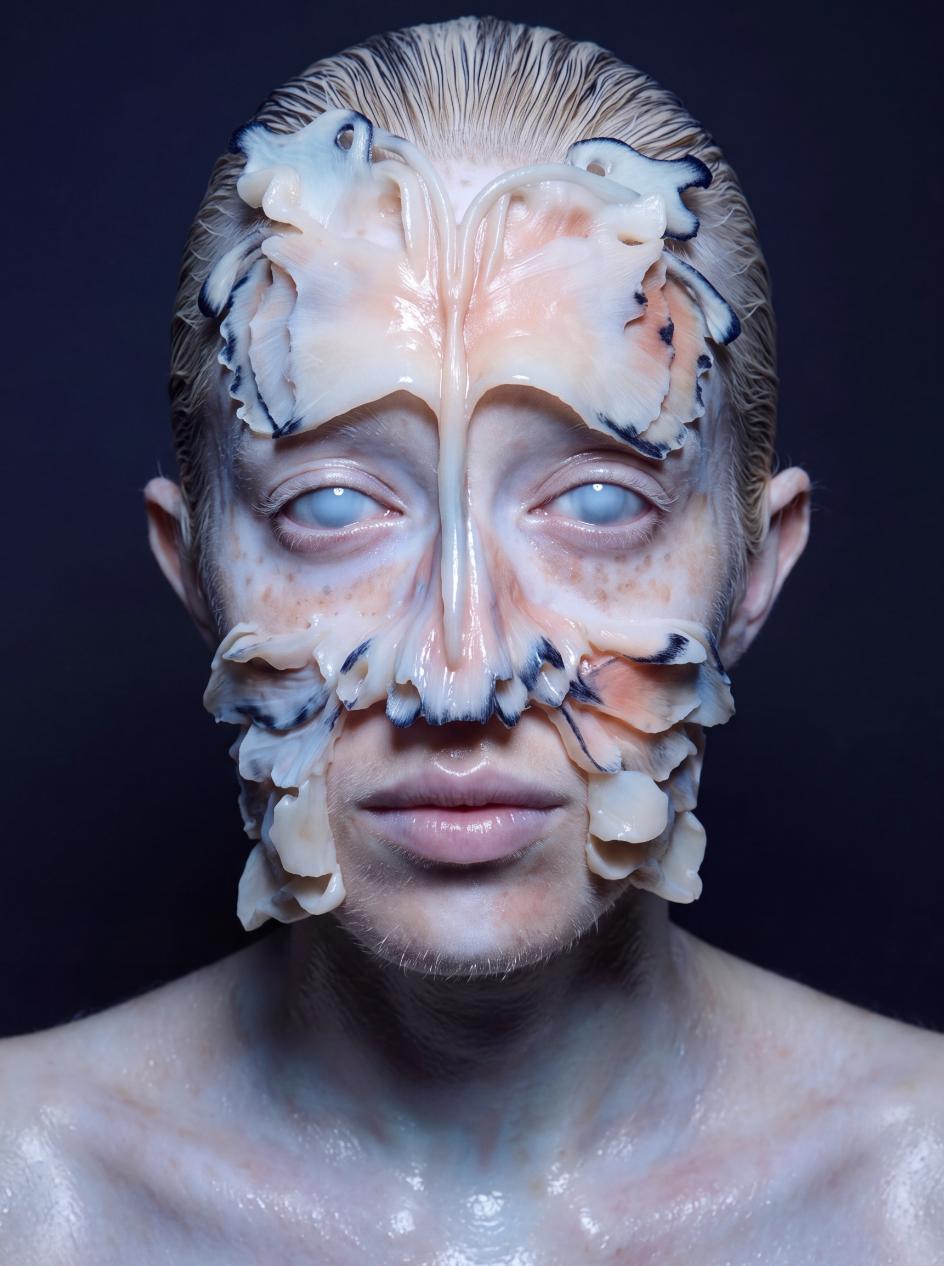
Artificial intelligence is often associated with an aesthetic of perfection and control, while prosthetic make-up carries with it a sense of materiality, gesture, imperfection and unpredictability. What role do error, anomaly and imperfection play in your practice? Can they become elements capable of making a digital image feel more alive and radically human?
I’m not a big fan of perfection, as I find it can be boring. I like to create tension in imagery, sometimes very subtle, sometimes very obvious and bold. I think this is also why I enjoy experimenting and pushing AI to show me transformations and possibilities that I haven’t seen before. The result can sometimes feel a little unsettling. Art doesn’t always have to be pleasing; sometimes the unexpected or imperfect is what makes an image feel more alive.
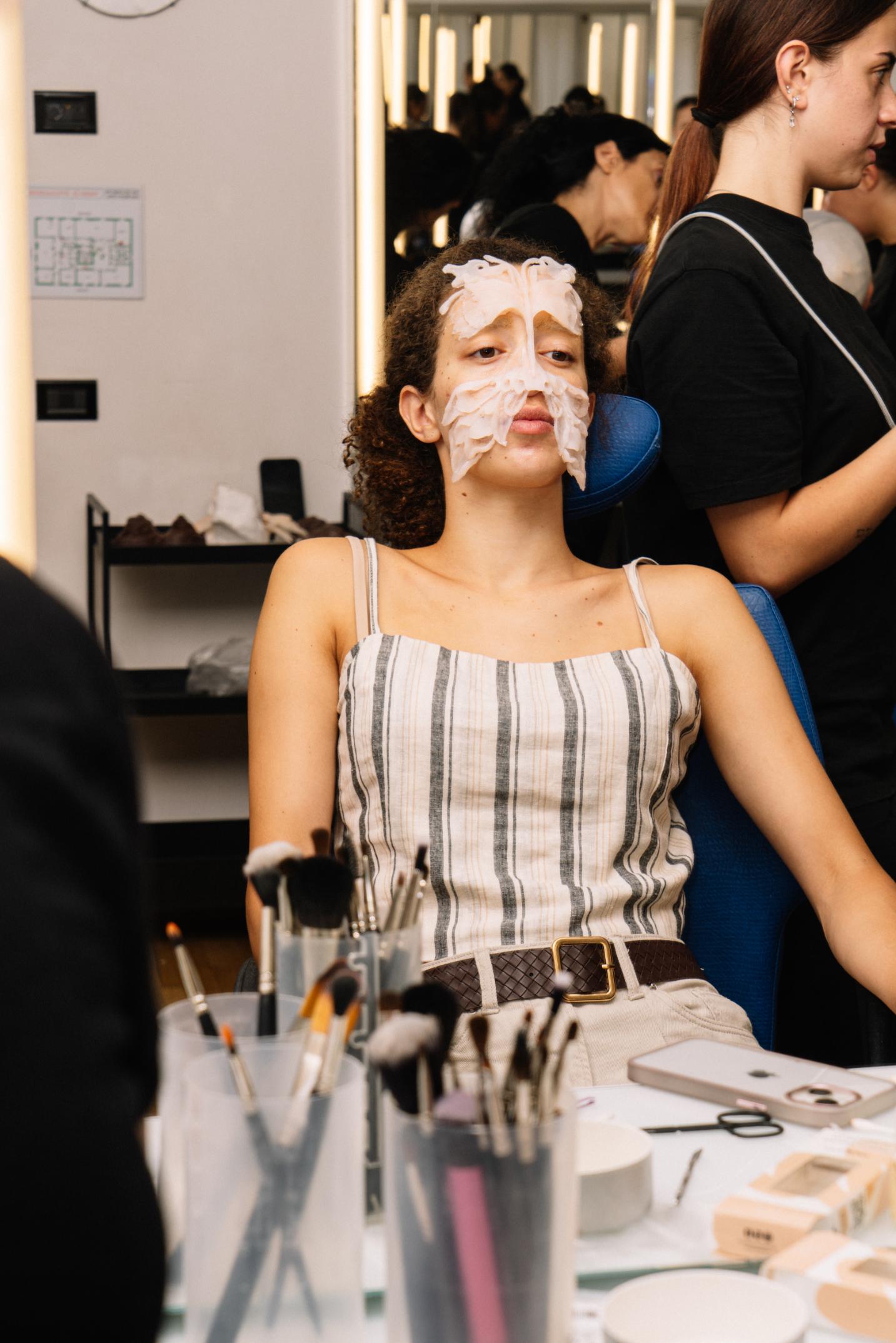
In these images, the body seems to become a surface in constant mutation: human, vegetal, animal and, ultimately, digital. Do you think AI is contributing to a new understanding of visual identity, in which the body is no longer a fixed form but rather a fluid, expandable and continuously transformable territory?
I absolutely think so. We’ve already seen how the 3D boom changed our perception of beauty in the digital realm, and I think that was only the beginning. I love the idea of AI opening up even more diverse perceptions of beauty and the body, where identity can become something more fluid and transformable rather than fixed.
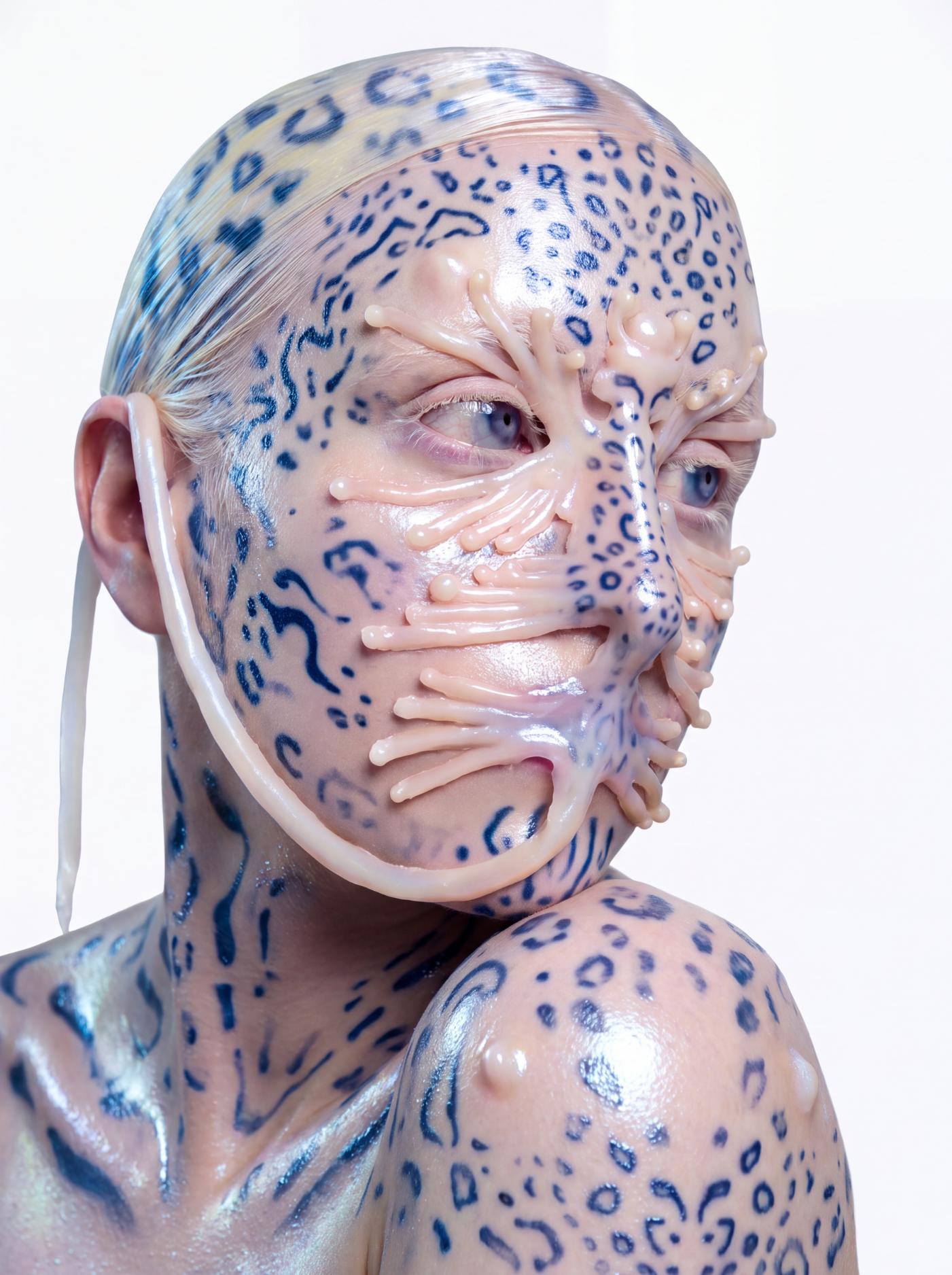
Fashion and beauty have always used the body as a space for experimentation and the construction of identity. What changes when artificial intelligence is introduced alongside make-up, styling and prosthetics? Are we simply expanding the tools at our disposal, or are we beginning to imagine an entirely new aesthetic language?
AI definitely enables us to expand our creativity, which I absolutely love. In a way, our imagination becomes the limit. I can imagine this leading to an entirely new aesthetic language.
At the same time, I think the direction should always remain human. What makes our creative decisions unique is our artistic judgement, shaped by our education, personal experiences and emotions. That is deeply personal, and I don’t think AI can replace that.
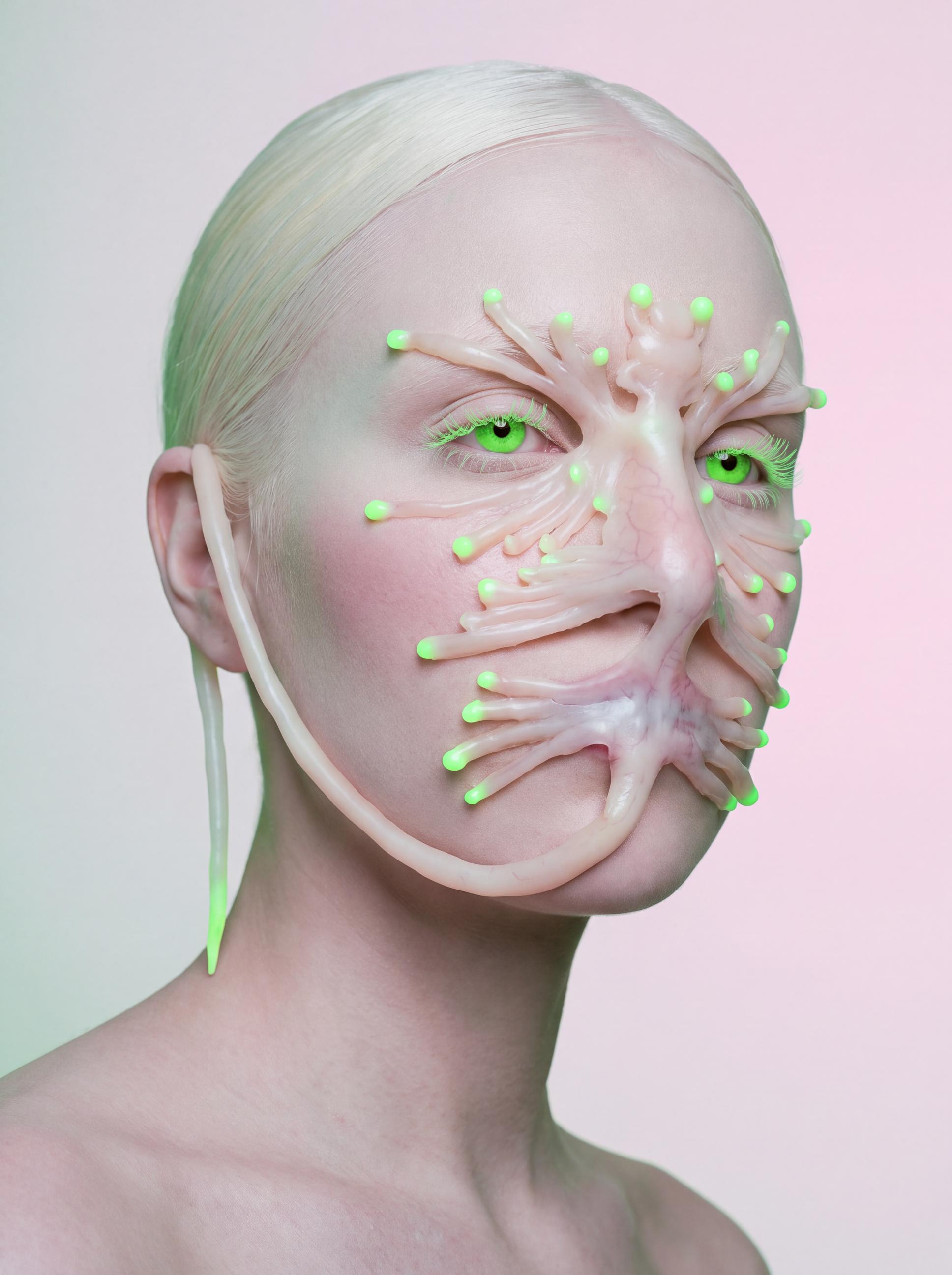
Collaborating with an Academy also means engaging with a new generation of creatives who will enter an industry profoundly transformed by AI. What skills do you think are essential today for students of fashion, beauty or make-up who want to use these tools in an authored and distinctive way? And which part of the creative process do you believe will necessarily remain human?
One very important skill will be knowing how to generate images and mastering at least one generative AI tool well enough to express their own ideas and visual language. Beyond that, I believe the most important skill in the age of generative AI is the ability to direct — having the creative judgement to know what is worth pursuing and what is simply AI slop.
The internet is already flooded with AI-generated imagery, so creatives need to be able to make these decisions quickly. For me, that comes from developing your own voice, following your intuition and building a strong design persona. The tools will keep changing, but that personal perspective and artistic judgement will remain human.
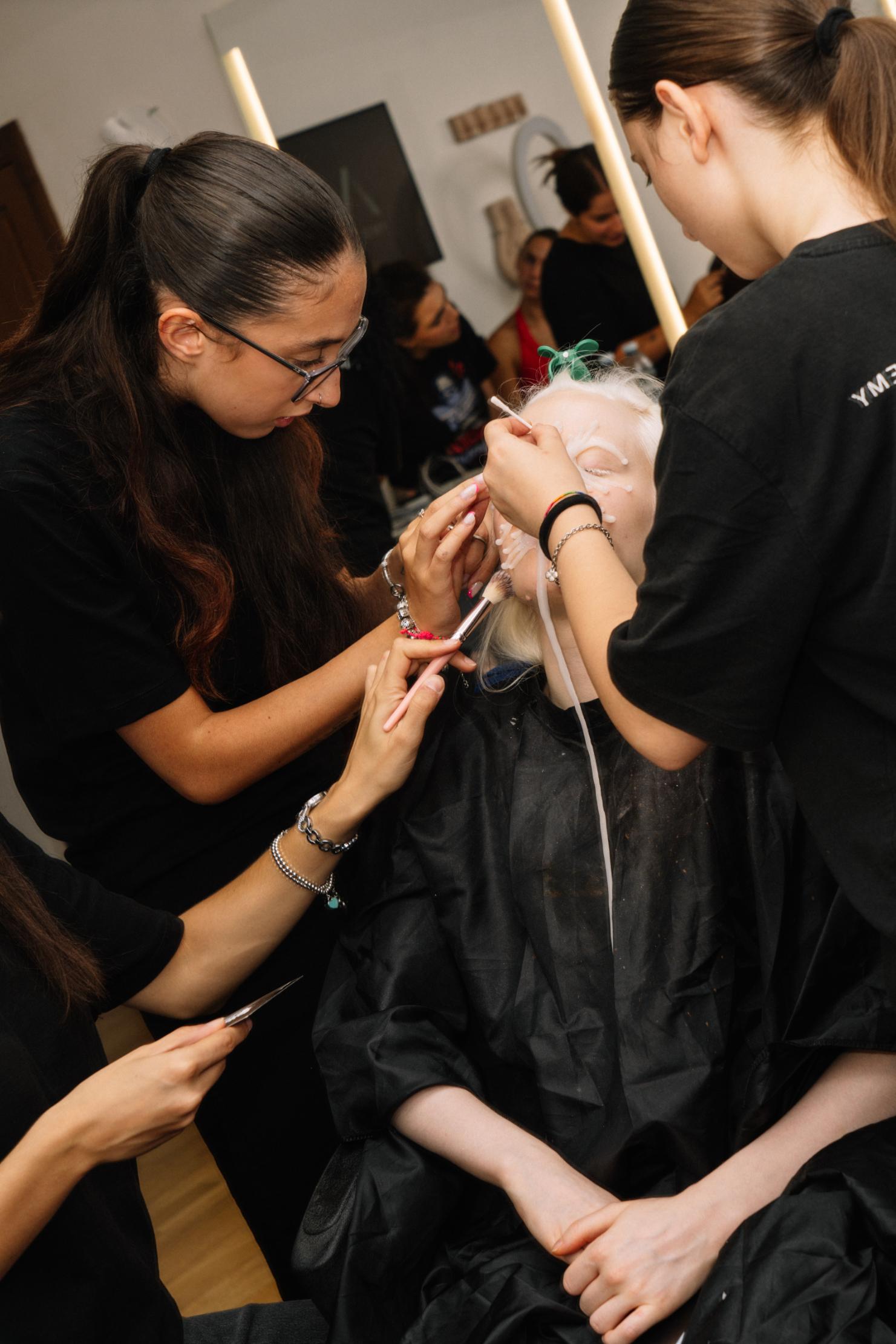
Your work occupies a hybrid space between art, fashion imagery and technology. At a time when image generation has become increasingly accessible, what does it mean to you to build a genuine authorial identity through AI? What makes an image recognisably yours?
For me, design — the act of shaping and creating — has always been at the core of being an artist. The medium has changed, but the core of my artistic practice hasn’t. I’ve always been interested in how artistic ideas can be transformed across materials, bodies, spaces and realities.
AI was never the starting point for me. It became another tool to explore these ideas and extend design beyond the physical object.
What makes an image recognisably mine is my combination of conceptual ideas, unexpected materiality, futuristic forms and a strong sense of colour. My visual language is often inspired by cosmic energy, frequency, sci-fi and cyber aesthetics, with the future of fashion constantly pushing me beyond traditional design.
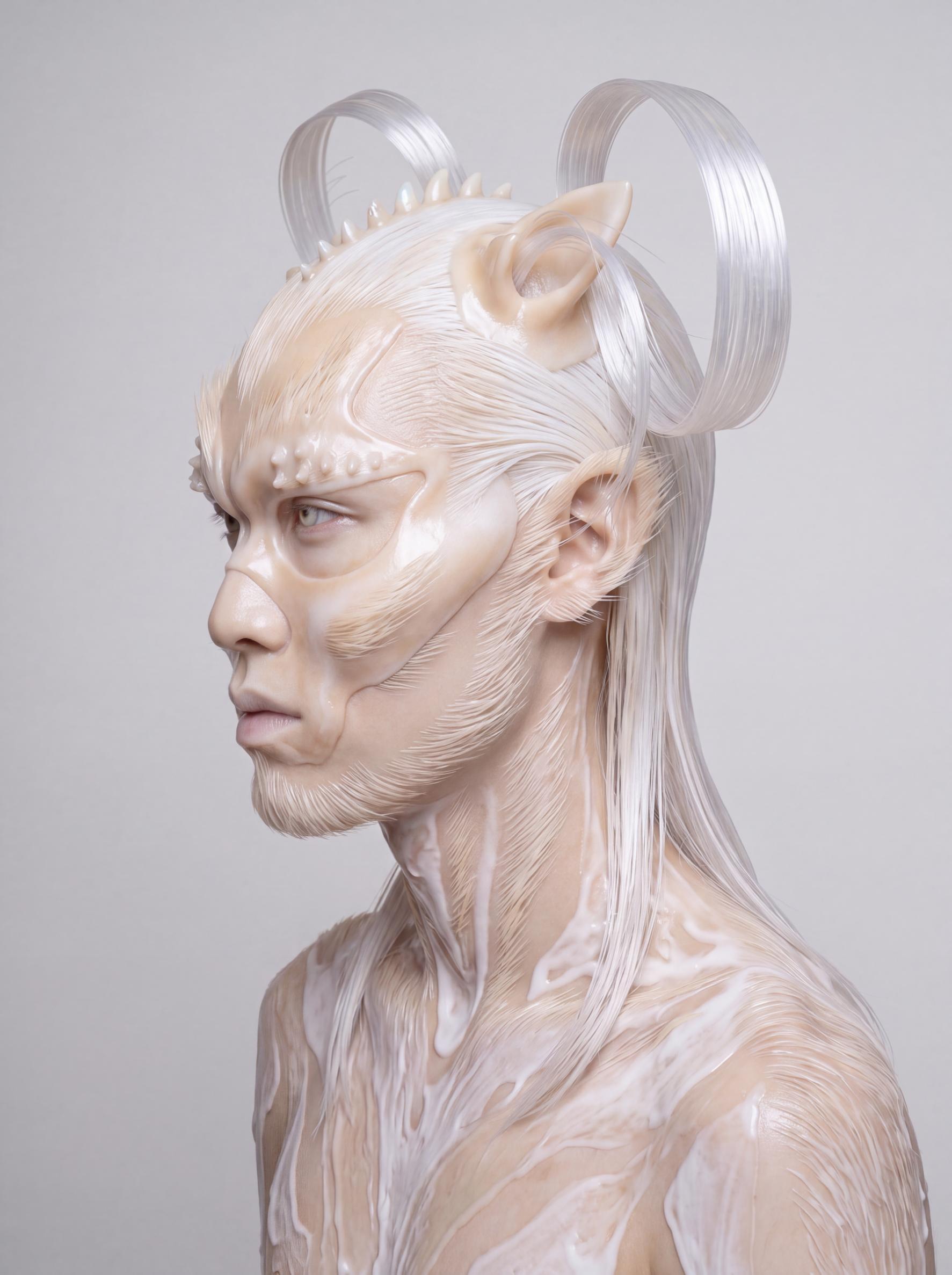
If you could imagine the future of your practice without any technological, physical or creative limitations, where would you like to take your work? And beyond visual innovation, what feeling would you like to remain with the viewer after encountering one of your images?
I would love to be able to generate 3D objects directly from my imagination, without any technical limitations. Not just garments, but completely new forms, materials and objects that don’t yet exist. For me, that would be the next layer of my practice — moving from creating images of imagined realities to actually materialising them in the physical world.
Beyond visual innovation, I want my work to create curiosity, surprise and sometimes a sense of unease. I’m interested in images that challenge what we perceive as familiar and make people stop, look twice and question what they are seeing.