- Date
- 29 JUNE 2026
- Author
- JAGRATI
- Image by
- NICE AUNTIES
- Categories
- Interviews
niceaunties: Where the Body Ends and the World Begins
Known online as niceaunties, Wenhui Lim has built an unmistakable artistic universe that challenges conventional ideas of beauty, ageing and identity. Through her celebrated Auntieverse, the Singaporean artist uses AI as a medium not to imitate reality, but to reimagine it—creating surreal worlds where humour, tenderness and cultural memory coexist.
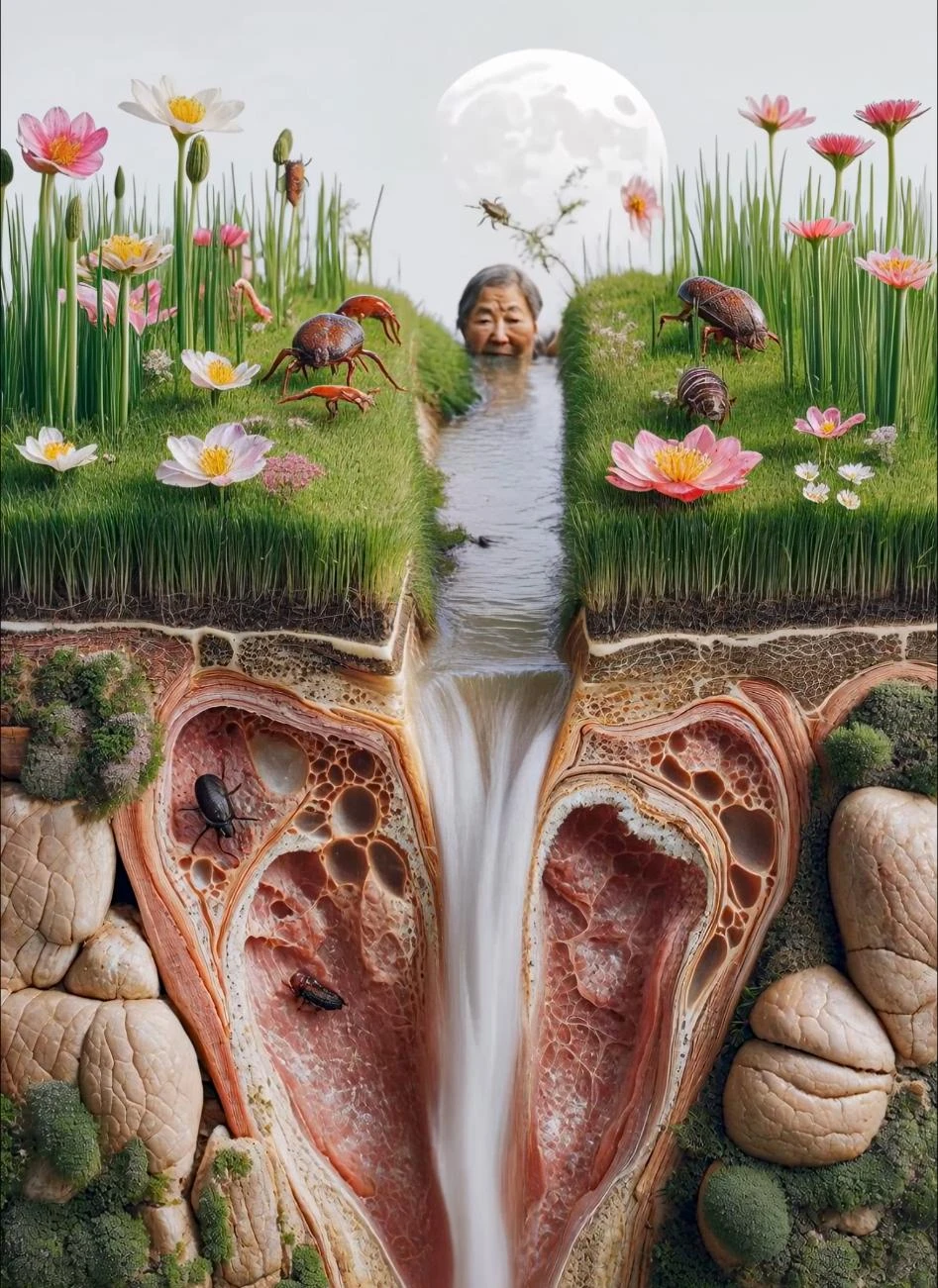
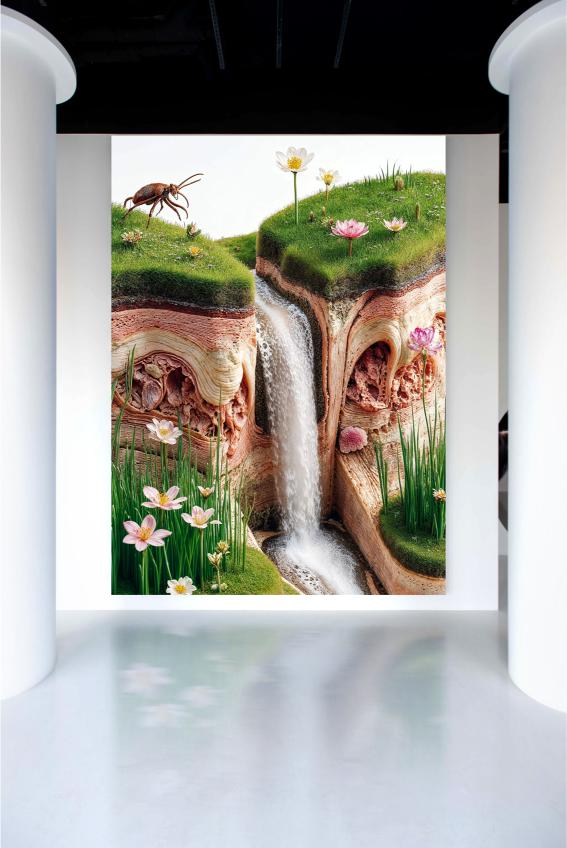
Her latest exhibition, auntiescapes, presented at Load Gallery in Barcelona, marks a new chapter in that evolving universe. Here, the body is no longer confined by skin or anatomy. It expands into landscapes, waterfalls and geological formations, dissolving the boundaries between flesh, nature and the planet itself. Ageing becomes an act of transformation rather than decline, while emotions behave like physical forces that shape the body from within.
Blending Eastern philosophy, contemporary beauty culture and immersive AI-generated moving images, auntiescapes invites viewers to question the systems that define femininity, self-worth and our relationship with the natural world. The symbolic figure of the “auntie” becomes both guide and mythology—a character that embodies lived experience, resilience and radical self-acceptance.
In this exclusive interview with RED-EYE Magazine, Wenhui Lim reflects on creating emotionally resonant AI art, building the ever-expanding Auntieverse, and why the most important question her exhibition asks is perhaps the simplest: Where do I end, and where does the world begin?
In auntiescapes, the body is no longer treated as something contained or stable; it leaks into landscapes, geology, weather, and even infrastructure. What compelled you to dissolve the boundary between body and environment so completely?
It came from my own conclusion working on this project that the body is frozen energy, and that the body is the conduit between spirit and the planet. We are one, both organism and universe, and the universe is within us. Once you start seeing it that way, the boundary between body and environment simply stops making sense. I approach the body as a living landscape. Skin behaves like terrain, continuously renewing, hosting microorganisms, and responding to cycles much like the Earth itself. It felt natural to dissolve that boundary because I do not believe it exists.
The exhibition suggests that skin behaves almost like ecology: absorbing, regenerating, hosting invisible systems, carrying memory. Were you interested in reclaiming the body from the way contemporary culture reduces it to surface and appearance?
My earlier investigations into beauty and skin in 2024 emerged as responses to societal expectations and pressures. Over time, this inquiry shifted towards the invisible, focusing on energy, emotion, and the ways internal states imprint themselves onto the body. With time and lived experience, it becomes obvious that emotions, energy, and belief systems have an impact on the body too. Who else but the aunties know it best, with their expanse of life knowledge.
Earlier iterations of the Auntieverse often explored social performance, beauty rituals, community, consumption, and public life. auntiescapes feels quieter, stranger, more interior. Did this body of work emerge from a more introspective period for you personally?
Building the Auntieverse is a constant reminder of how I should be questioning every beauty standard and belief. I often revisit themes over time, expanding and considering other aspects of them. This time, the exhibition came from a reaction to the Load Gallery space itself, its beautiful scale and the size of the screens, which influenced me to consider experiencing my videos in a slower, contemplative way. That led to zooming into the body and focusing on landscapes, on how energy accumulates beneath the skin and how the body, when you look closely enough, contains entire worlds.
There’s a radical tenderness in the way you depict ageing female bodies not as decline, but as accumulation, transformation, and lived history. Why do you think contemporary visual culture still struggles to imagine ageing as expansive rather than tragic?
I think contemporary visual culture is still very much driven by what makes money. In the health and beauty industry for instance, staying youthful is the main cash driving motive, and stakeholders naturally push to advertise for it. Ageing does not sell in the same way. The narrative is shifting towards longevity though, so we shall see. But it is the role of art to question these things, and the entire Auntieverse is about reframing that, giving ageing new meaning, a fresh injection of energy, and focusing on possibilities regardless of age or societal expectations.
Works like Hot Bod, Junk Butt, and Body Bag use humour, absurdity, and even grotesqueness to approach deeply intimate themes: menopause, surgical intervention, emotional weight, bodily change. What does surrealism allow you to say that realism cannot?
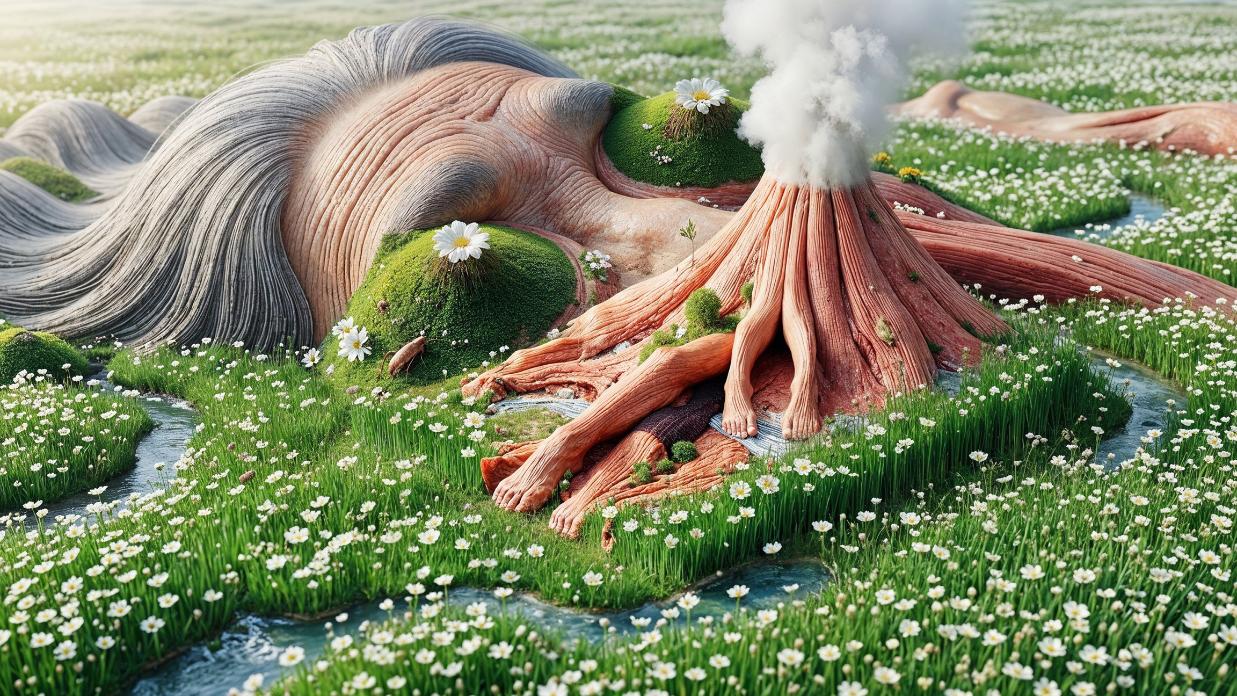
It creates a soft landing for hard topics, a more gentle entry point that invites people in rather than shutting them out. In dreams we often see several ideas or objects that did not exist in the same scenario before, in the same scene, which is similar to the way I create with AI. For instance, I imagined the frustrations of menopause bubbling under the surface, skin outbreaks, temper flares, and hot flushes. It conjures the image of a volcano erupting from our body, and hence hot bod.
The auntie figure has always carried contradictions: care disguised as criticism, affection expressed through control, resilience shaped through sacrifice. What happens when that figure stops being social and becomes almost mythological in auntiescapes?
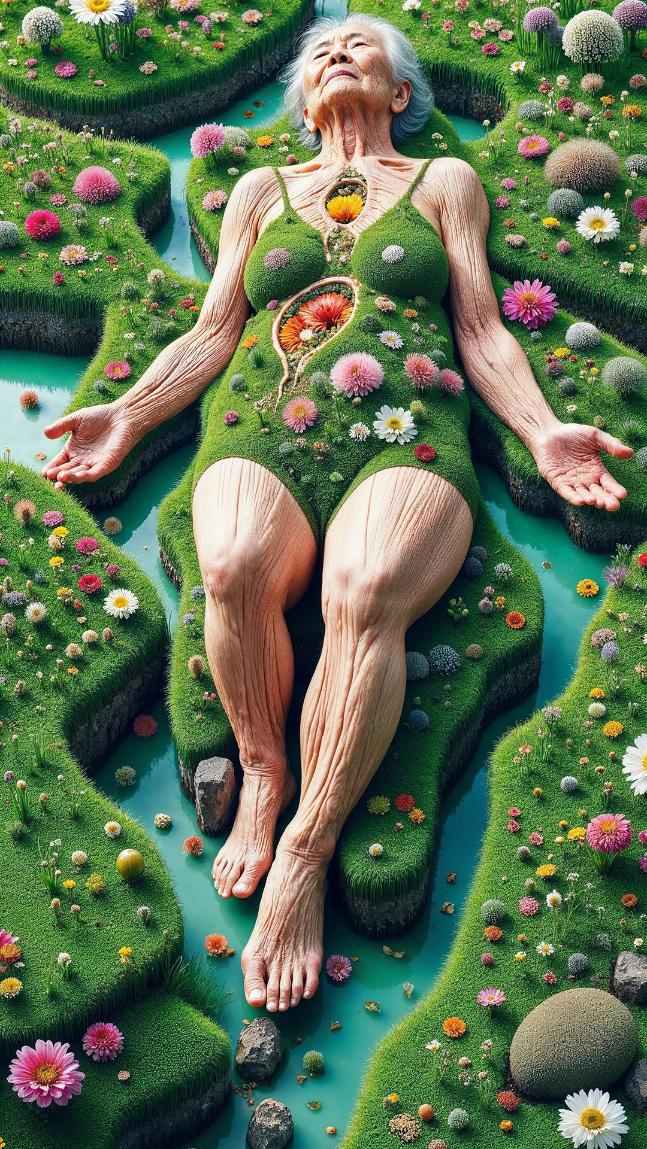
The aunties from the Auntieverse represent a magnified slice of the real world auntie, the version of her who is unapologetic, who places herself first, who loves both self and world, understands we are one organism yet sovereign, and also chooses to be free and have fun. In Auntie's Escapes, she becomes the landscape itself. In cycles, she trudges on as the terrain morphs through seasons. In leveling, she parkours through landscapes, exploring. In frogauntie, she regenerates with the moon phases. Perhaps it is a reminder to look within our own divinity and our natural call to rest and connect with our bodies. Other than having an auntie within us, we are part of this mythology of the land.
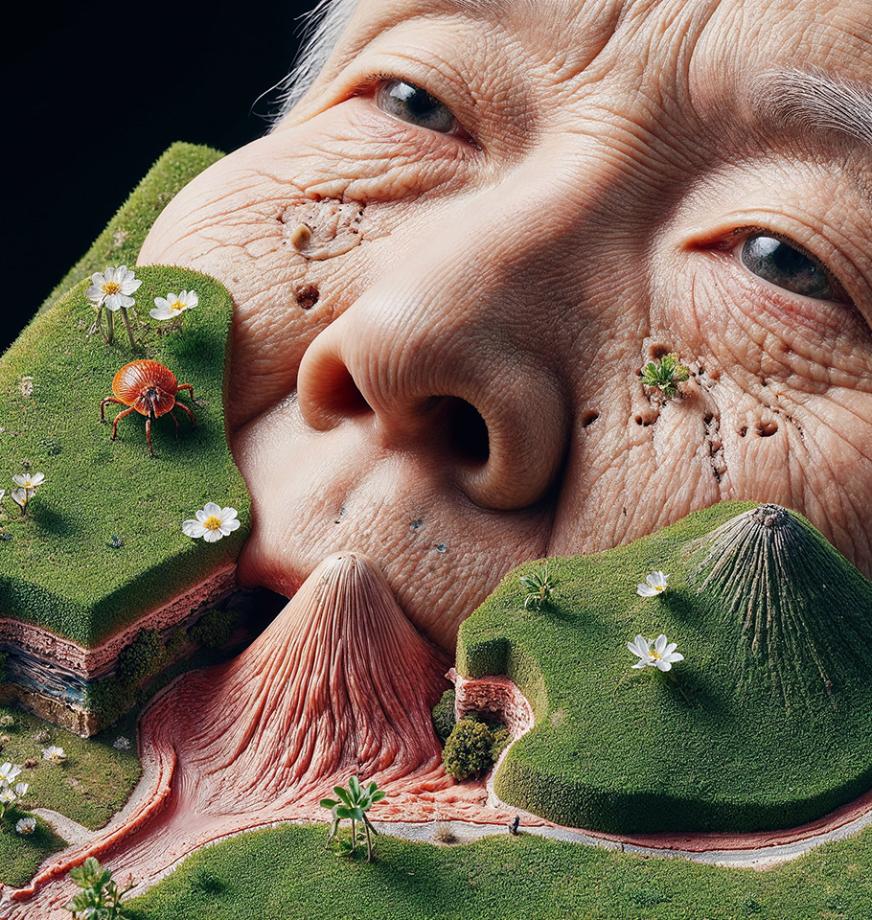
Throughout the exhibition, emotions behave like physical forces of pressure, heat, erosion, expansion. Do you believe the body archives emotional experience in ways language cannot fully express?
Absolutely. Works like body bag, junk butt, and NSFW explore the emotions and energy stored in the body, questioning when to hold on and when to let go. The body is frozen energy. Stagnant emotions and low frequencies collect and sometimes manifest as aches and pains. The body communicates with us constantly through its comforts and discomforts, we just have to pay attention.
Your work frequently resists categorisation aesthetically, culturally, emotionally. In the press text, you reference Alan Watts and the violence of naming. Do labels themselves become a kind of confinement in your practice?
I am interested in the labels imposed upon women, how bodies are expected to look, behave, and be controlled. By loosening these labels, the body can be seen again as something fluid, complex, and alive beyond definition. The aunties do not just represent the invisible characters in our world. They also represent the ageing figure, the voice of self criticism, the suppressed inner voices. The work is about creating space to question rather than define.
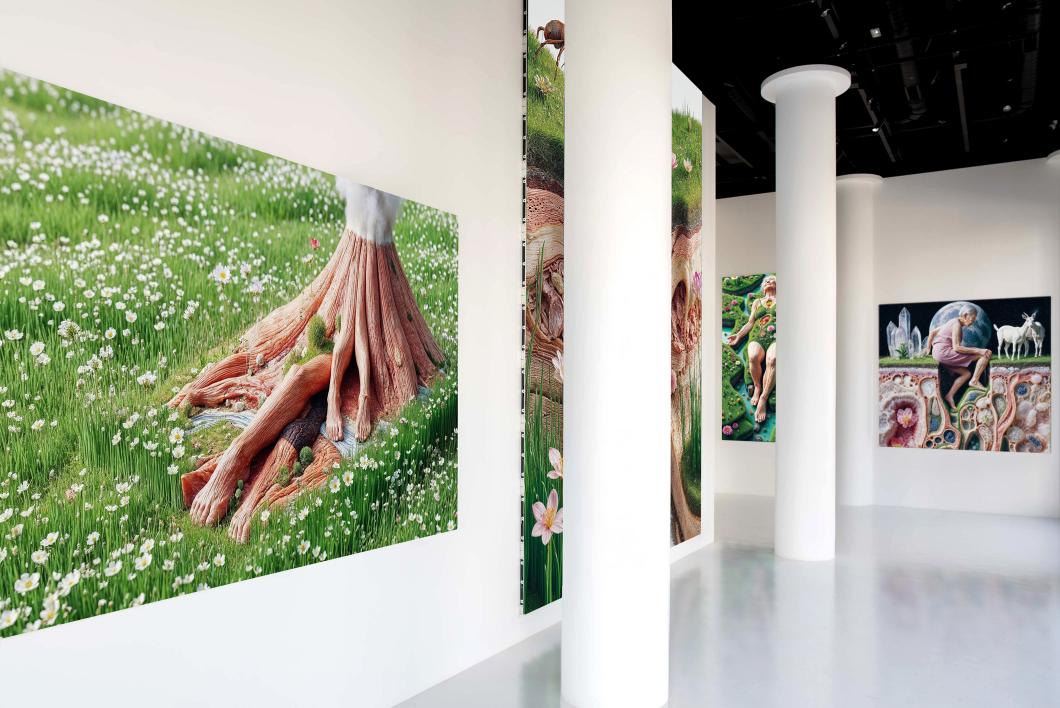
There’s a fascinating tension between control and surrender across the exhibition particularly in works dealing with beauty, surgery, wellness, and bodily maintenance. Do you see the contemporary body as something people are constantly trying to discipline into acceptability?
With so much information on the internet and especially social media, on health, beauty, and body image, it is challenging not to fall into the pattern of feeling "not good enough" or wanting to try out different techniques to achieve socially accepted forms of beauty. I think we all navigate that tension between accepting ourselves and wanting to improve, and the works in auntiescapes sit right in that space without judgement.
Mirror into the Auntieverse feels psychologically different from the rest of the exhibition because it turns the viewer into the subject. Were you trying to confront the internalised voice of judgement many people inherit culturally, especially around the body?
Yes. The auntie love language is a culturally specific mode of care, often expressed through blunt questioning and unsolicited commentary. Aunties ask why you have gained weight or not eaten enough, whether you are single, why you are not married. What can feel like judgement is, in many cases, a form of protection shaped by lived experience. The mirror confronts that internalised voice, the auntie within.
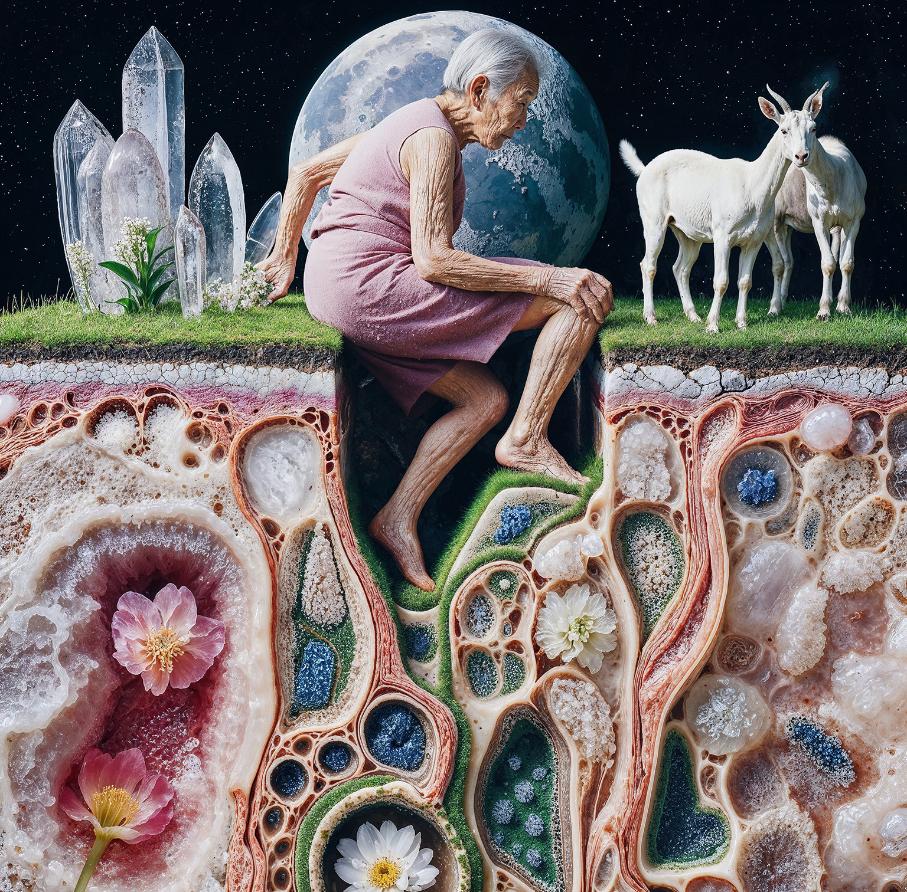
Your architectural background feels very present in this exhibition bodies become structures, terrains, ecosystems, spatial experiences. Do you approach image-making almost like world-building or environmental design?
It is more about filling in a piece that is part of a whole, with the overarching question of how I wish to age. Over three years of exploring themes and narratives, layers have built up across various places within the Auntieverse. With that context and backdrop in place, the spatial thinking becomes almost subconscious, with new ideas naturally building on top of what already exists.
The exhibition repeatedly returns to the idea of balance moderation, calibration, coexistence between internal and external worlds. Was auntiescapes in some way your response to the exhaustion and overstimulation of contemporary life?
I did not see it that way. It is more a combination of a reflection on my own growth journey and a natural progression in the development of existing themes around beauty, skin, and landscapes, inspired by the gallery space itself.
By the end of auntiescapes, the body no longer feels individual it feels collective, environmental, even planetary. Do you think the exhibition is ultimately asking us to rethink not just the body itself, but our entire idea of separateness?
The exhibition moves between scales, from the microscopic details of skin to vast landscapes that reveal themselves as bodies. That shift is intentional. Works like cycles, leveling, and frogauntie follow the rhythms of regeneration and return. Body bag, junk butt, and NSFW sit with the weight we accumulate beneath the surface. Hot bod and full moans confront the transformations we cannot control. Each work is a different entry point into the same question: where do I end and the world begin? And at the centre, headspace and the Mirror Into Auntieverse invite the viewer to sit with that question physically, face to face with the auntie within. I think the exhibition suggests that separateness is something we have been taught, not something we are.