- Date
- 20 MAY 2026
- Author
- GLORIA MARIA CAPPELLETTI
- Image by
- MONKEYS VIDEO LAB
- Categories
- News
Science Fashion: a report from MACRO
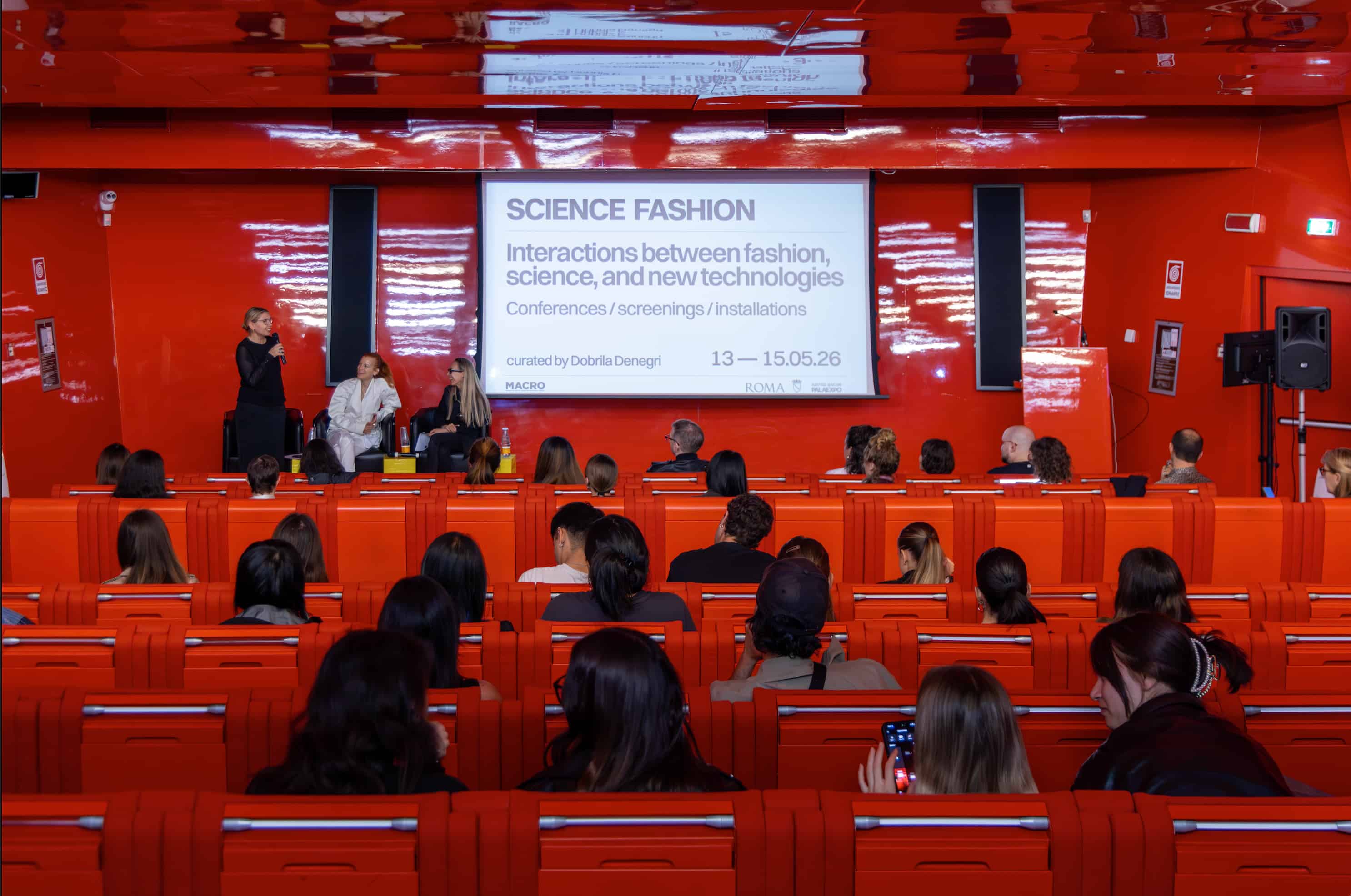
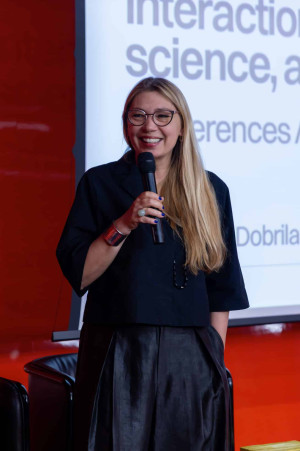
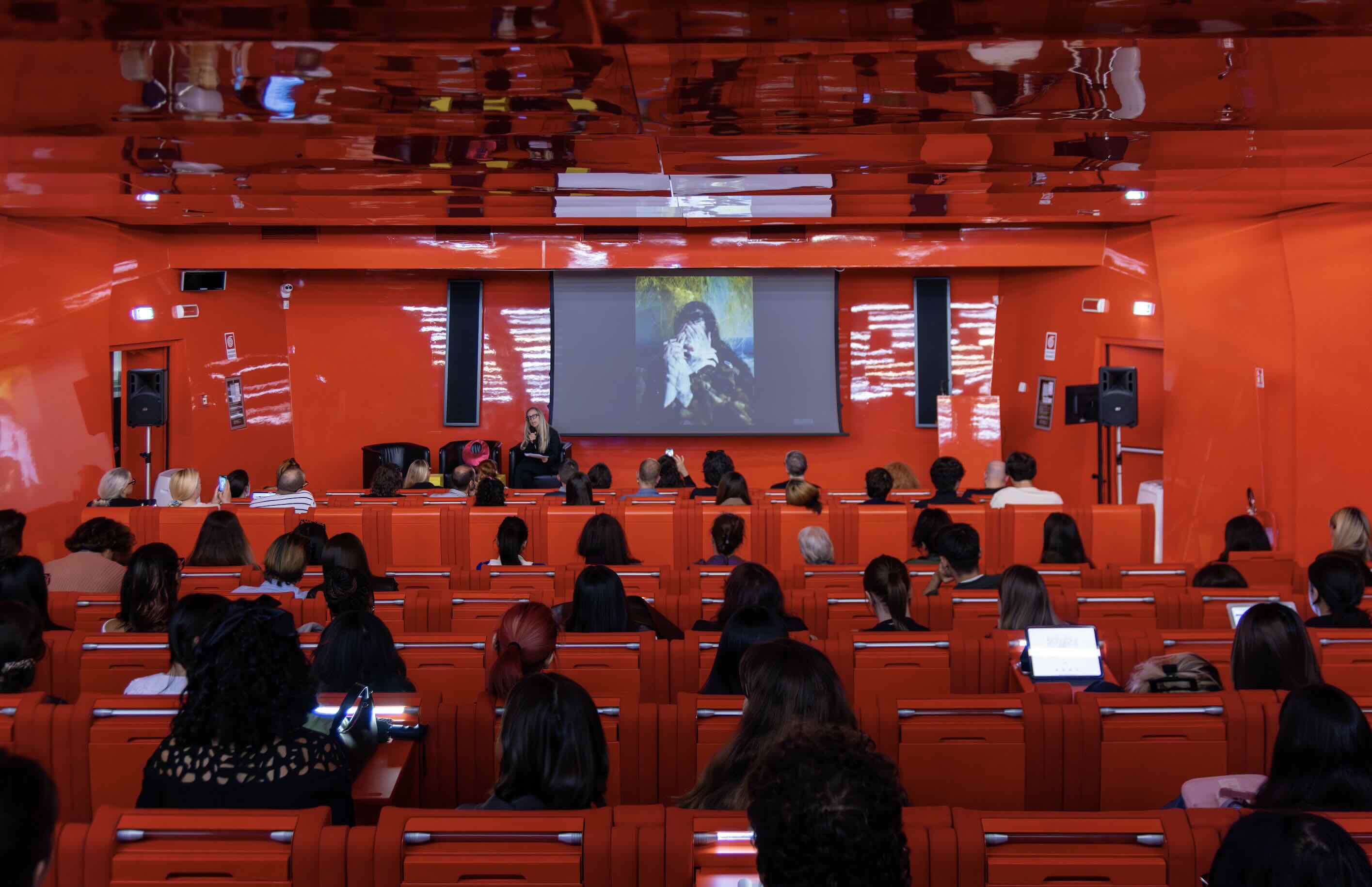
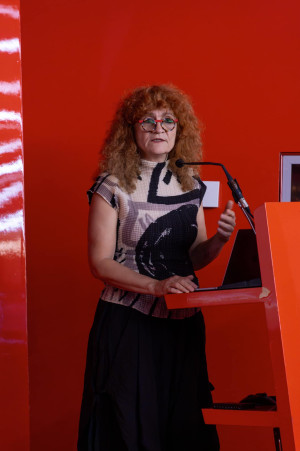
Science Fashion, curated by Dobrila Denegri, unfolded over three days at MACRO Museo d'Arte Contemporanea di Roma as a program of conferences, screenings, and installations. The title deliberately evokes science fiction, for the work presented blurs the line between rigorous research and visionary thinking. The aesthetic proposals may be innovative, futuristic, or even fantastical, but the commitment behind them is genuine and driven by urgent concerns over environment, climate, energy, and interspecies coexistence.
Divided into four thematic sections RENEWAL, DEMATERIALISATION, INTERACTION, and RECOVERY the conference does not aim to generate new trends or fashions. Rather, it seeks to contribute to a profound transformation in how fashion and the designer's role are understood. The goal is to question alternative ways of conceiving, creating, or producing something that fits within a broader definition of fashion, one no longer solely about wearability and functionality. Some of the research presented explores pure virtuality, beyond the physical body and matter. Others recreate matter by combining natural principles with human knowledge, giving rise to a form of "second-level nature" intelligent and adaptable. Some focus on the synthesis of technology and clothing, while others highlight the importance of solidarity and the inextricable power of human co-creativity.
Intentionally conceived as a series of contributions from divergent and even opposing perspectives, Science Fashion aims to explore future trajectories not only for the fashion industry but, above all, for education across creative disciplines such as fashion, design, art, and their intersections.
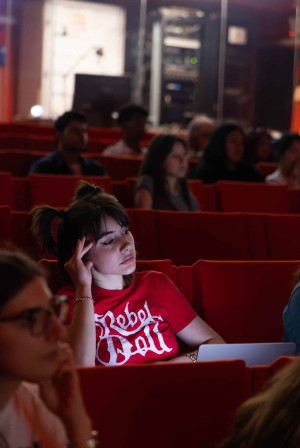
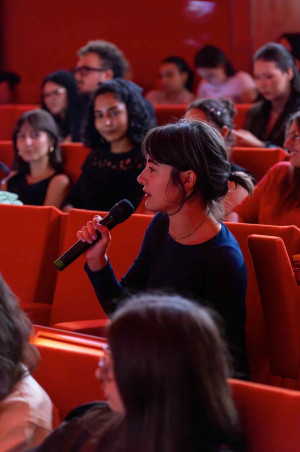
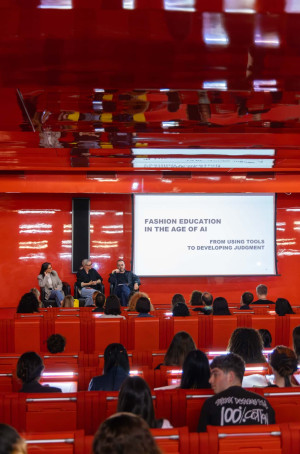
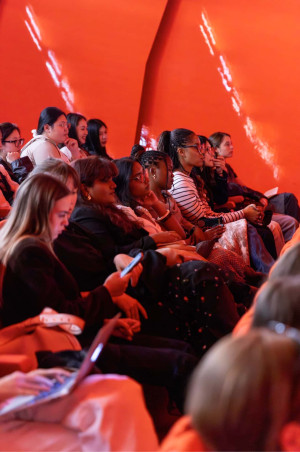
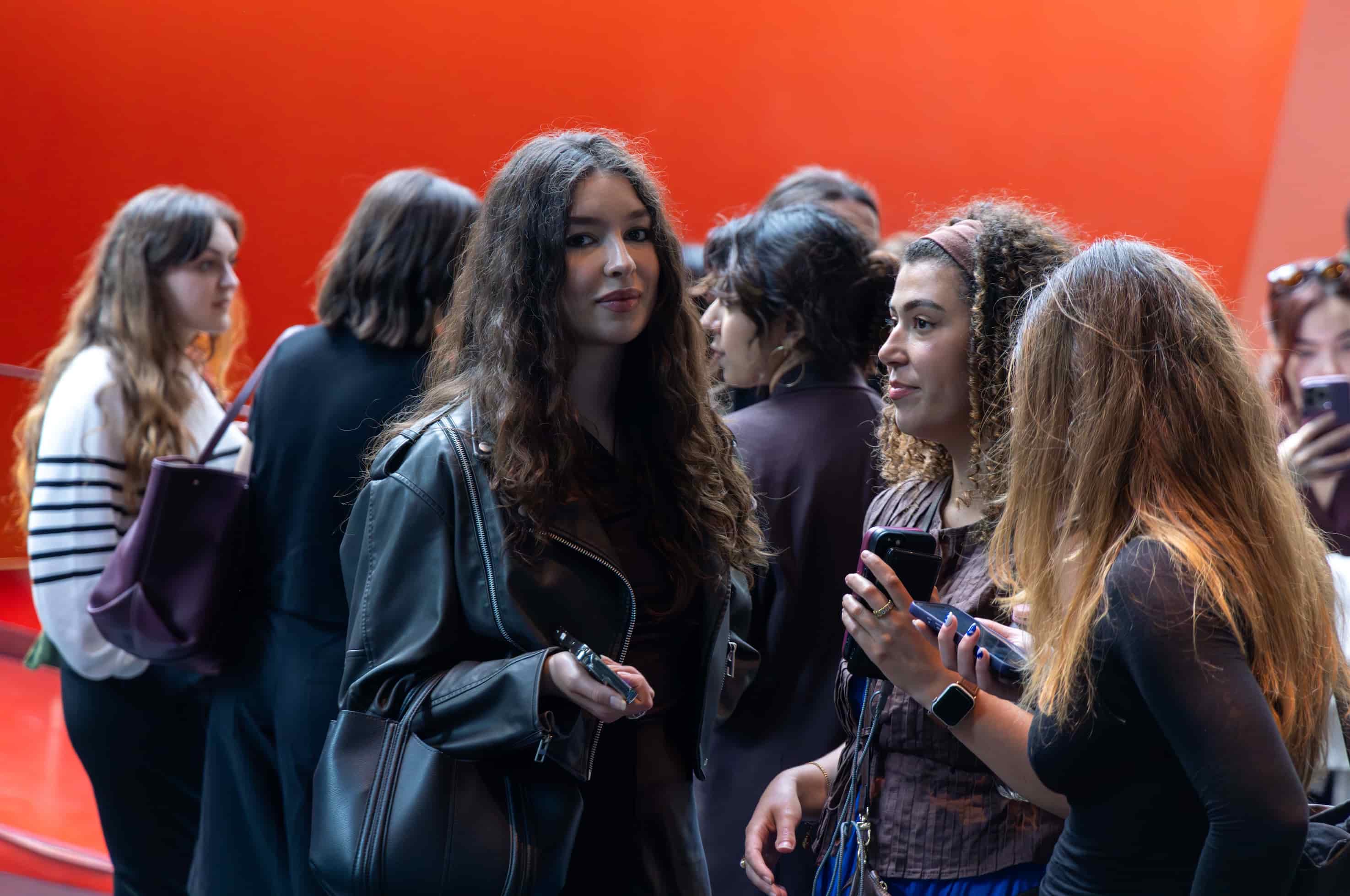
The conference was co-organised with the Fashion Design BA at NABA Nuova Accademia di Belle Arti, and the Master's programme in Fashion Theory and Practices at Sapienza University of Rome and UnitelmaSapienza. The audience reflected this academic partnership: students and faculty from NABA, Sapienza, IED, RUFA, ILA, Accademia Costume e Moda, and the University of Arts Linz filled the auditoriums throughout the three days. Entrance was free, and the halls remained at capacity.
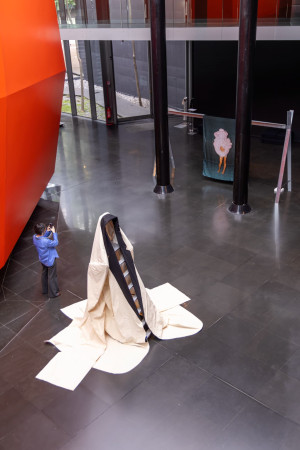

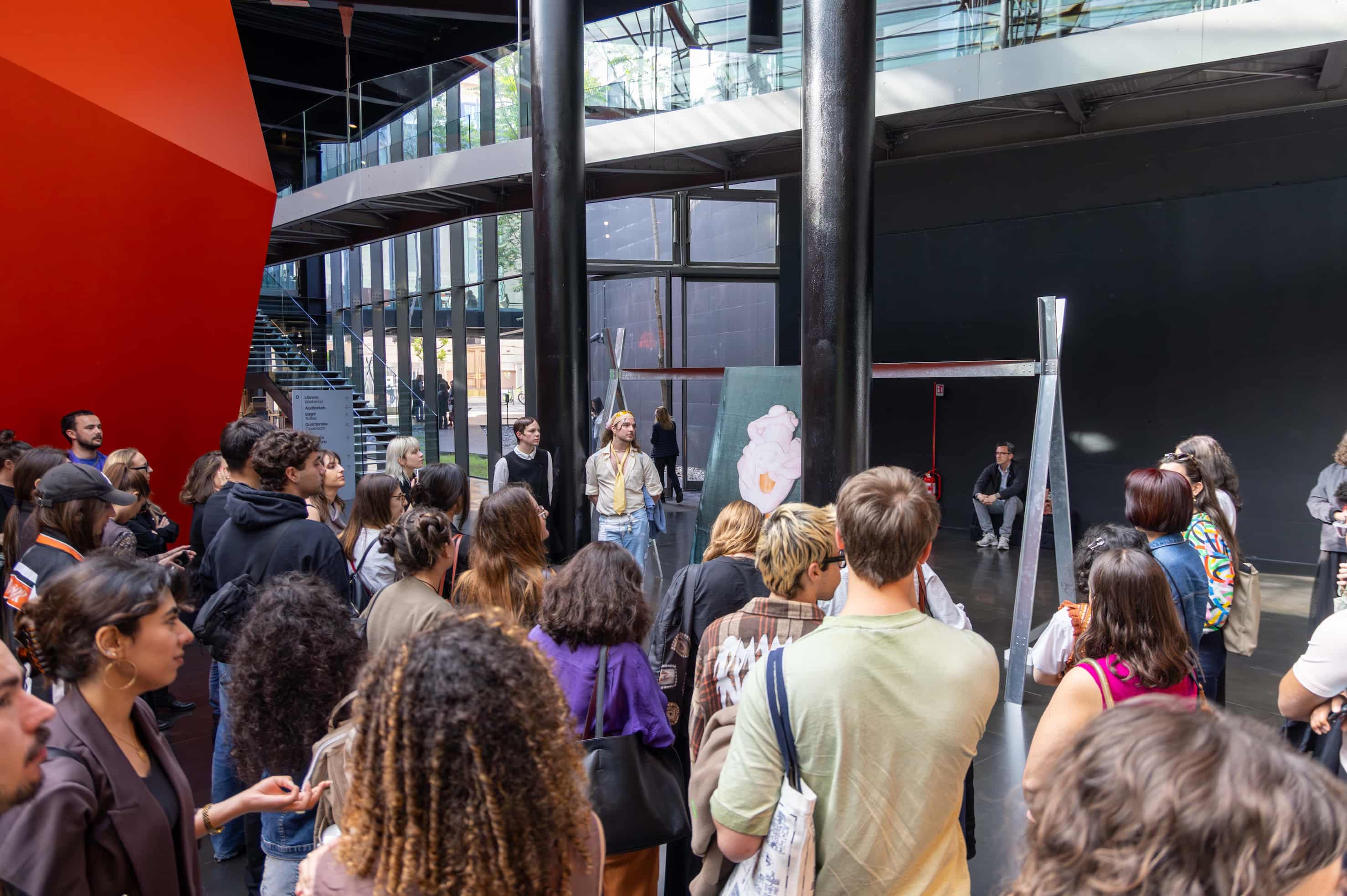
Before the talks began, two installations established the conference's material and conceptual ground.
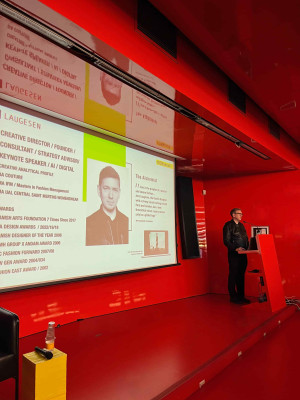
Jens Laugesen presented XXL JACKET, a piece that has toured museums and fashion events across the United Kingdom, Germany, and Denmark. The work originated in a production error: a pattern grader mistakenly scaled a jacket pattern incorrectly twice. The result was a garment of absurd proportions, non-functional yet monumental. Laugesen embraced the mistake as art, and the XXL JACKET hung in the MACRO courtyard as a tribute to the creative potential of failure.
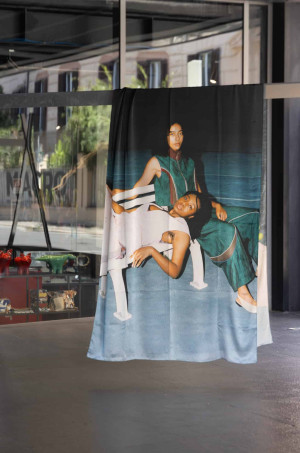
Meanwhile, photographer Anna Breit, who works exclusively on film with minimal retouching, favouring a bright, powerful flash, contributed a series of portraits. She photographed student collections from the Fashion & Technology courses at the University of Arts Linz. The selected images were printed on Tencel and displayed on structures designed by Supervoid, featuring the work of students Gerald Brandstätter, Peter Fellner, Lena Haslinger, Marilies Luger, Max Menschhorn, Hannah Pekarz, Mia Trotz, and Sookie-Celeste Simair. The installation captured an intimacy both tender and alien, faces half-obscured by fabric, bodies merging with architectural forms.
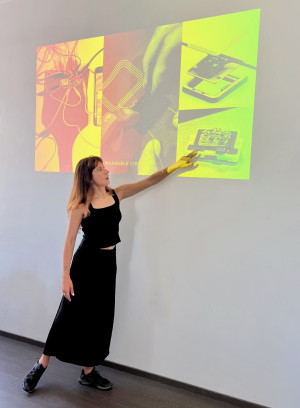
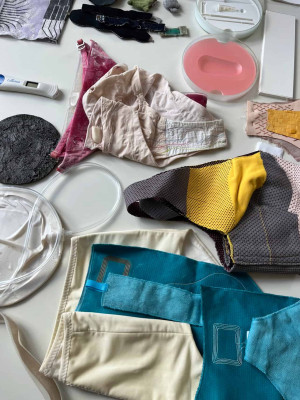
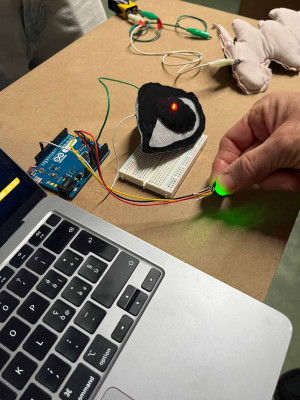
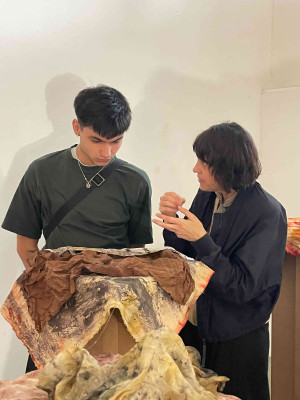
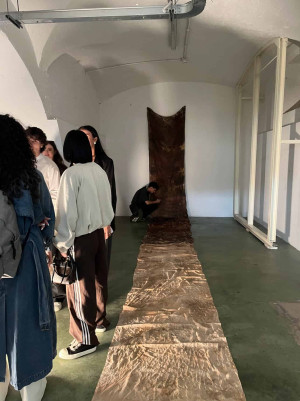
Two parallel workshops ran alongside the main program at NABA Nuova Accademia di Belle Arti. Giulia Tomasello presented Coded Biophilia, a workshop on soft wearables and biological textiles, asking how living matters might reshape the perception of other bodies and the relationship between technology, fashion, and nature. Christina Dörfler led Colour Lab, exploring natural dyeing as artistic research, drawing on historical practices from Hallstatt, Austria, and working with plant-based dyes, mineral pigments, and resist techniques.
Day One: Dematerialisation, Rematerialisation, and Radical Collaboration
Dobrila Denegri opened the conference with a concise provocation: the work presented here does not aim for novelty but for transformation.
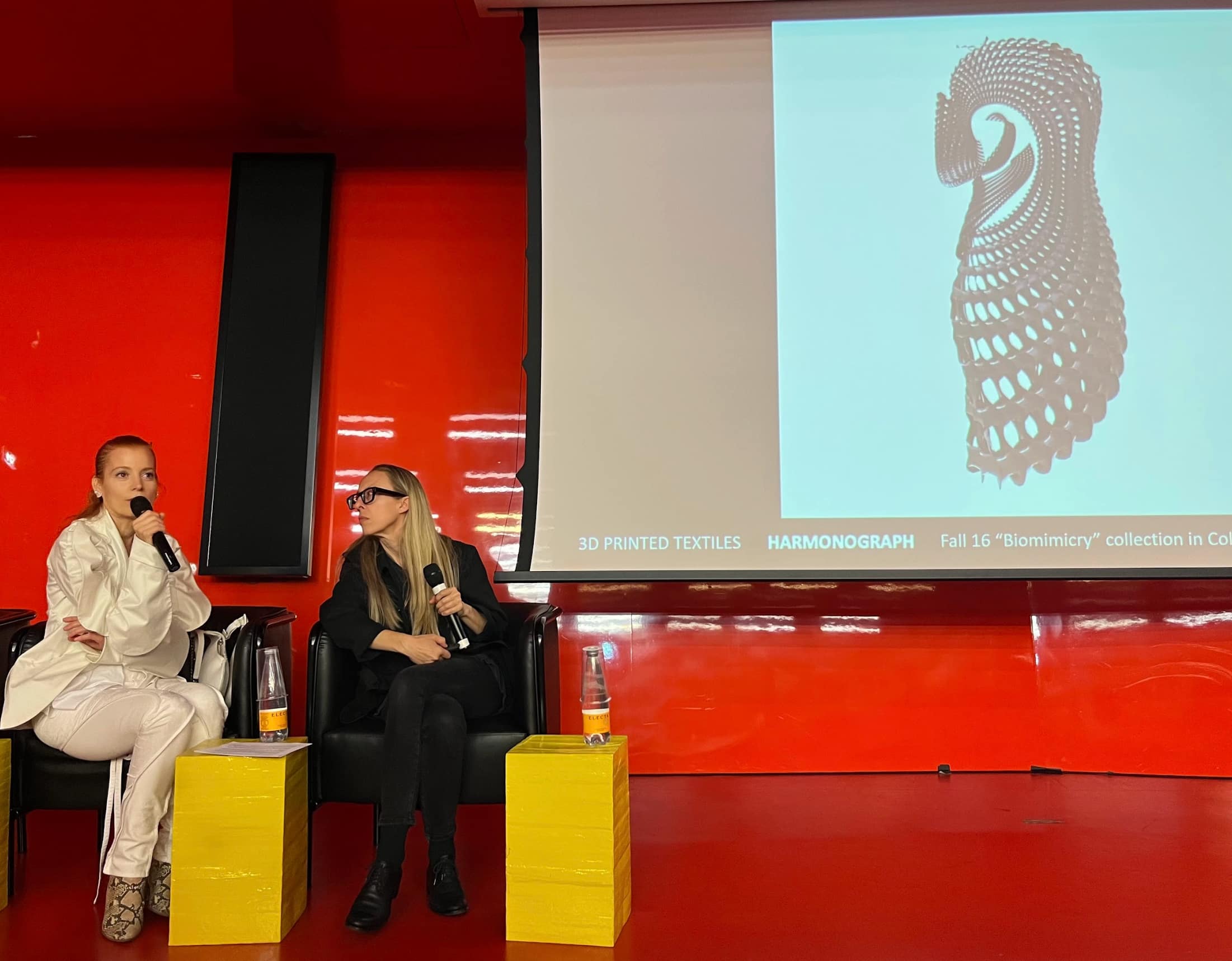
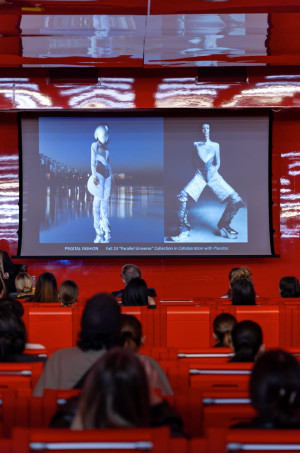
The first conversation, under the dual banner of DEMATERIALISATION and REMATERIALISATION, featured Adi Gil, co-founder of threeASFOUR and professor at Parsons School of Design, in dialogue with Gloria Maria Cappelletti (NABA Nuova Accademia di Belle Arti, RED-EYE, d La Repubblica) and the curator Dobrila Denegri. Adi, who together with Gabi Asfour (born in Lebanon) and Angela Donhauser (from the former USSR), forms a collective often described as the "United Nations of fashion." Hailing from three distinct geopolitical realities, Lebanon, the Soviet Union, and Israel, the founders have always treated the garment as a topological map of cosmic and communal harmony.
What distinguishes threeASFOUR is their refusal to separate technological experimentation from spiritual and ecological thinking. Their practice operates at the intersection of multi-tech experimentation, fabric manipulation, and digital fabrication. They move fluidly between 3D printing, digital fashion, virtual environments, and handcrafted textile manipulation, often within a single garment. The results are unmistakable: curvilinear shapes that echo glacial topology, fractal structures derived from natural growth patterns, and biomimetic forms that seem both digital and deeply organic. Fabrics are warped, folded, and reconstructed to create surfaces that breathe between the 3D synthetic and the living.
The collective's signature codes from the primordial geometries of ice formations to the nano-vibrations of the quantum realm draw inspiration from the natural architectures that connect the individual human body to universal, cosmic contexts. Yet this visionary aesthetic is rooted in community. threeASFOUR's commitment to ongoing collaboration across cultures, species, and technologies is the animating force behind their work.
The conversation ranged from fractal structures and biomimicry to the poetics of error and emergence, positioning threeASFOUR at the confluence of timeless themes and future-facing innovation. Theirs is a transformative fashion practice where the hand and the algorithm, the organic and the synthetic, the ancestral and the interstellar, coexist in radical unity and peace.
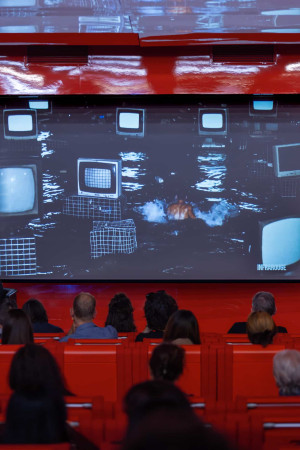
Jens Laugesen then presented his METASENS TRILOGY, a digital and "phygital" fashion project launched during London Fashion Week. Collaborating with digital artists from Style Protocol and VZNZ, Laugesen explores a 50/50 hybrid model where garments exist simultaneously in physical space, augmented reality, virtual reality, and metaverse environments. His lecture demonstrated how a physical jacket can be scanned, warped, projected onto a digital avatar, and reverse-engineered into a new physical pattern each iteration losing and gaining memory like a neural network's game of glitches.
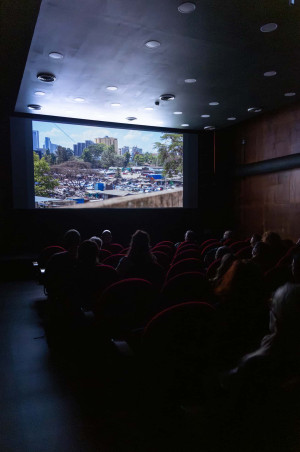
The evening concluded with the Rome premiere of Dust to Dust (2024), a documentary by Kosai Sekine on Japanese designer Yuima Nakazato. As the second Japanese designer ever invited to Paris Haute Couture Week, Nakazato has dedicated his practice to merging artistic vision with sustainable, environmentally conscious technologies. The film traces his journey from the landfills of Kenya, where textile waste burns in toxic pyres, to the Paris runway, where he transforms discarded fibres into ethereal couture. The documentary highlights the development of innovative, sustainable materials for his Inherit collection, offering a radical reinterpretation of fashion as a practice where creativity and ecological care are inseparable.

Day Two: Prosperity, Pedagogy, and the Digital Turn
Paolo Franzo, researcher in fashion design at the University of Florence, introduced the concept of prosperity fashion. Moving beyond GDP-based growth models, Franzo drew on post-human and new materialist perspectives to argue that materials are not passive resources but dynamic agents. "Nature is an active participant." His examples included mycelium leathers, algae-based dyes, and textiles that grow, he shared a vision of fashion as reciprocity rather than extraction.
A key pedagogical session followed, curated by Romana Andò, associate professor of sociology of communication and fashion at Sapienza University of Rome. The roundtable brought together leaders from Rome's most important fashion institutions: Guenda Cermel (Head of Fashion, RUFA), Ivana Conte (Director, ILA), Viviana Damiano (Head of the Fiamma Lanzara Library, Accademia Costume e Moda), Diego Manfreda (Course Leader BA Fashion Design, NABA Roma), and Romina Toscano (BA Coordinator of Fashion Styling and Art Direction, IED Roma).
Ute Ploier, designer and professor at the University of Arts Linz, presented the internationally oriented program Fashion & Technology, a curriculum designed for those who think, act, and research experimentally and sustainably. She was joined by Anna Breit, whose photographic installation remained on view. The session underscored the importance of combining traditional fashion techniques with new technical disciplines under the guidance of international experts in design, research, art, and business.
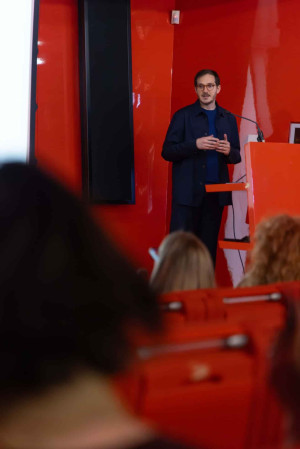
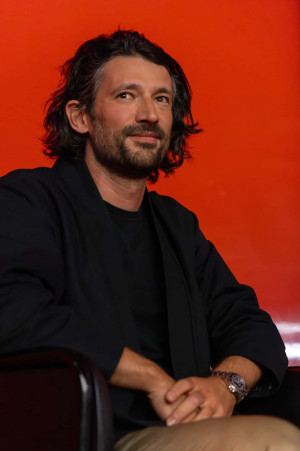
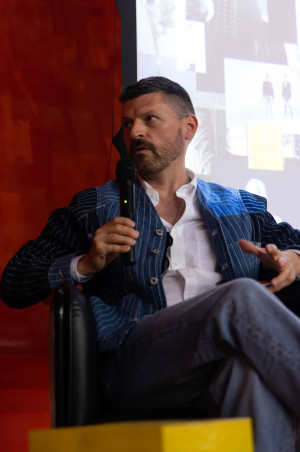
The most conceptually dense encounter of the second day came from Silvio Vujičić (artist and fashion designer) and Miro Roman (architect and researcher), moderated by Dobrila Denegri. They presented SOLL, a fashion designer who is an AI. SOLL is also a search engine, a cloud of images, and an entity "on his way to becoming more." Conceived by Roman and Vujičić, SOLL manifests physically through the fashion brand E.A. 1/1 A.I. The presentation framed SOLL as a decentred author: an AI that generates collections based on collective visual memory and produces physical garments as evidence of its digital existence.
Day Three: Interfaces, the Uncanny Self, and Social Design
Galina Mihaleva, artist, wearable technology designer, founder of Future Fashion LOOM.01, and associate professor at FIDM ASU (Arizona State University), opened the final day with a lecture on Wearable Futures. Her multidisciplinary practice, which integrates technology, media art, textile design, live performance, humanities, material science, and bio-design, positions fashion as an interactive system. Mihaleva showed garments that change colour based on air quality, textiles that sense physiological signals and vibrate in response to environmental conditions. Among her most striking projects is a jumpsuit designed for NASA, a garment that monitors bone density in astronauts while simultaneously achieving a remarkable aesthetic sophistication. It is a rare example of a garment that is at once medically functional, technologically advanced, and visually compelling.
During her time at Nanyang Technological University in Singapore, Mihaleva worked with students on a project that reimagined the traditional dresses of Singapore as interactive storytellers. Embedded with sensors, these garments detect the proximity of a viewer and, in response, audibly narrate the history, materiality, and cultural significance of their own design. The dress becomes a witness to its own making, a wearable archive that speaks when approached. The project transforms the passive act of looking into a conversational encounter, where the garment is no longer a silent object but an articulate participant in the transmission of memory and craft.
We are moving from object-based design to systems-based design with Galina Mihaleva argued. Her garments are interfaces between body, technology, and the planet. Her remarkable research advocates for a shift toward socially embedded practices that address sustainability, wellbeing, and future human-technology interactions.
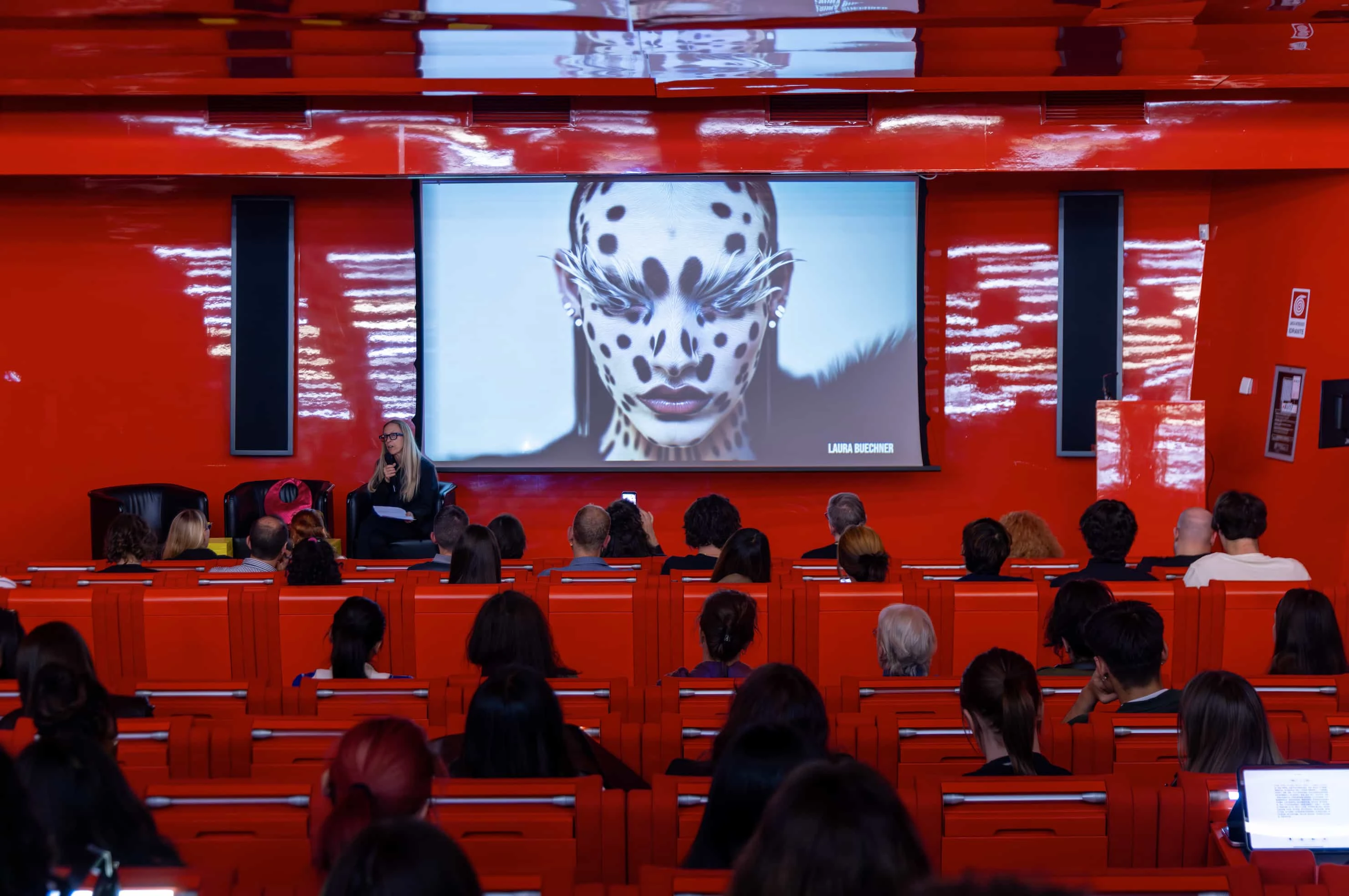
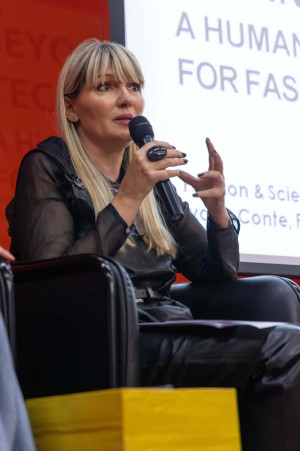
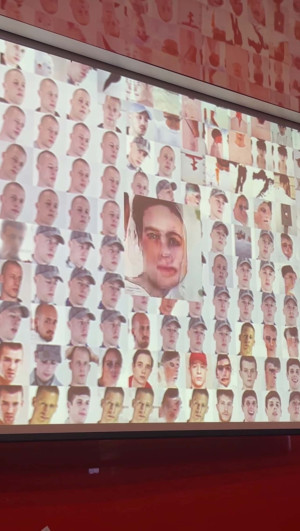
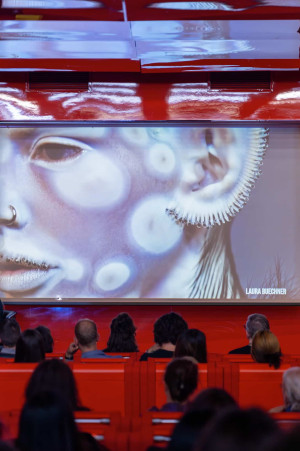
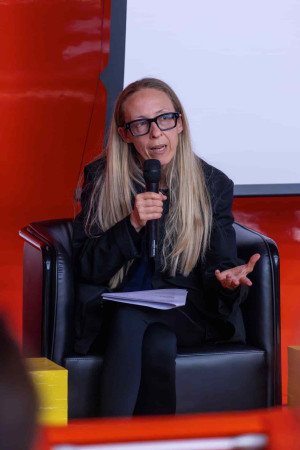
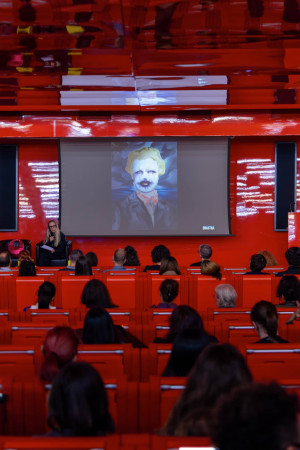
Gloria Maria Cappelletti then delivered her lecture, From Self-Expression to the Uncanny Self. Drawing on her roles as lecturer at NABA Nuova Accademia di Belle Arti, editor-in-chief of RED-EYE, and AI contributor for d La Repubblica, Cappelletti proposed that artificial intelligence is transforming fashion as a mirror, a liquid, probabilistic mirror made of data, hallucination, prediction, and synthetic dreams. She argued that contemporary culture is moving from an age of self-expression toward an age of the uncanny self fundamentally unstable. Referencing Freud's Das Unheimliche, she described how AI statistically absorbs human images, language, gestures, and fantasies, then returns them transformed, recognisable but alien. Generative AI synthesises, mutates, and produces realities that never existed yet feel emotionally legible.
Cappelletti questioned traditional notions of authorship in the age of generative systems. Who is the author of an AI image? The model? The dataset? The prompt writer? The collective visual history of humanity embedded in the training data? Perhaps all or none. She noted that fashion has always understood unstable identity, the garment as symbolic technology, a machine for becoming. Now AI enters this theatre as an active participant, generating campaigns, synthetic models, non-human beauty standards, and bodies unconstrained by anatomy. She concluded that the uncanny can be productive: it opens cracks in perception, destabilises certainty, and creates space for transformation. The future of AI art, she argued, belongs to translators capable of navigating both code and symbolism, datasets and desire.
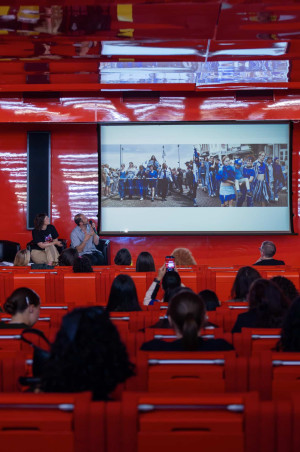
Els Petit-Carapiet and Branko Popović, founders and artistic directors of FASHIONCLASH in Maastricht, presented their program line Fashion Makes Sense. They showcased People Carry People, a large-scale performance created for the Heiligdomsvaart Maastricht 2025, a centuries-old pilgrimage tradition. Over one hundred participants, aged three to over seventy, co-created costumes, flags, and objects from discarded textiles collected through a local waste management partnership. The resulting procession wove together themes of community, vulnerability, and environmental and human recovery. Their second project, TexTiles, developed for Maastricht Year 2026, invites hundreds of residents to create individual textile tiles that form a collective artwork covering Plein 1992. Inspired by the signing of the Maastricht Treaty, the project brings together newcomers and long-established residents, weaving a contemporary treaty in textile. Petit-Carapiet and Popović argued that fashion can serve as a medium for recovery of materials, communities, and collective meaning.
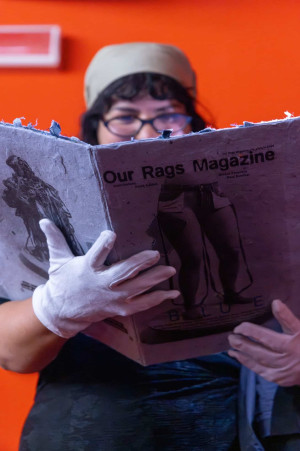
The conference closed with Elisa van Joolen, visual artist, programme director of the BA Fashion Department at the Gerrit Rietveld Academie in Amsterdam, and member of the critical fashion platform Warehouse. She presented Our Rags Magazine (ORM) , a speculative fashion magazine set four hundred years in the future. Each handmade issue is produced from discarded garments turned into paper. The pages do not depict clothing; they are clothing. A collaborative project with artist Aimée Zito Lema and graphic designer Elisabeth Klement, ORM challenges established industry norms while demystifying production processes. Van Joolen described a future where transformation and reuse are no longer ethical choices but absolute necessities, and where centuries-old paper-craft techniques respond to a world of depleted natural resources.
The MACRO conference concluded. The XXL JACKET was dismantled. The Tencel prints were rolled up. The students returned to their ateliers and their generative prompts.
None of this would have been possible without Dobrila Denegri. Her vision brought together a constellation of voices, from the cosmic geometries of threeASFOUR to the haunted intelligence of SOLL, from the landfills of Kenya to the rags turned paper four centuries from now. Science Fashion was curation as world-building.
For that, the gratitude is simple and profound.
Text by Gloria Maria Cappelletti
Images Courtesy of MACRO Museum of Contemporary Art of Rome. © Azienda Speciale Palaexpo. Ph. Monkeys Video Lab.
Images of Workshops at NABA Nuova Accademia di Belle Arti, Courtesy of Experiments in Fashion and Art
Special thanks to the curator Dobrila Denegri and all participants mentioned:
Dobrila Denegri, Adi Gil (threeASFOUR), Gabriel Asfour, Angela Donhauser, Gloria Maria Cappelletti, Jens Laugesen, Kosai Sekine, Yuima Nakazato, Paolo Franzo, Romana Andò, Guenda Cermel, Ivana Conte, Viviana Damiano, Colomba Leddi, Diego Manfreda, Romina Toscano, Ute Ploier, Anna Breit, Silvio Vujičić, Miro Roman, Galina Mihaleva, Els Petit-Carapiet, Branko Popović, Elisa van Joolen, Aimée Zito Lema, Elisabeth Klement, Christina Dörfler, Giulia Tomasello, Gerald Brandstätter, Peter Fellner, Lena Haslinger, Marilies Luger, Max Menschhorn, Hannah Pekarz, Mia Trotz, Sookie-Celeste Simair, Supervoid, Style Protocol, VZNZ.
AI artists featured in Gloria Maria Cappelletti's lecture From Self-Expression to the Uncanny Self:
Laura Buechner, Eugenio Marongiu, Anastasia Vladimirskaya, Anthony Tournadre, Dariusz Palarczyk, Cristian Poddighe.
Academic institutions and universities involved:
NABA, Nuova Accademia di Belle Arti (Fashion Design BA), Sapienza University of Rome (Master's programme in Fashion Theory and Practices), UnitelmaSapienza, Parsons School of Design, University of Arts Linz (Fashion & Technology), University of Florence (Department of Architecture), IED, Istituto Europeo di Design (Rome), RUFA, Rome University of Fine Arts, ILA, International Luxury Academy (Rome/London), Accademia Costume e Moda (Rome), FIDM ASU, Arizona State University, Gerrit Rietveld Academie (Amsterdam), Nanyang Technological University (Singapore).
Installations, screenings, and projects:
XXL JACKET, Dust to Dust (2024), Fashion & Technology student print installation, SOLL, Our Rags Magazine, TexTiles, People Carry People, Colour Lab, Coded Biophilia.