- Date
- 12 AUGUST 2026
- Author
- JAGRATI
- Image by
- TEAMLAB
- Categories
- Interviews
teamLab: Inside the Borderless World Where Art, Technology and Human Existence Interconnect
For more than two decades, international art collective teamLab has explored this question through immersive art that utilises digital technology and dissolves the boundaries between the viewer, the artwork, other people and the environment. Founded in 2001, teamLab brings together artists, programmers, engineers, CG animators, mathematicians and architects to investigate the relationship between the self and the world.
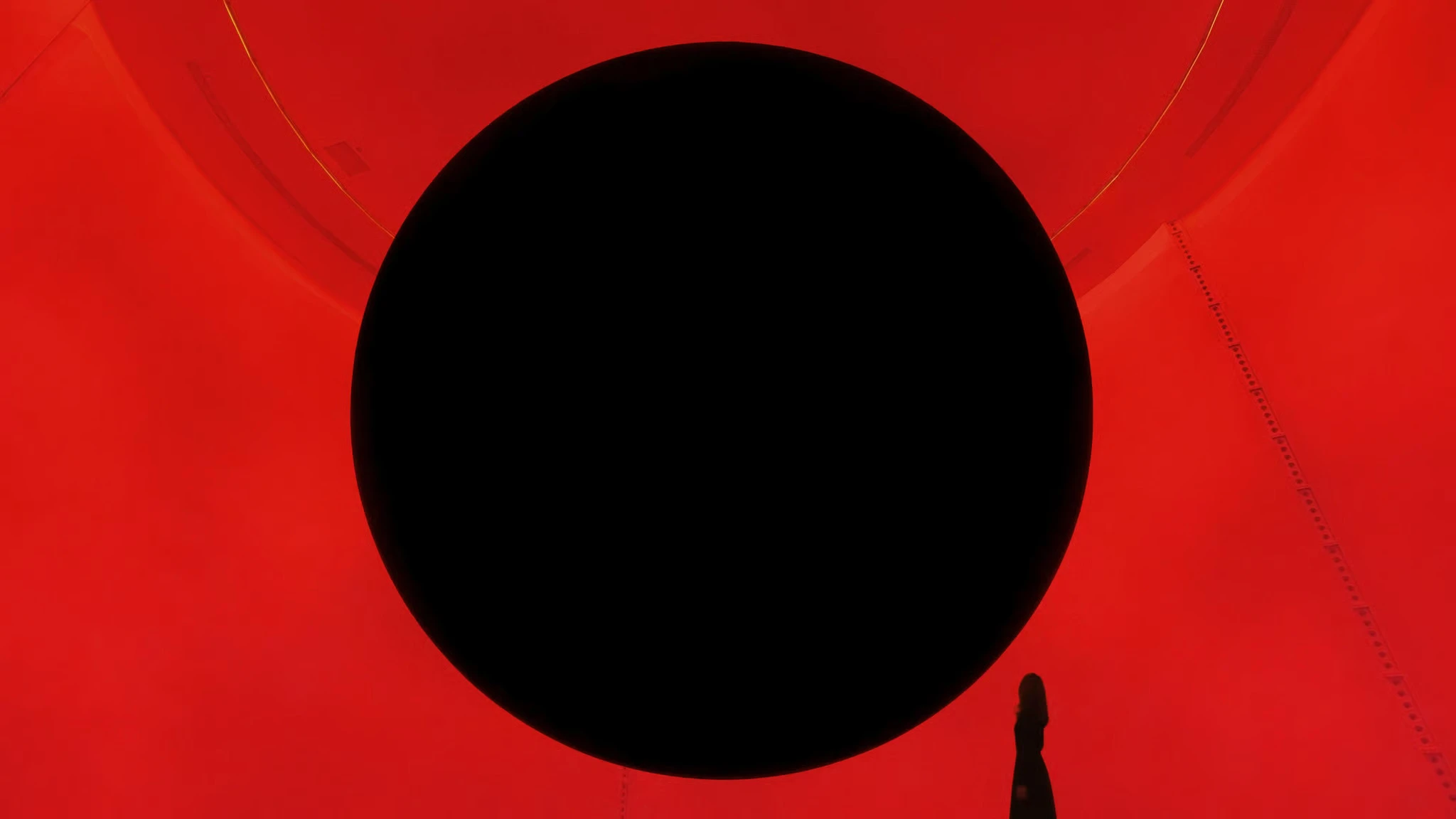
From teamLab Borderless: MORI Building DIGITAL ART MUSEUM to teamLab Biovortex Kyoto and teamLab Phenomena Abu Dhabi, the collective has transformed the museum into an evolving ecosystem where light, sound, bodies and movement become part of the work itself. teamLab Borderless describes itself as a museum without a map, allowing artworks to move across spaces and visitors to discover them through wandering rather than following a fixed route.
But beneath the spectacle lies a deeper investigation into perception and existence. What makes something exist? Where does the self end and the environment begin? And can the presence of another person actually change the artwork?
In conversation with RED-EYE, teamLab discusses immersive art, interconnected realities, perception, artificial intelligence, the social role of others and why the future of art may be less about creating objects than creating relationships.

The Borderless Self
Before there were screens, there were rivers.
Before there were immersive environments, there were forests.
Before algorithms generated worlds from data, there were monks sitting beneath cedar trees, watching mist dissolve into mountains, watching leaves surrender themselves to autumn, watching forms emerge and disappear within the ceaseless movement of existence.
Long before humanity learned to project light onto walls, nature had already perfected the art of immersion.
A forest does not ask to be observed.
A river does not perform.
A garden does not present itself as an object.
They envelop us.
They absorb us.
They remind us that we were never separate from the world to begin with.
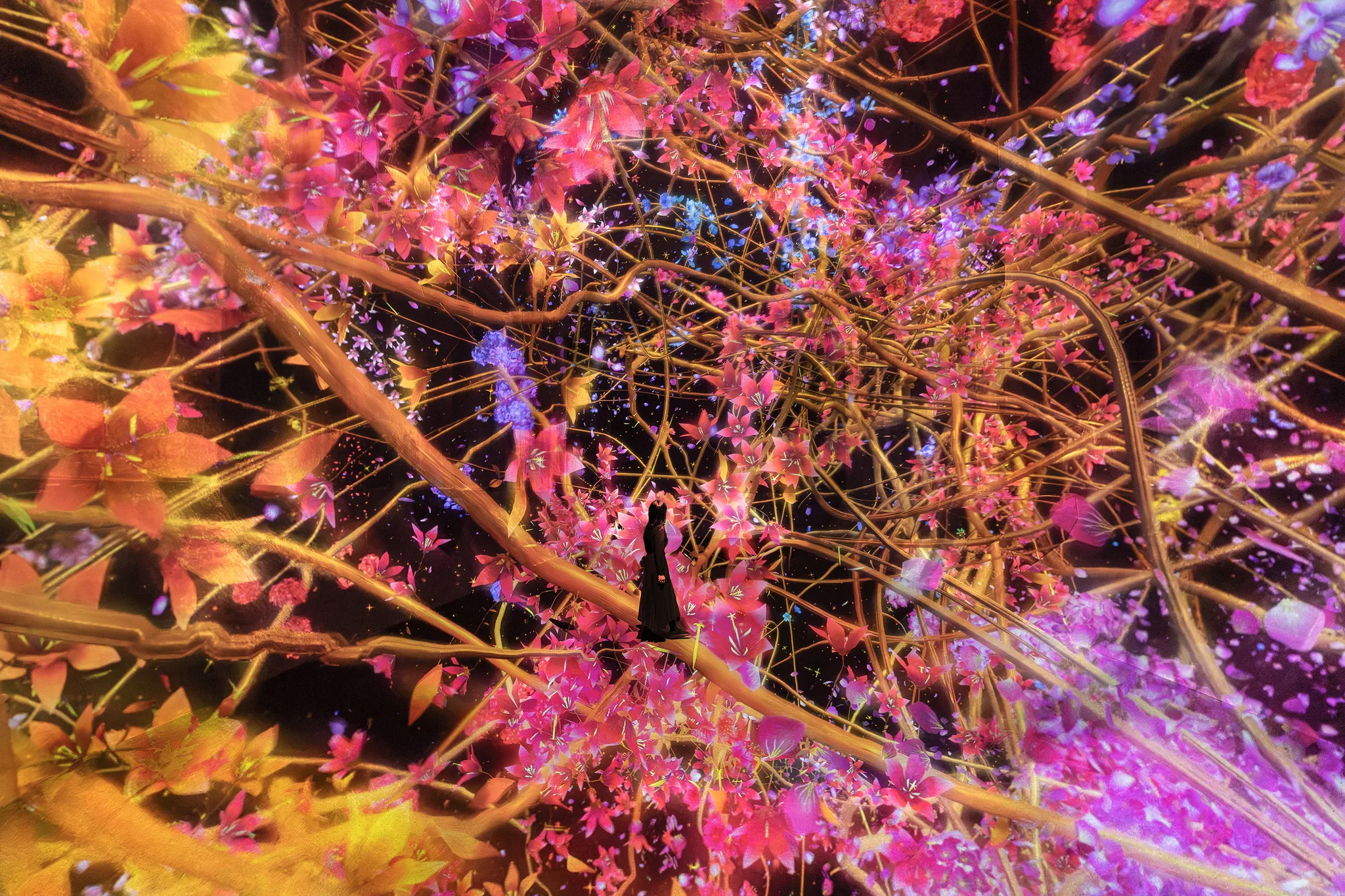
Standing within a teamLab artwork, one encounters something surprisingly ancient beneath the language of contemporary technology. The luminous flowers, responsive landscapes, floating spheres, and shifting constellations of light may be generated through digital technology, yet what unfolds feels less like innovation than a continuation of an inquiry that has occupied philosophers, poets, mystics, and scientists for centuries.
What is a self?
Where does one thing end and another begin?
What if existence is not contained within objects but emerges through connection and relationships?
And what if the boundaries we experience every day are not fundamental truths, but temporary agreements made by our perception?
In an age increasingly captivated by artificial intelligence, synthetic realities, and the infinite reproduction of images, these questions feel unexpectedly urgent.
One might expect a collective like teamLab, often described as pioneers of art that utilizes digital technology, to be preoccupied with the future of technology. Yet during our conversation, they repeatedly returned to something far more elemental.
Not technology.
Not innovation.
Not even art.
But perception itself.
“How do humans perceive the world?”
“Does existence apply only to physical objects?”
“Where do the boundaries of an artwork truly lie?”
The questions arrived not as intellectual exercises but as living investigations.
It quickly became clear that teamLab is not merely building immersive artworks. They are constructing philosophical spaces.
Spaces where perception becomes visible.
Spaces where existence itself becomes the medium.

The End of the Object
Much of the public conversation surrounding teamLab remains trapped within the vocabulary of spectacle.
Interactive art.
Digital entertainment.
Instagram aesthetics.
The language is understandable, yet profoundly insufficient.
What those descriptions fail to recognize is that teamLab’s twenty-year trajectory reveals something far more radical: a gradual departure from recognizing the artwork as an isolated object.
Traditionally, art has existed within boundaries.
A painting is enclosed by a frame.
A sculpture occupies a pedestal.
An artwork begins here and ends there.
The viewer remains outside.
The object remains inside.
The relationship is clear.
teamLab has spent decades dismantling this arrangement.
First came digital imagery.
Then came Ultrasubjective Space, an attempt to dissolve the separation between image and observer.
Later emerged Borderless, where artworks escaped their designated spaces altogether, drifting between rooms, merging into neighboring works, and transforming through human presence.
Today, the inquiry has expanded even further into what teamLab calls "Environmental Phenomena," "Higher-Order Sculpture," and "Cognitive Sculpture."
These are not merely artistic categories.
They are propositions about reality.
At the center of them all lies a deceptively simple idea:
“Existence is continuously generated through the relationships between perception, the physical body, others, the environment, and other artworks.”
Reading that sentence carefully.
Existence is not presented.
Existence is generated.
The distinction changes everything.
A Museum Without Edges
Nowhere is this philosophy more visible than inside teamLab Borderless.
To call Borderless a museum feels strangely inadequate.
Museums traditionally organize certainty.
They classify.
They separate.
They provide maps.
Borderless does none of these things.
There is no prescribed route.
No fixed beginning.
No definitive conclusion.
Artworks wander freely between rooms.
A flock of flowers may leave one environment entirely and reappear somewhere else.
Artwork spills across walls and into neighboring spaces.
Entire worlds mutate according to the movement of strangers.
The experience resembles a garden more than a museum.
A garden is never encountered all at once.
It unfolds through wandering.
Each step alters perception.
Each season creates a different world.
Rain participates.
Wind participates.
Time participates.
The garden is never finished because life itself is never finished.
In many ways, teamLab has transformed the logic of the Japanese garden into a computational medium.
Not as simulation.
But as a continuation.
The medium has changed.
The inquiry remains the same.
Q: To what extent does immersive art signal a shift from representation toward experiential realities?
The collective pauses before answering.
They seem almost uninterested in forecasting the future.
Instead, they redirect attention toward a deeper question.
teamLab:
“Whether art is shifting from something we look at to something we experience, honestly, we do not know what the future holds. Rather than predicting the future, we focus on the intentions behind how we create our work.”
Then comes a statement that feels less like a description of a museum and more like a description of a living ecosystem:
“teamLab Borderless is a world where existence is continuously generated through the relationships between perception, the physical body, others, the environment, and other artworks.”
A world.
Not an exhibition.
Not an installation.
A world.
The distinction matters.
Because worlds are not viewed.
Worlds are inhabited.


The Whirlpool
Perhaps the most illuminating moment of our conversation emerged through an unexpectedly simple image.
A whirlpool.
To explain their thinking about existence, teamLab compares a whirlpool to a stone.
A stone can be isolated.
Placed inside a box.
Removed from its surroundings.
It remains a stone.
A whirlpool cannot.
The moment it is separated from the conditions generating it, it vanishes.
Yet no one doubts that a whirlpool exists.
Why?
Does existence apply only to physical objects?
teamLab:
“Both the whirlpool and the surrounding water are made of the exact same water. There is no material difference. Yet we perceive a distinct existence there.”
What creates that existence?
Their answer arrives almost like a Zen koan.
“It is not a difference in material substance, but rather the flow, energy, and order generated within the environment.”
Suddenly the conversation is no longer about art.
It is about reality itself.
About whether existence belongs to things or to relationships.
About whether identity is a noun or a verb.
About whether consciousness itself may resemble a whirlpool more than a stone.
Not an object.
A process.
Not permanence.
Participation.

The Beauty of Others
Perhaps the most radical dimension of teamLab’s work is neither technological nor philosophical.
It is social.
Modern life often teaches us to experience other people as interruptions.
Crowds.
Noise.
Traffic.
Obstacles.
The presence of others frequently feels like a limitation imposed upon personal freedom.
Within teamLab’s worlds, that logic is quietly reversed.
When someone passes through the space, the environment changes.
A child running across a room gives birth to an entirely new phenomenon.
Artwork bends around strangers.
Flowers bloom differently because another body entered the frame.
For a moment, another person’s existence becomes visible not as interference but as a contribution to the experience, making it holistic and consciously aware.
Q: What social significance does this hold?
teamLab:
“The very presence of another person becomes an element that enriches the world.”
Few contemporary artworks make such a simple yet profound proposition.
That beauty is not something we create alone.
That reality itself becomes richer through coexistence.
That perhaps the deepest form of immersion is not immersion into technology—
—but immersion into a relationship.
Beyond Technology and Artificial Intelligence
We live in an era obsessed with generation.
AI generates images.
AI generates music.
AI generates language.
Increasingly, AI generates versions of reality itself.
Yet, to no surprise, teamLab remains unconcerned with the ongoing shift.
Their work begins elsewhere.
Not with images.
But with presence.
Not with simulation.
But with an encounter.
As they explain:
“The artwork is never confined within a screen.”
Even if beautiful imagery becomes infinitely abundant, certain things remain difficult to automate.
The movement of a body through space.
The sensation of water against skin.
The unpredictable presence of another human being.
The emergence of phenomena through the environment.
The experience of becoming aware of one’s own existence.
These are not images.
They are conditions of being.
And perhaps this explains why millions continue to visit these museums every year.
People are not merely seeking spectacle.
They are seeking participation.
Or perhaps a way to remind oneself what realities exist beyond the mundane.
The Borderless Self
Near the conclusion of our conversation, teamLab returned repeatedly to a single thought.
A thought so simple it is easy to overlook.
“Our own existence influences the world, and the existence of others enriches it as well.”
Hidden inside that sentence is an entire philosophy.
A challenge to contemporary culture’s obsession with separation.
A reminder that identity is relational.
That perception is participatory.
That existence is not something we possess.
It is something we continuously create together.
Perhaps this is the true meaning of 'borderless.'.
Not merely the absence of walls.
Not merely immersive technology.
But the recognition that the boundaries between artwork and viewer, self and other, and body and environment are far more permeable than we imagine.
The flowers disappear.
The light dissolves.
The artworks vanish.
Yet something remains.
A quiet intuition.
That reality is not a collection of isolated things.
But a living field of relationships.
A garden forever unfolding.
A river forever flowing.
A world continuously creating itself through the presence of everything within it.
As I reflected on teamLab’s words, I was struck by how their work feels strangely ancient despite its technological complexity. Beneath the digital technology lies an inquiry into perception, impermanence, and interconnectedness that philosophers and monks have pursued across centuries.
In many ways, teamLab resembles what they themselves have described: a collective of modern monks using radiance instead of ink, code instead of calligraphy, and immersive worlds instead of temples to explore the invisible terrain of existence.
They are exploring the same ancient questions: What are the true boundaries of the self? Where does one thing end and another begin? And perhaps most importantly: Can we build worlds where the presence of others makes us more whole?
These are not questions about the future of technology.
They are questions about what it means to be human.
Experience TeamLab’s Worlds
To encounter these ideas firsthand, teamLab currently operates immersive artworks across multiple cities with both seasonal and permanent exhibitions. Each space offers a distinct entry point into their investigation of existence and connection:
Ongoing currently at Nita Mukesh Ambani Cultural Center: NMACC
[teamLab Biovortex Kyoto - Permanent]
[Universe of Existence, Universe of Perception]
Tickets: [LINK]
[teamLab Phenomena Abu Dhabi - Permanent]
[The environment creates phenomena, which create the artworks.]
Tickets: [LINK]
[teamLab Borderless Azabudai Hills Tokyo - Permanent]
[Wander, Explore, and Discover in One Continuous Borderless World]
Tickets: [LINK]
More information: www.teamlab. Art
CREDITS:
teamLab Biovortex Kyoto, Kyoto © teamLab
teamLab, teamLab Phenomena Abu Dhabi, Saadiyat Cultural District, Abu Dhabi ©︎ teamLab
teamLab Borderless: MORI Building DIGITAL ART MUSEUM, Tokyo © teamLab