- Date
- 09 DECEMBER 2025
- Author
- DANIEL FACE
- Image by
- PRESS OFFICE
- Categories
- Aesthetics
What Art Basel Miami 2025 Revealed About the Future of Art
Art Basel Miami 2025 did not feel like a spectacle chasing relevance. It felt like a cultural system quietly showing how art truly moves now. Across beaches, hotel lobbies, fair booths, private dinners, nightclubs and digital platforms, creativity was no longer tied to one space, one format, or one audience. What mattered this year was presence, intention, and how people gathered around ideas again.
Check out some of the highlights below!

Digital Art Became Cultural Infrastructure
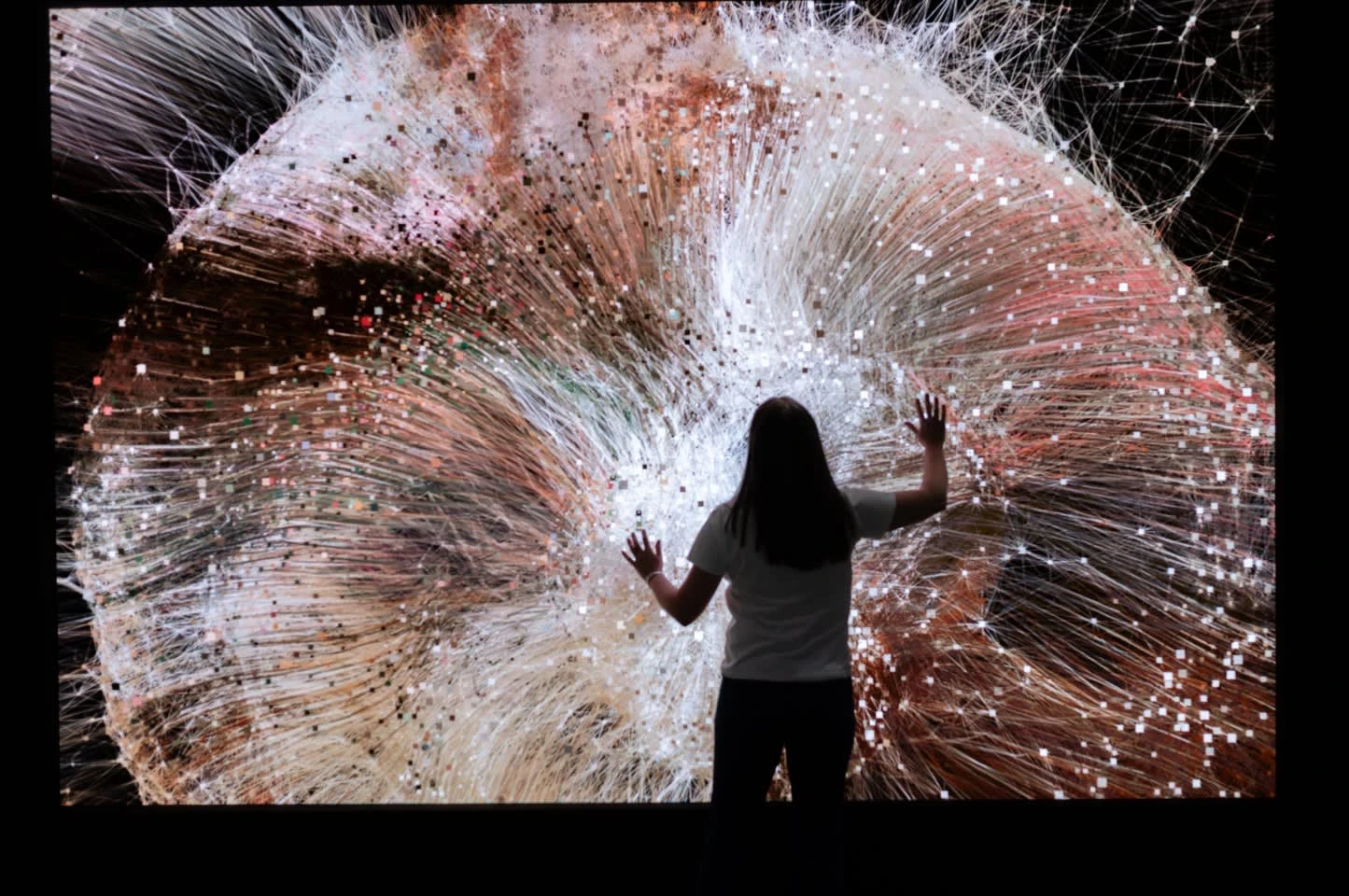
The most important structural shift arrived with the debut of Zero 10, Art Basel’s first platform fully dedicated to digital era art. Curated by Eli Scheinman, the initiative operated as more than an exhibition. It functioned as a live ecosystem for generative systems, computational practices, and hybrid physical digital works.
Beeple Studios, Art Blocks, Fellowship x ARTXCODE, Pace Gallery, Asprey Studio, AOTM Gallery and SOLOS moved effortlessly between established collectors and a new generation of digital-native buyers. Beeple’s Regular Animals sold out entirely. Tyler Hobbs, Kim Asendorf, Joe Pease, and XCOPY generated massive engagement, with Coin Laundry recording over 2.3 million NFT claims.
What mattered was not only volume. It was confidence. Digital art was no longer introduced. It was simply collected.
This shift confirmed what many already sensed. The future of contemporary art is hybrid, fluid, and technologically native.

The Market Was Active Across Every Generation
On the traditional fair floor, momentum was immediate. Works by Ruth Asawa, Sam Gilliam, Alice Neel, Andy Warhol, and Martin Wong entered major public and private collections. Rediscovered figures including Emma Amos, Eva Olivetti and Juliette Roche moved alongside emerging voices such as Kelsey Isaacs, Cisco Merel and Adriel Visoto.
No single aesthetic dominated. Abstraction, figuration, conceptual practices, social commentary, digital sculpture and installation all circulated with equal authority. The appetite was not narrow. It was wide.
As Bridget Finn reflected, this edition carried unusual creative ambition and cultural plurality. It was not only market driven. It was culturally alert.

Fashion, Design and the New Art Social System
Beyond the fair, Miami Art Week expanded into a living fashion and design ecosystem.
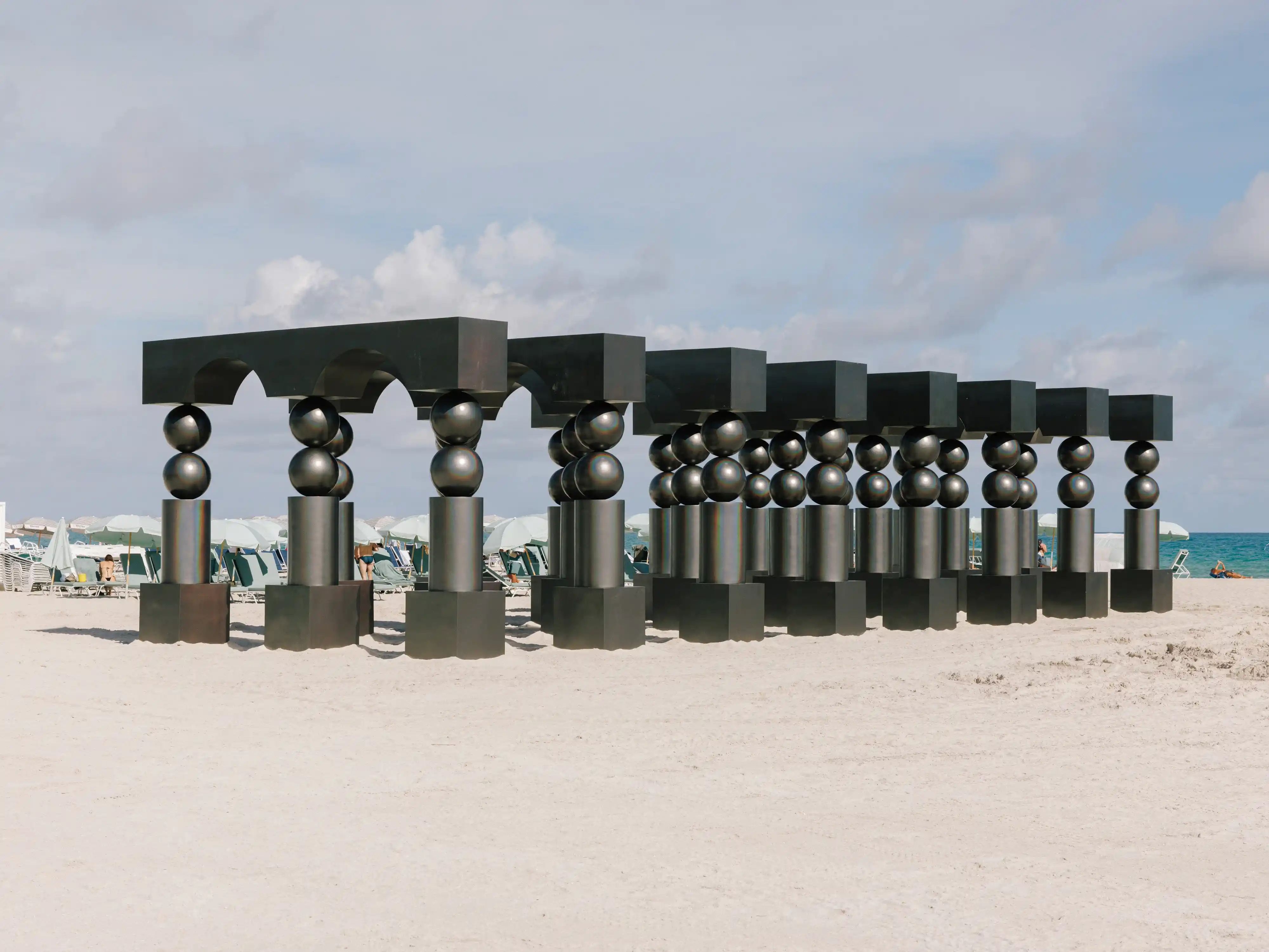
At Andaz Miami Beach, Ferragamo creative director Maximilian Davis hosted a late night gathering where fashion, music and art culture merged naturally. Music by Benji B carried the night, while faces from modeling, performance, digital culture and fashion cross-pollinated the room.
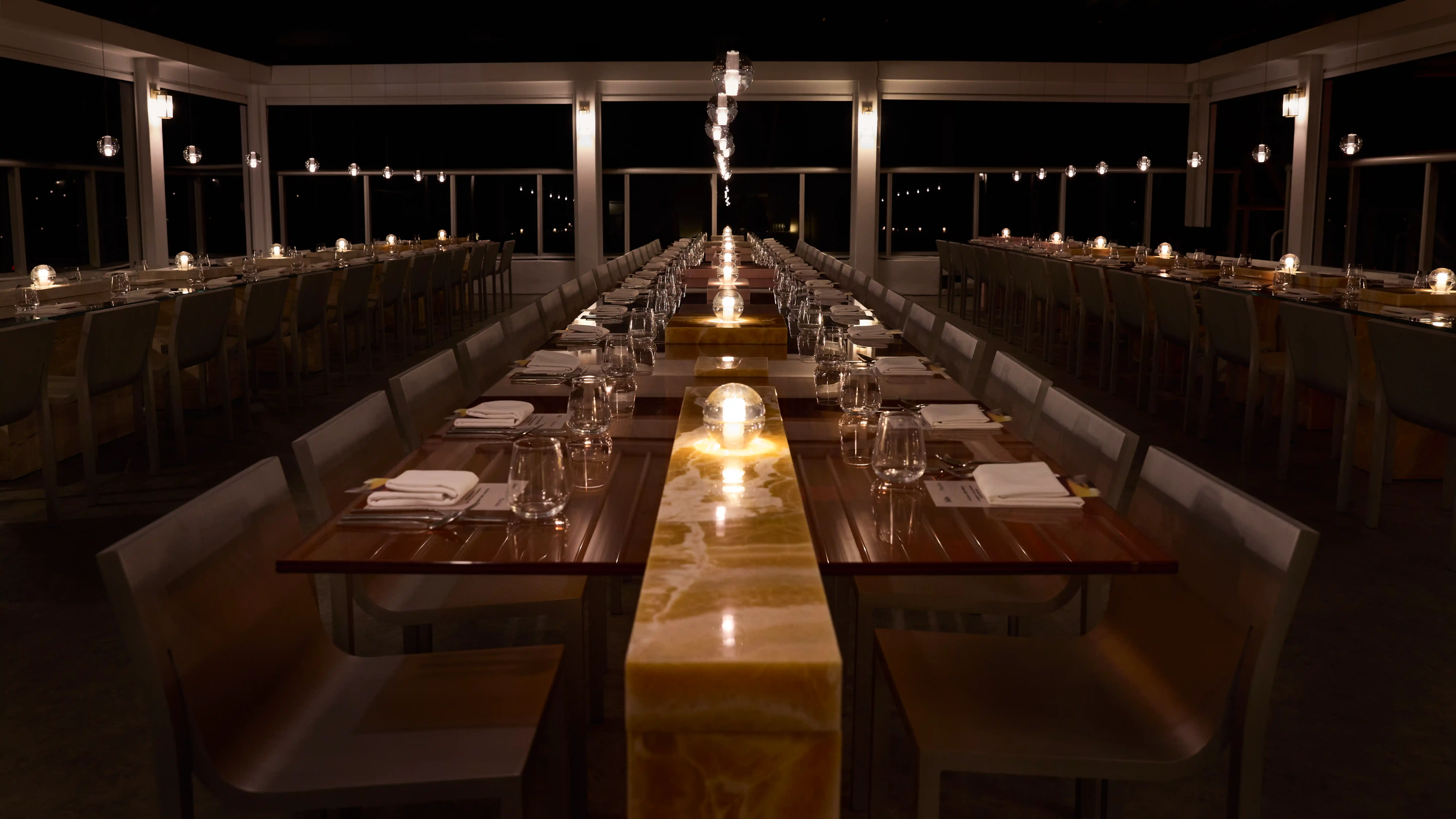
Earlier the same day, Andaz unveiled its collaboration with WE ARE ONA founder Luca Pronzato and designer Sabine Marcelis, with culinary direction by José Andrés. Design, gastronomy, sculptural installation and hospitality merged into a four-day immersive dining environment that placed experience at the center of luxury.
These moments reflected a wider truth across Miami Art Week. Art was no longer framed only inside gallery walls. It lived through fashion, food, architecture, and social ritual.
Pilar Zeta and the Rise of Public Immersive Art
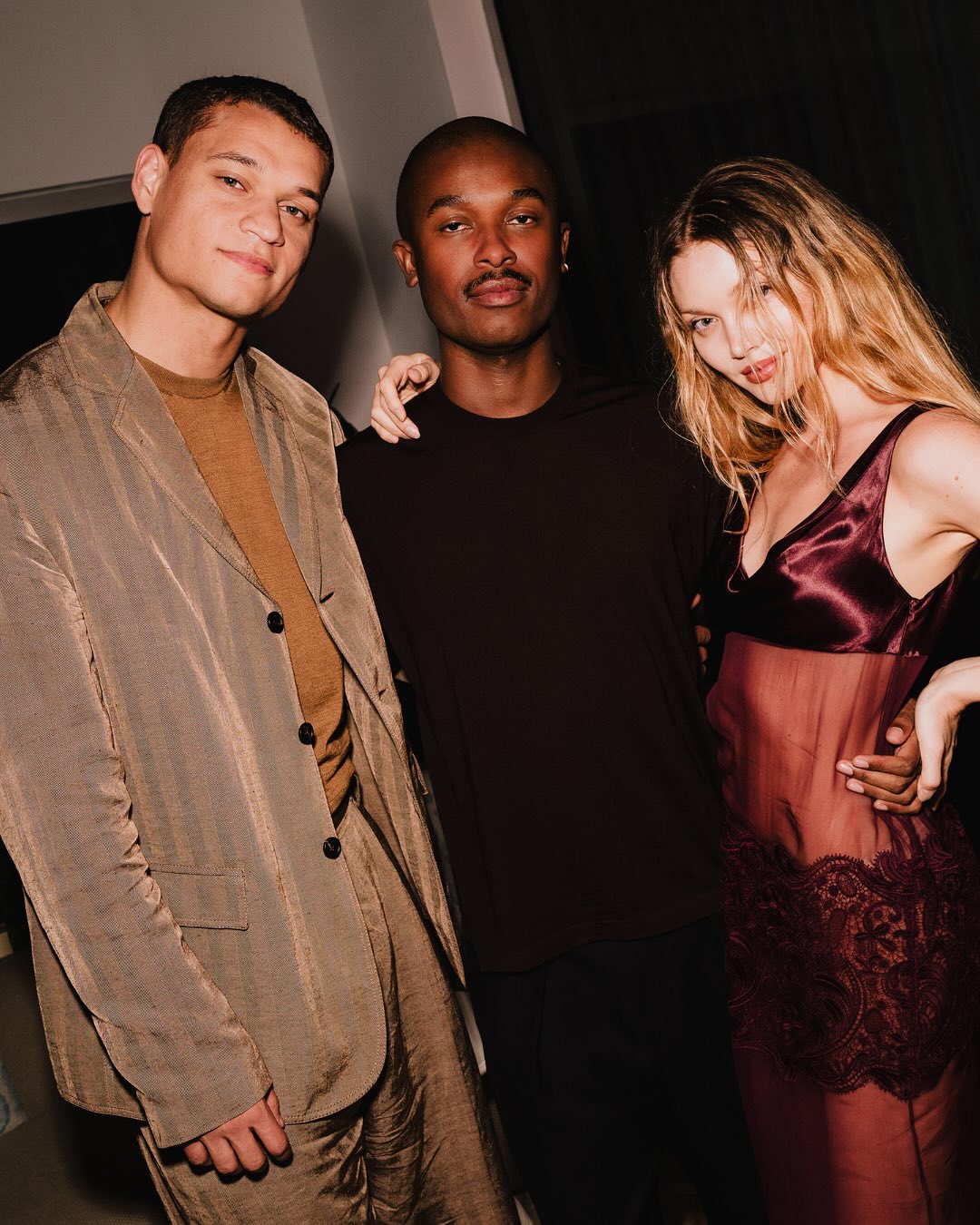
On the sands outside The Shelborne by Proper, Argentine multimedia artist Pilar Zeta unveiled "The Observer Effect." Eight monumental metallic portals transformed the beachfront into a perceptual landscape of reflection, movement and light.
By day, the installation functioned as a shifting prism. By night, it became a glowing site of collective pause. Guests gathered not only for spectacle but for stillness. DJ Mia Moretti’s soundtrack, cocktails by LALO Tequila, Grey Goose, and St Germain, and the surrounding ocean air shaped the launch into a rare moment where experiential art met genuine human presence.
Alongside her large-scale public work on the shoreline, Pilar Zeta’s presence at Miami Art Week extended into a more intimate cultural format through a collaborative dinner with DoDo at Andaz Miami Beach. Hosted on December 2 by DoDo CEO Teejana Beenessreesingh, the evening marked the ceremonial opening of Art Basel Miami Beach through a four-day immersive program curated by WE ARE ONA. Guests gathered on the ocean-facing terrace within a sculptural environment of glass and stone table installations by Sabine Marcelis, before moving into a seated dining experience led by José Andrés, featuring dishes from his new restaurant Aguasal. The room became a meeting point of art, fashion, sound and cultural leadership, with attendees including Mia Moretti, Benji B, Charlene Prempeh, Dianna Cohen, Beverly Nguyen, Bách Buquen, and Nuni and Nasteha Yusuf. The dinner did not function as a brand activation in the traditional sense. It operated as a live cultural performance where jewelry, art, design and gastronomy shared equal narrative weight.
BitBasel and the Power Shift Toward Women in Web3
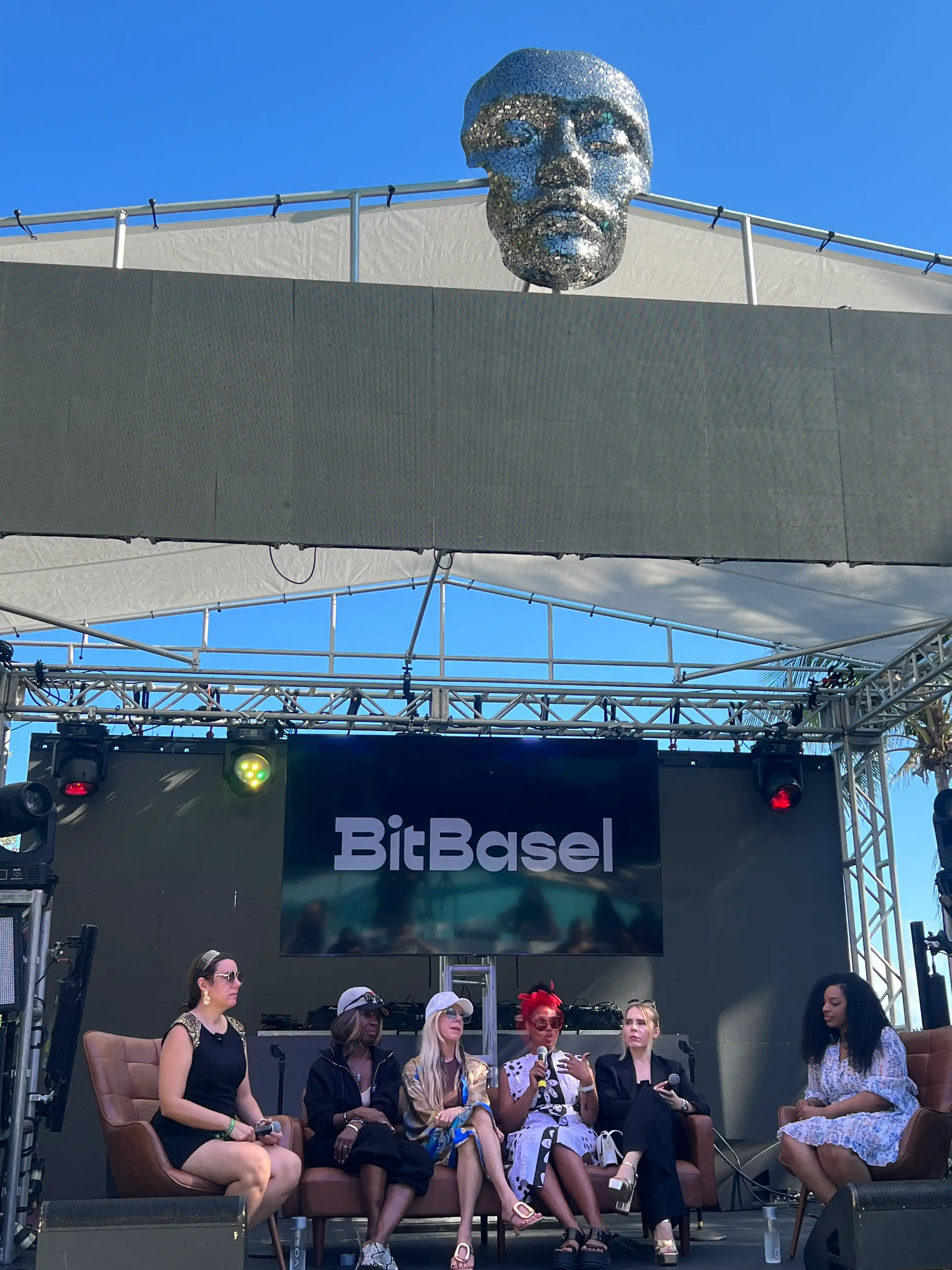
The future-facing energy of Miami Art Week found one of its most focused expressions at BitBasel through The Queens Gathering, its signature summit honoring women shaping the future of culture, technology, finance, and creativity. Hosted at Sagamore Hotel South Beach on December 7, the daytime program centered on intimate, high-impact conversations around leadership, transformation, and cultural authorship. Among the panelists shaping this dialogue was our art director Adriana Krawcewicz, who took part in the Women in Web3 panel alongside PAG Black, Naama O. Pozniak, Adriann Guy, and Nova Lorraine, moderated by Scarlett Arana. The conversation moved beyond surface-level innovation and into real narratives of power, pivots, vulnerability, and ownership within emerging digital economies. The Queens Gathering flowed directly into The King’s Exhibition that evening, linking women-led future systems with historical cultural legacy through rare presentations of Basquiat works and new pieces by PAG Black. Within the wider rhythm of Art Basel Miami 2025, BitBasel stood as a structural reminder that the future of art is not only being built through new technologies, but through who holds power inside them.
Nightlife as Exhibition Space
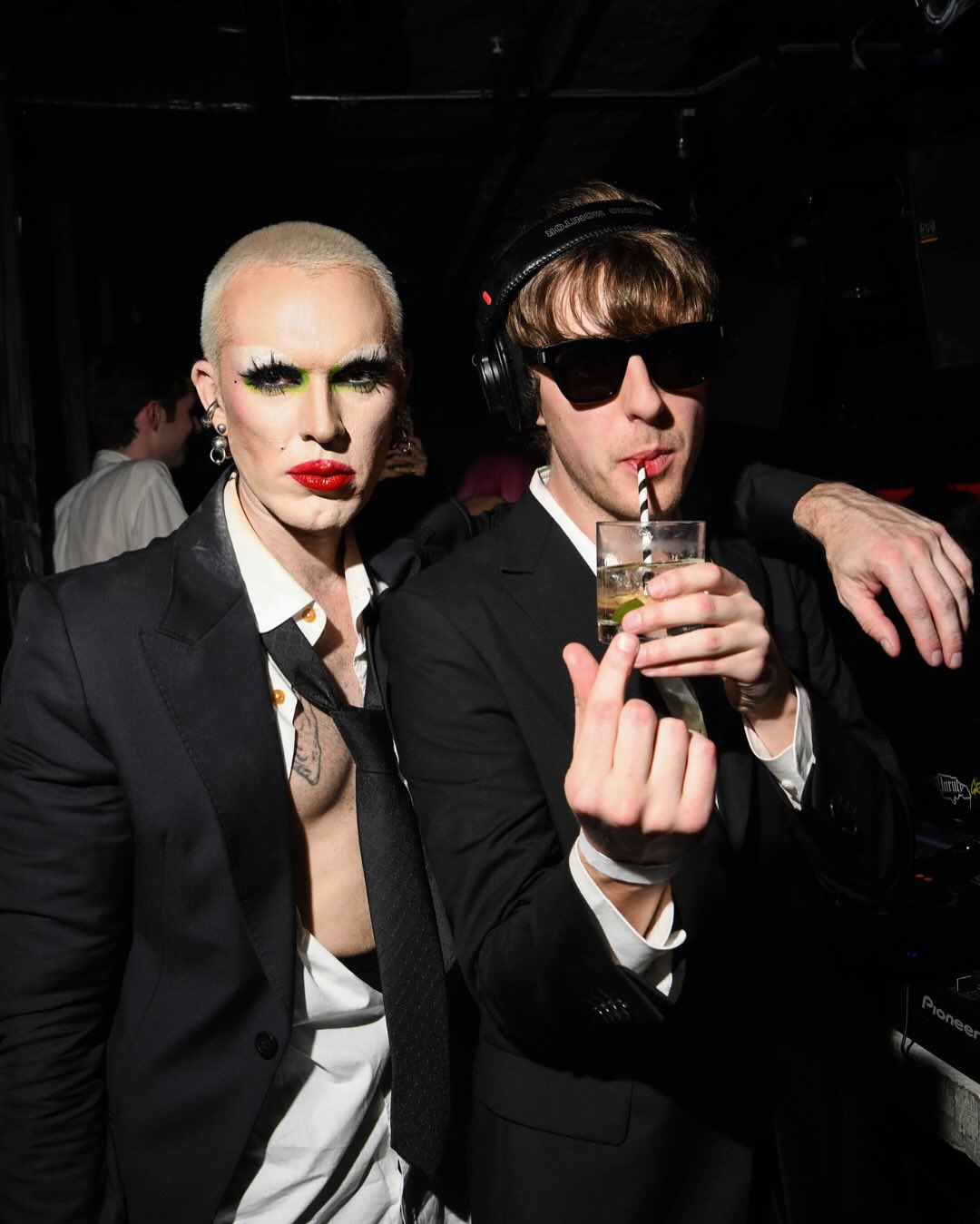
In the late hours, Parisian cultural institution Silencio returned to The Miami Beach EDITION for three consecutive nights. The program brought together musicians, artists, collectors, designers and digital creatives in one moving social sculpture.
Tuesday featured a DJ set by Yves Tumor. Wednesday followed with a set by Benji B. The room became both dance floor and cultural intersection. Here, nightlife functioned as a curatorial format in itself.
Design as Contemporary Language at Cassina
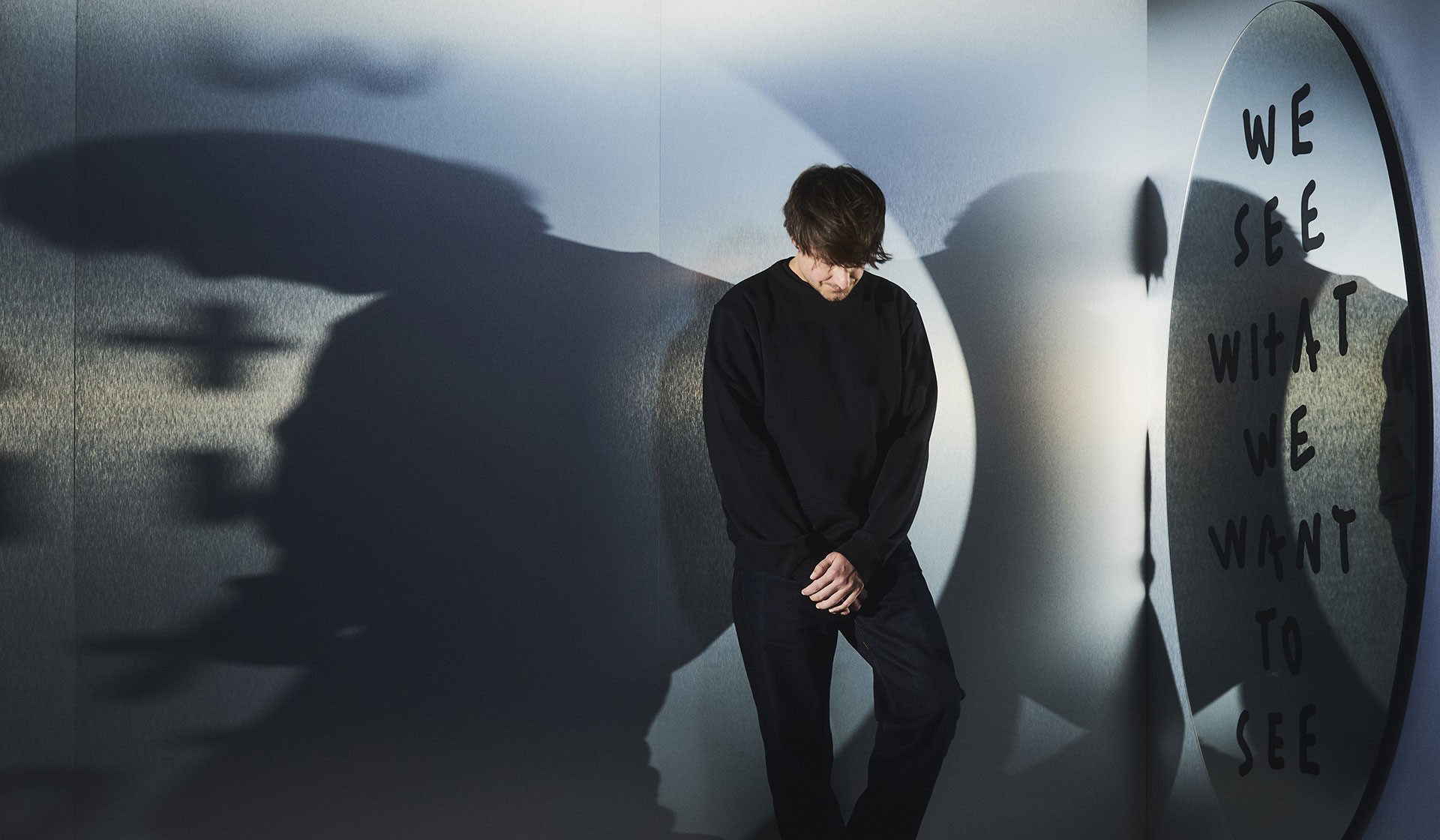
In the Miami Design District, Cassina unveiled a site specific intervention by Italian artist Pietro Terzini. The facade text installation and limited mirror editions transformed the storefront into a public message space centered on reflection, identity and perception.
Inside, the ME FROM OUTSIDE mirror room blurred boundaries between design object, conceptual art, and interactive environment. The project confirmed how furniture, language and social commentary now coexist seamlessly within contemporary practice.
Es Devlin and the Return of Quiet Meaning
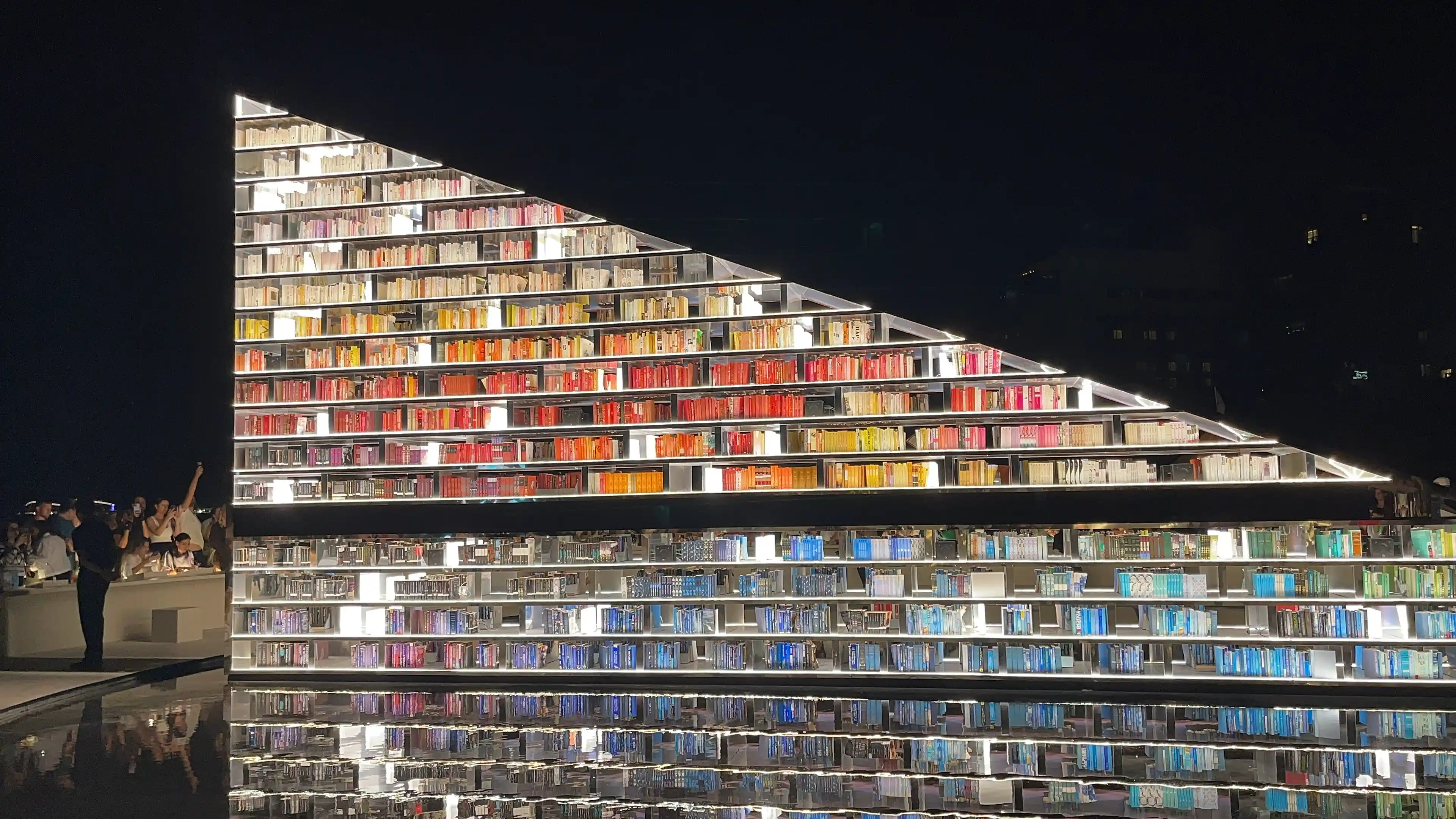
Perhaps the most emotionally resonant experience of the week unfolded at Faena Beach. British artist Es Devlin presented Library of Us. A monumental revolving structure containing 2,500 books rose between sea and sky. Visitors moved slowly through the space, reading, reflecting, exchanging conversations with strangers.
At sunset, reflections multiplied across water and mirrored surfaces. The installation invited silence, presence, and shared knowledge. It resisted the frantic visual economy of social media and offered something rare during Miami Art Week. Time to think.
The accompanying Edible Library dinner translated literature into cuisine under the hand of Francis Mallmann. Guests revolved between courses, encountering both new texts and new humans with each rotation. The work reminded visitors that art can still shape attention, not only content.
CONTEXT Art Miami and the Pulse of Emerging Talent
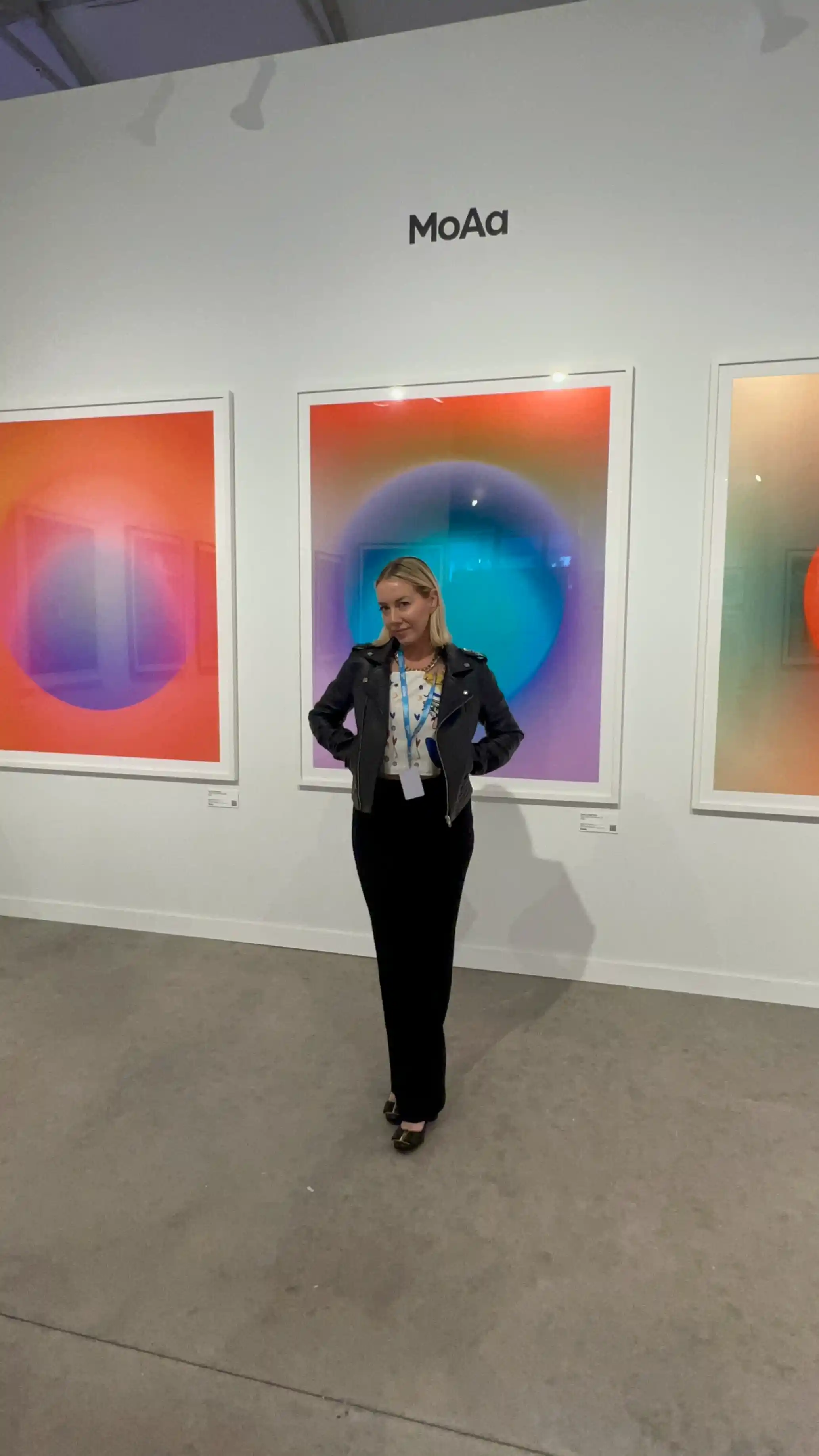
While Art Basel anchors the global spotlight, CONTEXT Art Miami continued to operate as one of the most vital discovery zones of Miami Art Week. Dedicated to emerging and mid-career artists, the fair created a faster, more porous dialogue between galleries, collectors, and cultural operators. The atmosphere was less about spectacle and more about proximity. Artists were present. Conversations were direct. Risk felt encouraged rather than hedged. Across painting, sculpture, installation, textile, photography and hybrid digital practices, CONTEXT revealed how the next generation is shaping a language that is politically aware, materially experimental, and strategically fluid. Adding to this forward-facing energy, our friends from the Museum of Artificial Art were also present, reinforcing how artificial intelligence and computational creativity are now fully embedded within the emerging art ecosystem. In contrast to the institutional gravity of Art Basel, CONTEXT functioned as its necessary counterbalance. It reminded the week where its future bloodstream continues to circulate.
What the Week Ultimately Told Us
Art Basel Miami 2025 revealed that the future of art is not about replacing the physical with the digital. It is about layering the two into one expanded cultural language. It showed that nightlife is curation, design is storytelling, technology is authorship, and installation can still invite spiritual quiet.
The market proved strong. Digital proved stable. Public art proved necessary. Fashion proved essential. And Miami once again proved that contemporary culture no longer belongs to one room, one class, or one medium.
The future of art is no longer about what hangs on the wall. It is about what moves through people.
Words by @danielface_
On the cover ZERO10 image courtesy by Art Basel