- Date
- 15 APRIL 2026
- Author
- GLORIA MARIA CAPPELLETTI
- Image by
- AGATA ELISEEVA
- Categories
- Interviews
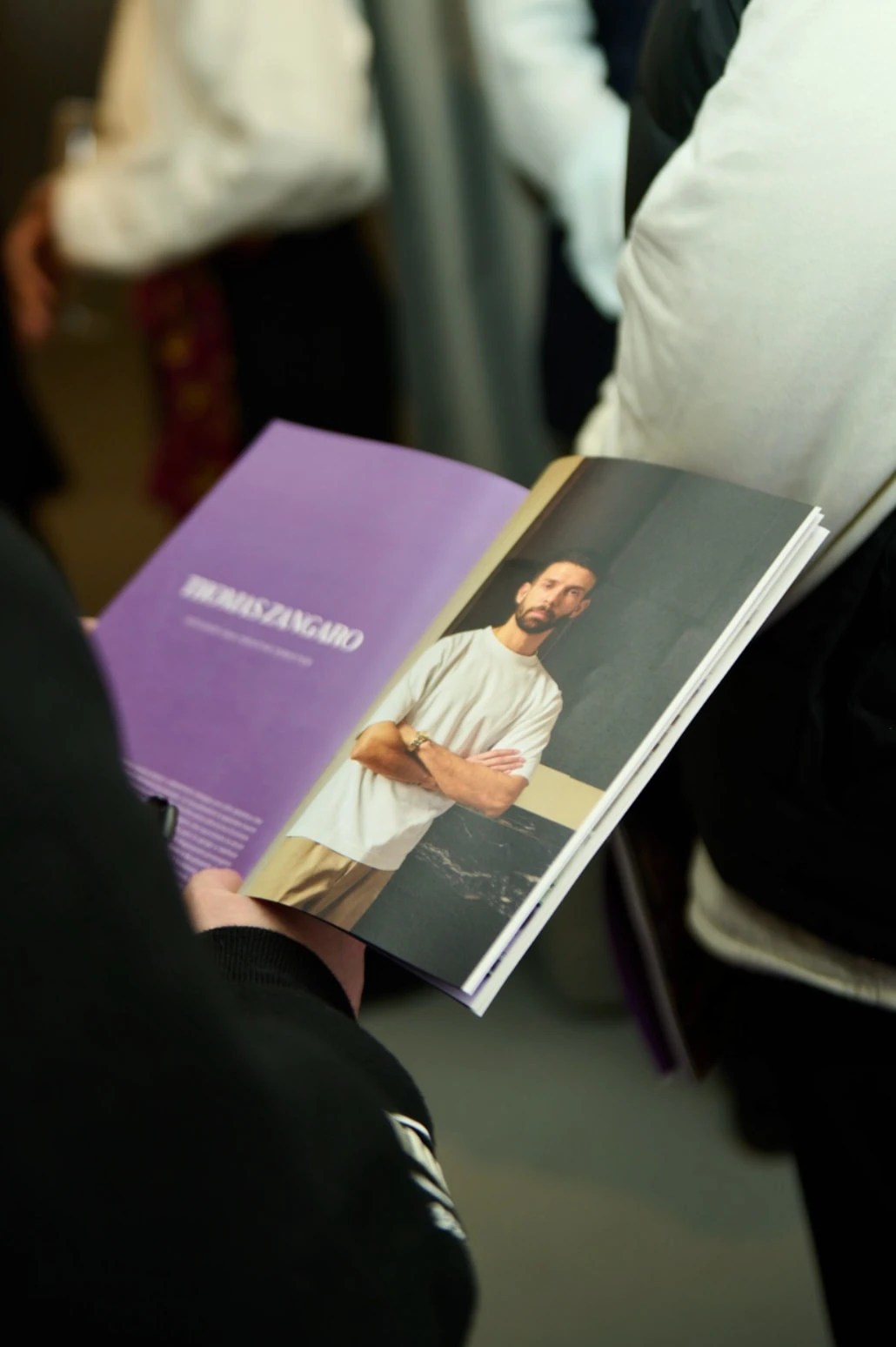
Inside FineSettimana: An Interview with Thomas Zangaro
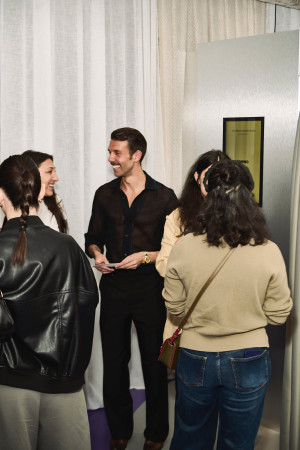
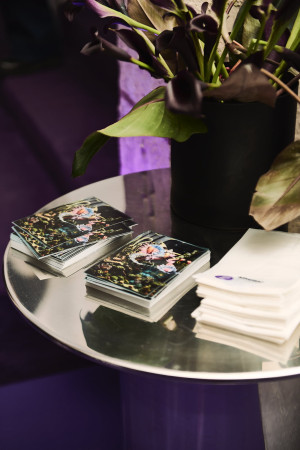
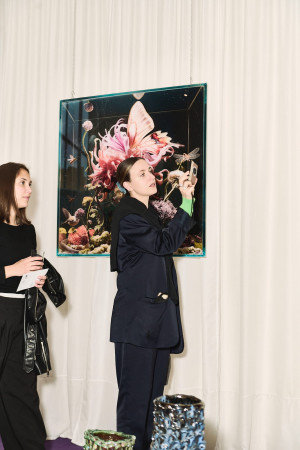
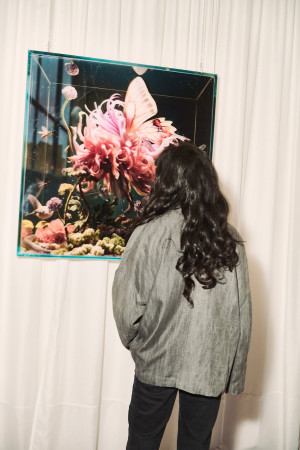
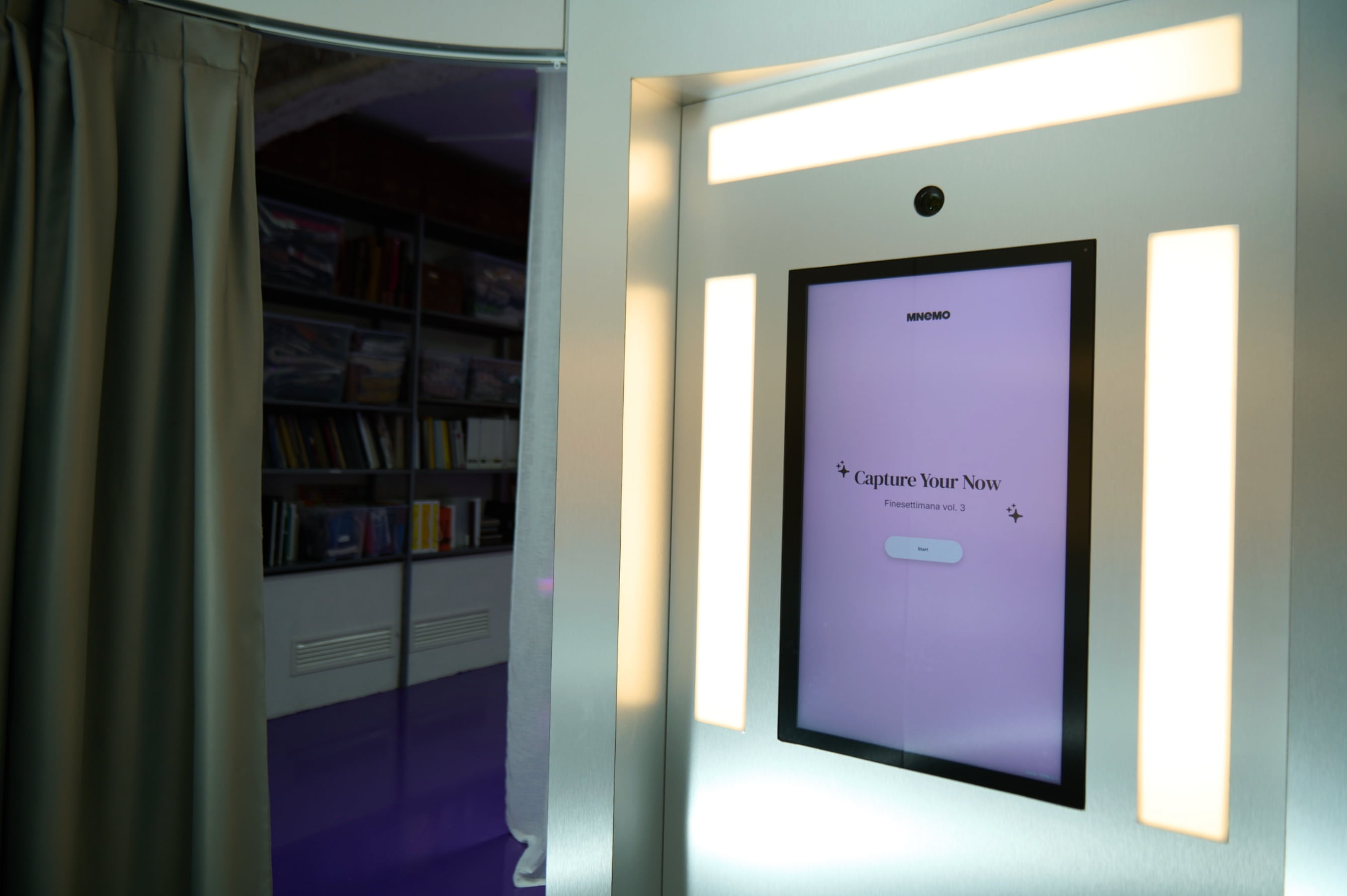
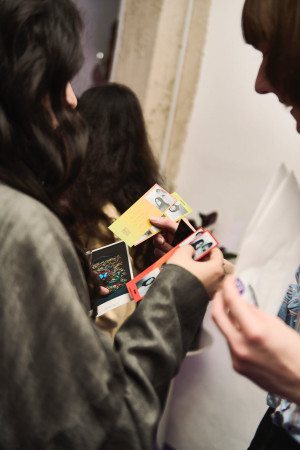
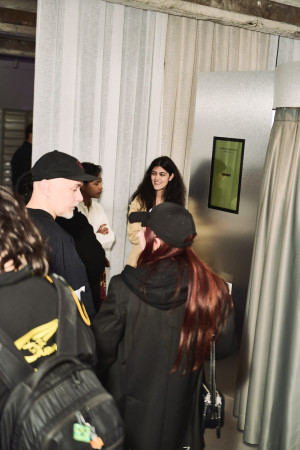
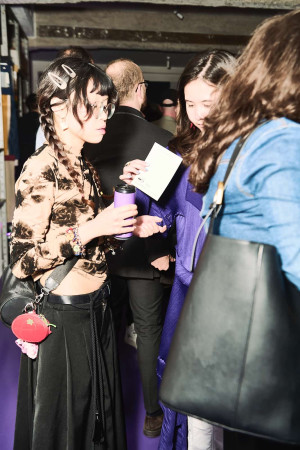
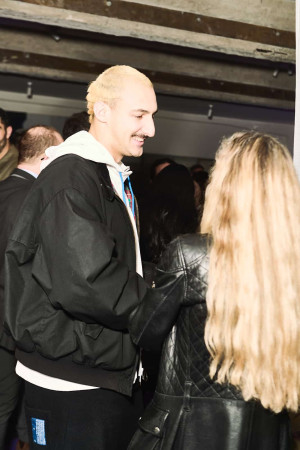
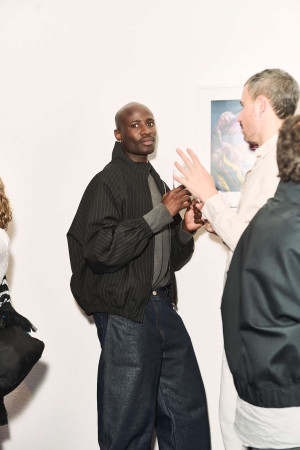
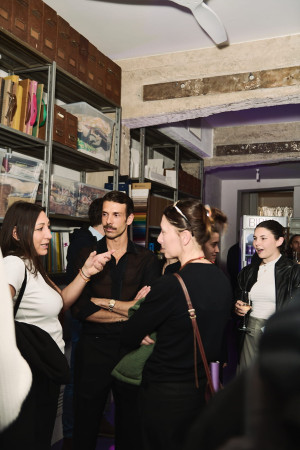
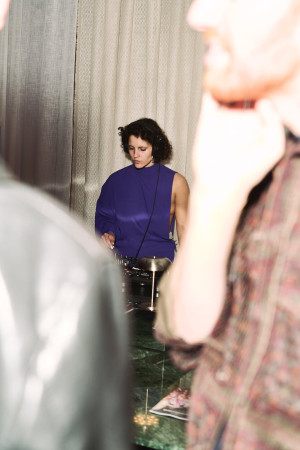
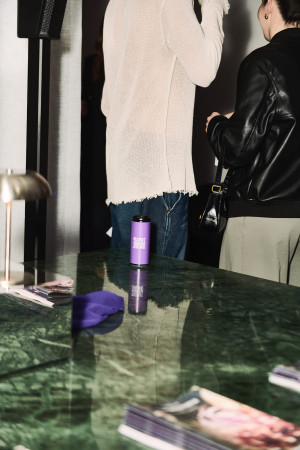
Last night, Thomas Zangaro Studio opened its doors for the vernissage of FineSettimana 2026, the third edition of the annual project that transforms this Milanese space into a platform for experimentation between art, architecture, and new technologies. The celebration was everything one could hope for: the studio filled with curiosity, conversation, and the kind of energy that only happens when people who genuinely care about creativity come together. Walking through the space, I watched visitors pause before Lorenza Liguori's Flos Aliena, leaning in toward her virtual teche as if trying to hear the alien flowers breathe. I saw them queue patiently for Mnemo, the experiential photo booth designed by Thomas and his team, emerging with curious expressions and printed portraits that seemed to capture not just their faces but something closer to their emotional state. The evening was a success, not because everything was perfect, but because everything felt alive.
Today, with the echoes of the vernissage still settling, I sat down with Thomas Zangaro to reflect on this third edition. Thomas is not simply a designer who happens to host exhibitions. In his interior design, product design, and exhibition projects, he develops a distinctive style that strikes a perfect balance between contemporary trends and references to the past. His passion lies in exploring new narratives between the spaces he designs and their architectural context, creating environments that go beyond mere function. He masters the art of contrast and disruption, crafting unexpected yet engaging spaces that tell the story of those who inhabit them or who will become part of them.
His ongoing search for unique materials and objects drives him to redefine the environments and installations he creates, generating innovative visual and sensory narratives. His sources of inspiration come from works of art, icons of design from the '70s and '80s, and great designers of the past and present, such as Niemeyer, Gae Aulenti, and Le Corbusier. In his projects, Thomas expresses a strong affinity for brutalism, using precious materials that contrast with simpler objects or materials from other contexts, while also exploring the concept of the "unfinished." To complete the picture, he incorporates Eastern and ethnic influences, creating spaces that uniquely and distinctively blend aesthetics and functionality.
FineSettimana is his vision made temporary, a space where his design practice opens itself to the city, to artists, and to the public. This year, with Flos Aliena and Mnemo and us at Red Eye Metazine as collaborators, the project reached a new threshold. In the following interview, Thomas looks back on the journey, reflects on what surprised him most, and shares his evolving thoughts on artificial intelligence, authorship, and the future of FineSettimana as a year-round cultural platform.
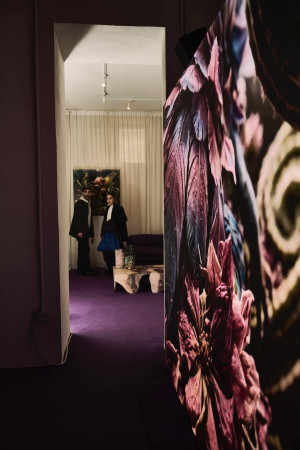
FineSettimana has reached its third edition. Now that the exhibition week has concluded, looking back, how do you evaluate this journey? What did it bring that was new compared to previous editions?
For me, FineSettimana represents a path of continuous exploration and, above all, a way to step outside my comfort zone. The previous editions were, in some ways, closer to my own aesthetic and to the scenarios we work with daily in the studio. This third edition, realized in collaboration with Red Eye Magazine and with the artist Lorenza Liguori, opened the project to new languages and new boundaries, bringing the digital to the center of the experience. It was an opportunity to question our own point of view and to expand the dialogue between art, space, and technology.
This year, you welcomed Lorenza Liguori's Flos Aliena into the studio. How did you see the public relate to her virtual teche—these ecosystems suspended between the organic and the digital? Was there a moment or an encounter that particularly struck you?
What struck the public the most was their curiosity about the generative process behind the worlds Lorenza created. Many people were fascinated by trying to understand how these ecosystems took shape and, above all, how much of that process was guided by the artist's sensibility and how much was entrusted to artificial intelligence. I believe that AI is already part of everyone's daily life, but seeing it translated into an artistic language sparked a deeper reflection. It was very interesting to observe how the public always tried to bring the focus back to Lorenza's authorial gesture and her vision.
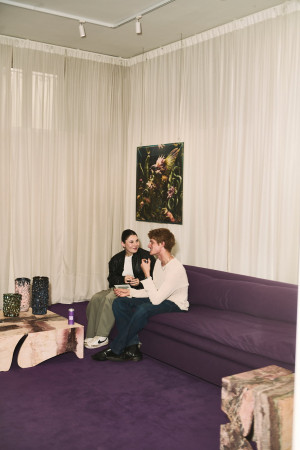
The studio is your usual workplace, but during FineSettimana it transformed into an exhibition space open to the city. How did you experience this transition? What does it mean for you to see your own project space inhabited by artworks and crossed by so many people?
For me, it is a deep joy to see this space, which I care about very much, come to life in a different way. Every year it changes its appearance, enriches itself with art, with people, and with conversations. When I first saw this place, one of my first thoughts was precisely to make it a space for gathering, a meeting point for people we respect both professionally and personally. During FineSettimana, this desire is fully realized, and the studio ceases to be just a workplace and becomes a space open to the city and to exchange.
One of the central elements of this edition was Mnemo, the experiential photo booth you designed and developed internally. How did visitors react? What surprised you most about the way they interacted with the device?
Mnemo is a project we have been working on for more than a year with Alessandra Allazetta, who came to the studio with the idea of completely rethinking the traditional photo booth experience. With my team, we wanted to redesign it by putting not the photo strip at the center, but the person and the value of the moment experienced. The goal was to offer three minutes of suspension, a space to reconnect to the here and now. The most beautiful thing was seeing people enter, answer the questions, let themselves go, have fun, and move freely—exactly what we had hoped would happen.
Mnemo combined photography, artificial intelligence, and a customized color palette as an "emotional portrait." Did you observe any modes of interaction you had not anticipated? Was there a moment when the public's behavior made you rethink any aspects of the project?
Rather than rethinking the project, this experience opened up new possibilities for its future evolutions. I would like to integrate an audio component during the question phase, to make the experience even more immersive. I also believe it will be interesting to communicate more clearly the process developed with Silvia Bairo for constructing the questions and for the way artificial intelligence was instructed to support both the experience and the emotional translation into color.
The design of the booth evoked a 1970s Space Age aesthetic reinterpreted in a contemporary key. How was this formal choice received? Do you think the public grasped the reference, and in what way did it influence the overall experience?
The choice was very well received, even by those who perhaps did not explicitly grasp the aesthetic reference. Rather than being recognized in a didactic way, I believe it worked on a perceptual level. We wanted to create an almost iconic object, capable of attracting people and at the same time transporting them into a dimension suspended between memory of the past and imaginary future. This contrast helped make the experience more immersive and engaging.
In the press release, you spoke of artificial intelligence as a tool that does not replace the author but amplifies creativity. Has this conviction been strengthened?
Absolutely yes, it has been strengthened. I believe the most evident confirmation came precisely from the way the public related to Lorenza's works. In front of each piece, attention was always directed to her sensibility, her process, her references, and her vision. AI was perceived as a supporting tool, almost like a collaborative figure within the creative process, never as a replacement for the author.
FineSettimana brought together two very different projects: Lorenza's artistic installation and an interactive device like Mnemo. What is your assessment of this dialogue?
I believe the dialogue between the two projects was very natural and deeply coherent. On one hand, Lorenza demonstrated the ability to construct complex worlds and visual universes, amplified also by the immersive video content we developed to allow the public to "enter" her teche. On the other hand, Mnemo offered a complementary experience: upon entering the booth, the visitor had the opportunity to engage directly with the device and with AI. Both projects, in different ways, invited people to step inside an experience.
During the week, the studio became a meeting place between different disciplines: art, design, technology and between people. Was there a particularly significant episode or conversation?
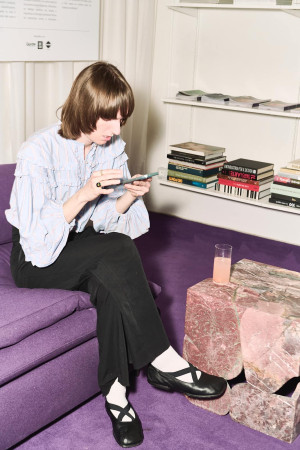
More than a single episode, what I take away is the energy of exchange that was created within the space. It was very significant to see people from different worlds—art, fashion, design, and technology—stop for a long time to talk to each other, compare notes, and build new connections. For me, FineSettimana is exactly this: a place where disciplines and people can meet spontaneously and generatively.
Looking to the future: has this edition of FineSettimana opened up new ideas or new directions of research for you?
Certainly, this edition has opened new directions. FineSettimana was born with the idea of hosting an art gallery and the work of an artist in our studio, creating a dialogue every year between space, visual research, and people. This year, however, the project underwent an important evolution: we hosted not only a digital artist like Lorenza but also an international metazine like Red Eye Magazine, opening the format to different languages and disciplines. This made us realize how much FineSettimana can become a broader platform for cultural experimentation. Until now, we have always concentrated these events during Art Week, but I would like FineSettimana to become a living project throughout the year, with more editions and moments of gathering. I imagine being able to host very different realities, but always in dialogue with our work and with the world of art: a publishing house dedicated to books and editorial research, a sculptor, or an experience linked to perfume and the sensory dimension of space.
Exhibition Info
FineSettimana 2026
Thomas Zangaro Studio
Via Carlo Vittadini 31
20136 Milan, Italy
Dates: 14 April – 19 April 2026
Opening Hours: 11:00 AM – 7:00 PM
Free Entry
More information:
www.thomaszangarostudio.com
Interview by Gloria Maria Cappelletti
Photos by Agata Eliseeva
Special thanks to PR & Press Office:
Chiara Rimoldi
Cristina Iannizzotto