- Date
- 24 NOVEMBER 2026
- Author
- DANIEL FACE
- Image by
- SERENA DEVEREUX
- Categories
- Interviews
Serena Devereux on the Hidden Connections Between Nature and Technology. Beta Festival Dublin 2026.
For Irish interdisciplinary artist Serena Devereux, this question sits at the centre of her practice. Working across digital media, moving image and code, she explores the relationships between human and non-human systems, examining how technology reshapes our understanding of the environments we inhabit.
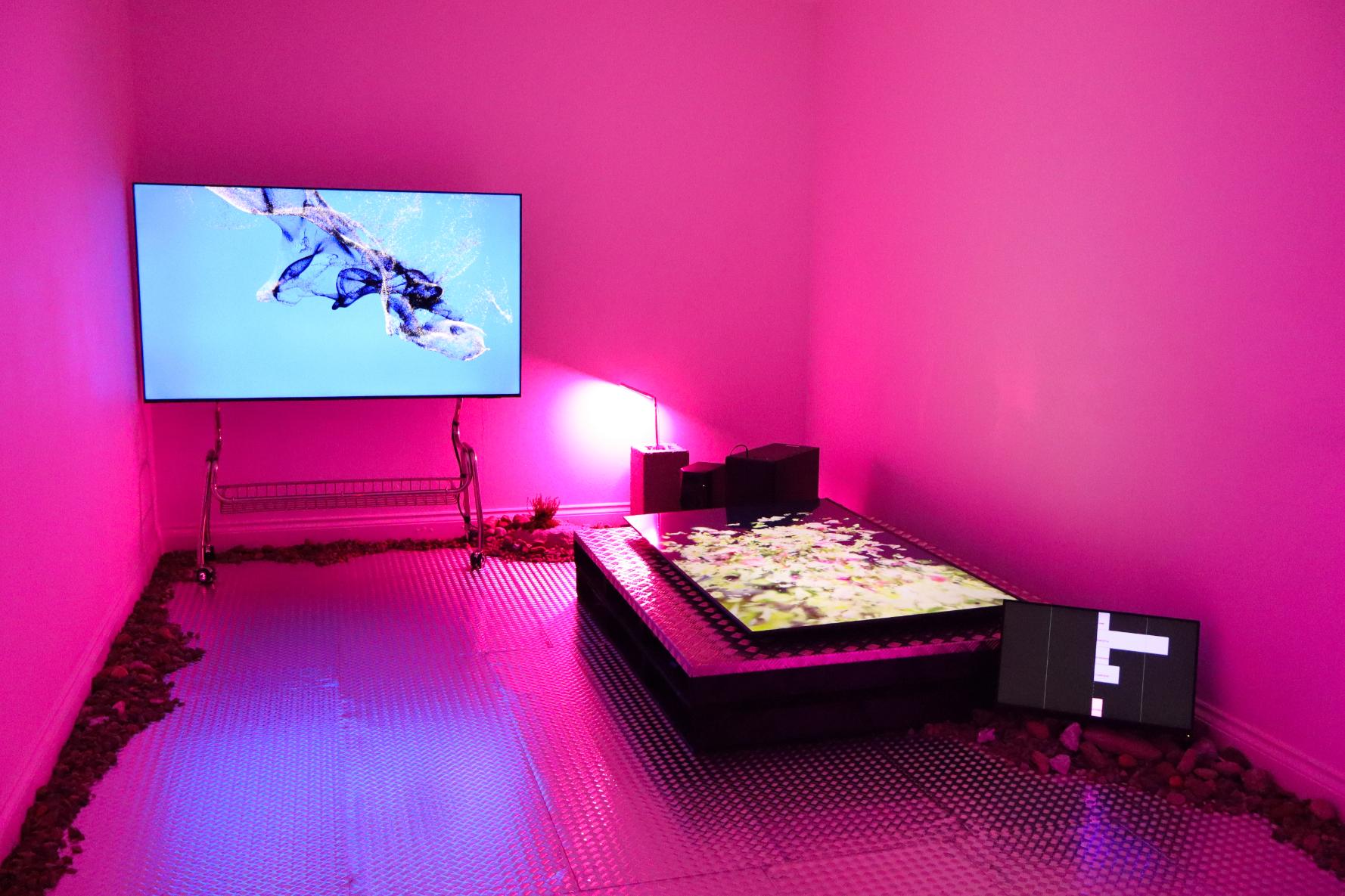
Presented as part of Beta Festival 2026 in Dublin, her installation Cybernetic Ecologies brings these ideas into a physical space. Combining real-time local weather data, digital visualisations, screens and native Irish plant species, the work creates a hybrid ecosystem in which environmental conditions continuously influence digital forms. Wind and temperature become active elements within the installation, allowing natural phenomena to shape its visual language.
Drawing on cybernetics and posthumanist thinking, Devereux considers the landscape as more than a backdrop to technological development. Instead, she approaches it as a networked archive of information, memory and consciousness. Influenced by Irish folklore and its relationship with the natural world, her work also explores the cultural significance of plants and landscapes as sites of transition between different realities.
Currently completing an M.Phil in Digital Arts and Intermedia Practices at Trinity College Dublin, Devereux spoke to RED-EYE about ecological networks, the body as an interface, posthumanism and the possibility of imagining a future in which technology collaborates with nature rather than attempting to control it.
In Cybernetic Ecologies, you draw parallels between natural environments and digital infrastructures, particularly through the relationship between invasive plant species and data networks. What inspired you to explore these seemingly different systems, and what do they reveal about the way we understand nature?
I have always been really drawn to thinking about connections, webs, rhizomatic structures and interconnected systems within the natural world, often exploring these ideas through moving image and code. This work emerged through the research I had been completing as part of my masters in Digital Arts and Intermedia Practices at Trinity College Dublin, and has been hugely influenced by the writings of practitioners and theorists such as Benjamin Bratton, Jussi Parikka and Donna Haraway. I became fascinated by the sprawling structure of fibre optic cables embedded deep within the earth’s soil, mirroring that of decentralised plant networks and speculating on the relationship between digital infrastructures- such as cables and sensors- with the soil, organic matter and micro-organisms surrounding them. Rather than the work revealing specificities about nature itself, the work seeks to focus our attention on the way in which technological intervention and interaction shapes our experience of the contemporary natural world, making invisible atmospheric conditions and data flows feel visible and tangible. In working with screens, living organisms and construction materials, my work achieves this through contrasts, links and parallels, offering those who encounter it to navigate and interpret the work to draw new links and connections between the range of material and visual imagery, as well as themselves.The work positions digital infrastructures and artefacts within a hybrid environment, fuelled by continuous mutual exchange of data, feedback and responses between natural and digital systems to transform the space into a speculative ecosystem that is not situated within a particular past, present or future.
Your project explores the skin as a membrane where data resides, challenging the boundaries between the physical body and its environment. How do you interpret the relationship between our bodies, technology and the landscapes we inhabit?
My work investigates this relationship as one larger system, a network operating on feedback loops as well as continuous sensory and informational exchange. Within this positioning, the skin is viewed as a datafied permeable membrane, penetrated by streams of data through spatial interfaces, an invisible bridge between the self and the landscape in which we are embedded. This data in question encompasses sound waves, temperature data and light, to name a few, conditions that are carried through the air which then pass through and connect with the skin. In this speculative context the landscape assumes the role of being a foundational body of information within this expanded speculative ecosystem. The landscape which is permeated with vast technological networks, home to cloud-based archives and facilitating a continuous flow of both natural evolution and digital streams of information becomes realised as a foundational layer which has become a sort of hybrid prosthesis- a disembodied sensory organ of networked memory, machine vision and algorithmic perception in the digital era.
Posthumanism questions the idea that humans are at the centre of everything. How does your work challenge this anthropocentric perspective, and what might we learn from considering non-human systems as equally important participants in our technological world?
I’m really fascinated in posthumanism, specifically within this line of inquiry that seeks after a decentered positioning of the human in order to dissolve a sense of hierarchy within traditional ecological perspectives. I think this approach towards non-human systems, specifically within the digital realm, as they become become increasingly entangled with our perception and construction of reality, provide a really useful and progressive framework for co-existing alongside technologies as they continue to evolve- reconfiguring the conditions that were once believed to solely constitute biological life by positioning them as ecological plateaus of equalised importance. The more we can channel posthumanist, or post-anthropocentric beliefs into ecological research, and raise awareness surrounding the complexity, depth and beauty of non-human intelligence, we can develop a greater collective relationship with our surrounding natural environments, one which is not dependent on transactional value or translating their unique intelligence into human-centered definitions.
The installation uses real-time local weather data and feedback loops to create an evolving relationship between the artwork and its surroundings. How does incorporating live environmental data change the way an artwork behaves, and how does it influence the audience’s experience?
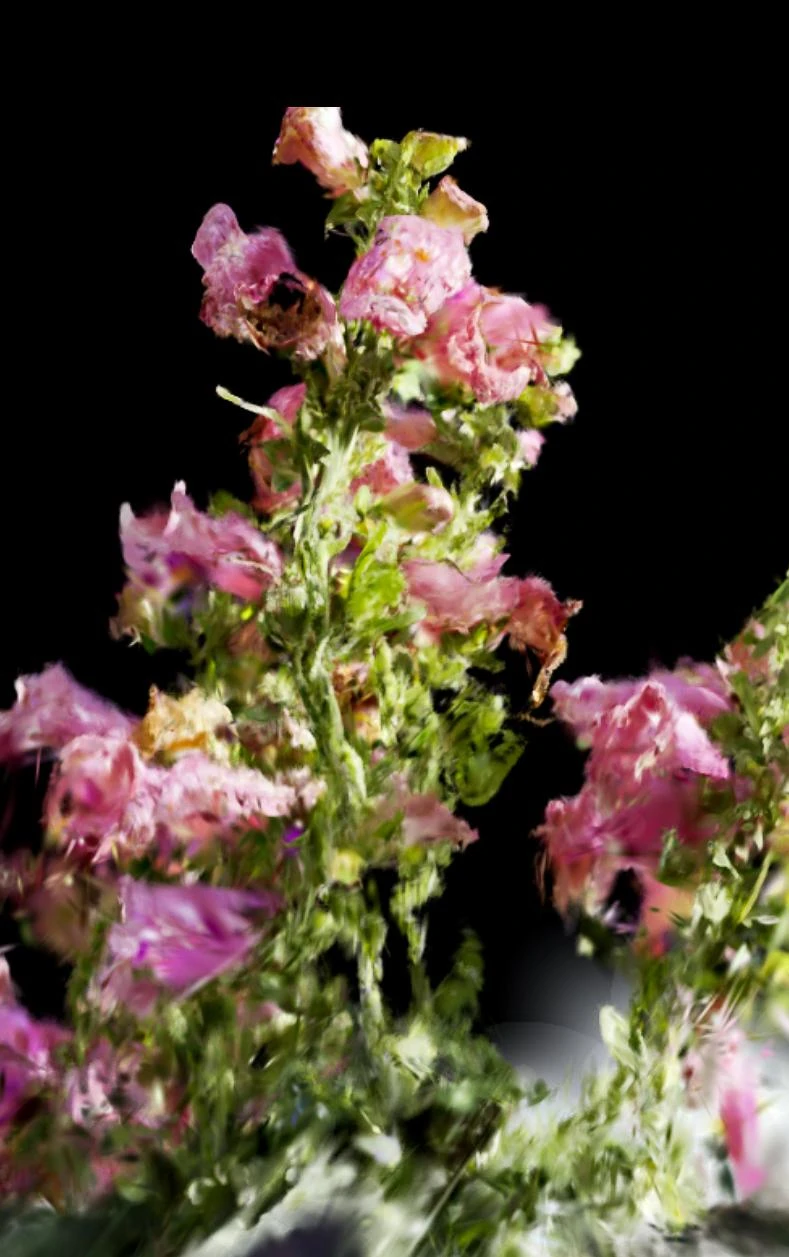
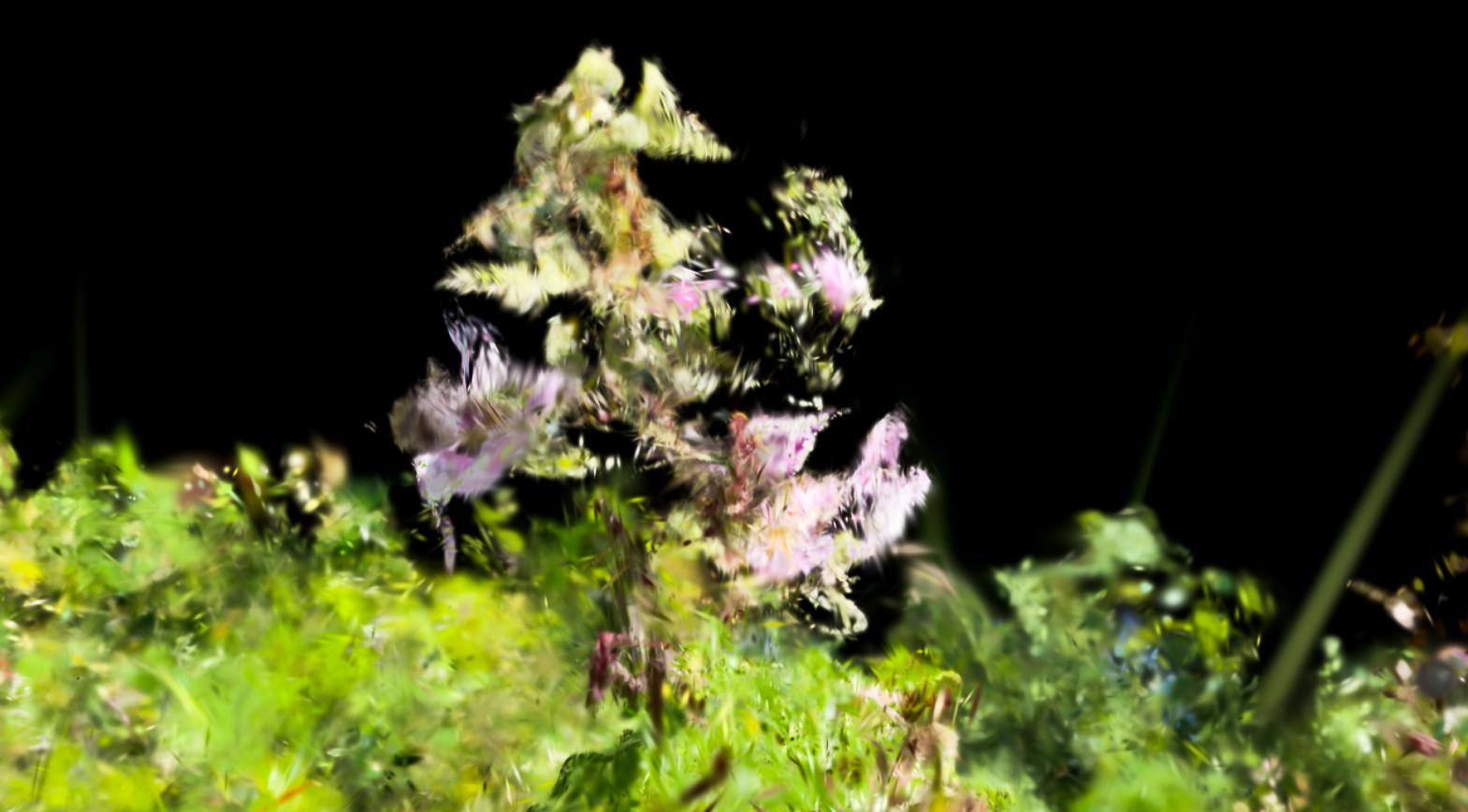
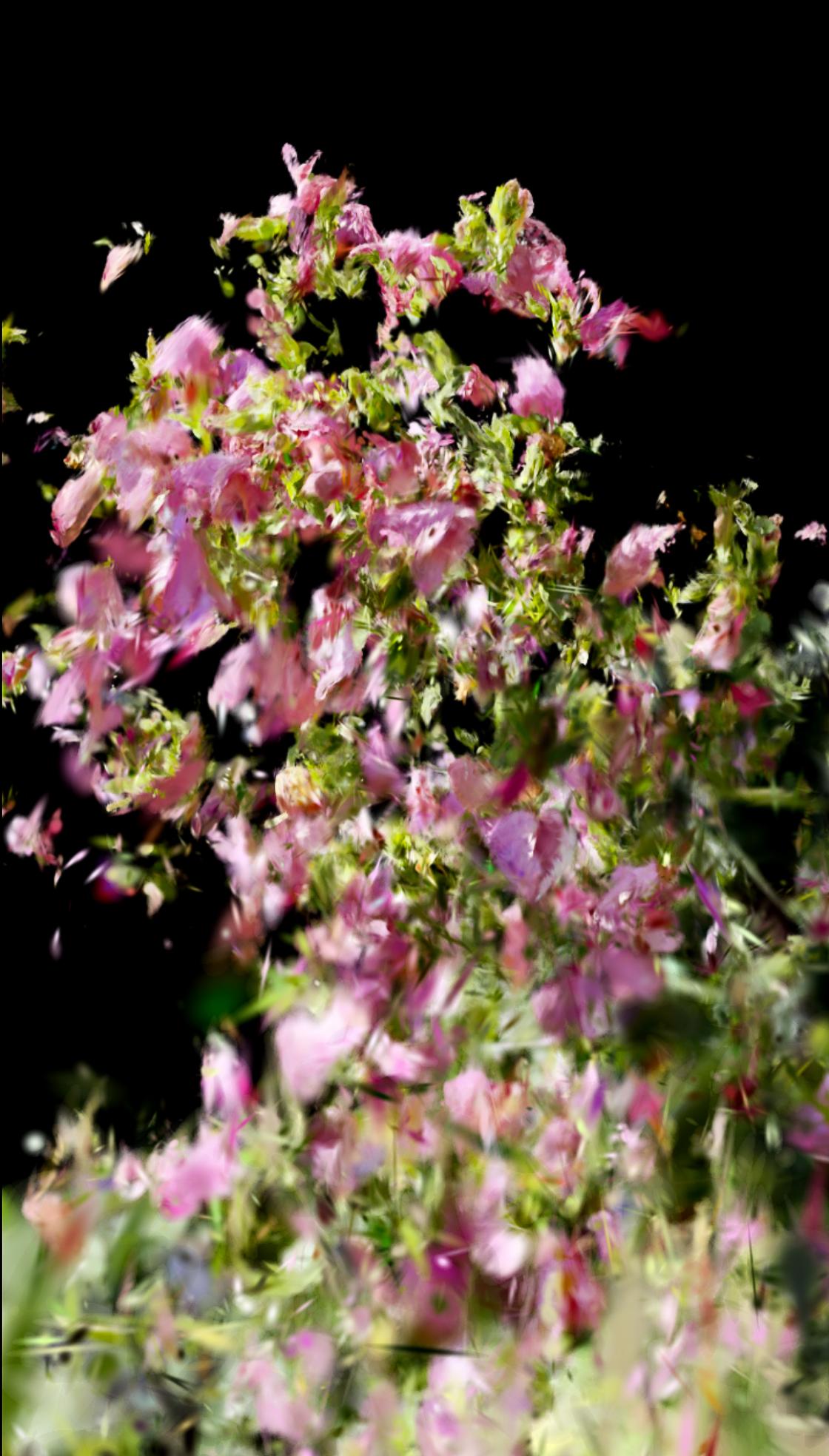
The installation features 3 screens, depicting real-time local weather data, visualisations of real-time wind gusts, as well as using local weather data to shift the movement of alternating 3D scans depicting native Irish plant species. The screen depicting real-time wind gusts features a shifting cloud of black and silver particles on a digital-blue backdrop, aiming to speculate on how sensors, satellites and monitoring instruments view the often invisible conditions they are observing as they are coming into contact with them. It focuses on the materiality of the phenomena helping to shape the world around us while highlighting the relationships they have with the digital systems that have become integrated within their ecology. The second screen depicting 3D scans however, is driven by live temperature data, using numerical values to pulse and disperse the scans, shifting their appearances to simulate a living hybrid entity. These representational organisms assume various forms as the temperature values gradually shift their movements. In utilising temperature specifically, the work speculates on future ecosystems as plant-life begins to adapt to temperature increases as a result of the pervasive sprawl of technological infrastructures heating the soil surrounding them. These generative bodies subsequently exist as fundamentally hybrid organisms; digital representations of the natural world, whose movements and forms are continuously generated through real-time natural conditions as interpreted through sensors and satellites. In terms of an audience experience, I like the idea of the viewers making the connection between the data tables and moving visuals, deciphering how or what numerical values are controlling the non-linear narrative guiding the experience of being in the presence of the work. Evoking curiosity and reigniting a sense of wonder in the face of both technology and nature are integral elements to the reason I create work and getting the privilege to witness others momentarily inhabit this networked world I have built has been such an amazing experience.
You describe the landscape as a kind of prosthesis of memory, extending human and machine consciousness into the natural environment. Could you elaborate on this idea? Can landscapes become repositories of collective memory, much like digital networks?
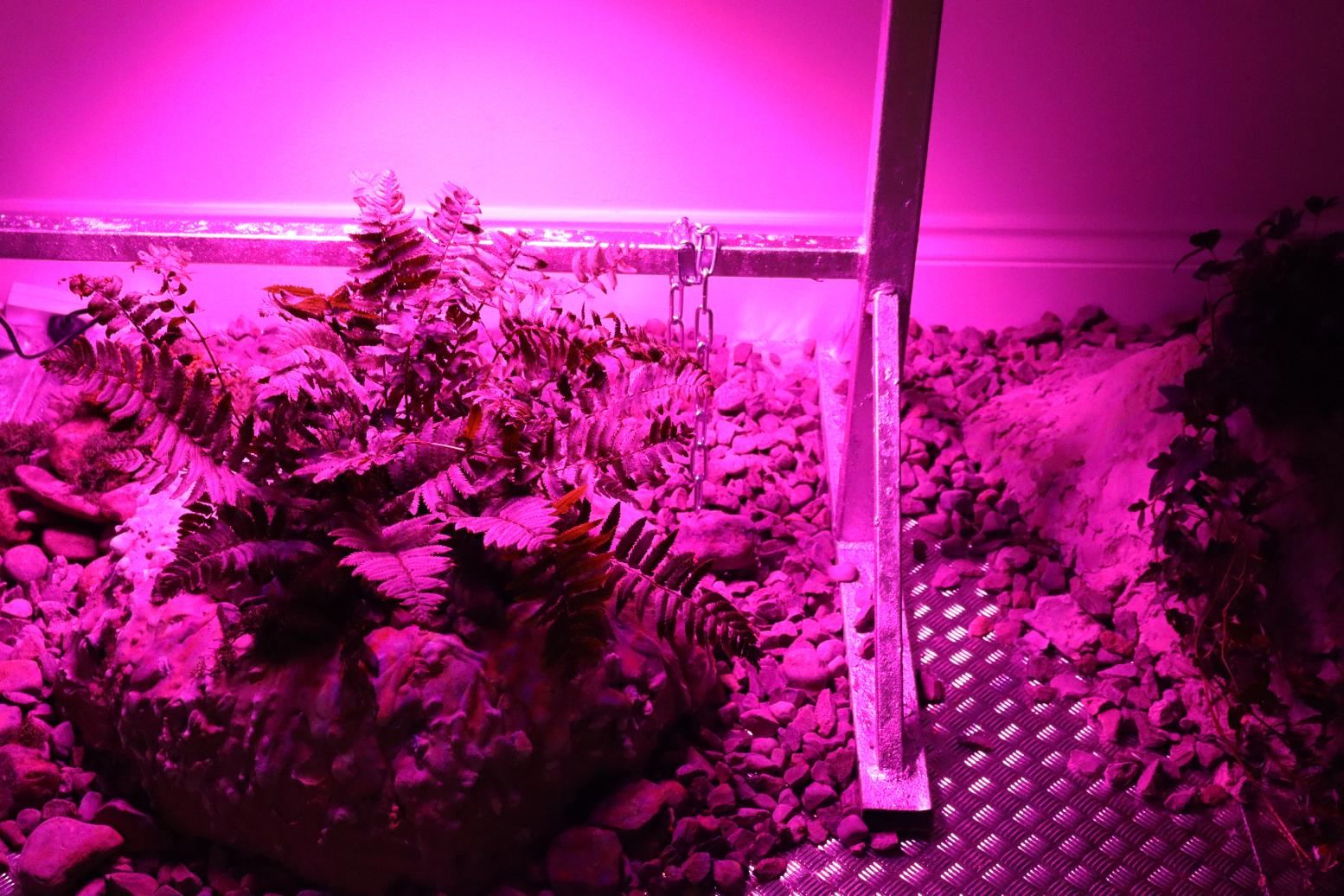
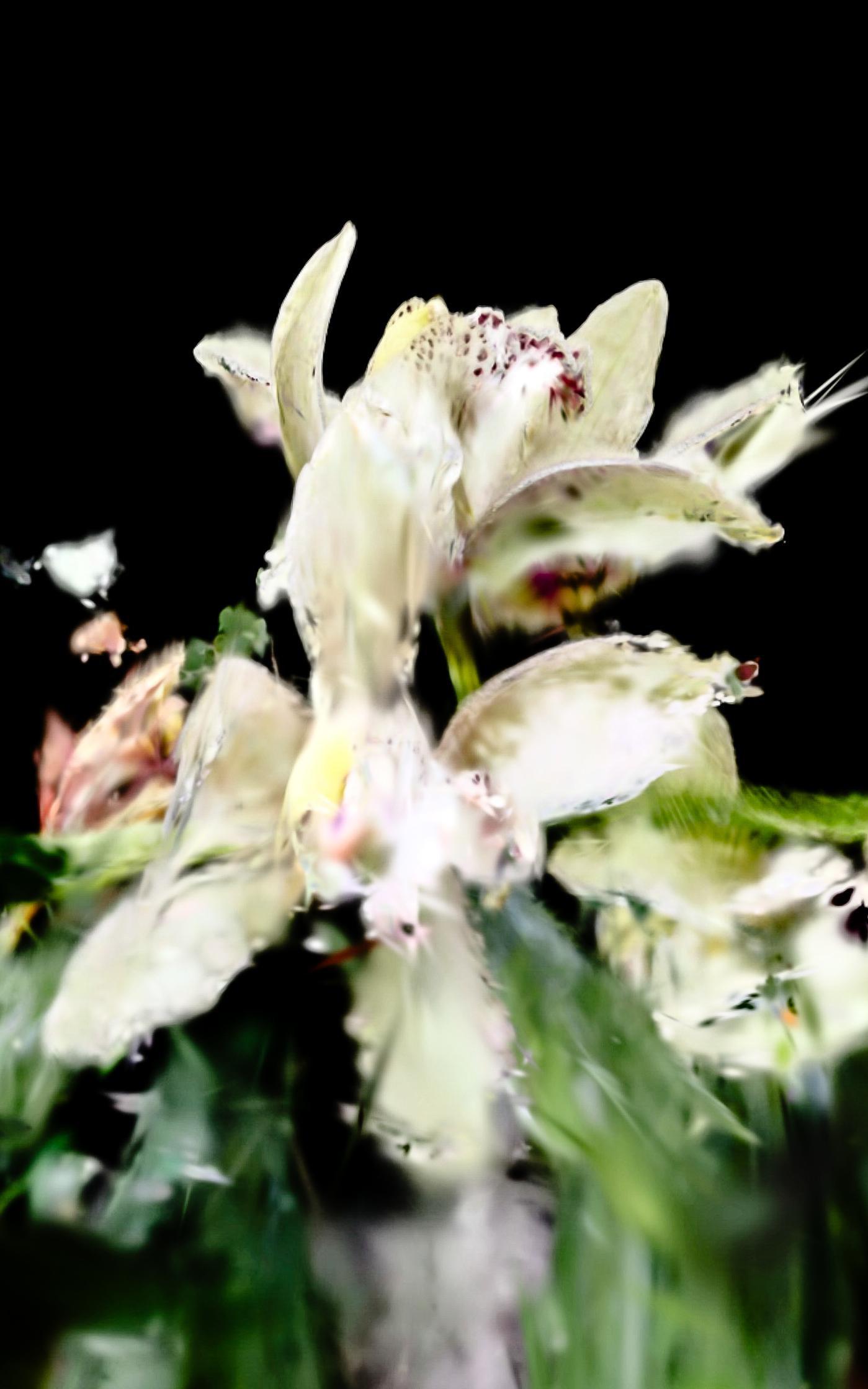
Yes, the idea of the landscape becoming this kind of networked archive of memory and a medium for digitally mediated cognition is central to my practice and I suppose this is heavily influenced by the Irish landscape and the poetic way in which it is portrayed throughout Irish folklore and mythology in regards to its personification. Cybernetic Ecologies exists as a condensed networked ecosystem, consisting of screens, sound, grow lights and native Irish plant species. The particular plants I have featured within the work, both through digital representation and the inclusion of live plants, are of beautiful significance within Irish folklore. Plants such as navelwort and ivy are dispersed throughout the space, plants which are typically found growing in walls and doorways. These plants signaled sites of liminality and transition, marking the boundary between our world and The Otherworld, which I like to examine as a parallel to the place cyberspace and the digital realm holds in the contemporary era.
The futuristic landscape of this work, with its silver reflective floor, plants, concrete, live data and pink hues, primarily looks at the way in which the natural environment continues to evolve as a technologically reconfigured body of information and has become encoded with layers of signals, cloud-based memory and technology, transforming it into a relational nexus which is in a constant state of adaptation and evolution. I think cultural identity is deeply entangled within the landscape and it’s extremely important to me that in this speculative contextualisation the land isn’t reduced to just a medium of facilitation for technological process, but a body of information in its own right, a planetary skin in which we extend ourselves through physical and technological means.
As technology becomes increasingly embedded in our everyday environments, the distinction between natural and artificial systems may become harder to define. Do you see this convergence as an opportunity to rethink our relationship with the planet, and what kind of future could emerge from it?
Absolutely, and for me this is one of the ideas emerging from the fields of posthumanism that is so intriguing and alluring in the age of rapid technological advancements. I really do see the blurring of boundaries between human and non-human systems as an opportunity to re-examine the way in which we currently interact with the natural world and shift our attitudes in regards to technology to using it to collaborate with nature rather than controlling it. The aim of the research I have been conducting alongside this work was to produce a framework for co-existing and co-becoming with both natural and digital infrastructures, establishing a sense of equilibrium between pervasive machines, organic matter and human systems.