- Date
- 31 MARCH 2026
- Author
- GLORIA MARIA CAPPELLETTI
- Image by
- NICCOLO RASTRELLI
- Categories
- Gaming
They Don’t Look Like Me: Cosplayers, Families, and the Global Identity Remix
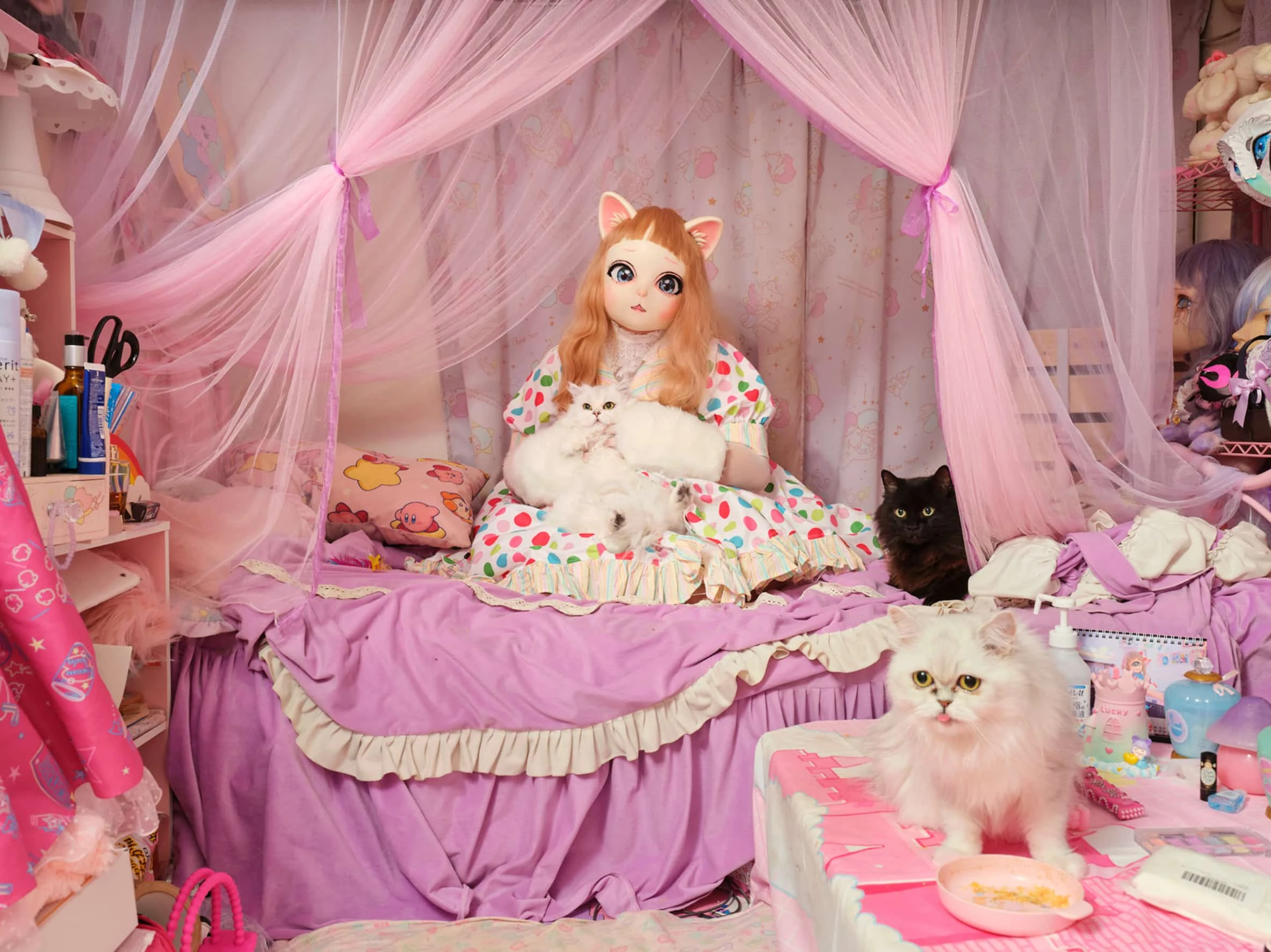
In a candy-pink Tokyo bedroom draped in tulle and Kirby pillows, 33-year-old Pitan perches on her four-poster bed in full “Nenekochan” regalia, an original cat-doll cosplay complete with oversized ears and a polka-dot dress. Three very real cats (one white, one black, one fluffy Persian) stare at the camera with the mild confusion usually reserved for humans who have somehow lost the plot.
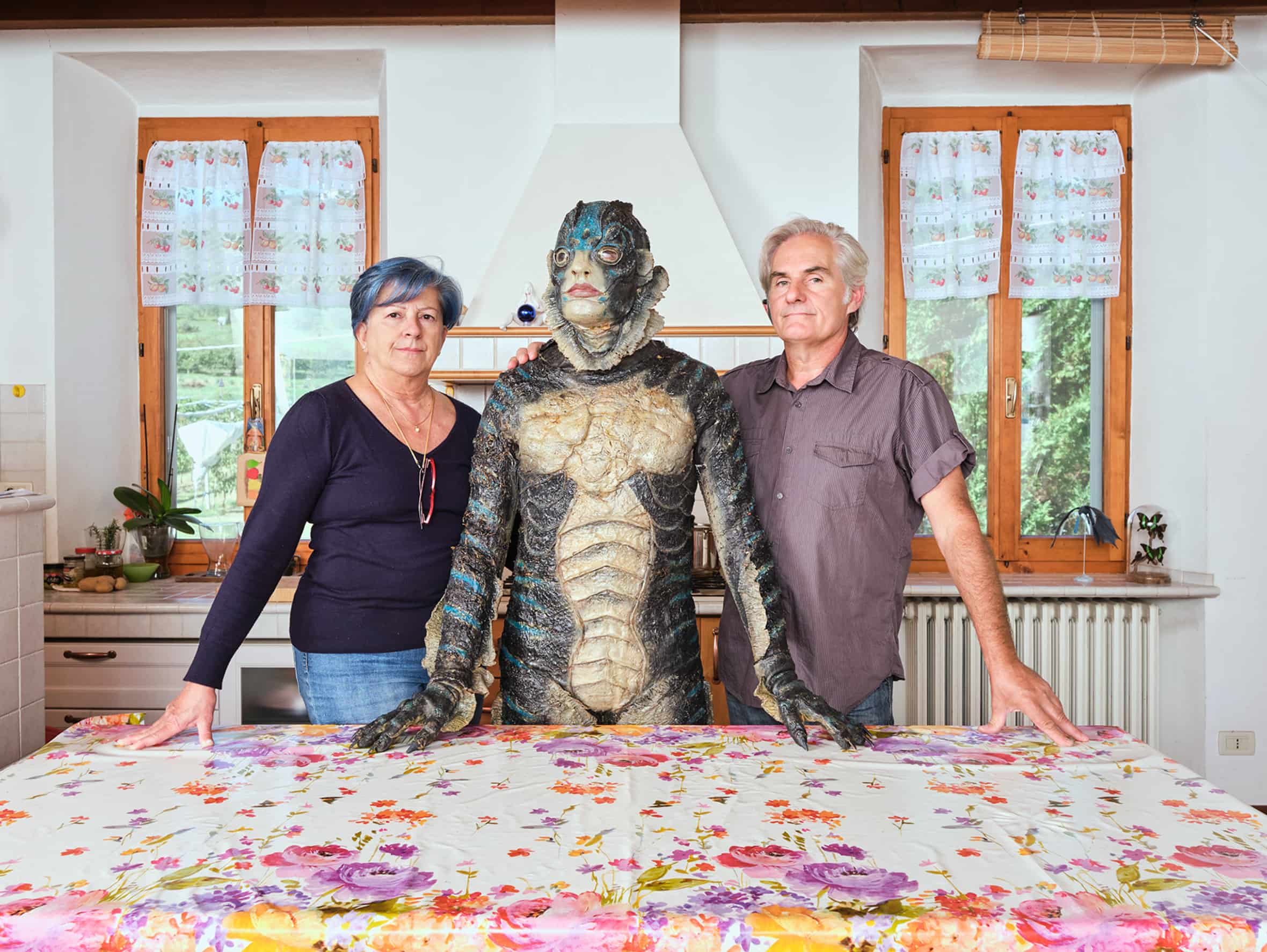
A few neighborhoods away, 40-year-old Mahio sits primly on the family sofa in the flowing blue-and-purple robes of the Medicine Seller from the cult anime Mononoke, sword prop balanced across her lap, while her elderly parents bookend her like polite bookends and the household tabby yawns mid-meow. These are not outtakes from a fever dream. They are portraits from Italian photographer Niccolò Rastrelli’s ongoing project “THEY DON’T LOOK LIKE ME,” a globe-trotting, laugh-out-loud exploration of cosplay that treats every young fan like a rock star and every parent like a slightly bewildered roadie.
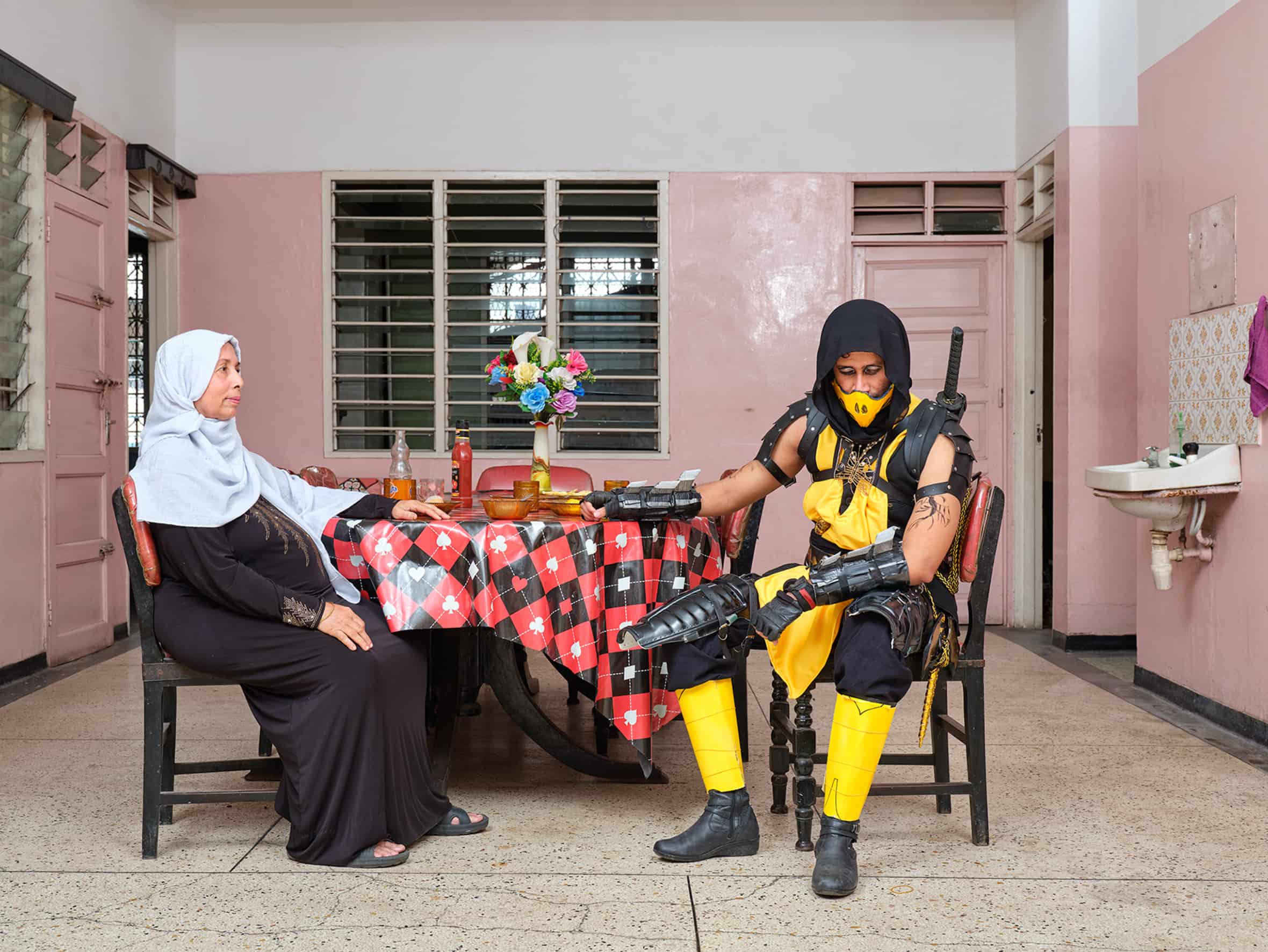
Rastrelli, who started in Italy and kept going to Japan, Kenya, India, and beyond didn’t set out to document costumes. He set out to document the moment when the person you are at the dinner table and the person you become online stop resembling each other entirely.
Inspired by John Olson’s 1970s Life magazine portraits of rock legends posed at home with their moms and dads, Rastrelli swaps leather jackets and Stratocasters for cat ears and replica katanas. The result is equal parts uncanny and very tender: generational whiplash captured in living color.
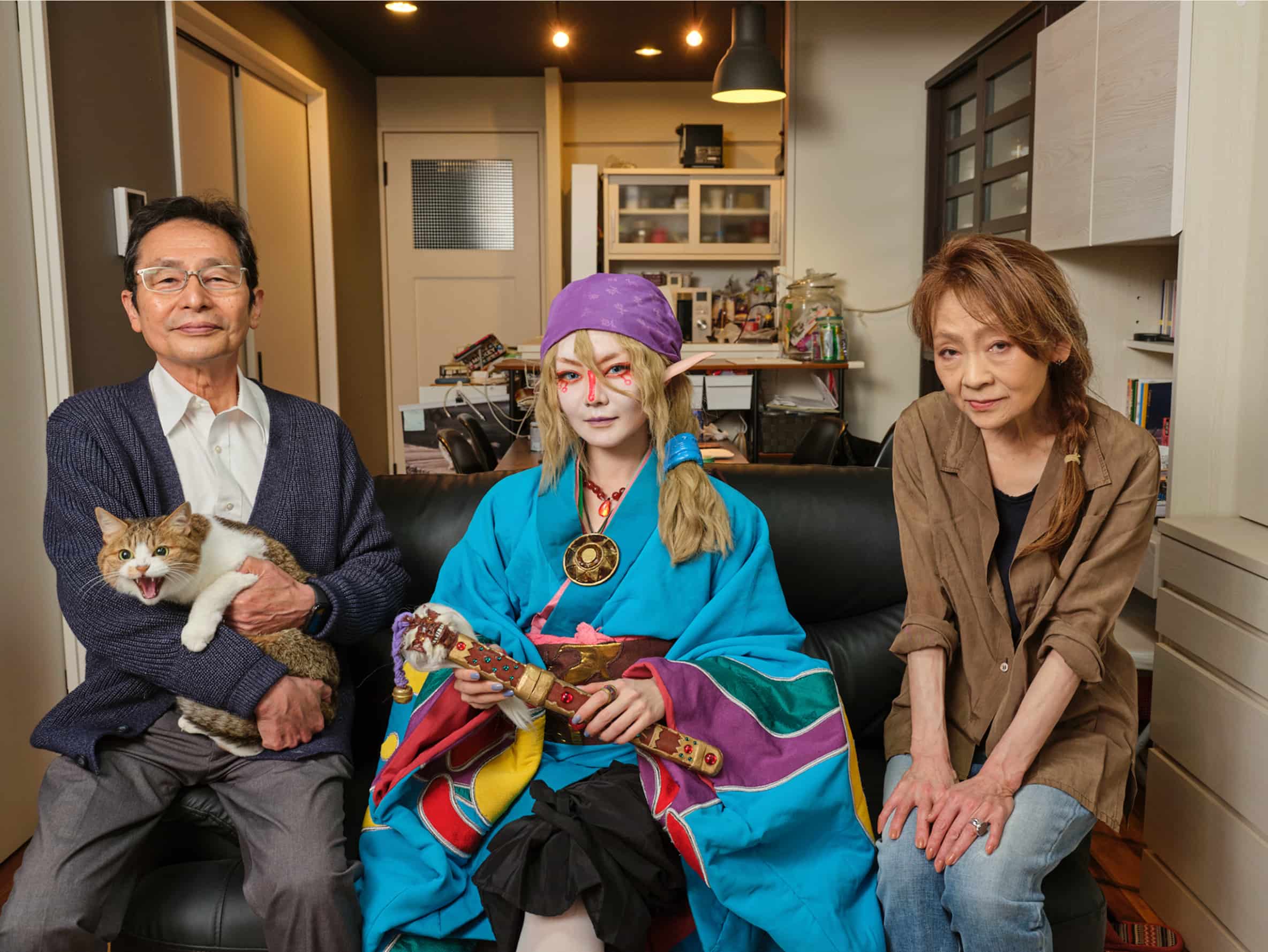
Mahio is an employee in a company that deals with planning and marketing for entertainment facilities and has been a cosplayer from 20 years. In the photo she plays the character 'Medicine Seller' (Kusuri) from the anime "Mononoke".
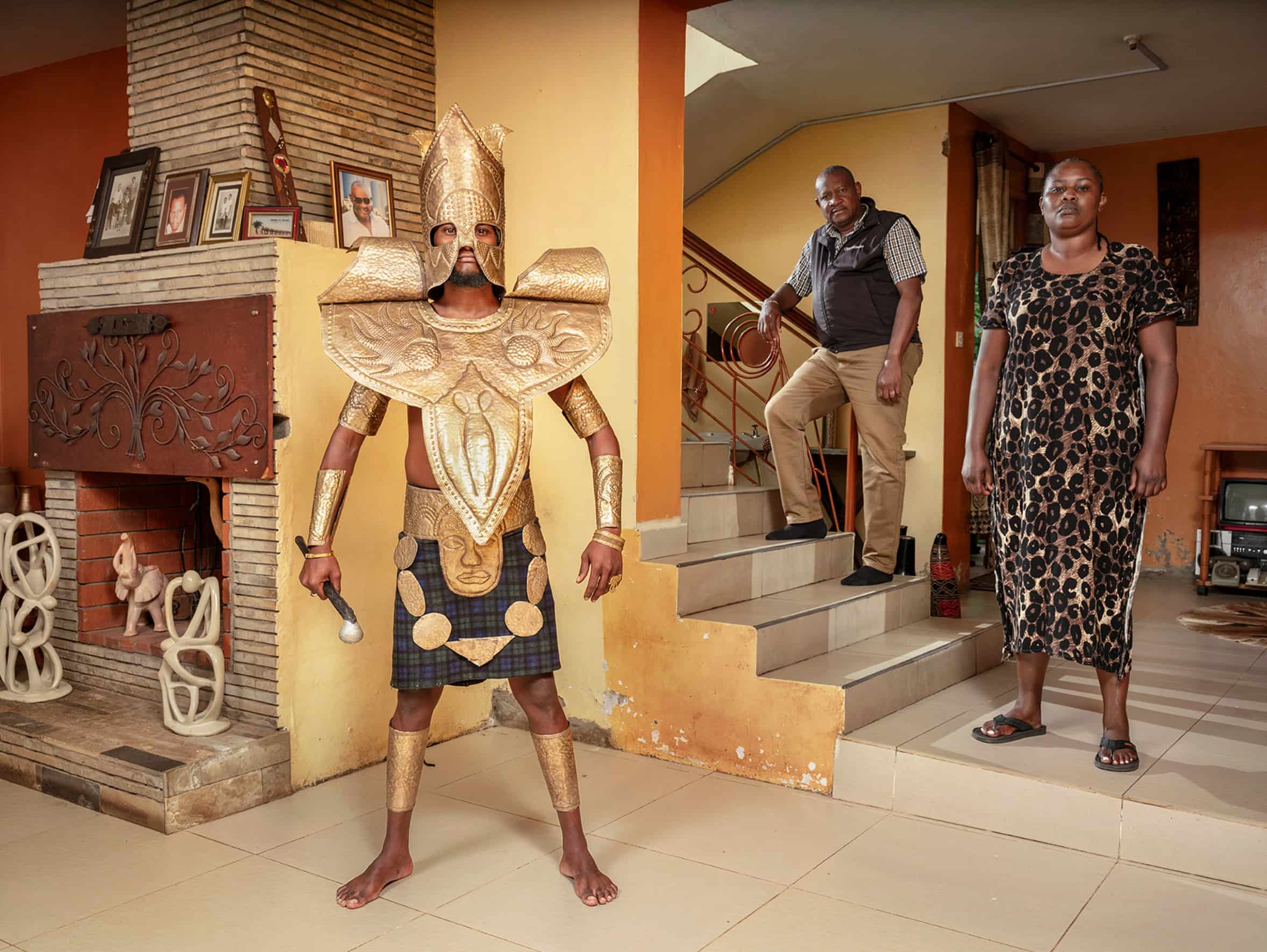
Cosplay, that is short for “costume play”, is exactly what it sounds like: dressing up as your favorite character and living the fantasy, at least for a weekend. Historians still squabble over its birthplace. Some point to 1960s America, where Star Trek and Batman fans started showing up at conventions in homemade uniforms. Others credit Japan’s early-1980s manga and anime boom, when the first big comic cons turned fans into walking billboards. Whichever origin story you prefer, the explosion is undeniable. Today cosplay is a borderless, internet-fueled subculture. Young people who spend their weekdays in cubicles or lecture halls devote every spare hour (and yen, and euro) to crafting latex prosthetics, perfecting wigs, and chasing the perfect Instagram angle. And here’s the twist Rastrelli nails so well: in cosplay, the body stops auditioning for “conventional beauty.” It simply demands to be seen. The goal isn’t to look like a magazine cover; it’s to become the character so completely that strangers stop scrolling, double-tap, and maybe even question their own boring wardrobes.
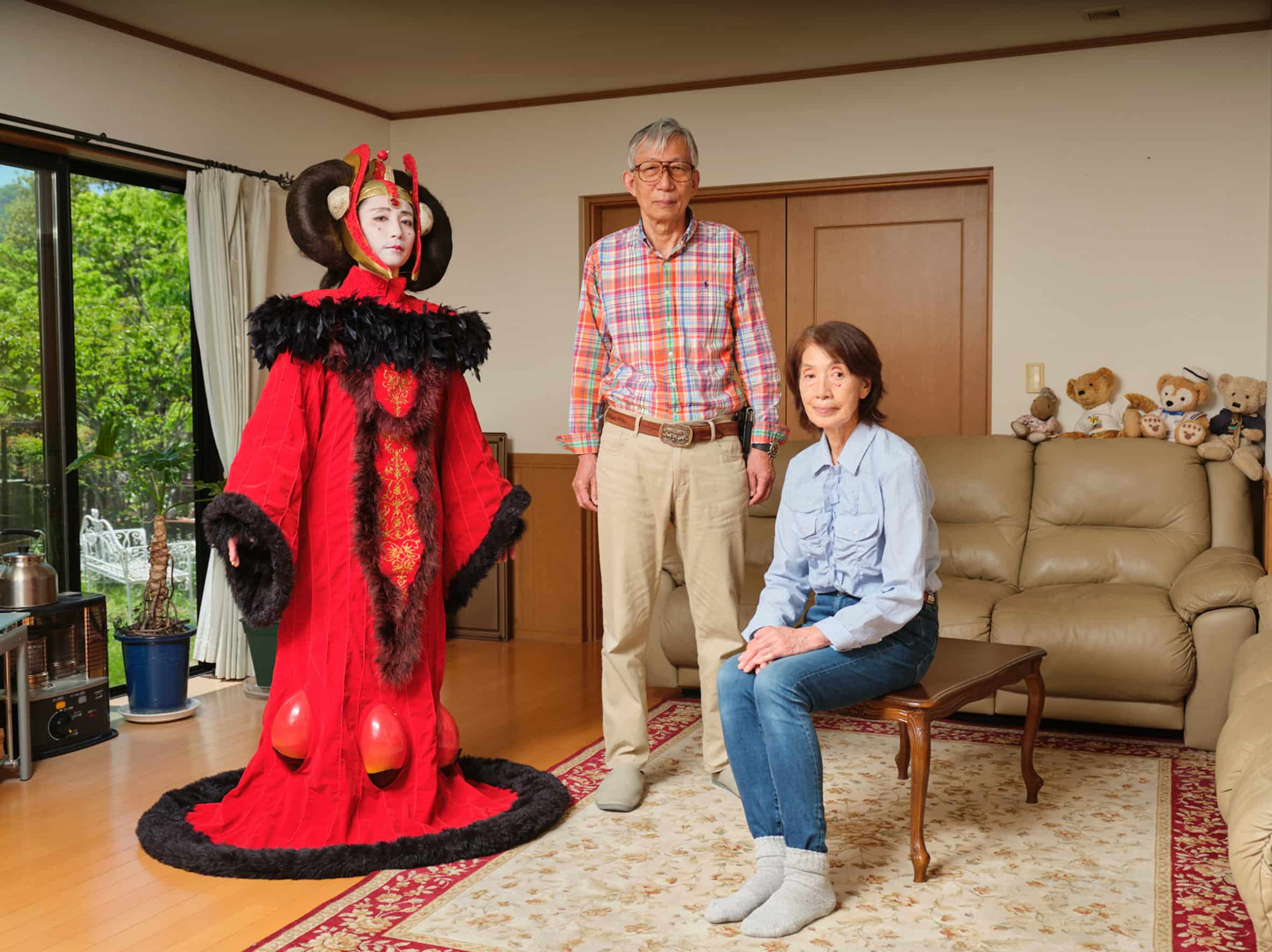
In the photo, she plays Princess "Padmé Amidala" one of the main characters in the film saga "Star Wars".
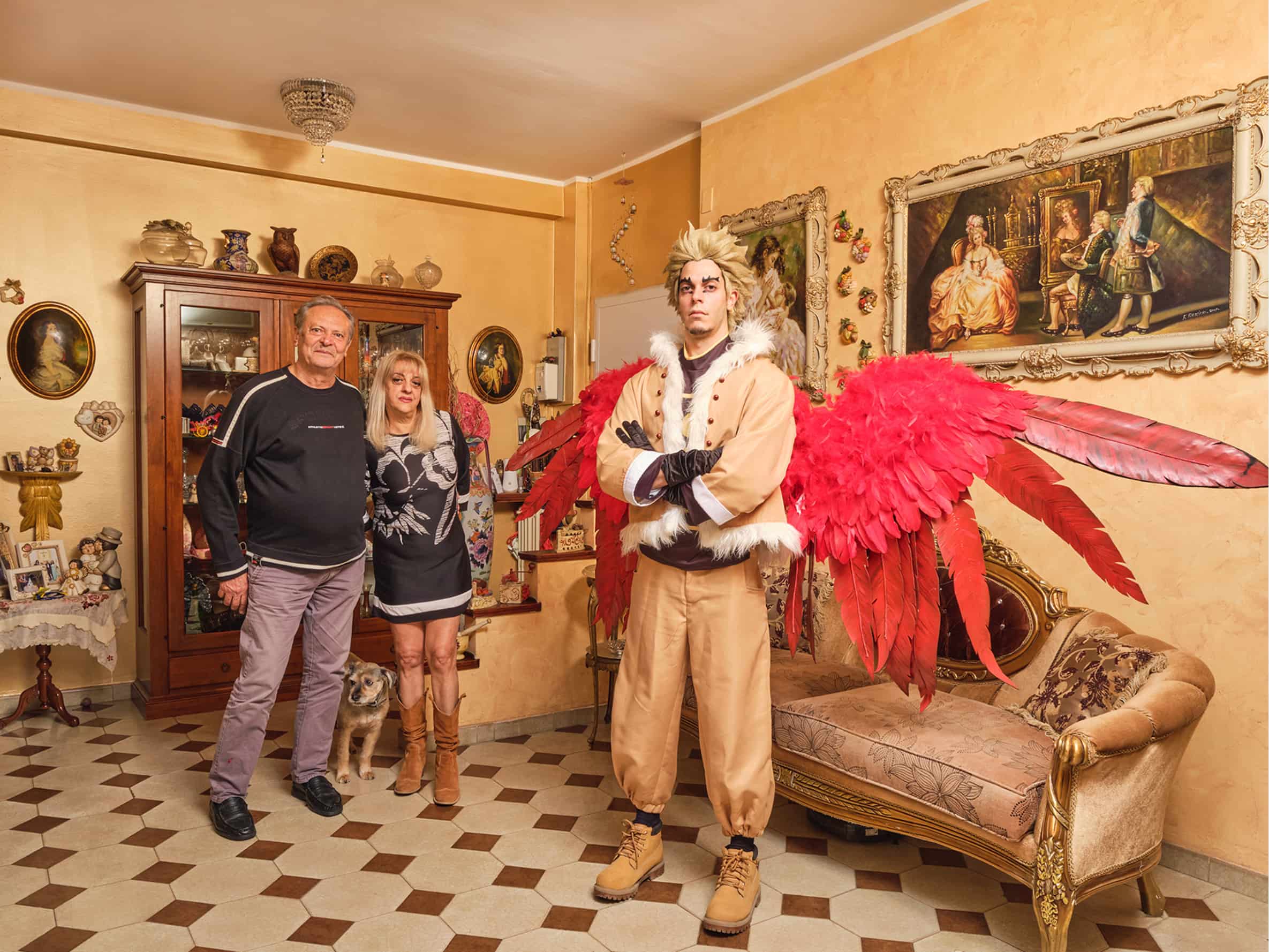
Look at Christian, 33, in his parents’ living room in Senago, Lombardy. He’s Hawks from the blockbuster anime My Hero Academia with spiky blond hair, fierce black eyeliner, and a pair of enormous crimson wings that look like they could knock over the china cabinet. Mom and Dad stand beside him in everyday clothes; a small dog peers out from between their legs like it’s wondering when the pizza arrives. The contrast is chef’s-kiss perfect: the winged superhero versus the couple who probably still call him by his childhood nickname. Or take Eleonora, 29, in Lucca, Tuscany. She’s Sheik from The Legend of Zelda, mask on, harp in hand, golden braids swinging. Her mother knits on the sofa; her father reads a book titled Robin (close enough). Outside the window, pink oleander blooms like it’s trying to keep up with the costume beauty. Social identity (Mom, Dad, Sunday lunch) sits inches away from individual identity (legendary ninja bard). The tension is delicious.
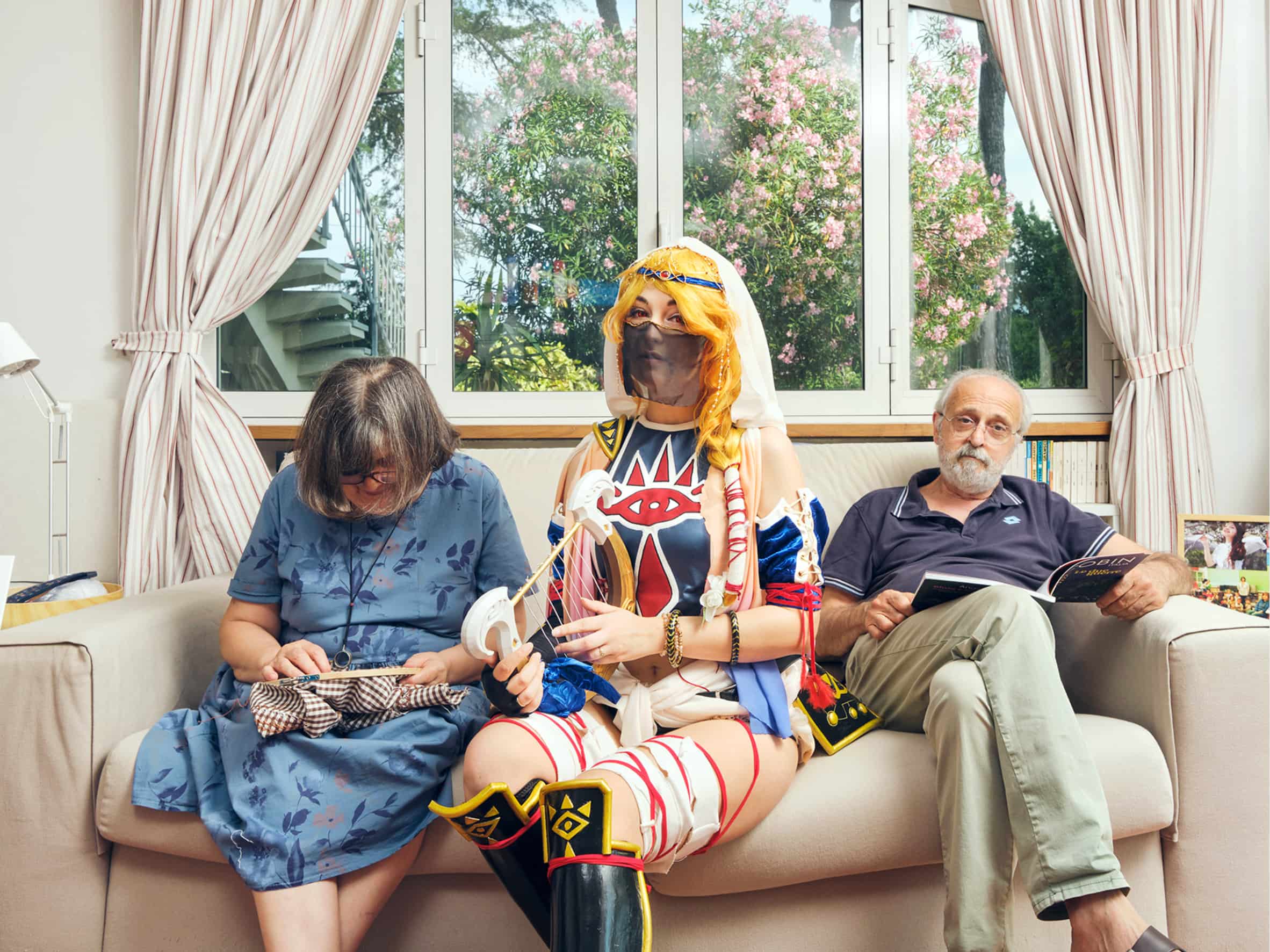
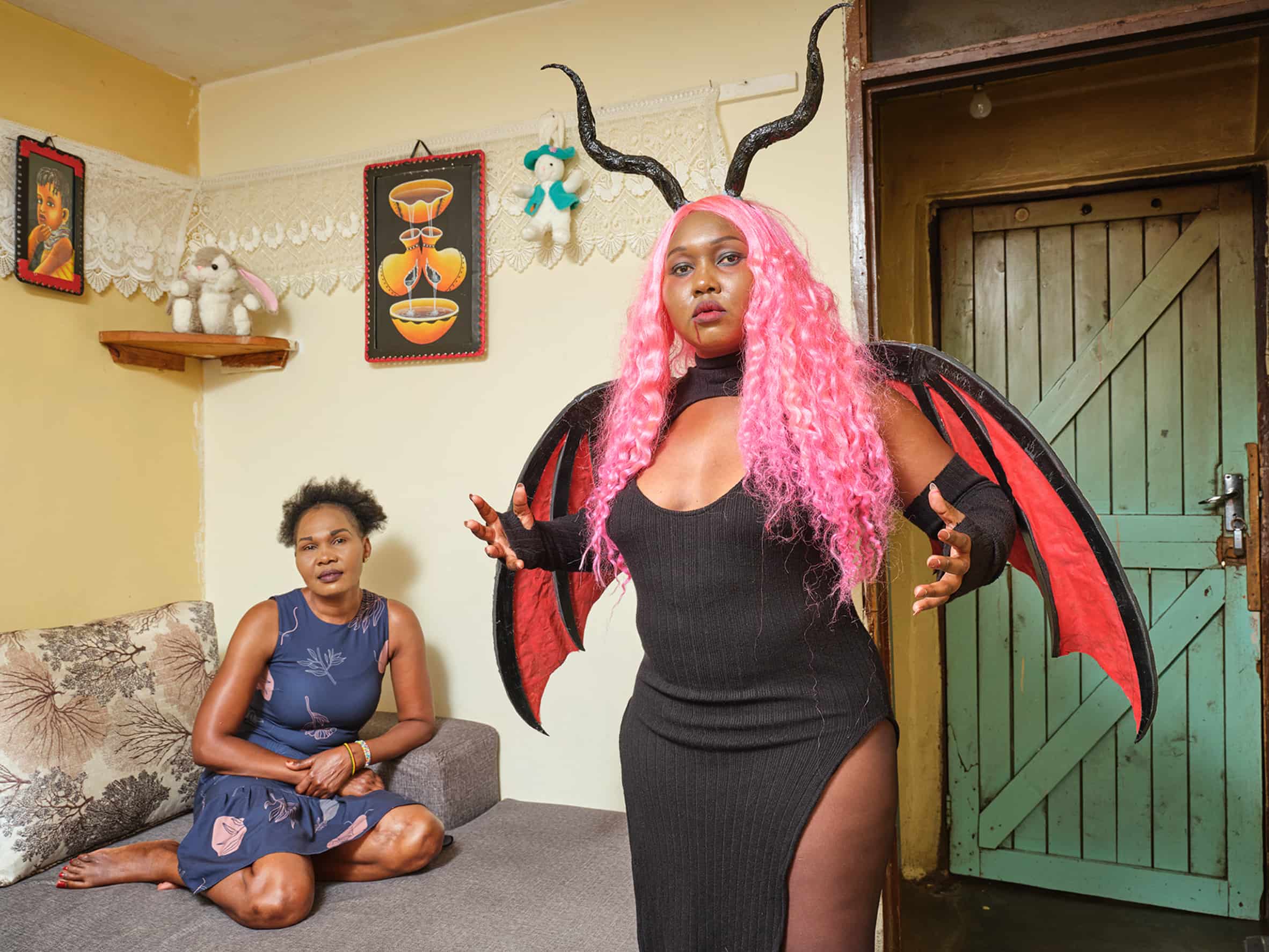
Rastrelli’s images don’t mock. They celebrate. They show a 29-year-old Italian woman and a 40-year-old Japanese man using fictional characters to explore who they actually are, sometimes for fun, sometimes for something deeper. In an era when everyone performs online anyway, cosplay just makes the performance gloriously, unapologetically literal. The project’s global sweep proves the point. What began in Asia has leapfrogged oceans and time zones. In Kenya, Rastrelli’s Kenyota chapter captures the same joyful collision of tradition and fantasy. In India, the same mix of parental pride and polite bafflement. Everywhere the message is identical: the kids have built new selves out of pixels and fabric, and the parents are along for the ride, smiling, slightly as if jet-lagged, and holding the pets. So next time you scroll past a perfectly lit cosplay selfie, remember the bigger picture. Behind every flawless wig and prop sword is usually a mom asking if the character “eats enough vegetables” and a dad wondering how much the wings cost to ship. That’s “THEY DON’T LOOK LIKE ME” in a nutshell: the sweetest, strangest family album of the digital age. And it’s still growing one convention, one costume, one bewildered parental smile at a time.
Text by Gloria Maria Cappelletti
All Photos from the Project "They Don't Look Like Me" © Niccolò Rastrelli