- Date
- 14 SEPTEMBER 2026
- Author
- MIRA WANDERLUST
- Image by
- PRESS OFFICE
- Categories
- Interviews
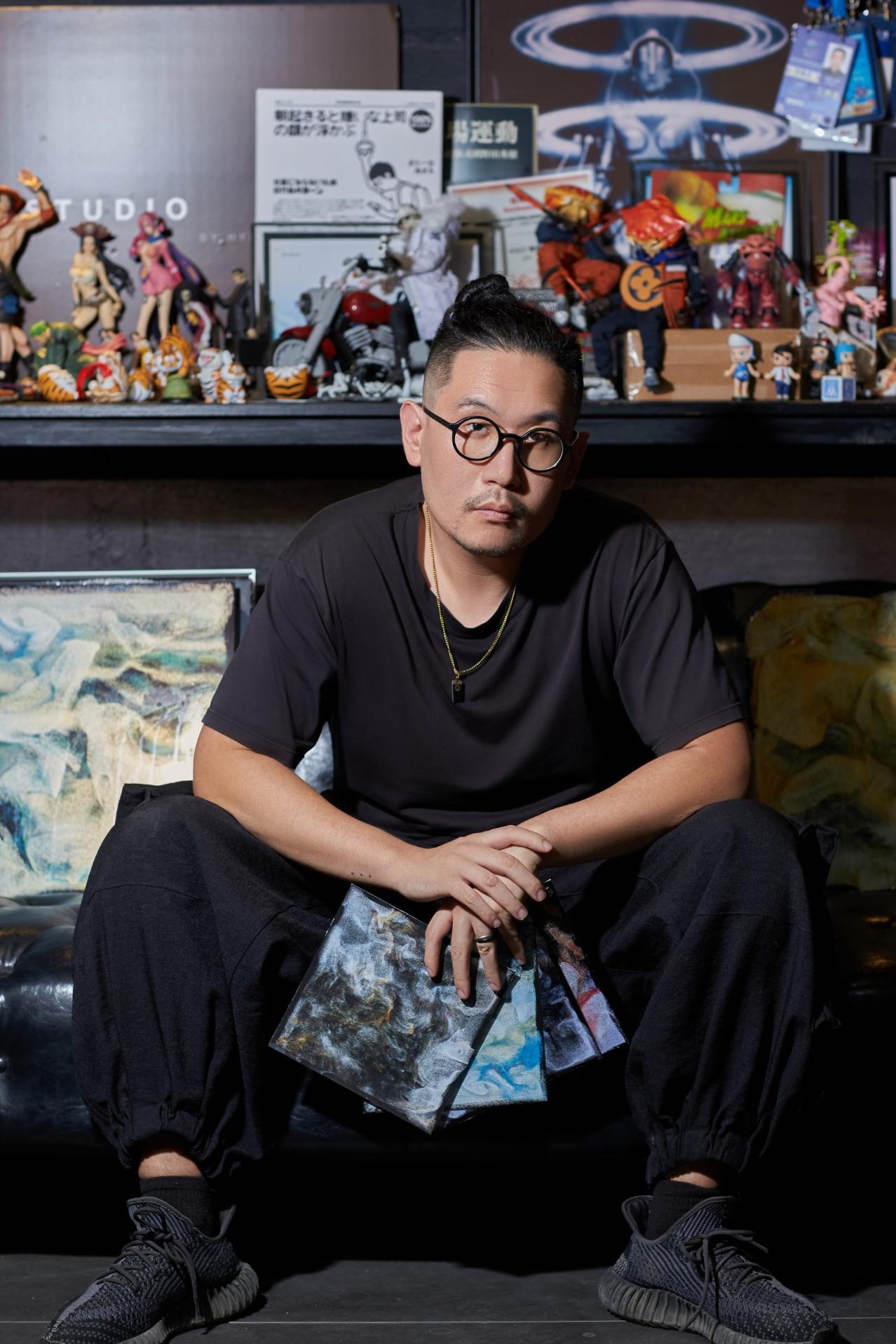
Cao Yuxi and the Intelligence of Water
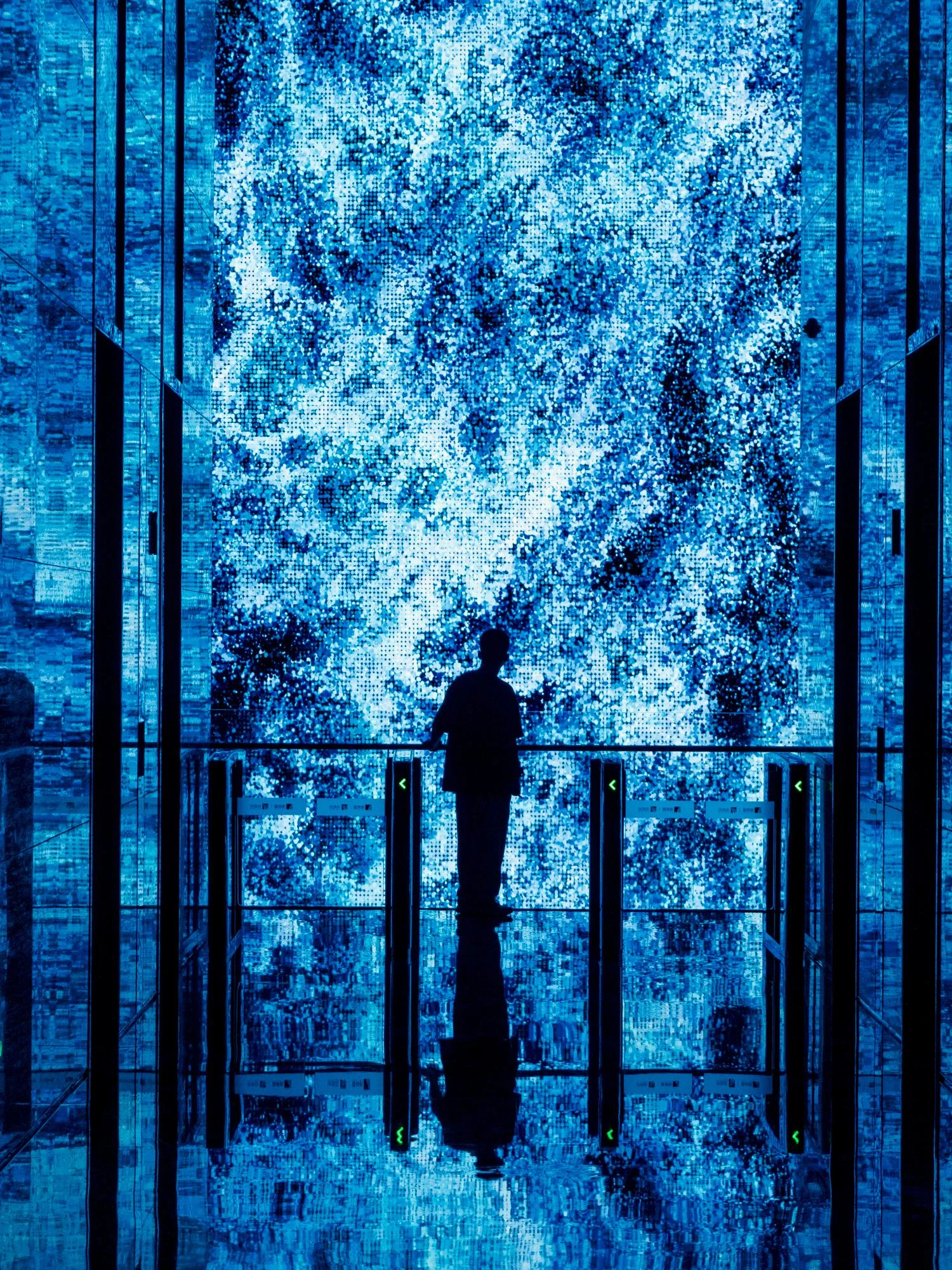
With Nature’s Computility at Videocittà Watercult 2026, Chinese digital artist Cao Yuxi turns ocean movement into a living algorithm, opening a meditation on technology, nature and perception.
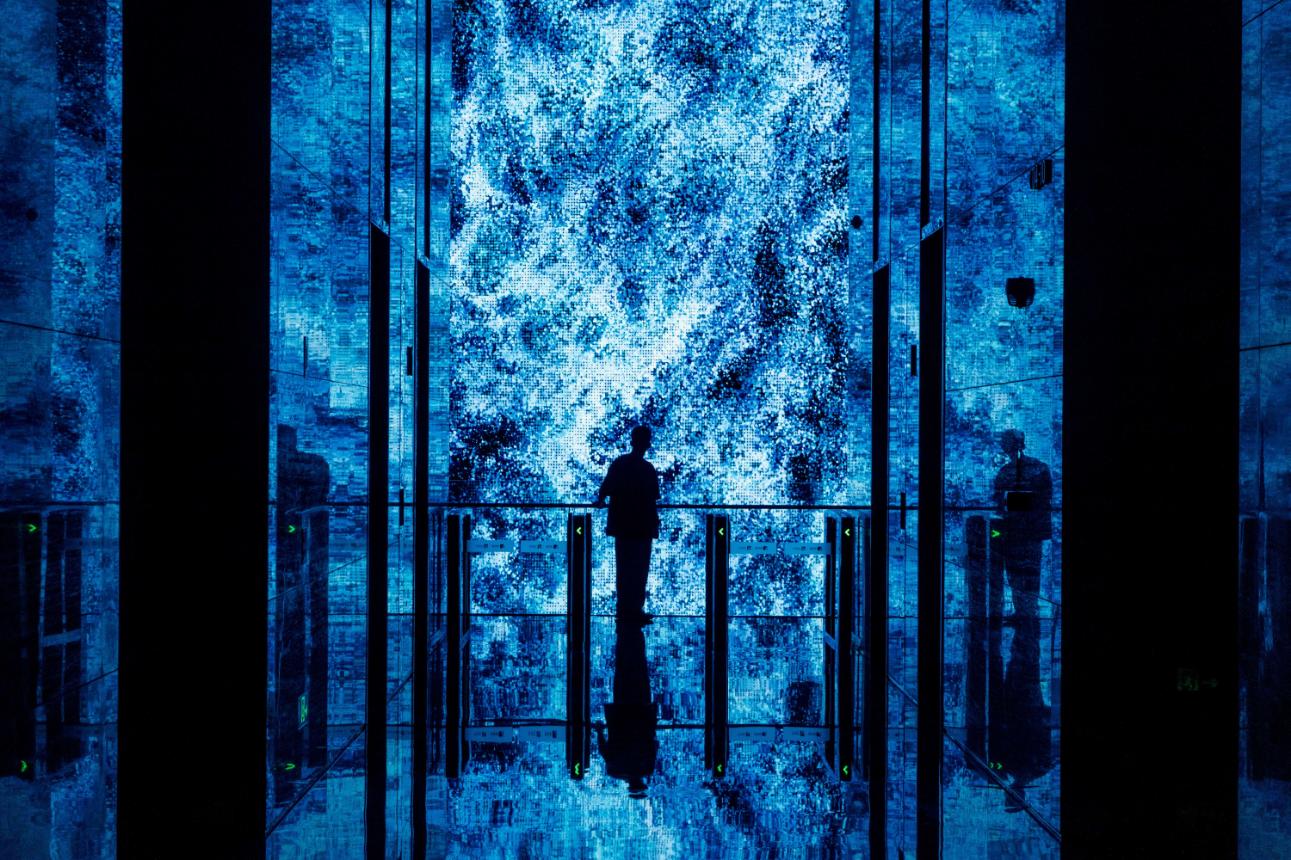
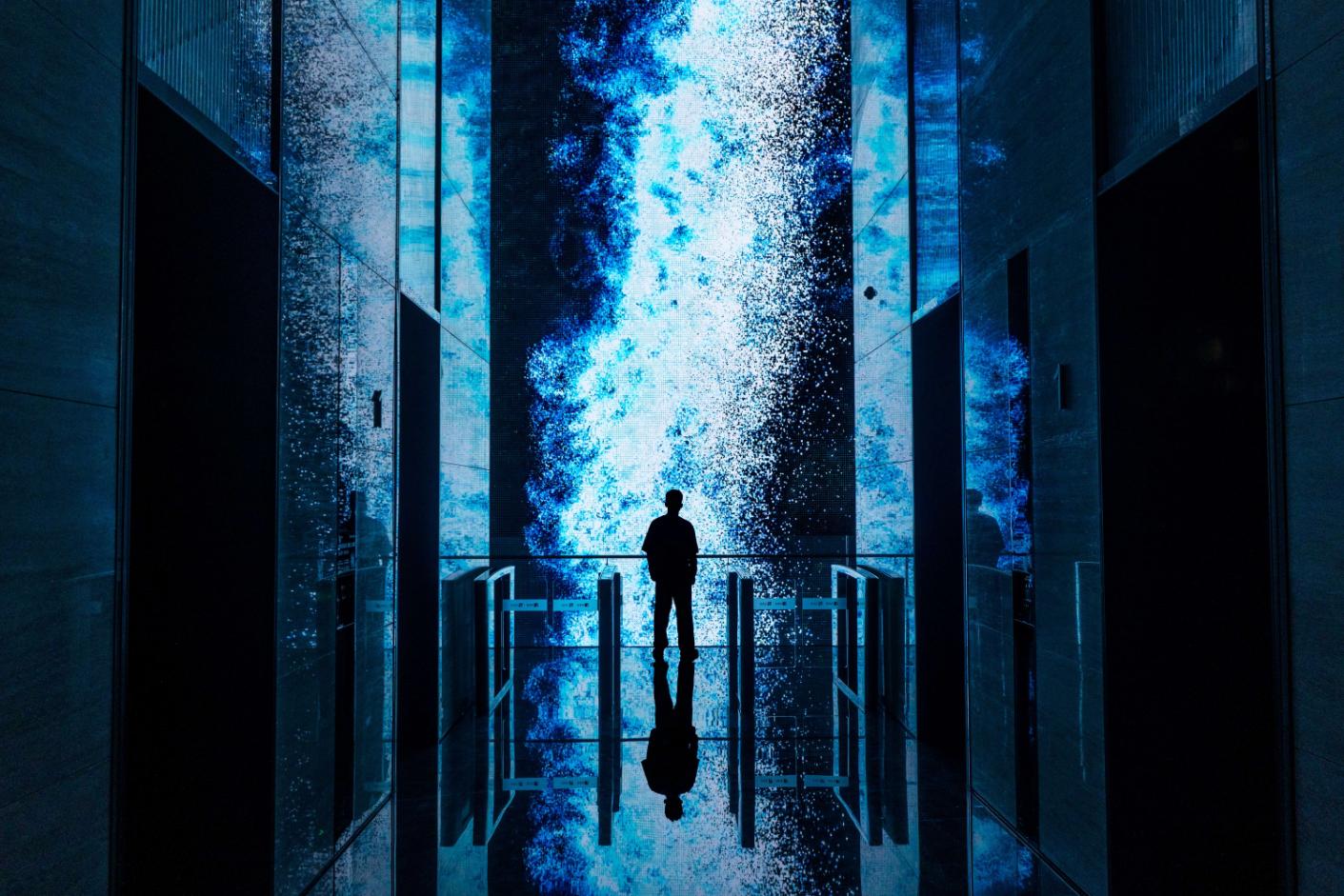
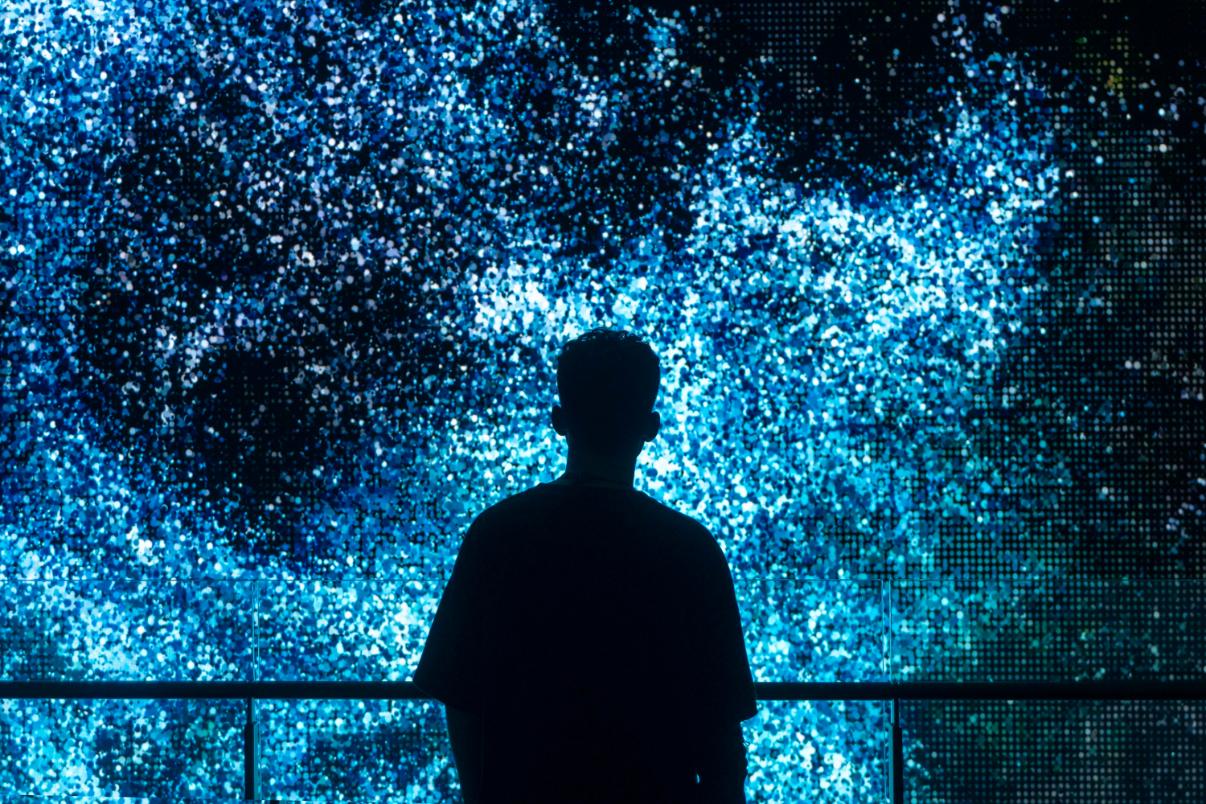
There are works that ask to be watched, and others that seem to watch back. Nature’s Computility belongs firmly to the second category. Meditative yet technologically intricate, the installation transforms the movement of ocean water into a luminous computational organism, suspended between abstraction and recognition, between the logic of data and the mystery of perception.
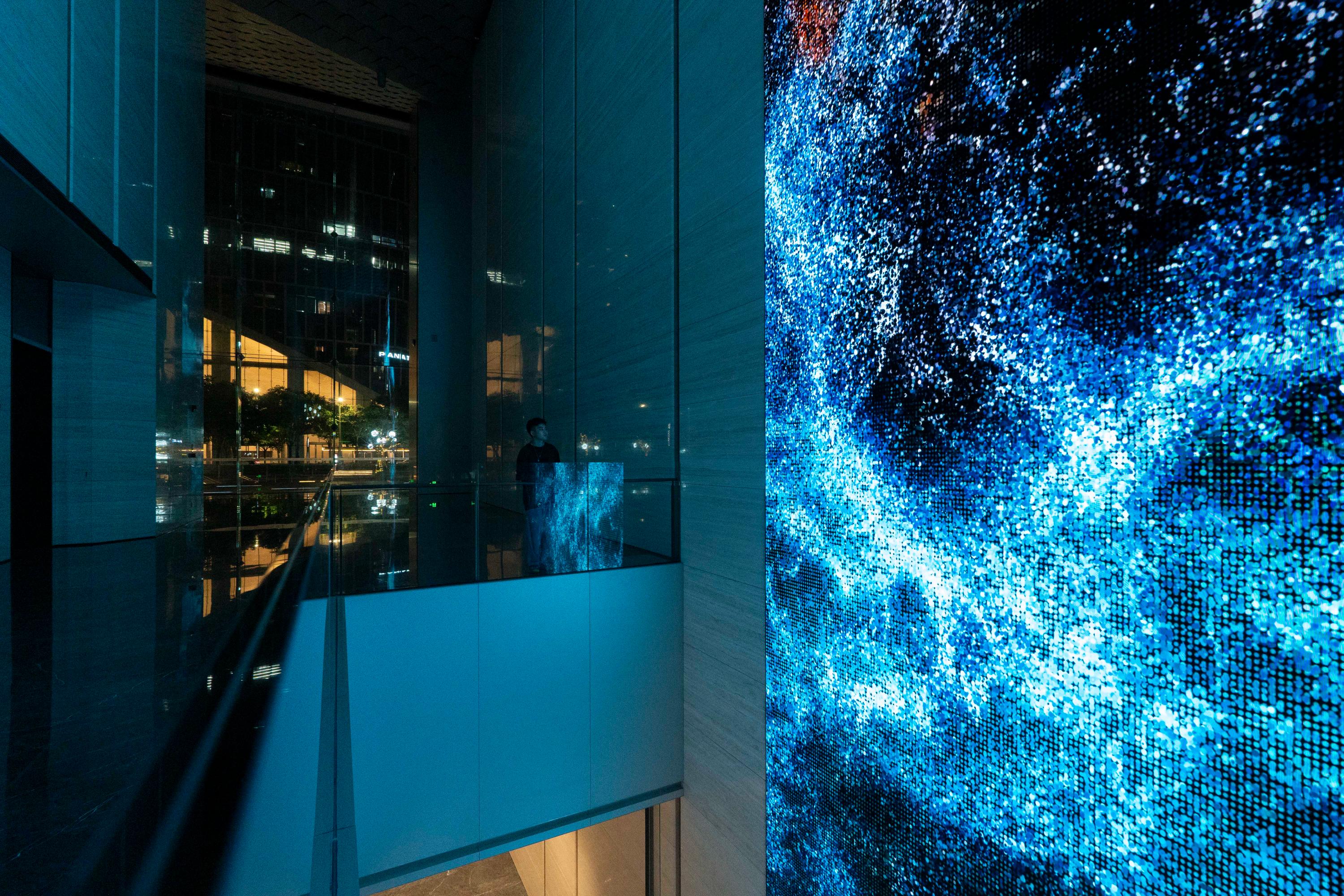
Created using GPU Instancing and real-time particle algorithms, the work combines drone footage shot along the coastline of Qianhai, Shenzhen, with computational rendering. Rather than reproducing the sea literally, Cao translates its movement, velocity and rhythm into a constantly shifting field of particles, creating an image that can feel at once like a breaking wave, a star field or a living digital system.
Presented in collaboration with eFM, the installation finds a resonant context within Videocittà, where art, technology and research intersect. Yet its central proposition is ultimately simple: technology does not have to compete with nature or imitate it. It can become a tool for observing, translating and revealing the complexity that is already there.
In Nature’s Computility, computation becomes less a means of control than a way of listening. Read our full interview with Cao Yuxi to discover the ideas, processes and questions behind the work.
What first drew you to the intersection of AI, data, the environment, and natural systems?
I started working with technology because I was interested in how it could be used to generate content that felt more like art than pure technology. The more I worked this way, the more I realised that new technologies could function as tools—more tools to experiment with and “cook” with creatively. This connection happened quite naturally. What fascinates me is the conflict between two very different concepts: art, which is deeply human, cultural, and tied to time, and technology, especially AI, which is extremely contemporary and rooted in the present moment. When you place the old and the new, tradition and the latest technology side by side, a very interesting tension emerges. I’m obsessed with that conflict, because it can draw people into conversation the moment they see it.
Could you tell us more about the concept behind Nature’s Computility?
The installation began during a road trip in Hawaii. At the time, I was working on algorithms to simulate flight, and I realised how difficult it is to use computers to reproduce something that seems effortless in nature, like the movement of water. It requires an enormous amount of computing power and processing time.
Then one morning, while staying near the seashore, I had a realization: the real thing was right in front of me. Nature itself was already performing the simulation. All I had to do was document it. So I flew a drone over the coastline and recorded the movement of the water, then used that footage as the source material for my particle-based generative work.
People often think the final result is fully computer-simulated, but in fact I am layering creative coding over documentary footage. That contrast is what I find so interesting. The work is also a kind of homage to the magnificence of nature’s own computational power—far beyond our own small and artificial attempts to recreate it.
Why is it important for you to use AI as a tool for observing nature instead of imitating humans?
I don’t think AI is meant to replace human creativity. The more you work with it, the more you understand that diffusion-model-based systems cannot truly produce a human result in the fullest sense. They can imitate what people have already made, but they cannot understand context, nuance, emotion, or the human mindset.
When we experience art, what we are really looking for is a human response and a human point of view. AI can imitate a perspective from the past, but it cannot genuinely create something new in the same way a human artist can.
That said, I don’t see this as a threat anymore. AI is a very useful tool that makes my process more efficient. And as AI-generated content becomes more widespread online, genuinely human-made work will become even more precious and valuable. In that sense, AI may become one more cheap layer in the cultural marketplace, while human creativity remains distinct and irreplaceable.
What do you think an algorithm “sees” when it looks at water, the sea, or a landscape?
An algorithm is not exactly what we usually imagine it to be. It is really just a sequence of design steps, a rule-based process. So what it “sees” is essentially input data that allows the workflow to operate.
In my view, the algorithm—or the workflow—has to be designed and curated by the artist. The sea, the landscape, or nature itself are simply source materials. The outcome becomes the artwork.
I like to think of it as a cooking analogy: the artist is the cook, the source material is the ingredients, and the algorithm is the cooking process. That is how I understand this relationship.
How does Nature’s Computility translate the movement of water into visual form?
I started by trying to simulate particles, but I quickly realised that reproducing the physics of water is extremely difficult. So instead, I used material collected from nature itself and turned it into a simulation layer.
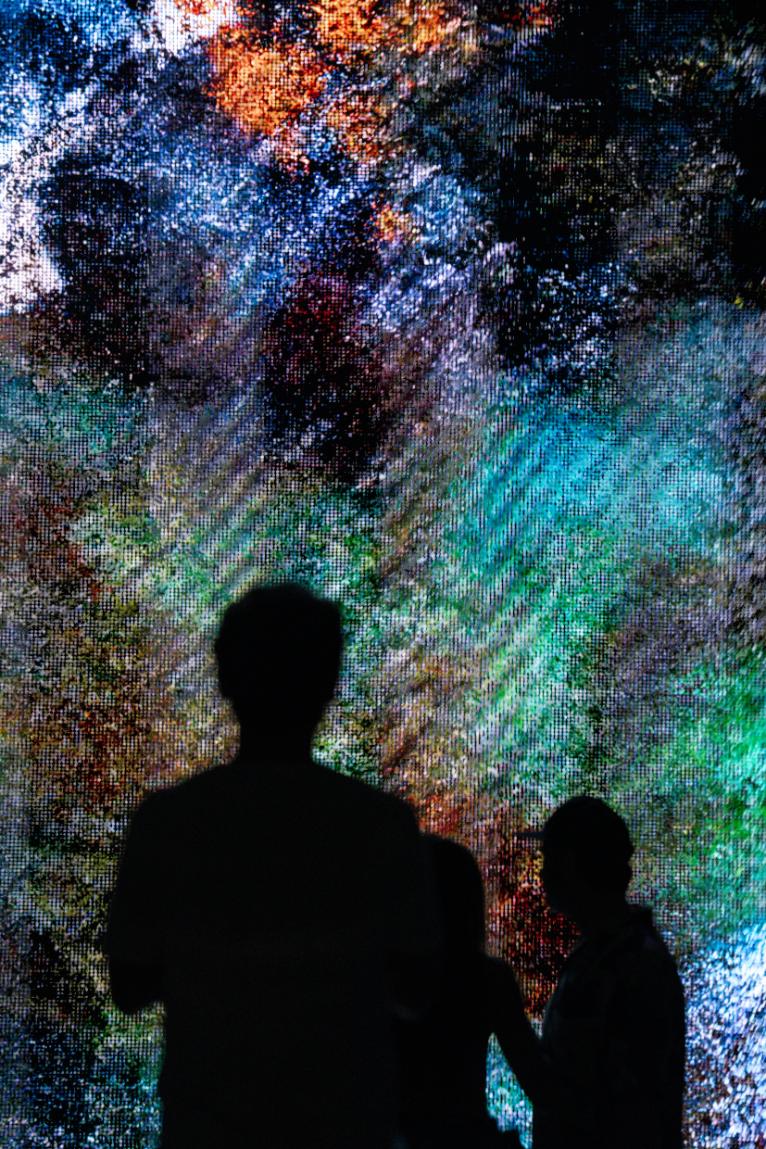
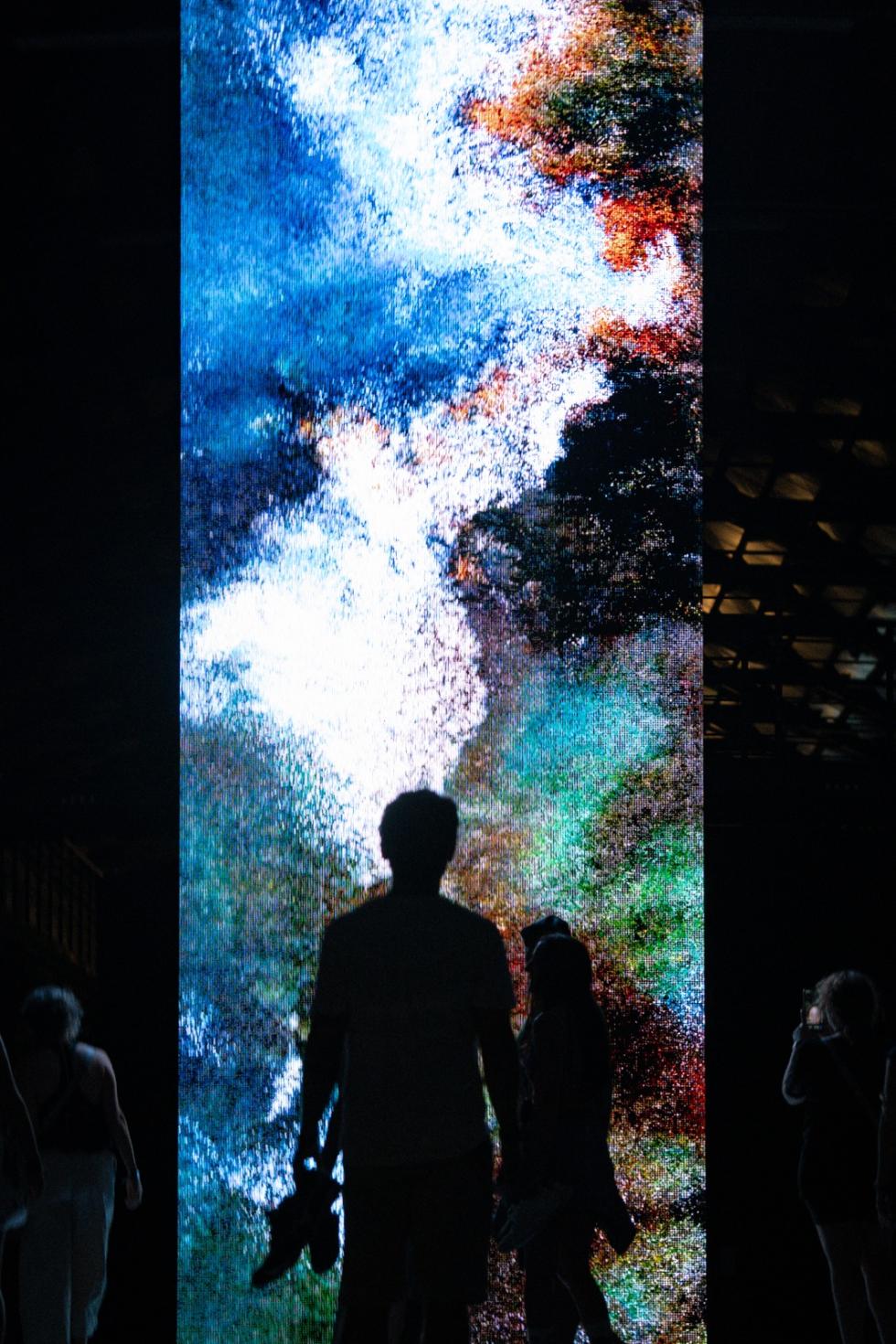
The work uses algorithms to detect flow, velocity, and color in the footage, then transforms that information into a mosaic of dots. These dots move dynamically according to the movement captured in the original footage, creating a particle flow that changes with the image.
When the work is displayed on LED screens, those tiny dots become both the visual medium and the artwork itself. The result feels like a hybrid between the content and the display surface. It becomes a kind of digital impressionism: technology is used to create a moving impression of nature, rather than a literal copy of it.
Can AI help us better understand ecosystems and natural phenomena?
Yes, I think of artificial intelligence as a kind of information-collecting speed booster. In the past, gathering specific information took much more time. Now, AI can help us source information more quickly and with greater accuracy.
That improves our ability to make decisions, because decisions depend on whether we believe we have collected enough information. In that sense, AI can significantly accelerate the way we understand ecosystems and natural phenomena.
How does presenting the work in Rome, within a festival devoted to water, amplify its meaning?
Rome is different, but I often compare it to Xi’an in China. Both are cities with very deep historical roots, going back centuries. That creates an important contextual tension for the conversation around the work.
Here I am presenting something made with the latest technology and media art, while the theme is water—an element that is very different from stone or earth, which are usually associated with history and permanence. Water is about flow, transformation, and never being fixed. That contrast is especially meaningful in a city like Rome.
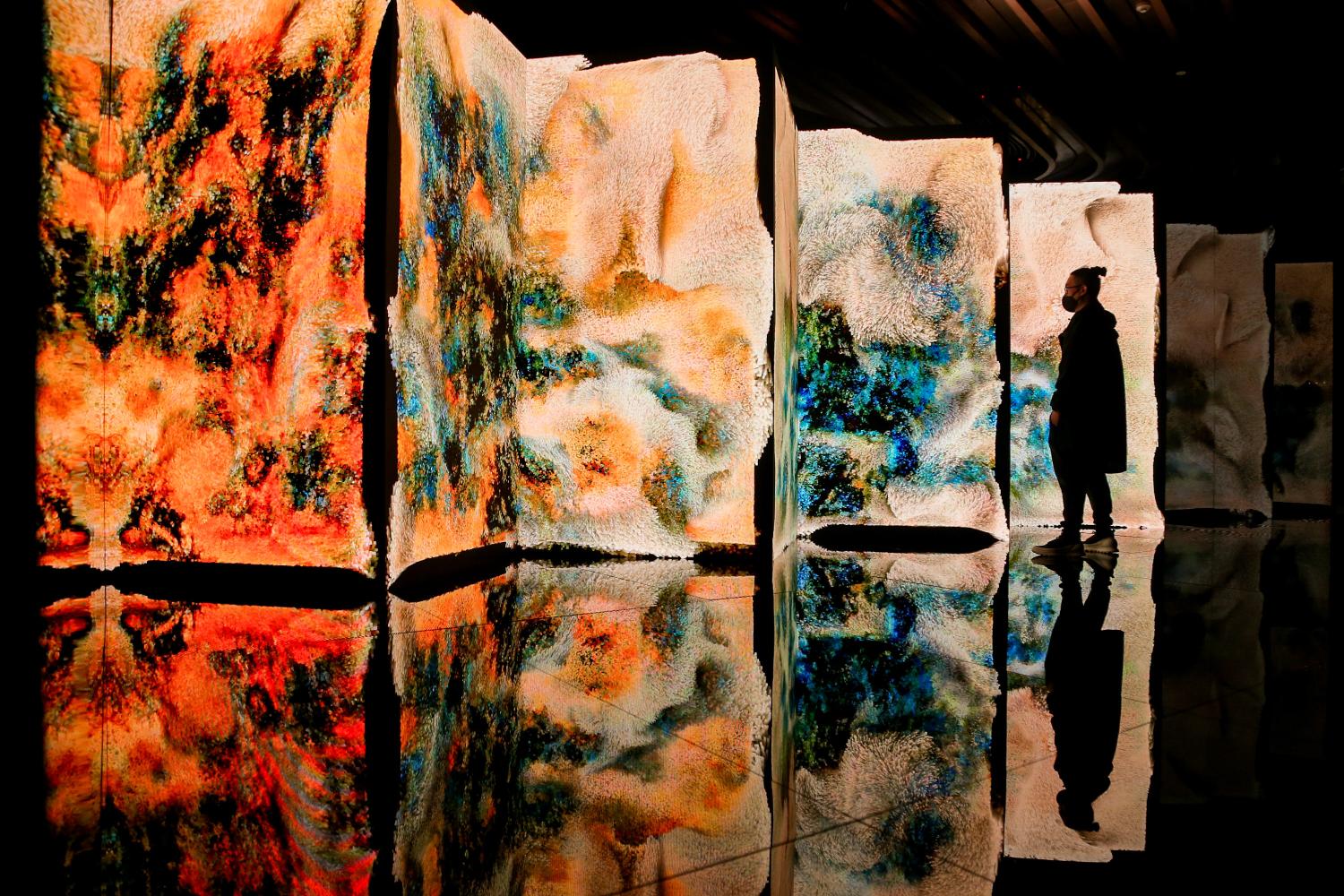
I think the festival is a very good context for the work. The venue, the city, the clean white-box exhibition setting, the use of new technology, the theme of water, and the ocean footage all come together perfectly. The audience can immediately see the work and engage with it through that tension and begin a conversation from there.
What message do you hope audiences take away about the future relationship between technology and the natural world?
I want audiences to feel the power of reality. AI is very good at automation and can make everything seem smooth, but to truly live, you still need to experience things yourself. Reality cannot be bypassed. No matter how many great tools we have—artificial intelligence, automation, or any other advanced technology—we still need to be present in the world and see it for ourselves. That is what I hope people understand through this work.
For me, the best outcome comes from combining the tools of technology with the reality of human experience. What we truly need for the future of life and civilization is creation that comes from real experience. So my message is that technology can support us, but it cannot replace the reality of the world.
A note to your future self
Stay focused and stay humble. That is my current understanding of life.