- Date
- 30 OCTOBER 2026
- Author
- DANIEL FACE
- Image by
- ANNE TETZLAFF
- Categories
- Interviews
Keiken Wants Us to Feel the Future: Inside the World of Empathetic Technology
Keiken is an interdisciplinary artist collective exploring how technology can transform the way we perceive, connect and experience the world. Working across installation, film, gaming, performance and wearable technology, the collective creates speculative environments that challenge the boundaries between physical and digital realities.
Founded by by Hana Omori Keiken, meaning “experience” in Japanese, has developed a practice rooted in embodied storytelling, collective imagination and empathetic technologies. Rather than treating technology as a passive creative tool, the collective investigates how it might become an extension of human perception and connection.
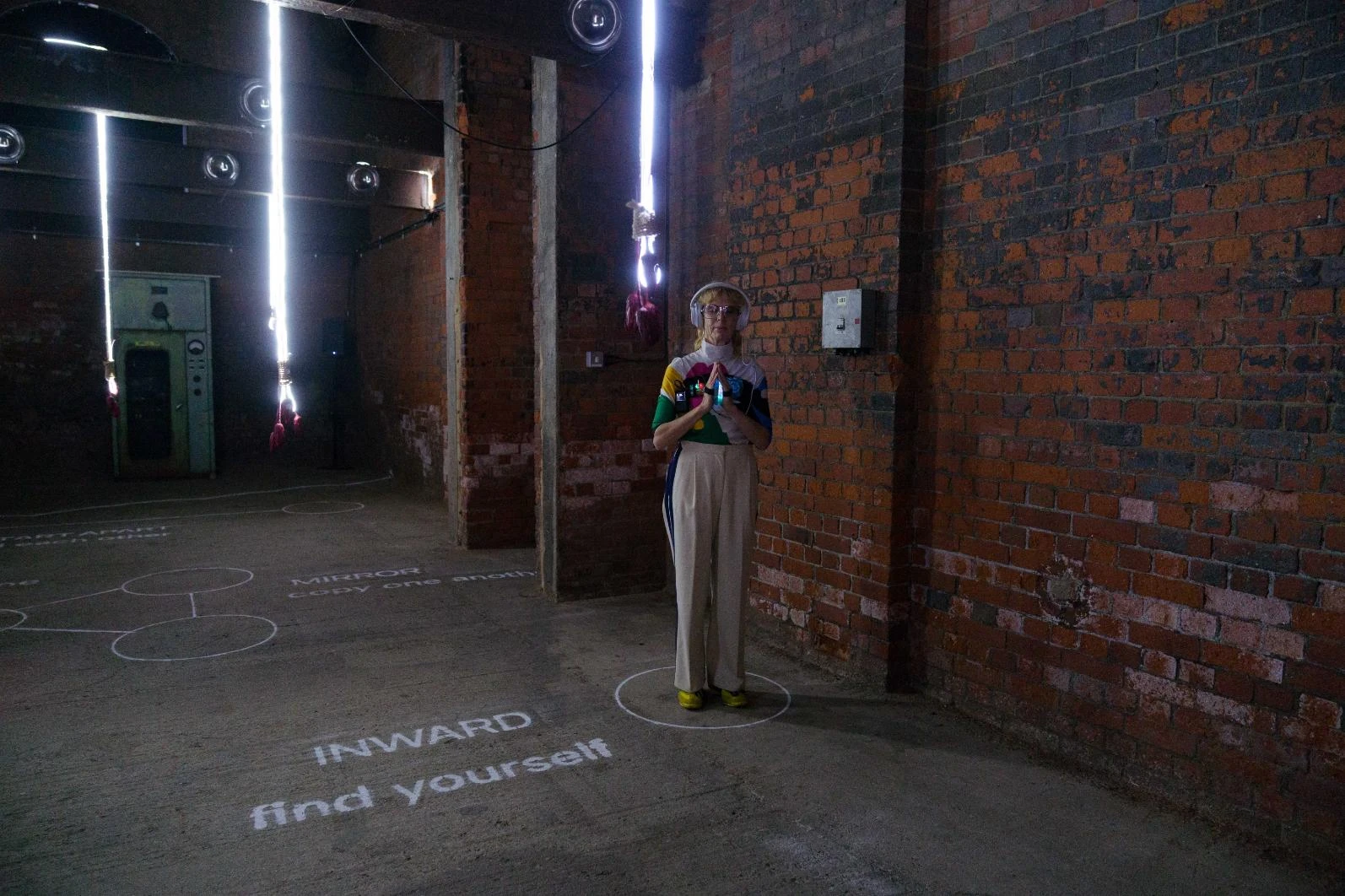
For Somerset House Studios’ tenth anniversary, Keiken presented Liquid Perception as part of 3 Evenings: Experiments in Performance and Technology, a landmark programme at London’s Wapping Hydraulic Power Station. Through haptic devices, light, sound and proximity, the installation invited audiences to experience communication beyond language, opening up new possibilities for empathy and shared sensory experience.
Read our full interview with Hana Omori from Keiken below!

Keiken means experience in Japanese. How did the collective begin, and how would you describe its practice today?
Hana Omori: Keiken comes from a love for experience, whether that’s pushing the boundaries of experience or exploring ideas around consciousness and lived experience. That’s the fundamental anchor of the collective.
Over time, it has evolved into a deep world-building practice exploring empathetic technologies and embodied storytelling. We move between different mediums, including installation, film, games and performance. We’re not bounded by a particular medium, but rather by the idea of experience itself.
The collective began with three of us, Tanya Cruz, Isabel Ramos and myself. We started collaborating at university, and from the beginning, we were always inviting other people into the process. Collaboration and the unknown have always been central to Keiken.
With Liquid Perception, you’re developing your own haptic technology. Can you tell us more about the experience and what you want audiences to discover?
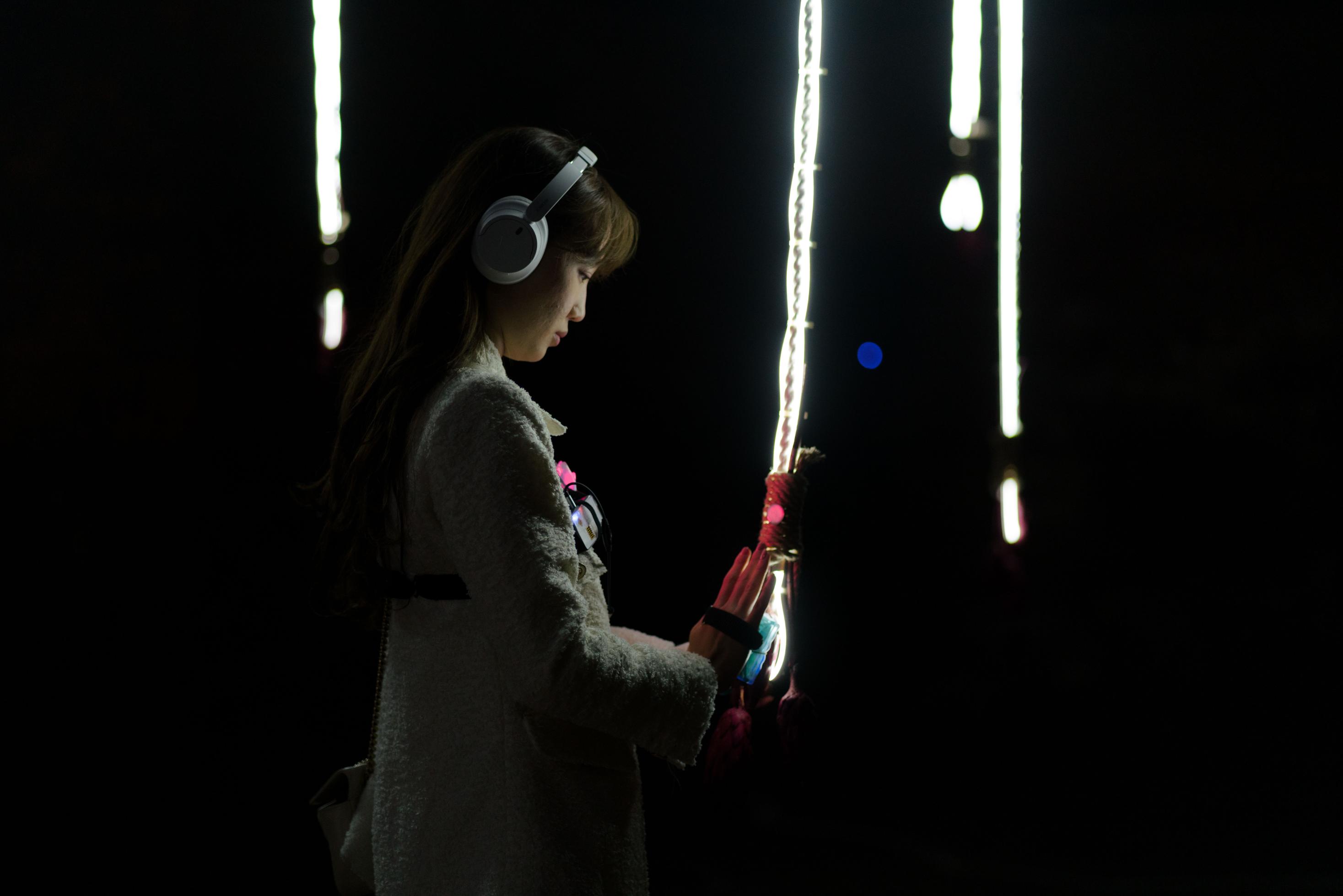
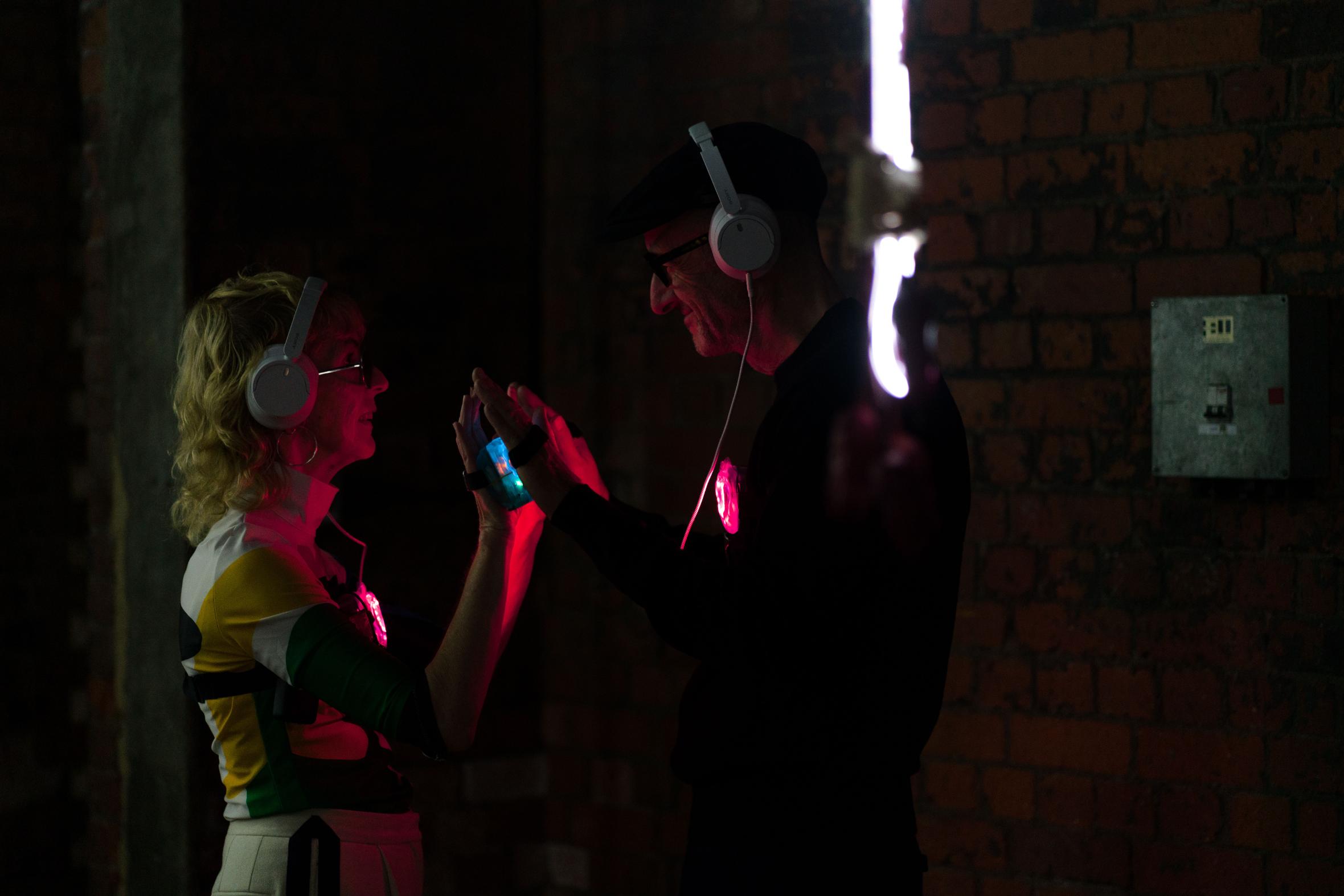
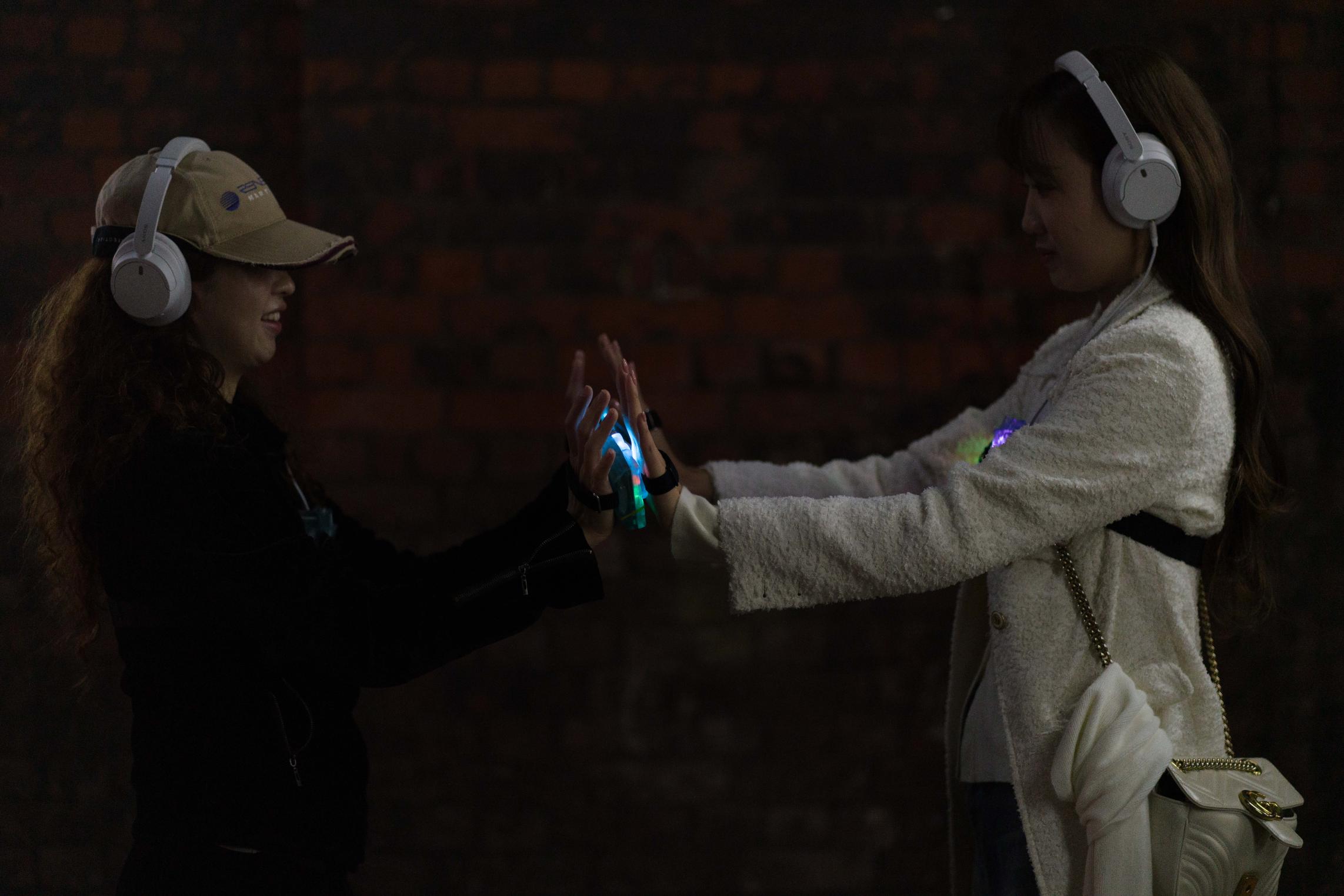
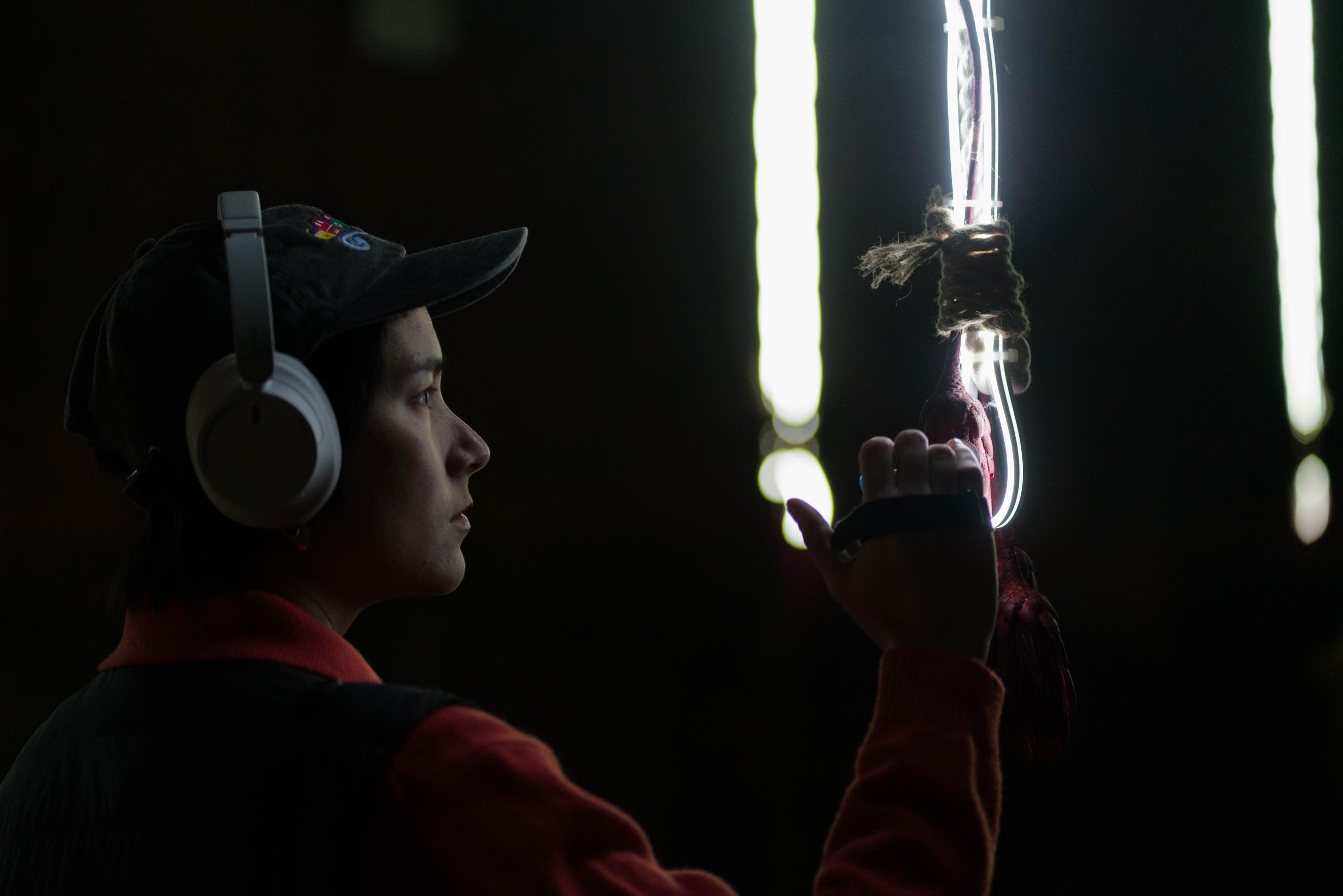
Hana Omori: We’re creating hand and heart haptic devices using technology we’ve developed ourselves. Audiences can connect with themselves, with each other and with objects in the space. The haptic feedback, light and sound change depending on what they connect with.
For example, you might experience sound vibrations around your heart when connecting with another person. There’s also a distance sensor, so the closer you get to an object, the more vibration you feel through your hand.
It’s a very unique experience. It’s difficult to describe because it’s not something most people will have experienced before. I think the most exciting thing is watching someone encounter it for the first time and trying to understand what they’re experiencing.
Do you think technology has become a performer in its own right, rather than simply a tool for artists?
Hana Omori: One important thing as an artist is learning how to make the tool not use you, but for you to use it.
Once you understand how to change and manipulate technologies in new ways, you can create things that don’t already exist or that the technology isn’t necessarily telling you to do.
A lot of software and hardware is developed with very different intentions, often practical or corporate. Those intentions might be completely different from how an artist perceives things.
You often talk about empathetic technology. What does an empathetic relationship between humans and technology look like to you, particularly with the development of AI?
Hana Omori: One of the most distinguishing relationships is that humans are embodied beings. We learn how to digest before we learn how to have language, before we have a voice.
Empathy means understanding something or someone else without necessarily having to experience what the other person is feeling. It’s a kind of reaching out towards something, regardless of whether you know that experience or not.
The difference between a human or an animal and an AI intelligence is that AI isn’t an embodied being. There needs to be respect in both directions. We need to understand what it means to be embodied beings, and technology needs to have empathy for that.
Wearable technology is increasingly entering fashion, healthcare and everyday life. What possibilities interest you most?
Hana Omori: When it comes to wearable technologies, including technologies under the skin, there are important applications in healthcare and accessibility. These technologies can improve people’s well-being and lifestyles, and I think that’s incredibly important.
Then there are wearables that act as an extension of the body, perhaps through aesthetics or a non-human aesthetic, or through fashion and pushing boundaries.
For us, the reason we work with wearable technology is that we want to be as close to the body as possible. Touch is a really important medium to explore. There is very little art that focuses on physical touch, even though it affects everybody.