- Date
- 15 MAY 2026
- Author
- MIRA WANDERLUST
- Image by
- PRESS
- Categories
- Interviews
Li Yi-Fan’s Screen Melancholy at the Venice Biennale: Artist and Curator in Conversation
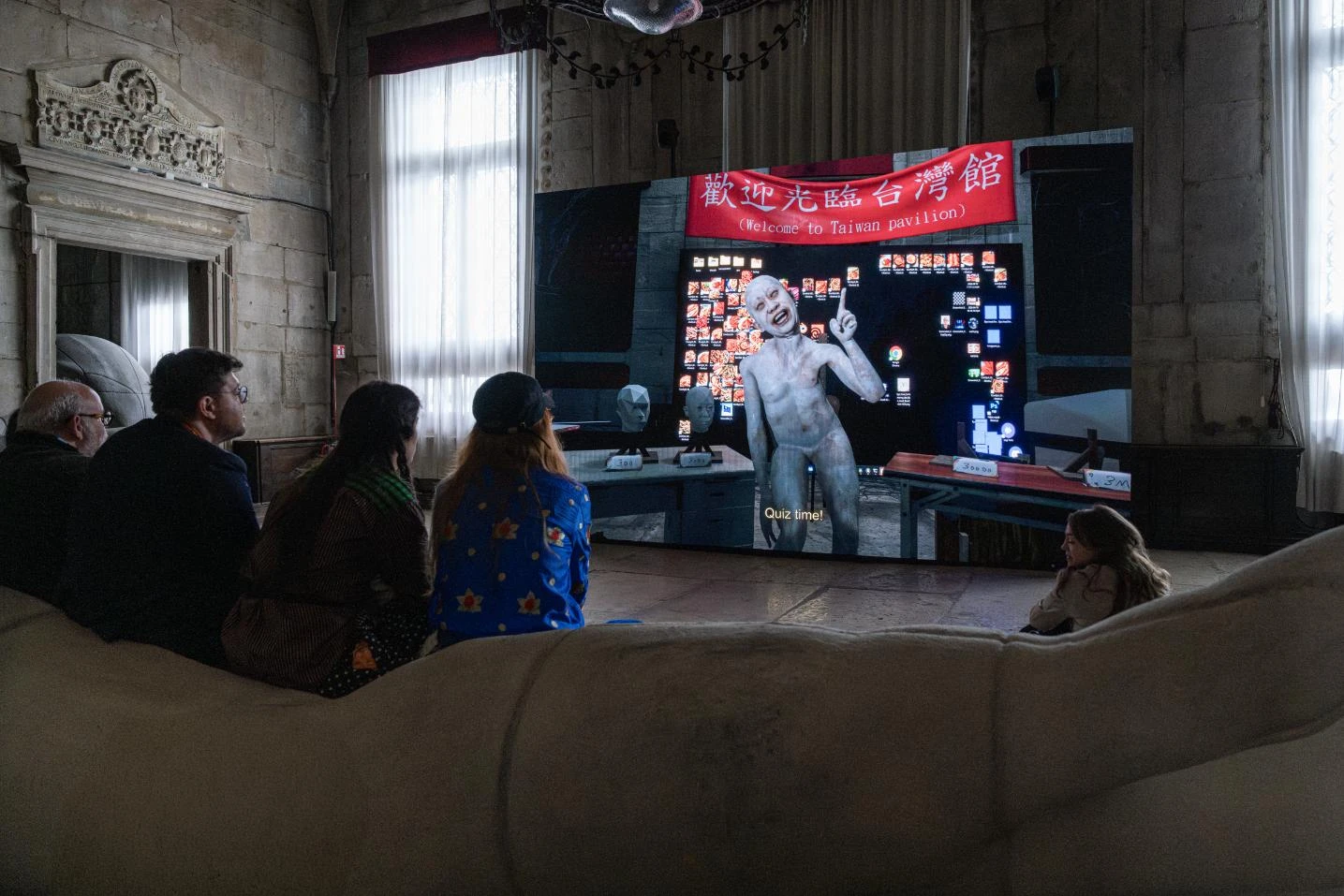
At the latest edition of the Venice Biennale, RED-EYE speaks with both artist Li Yi-Fan and curator Raphael Fonseca about Screen Melancholy, an installation for Taiwan's pavillion that examines how image culture shapes perception, emotion, and identity today. Bringing together two perspectives, the interviews unfold a layered understanding of a project rooted in technological inquiry and contemporary subjectivity.
Li Yi-Fan’s practice navigates the evolution of visual systems, from legacy CGI techniques to the broader logic that underpins machine learning. In Screen Melancholy, he shifts focus away from AI as a buzzword and instead highlights the mechanisms that structure how images are built and experienced. His work explores dimensional reduction and the transformation of complex realities into flat surfaces, revealing how screens become sites where human desire, fear, and imagination are projected and negotiated.
For curator Raphael Fonseca, the exhibition is shaped by a shared global condition rather than fixed geography. He frames melancholy as an emotional response to constant stimulation, digital saturation, and the exhaustion of endless scrolling. Together, artist and curator position humor, overload, and spatial tension as tools to question how audiences engage with images that no longer simply represent reality but actively construct it.
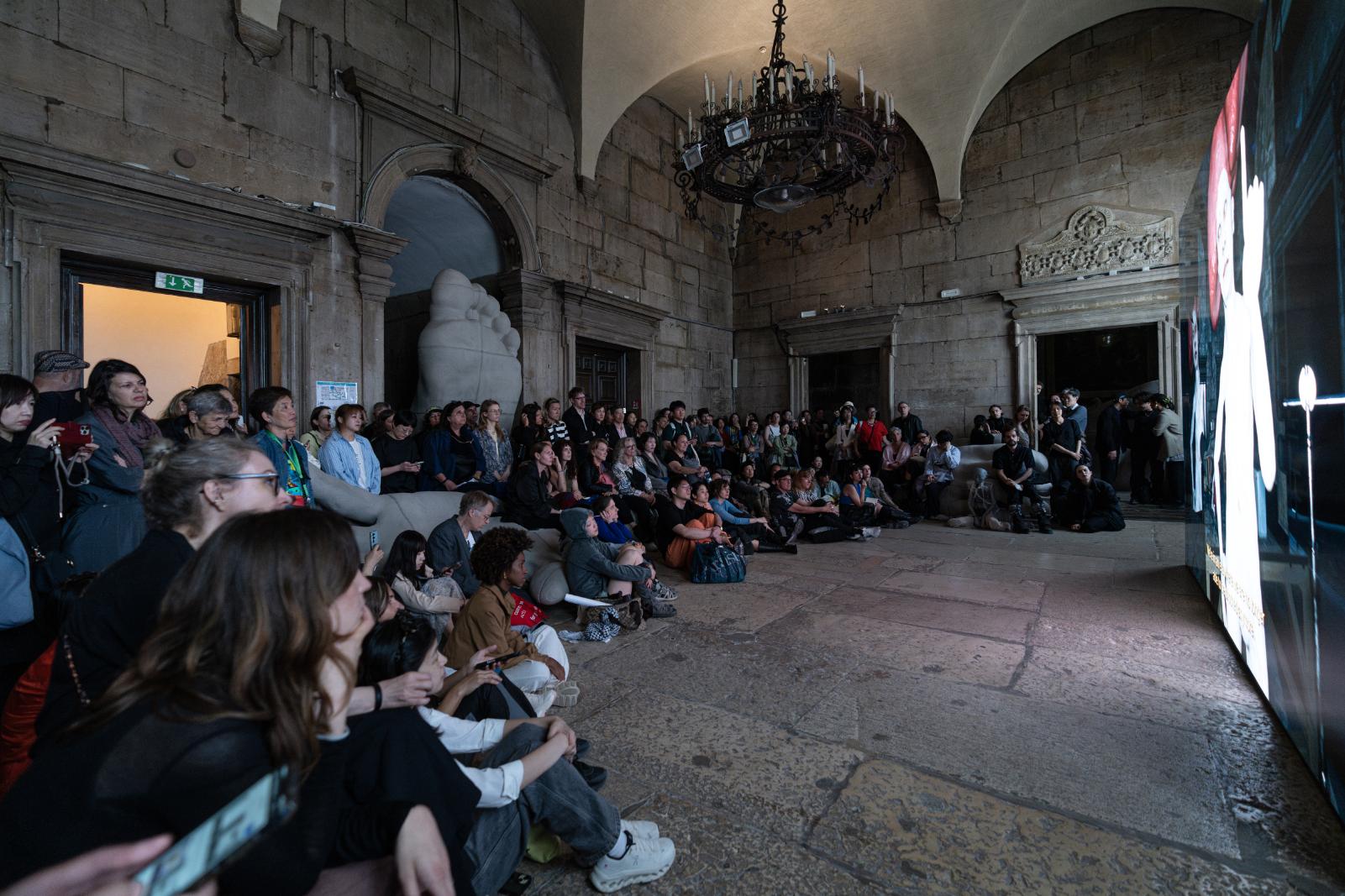
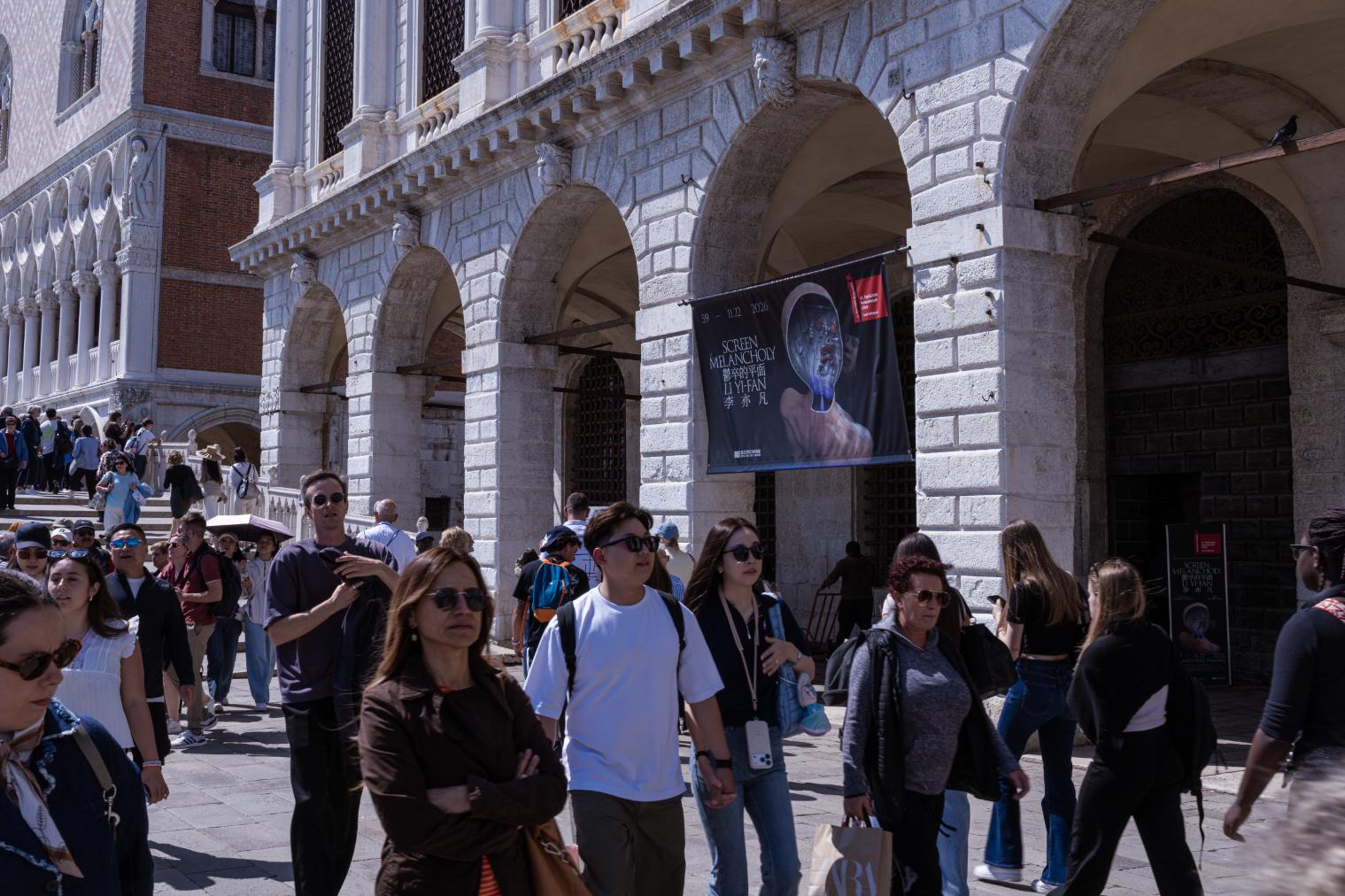
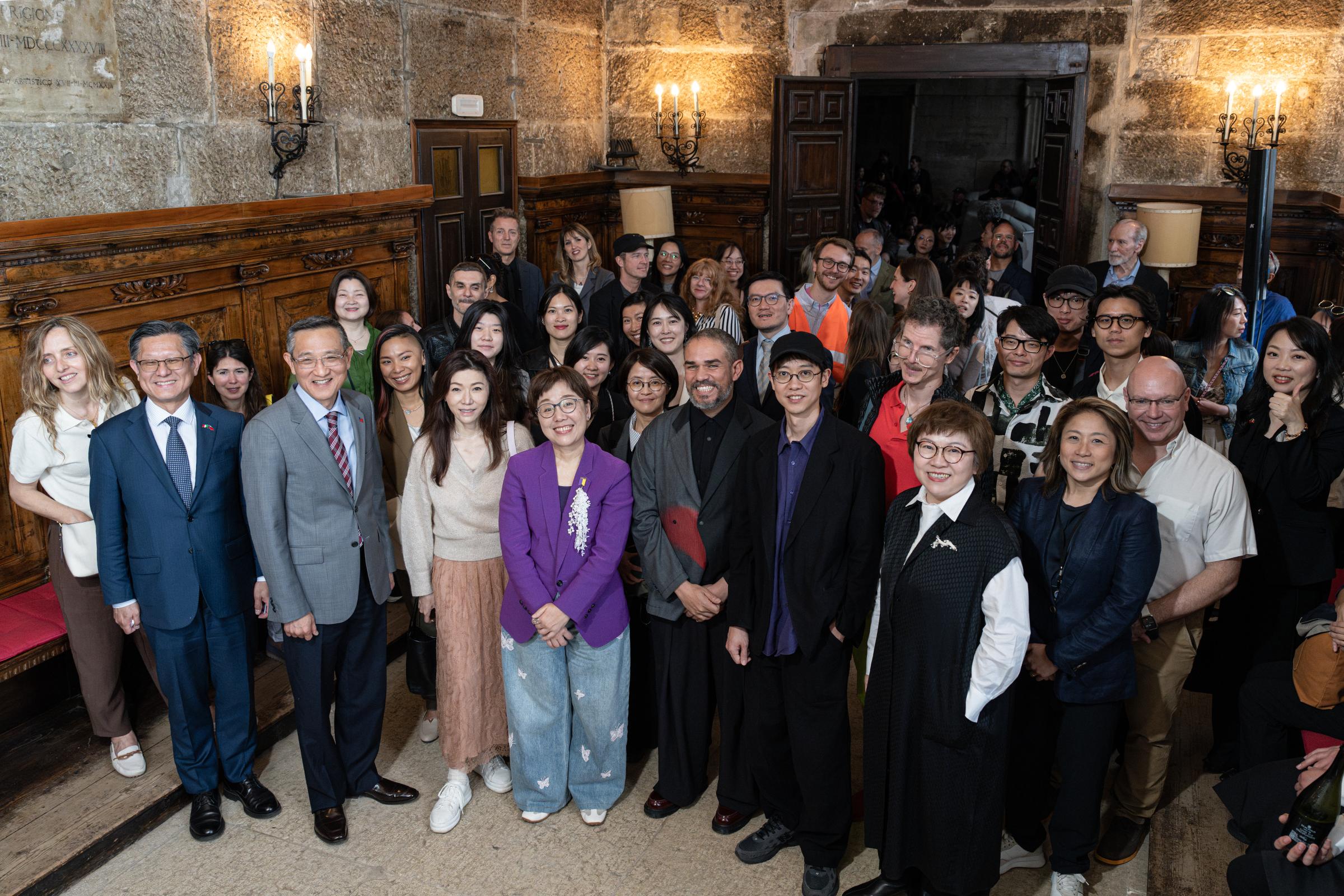
Installed within the historic Palazzo delle Prigioni, Screen Melancholy creates a dialogue between physical space and virtual logic, inviting viewers to reflect on their own relationship with technology and the unstable realities it produces.
Hello Li, your practice explores the relationship between imagery, technology, and human perception. How is this investigation articulated in Screen Melancholy, and what new directions does it open in relation to your previous projects?
Li: After finishing What’s Your Favorite Primitive in 2023, delving into machine learning and generative AI felt inevitable for me. From 2023 to 2025, I investigated the current state of machine learning technology. However, in Screen Melancholy, instead of discussing AI directly, I dedicated more space to legacy CGI techniques (like UV texture maps), as I feel the logic of optimization runs through these different technologies.I have always been fascinated by the concept of dimensionality specifically, how humans can perceive or project higher-dimensional desires and fears through two-dimensional planes, such as painting, photography, and film. The reduction of dimension is pure magic, different mechanisms are involved, and mechanism itself changes the way we perceive.
Screen Melancholy reflects on the role of screens in everyday life and on the condition of the individual in an age of image overproduction. How do you express, within the installation, the tension between informational overload, emotional distance, and vulnerability?
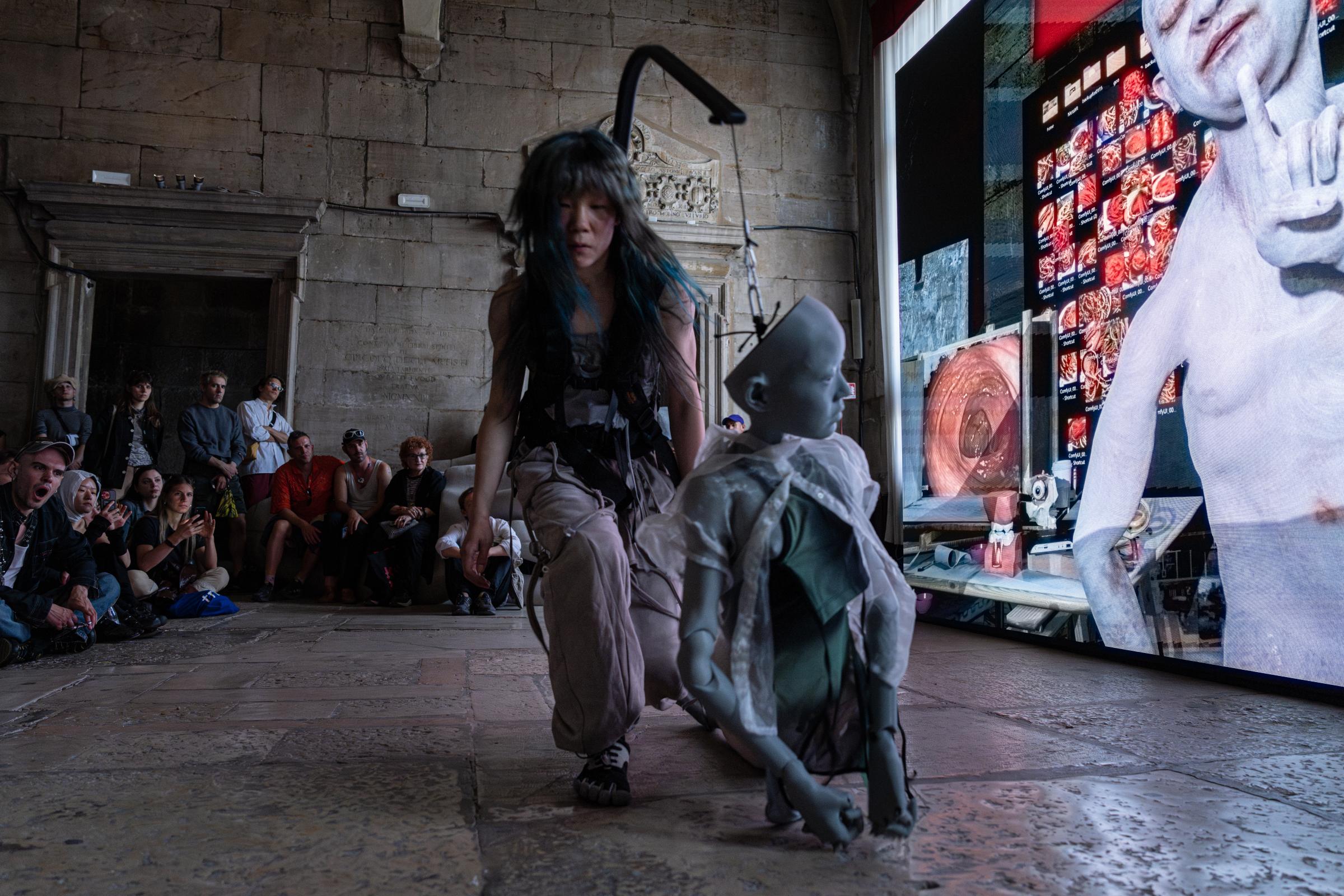
Li: I enjoy making the audience feel informational overload. Showing video in museum/ gallery space for me is very different from showing in cinema. The audience has the free will to leave or stay, they have their own body. Just like they have the right to switch off the phone. So during the viewing the audience is always evaluating.
Why do you think dark humor is a way to approach serious questions about identity, control, and the mediated self in the digital age?
Li: I enjoy seeing the audience laugh in front of my work; laughing together creates a connection and a shared identity, much like crying does. However, I also find interest when only part of the audience gets the joke while others don't. When everyone is laughing but you don't get the joke, it creates a sense of alienation. Dark humor is like an armor, it helps us rethink our situation through a metanarrative lens and break free from constraints.
The title Screen Melancholy suggests a deeper reflection on the emotional texture of contemporary life. For you, what does “melancholy” mean in relation to technology, perception, and the way we position ourselves within a world of endless images?
Li: I’m fascinated about images, but also terrified at the same time. I’m always thinking about the consequences of looking at an image/ creating a image. Will look or create a single image causing something devastating? Melancholy for me is this kind of worry, uncertainty. We want to know all the magic behind the technology, but found out it’s always shadier than sorcery.
What do you hope will come after the Biennale 61st International Art Exhibition, and are there any future directions or projects you are excited to explore next?
Li: As a tech nerd, I think I will still focus on technology. I've been working in this kind of funny fast forward / intuitive manner for a while. But I start to feel some topics I’m interested in need to be more slow and serious.
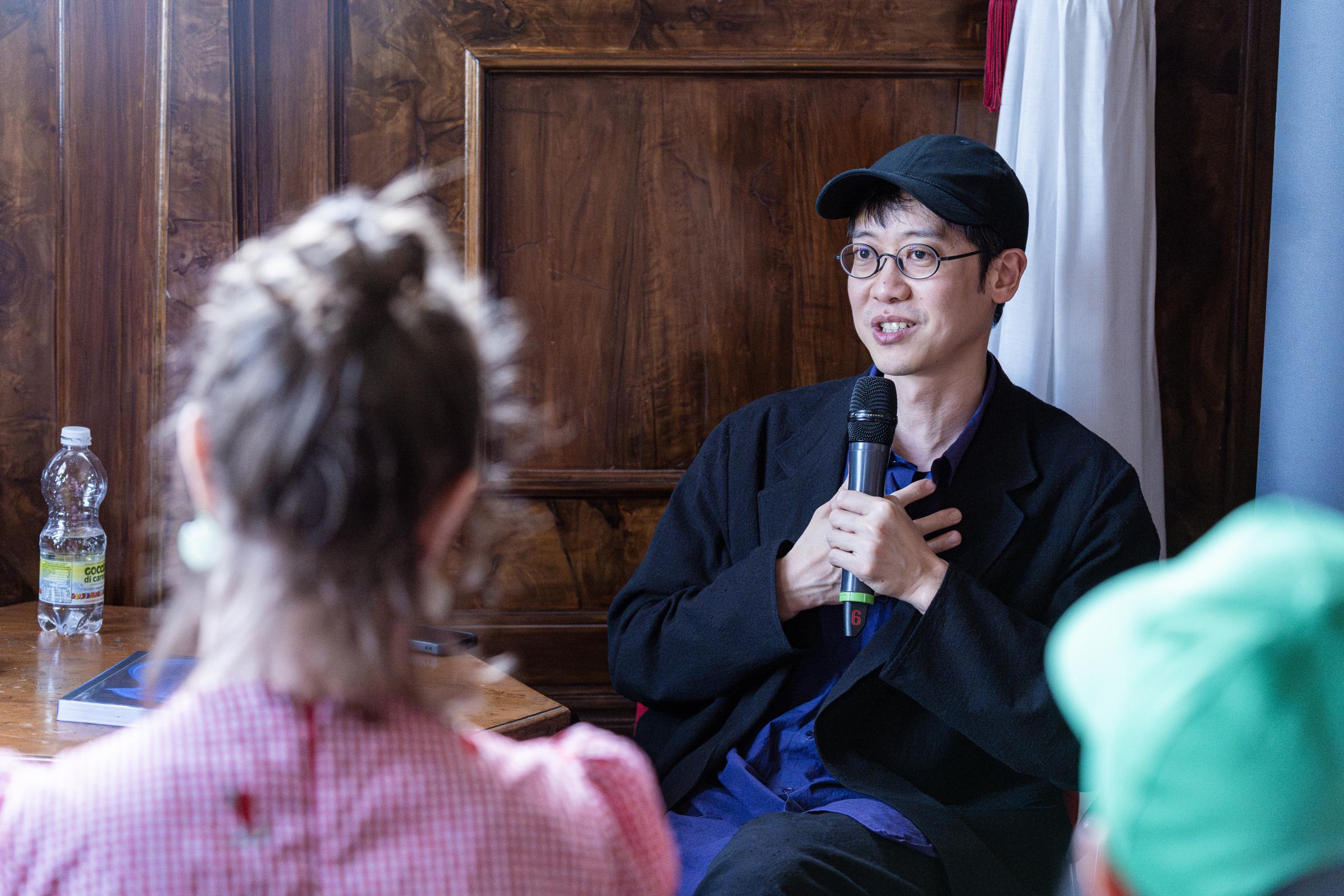
Hello Raphael, we are so glad to have you part of Red Eye World. As a curator from Brazil working on Taiwan’s exhibition at the Venice Biennale, how do you see this collaboration with Li Yi-Fan opening a dialogue across regions, generations, and artistic contexts?
Raphael: As a curator, I’ve always been interested in creating dialogues that move beyond geography as a fixed identity. So, while I come from Brazil and Li Yi-Fan works from Taiwan, what matters most to me are the unexpected affinities that emerge through shared contemporary experiences - technology, political uncertainty, humor, anxiety, and the emotional conditions of living through constant mediation. What makes this collaboration exciting is precisely that it doesn’t try to stage a simplistic cross-cultural encounter, but rather creates space for different perspectives to meet through the work itself. Venice is a perfect context for that: a place historically shaped by exchange, circulation, and spectatorship, where conversations between regions, generations, and artistic languages can unfold in particularly rich ways.
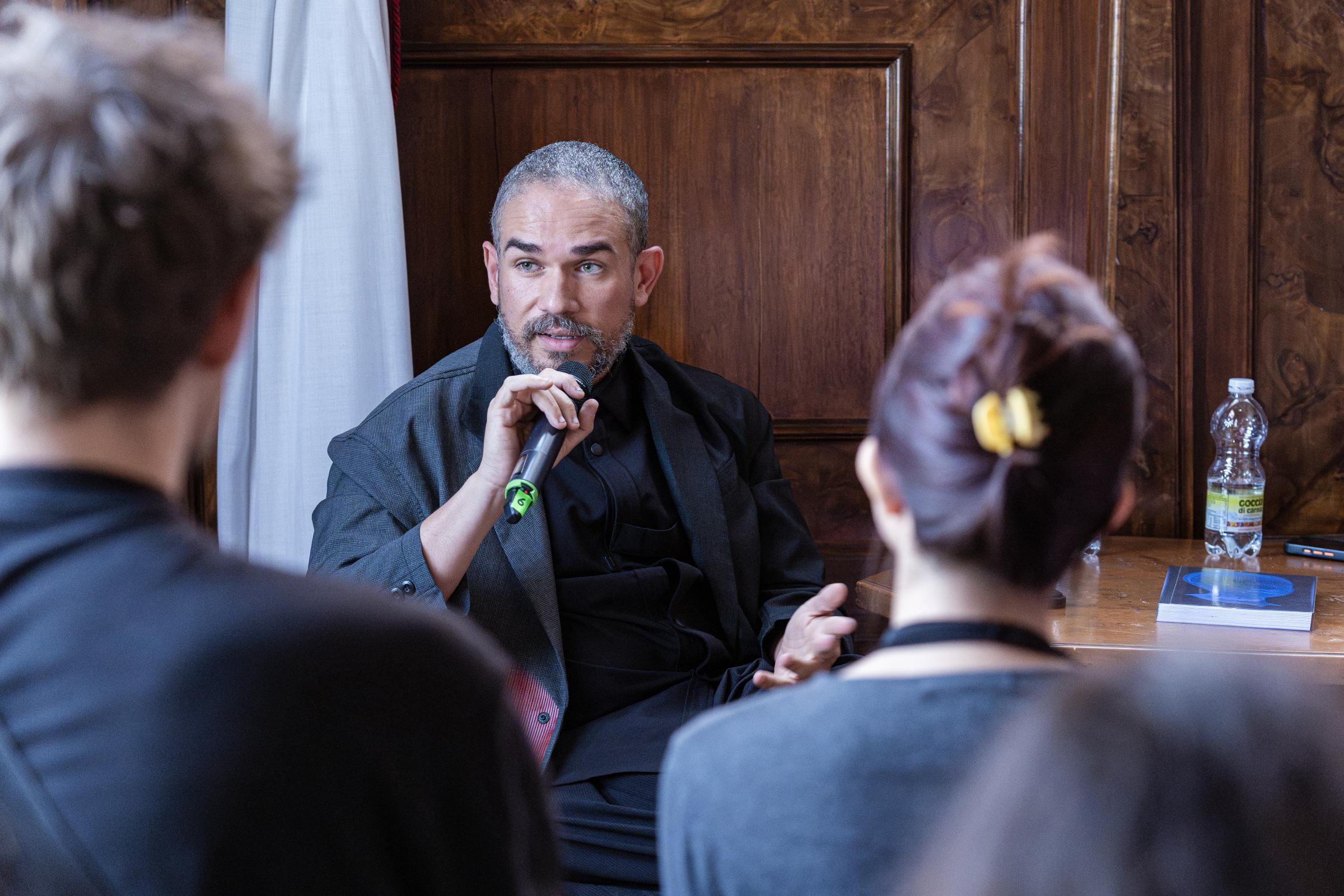
The exhibition Screen Melancholy responds to information overload, digital life, and the anxiety produced by contemporary image culture. How are you approaching melancholy as a curatorial framework for this project?
Raphael: For me, melancholy here is less about literal sadness and more about a broader emotional condition shaped by contemporary life. We live in a moment of constant stimulation, endless scrolling, and information overload, where screens mediate so much of how we work, communicate, and even understand ourselves. Melancholy became a useful framework to think about the exhaustion, anxiety, humor, and alienation that can emerge from that condition. What interests me about Li Yi-Fan’s work is that he approaches these questions with critical sharpness and wit. The exhibition doesn’t offer a nostalgic rejection of technology, but rather a more complex reflection on how deeply entangled we already are with these systems.
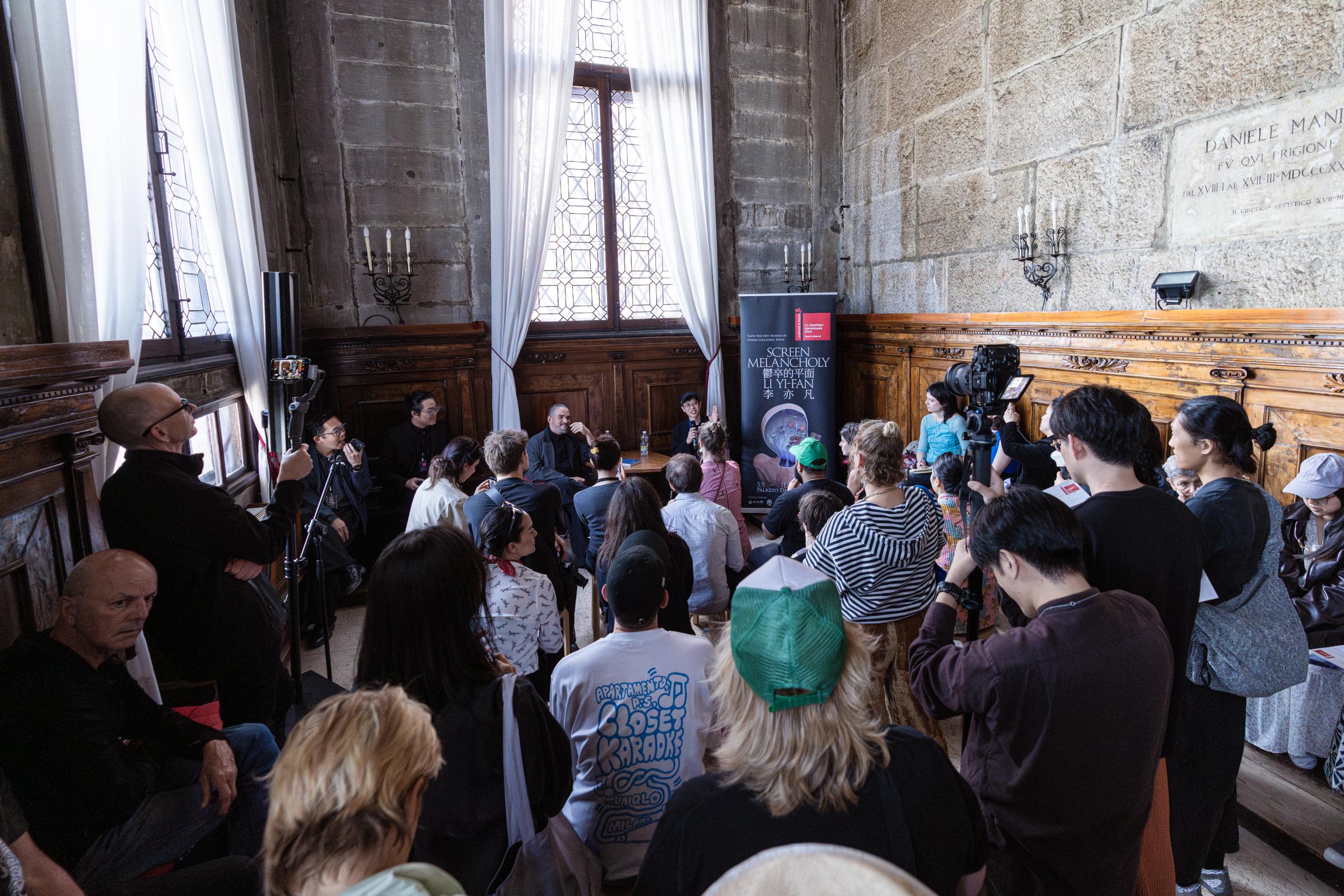
Li Yi-Fan’s work explores image-generation technologies, software, and AI through humor and critical reflection. How do you think Screen Melancholy will challenge how viewers understand images today?
I hope the exhibition invites viewers to think more critically about the images that constantly surround us - how they are produced, consumed, manipulated, and circulated. We are living in a moment in which images no longer represent reality; they increasingly generate realities of their own. Li Yi-Fan approaches that condition with humor and remarkable intelligence, which makes these questions feel accessible rather than didactic. Rather than offering clear answers, Screen Melancholy creates space for viewers to reflect on their own relationship with images, technology, and the strange emotional landscapes that emerge from digital life today.
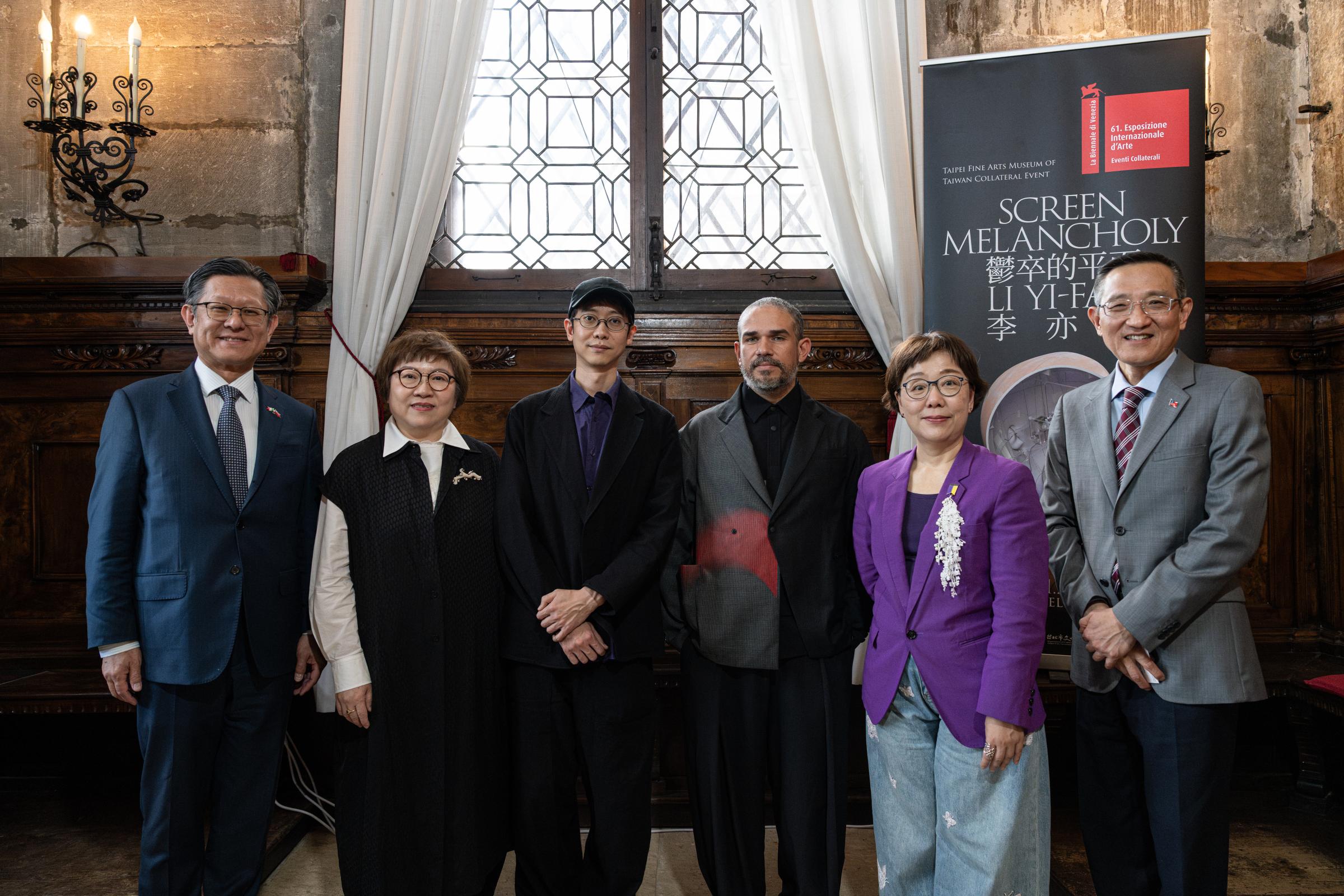
In your view, how does Li Yi-Fan’s practice reflect broader questions about the relationship between technology, perception, and contemporary subjectivity?
Li Yi-Fan’s practice reflects how deeply technology now shapes not only what we see, but how we perceive, process, and relate to the world around us. His work touches on the increasingly blurred boundaries between human agency and automated systems, between authorship and algorithmic production, between humor and discomfort. What I find compelling is that he approaches these broader questions through highly specific, often playful works that still reveal something quite profound about contemporary subjectivity - how our attention, emotions, and even sense of self are constantly being negotiated through technological interfaces.
What do you hope audiences at the Venice Biennale will take away from Screen Melancholy, especially in relation to Taiwanese contemporary art and its place within the global digital landscape?
I hope audiences leave with curiosity - not only about the questions the exhibition raises around technology and contemporary life, but also about the richness and complexity of Taiwanese contemporary art. Li Yi-Fan’s work shows how artists working from Taiwan engage critically and inventively with deeply global conditions while remaining grounded in specific cultural and social contexts. Rather than positioning Taiwanese contemporary art as something peripheral to these conversations, I hope Screen Melancholy makes clear that it is very much at the center of how we think about digital culture, image production, and contemporary subjectivity today.