- Date
- 20 AUGUST 2026
- Author
- DANIEL FACE
- Image by
- @THEZHAPEZHIFTER
- Categories
- Interviews
The World Slightly Out of Shape in Conversation with @thezhapezhifter
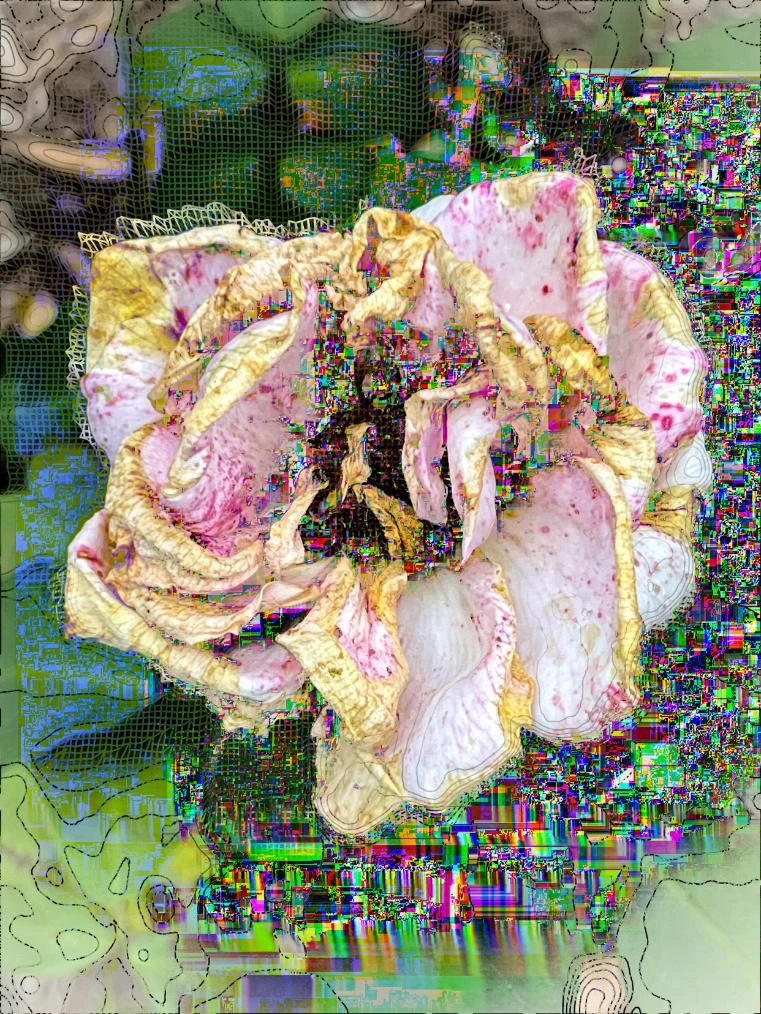
For The ZhapeZhifter, reality is less a fixed image than a starting point. Working primarily with his own photographs, the New England-based experimental digital artist bends, stretches and digitally manipulates familiar environments until they begin to reveal something hidden beneath the surface. A hallway becomes uncanny. A powerline becomes a compositional gesture. An ordinary street begins to feel like evidence of another dimension.
While often grouped within glitch art, The ZhapeZhifter sees his practice differently: as a form of augmented reality. His images retain enough of their original identity to remain recognisable, while pushing that recognition into unfamiliar territory.
Since beginning his experimental digital practice in 2019, his work has become increasingly intentional, detailed and conceptually driven. At its core is a simple proposition: art can be found almost anywhere, if we learn to look closely enough.
We speak to The ZhapeZhifter about photography, distortion, authorship, the uncanny and finding the extraordinary in the everyday.
READ THE FULL INTERVIEW BELOW
Your name, The ZhapeZhifter, already suggests a world where things are constantly changing form. What does “shifting shape” mean to you?
I actually came up with the name when I was more into making music, I experimented with a lot of different styles so I used the name “Shapeshifter”. I later on stylized it to the ZhapeZhifter because I thought it was more memorable, and there's some Australian jam band or something called Shapeshifter anyway. But yeah, the name also implies transforming your surrounding or yourself, and that is a goal of mine.
You often begin with something very familiar: a photograph, an object, a landscape or an everyday scene. What attracts you to ordinary images before you start transforming them?
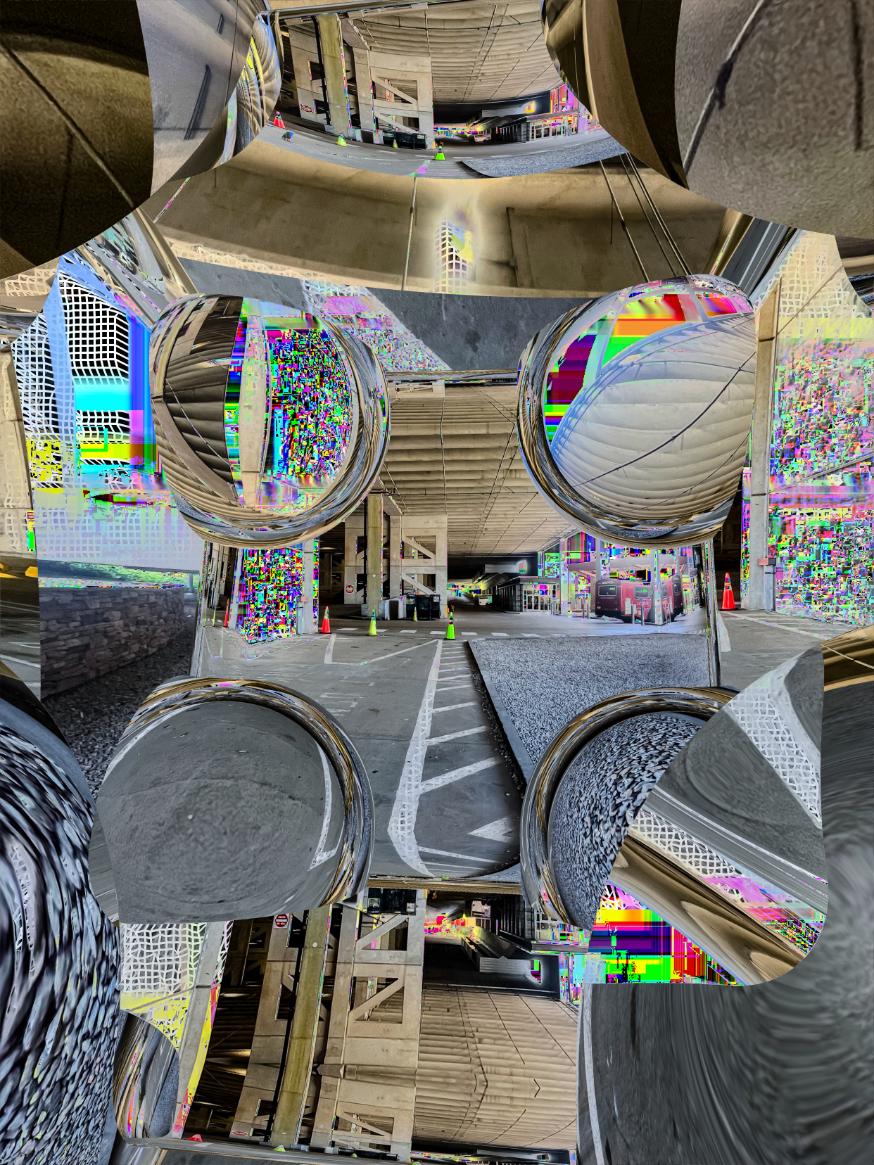
I come up with a lot of my artistic concepts when I'm just visually observing things in daily life. Whether that's because I see form, leading lines, contrast, etc. in everyday scenes or because I can imagine how it will look with certain digital effects. For whatever ordinary scene that I'm portraying, those can have varying connotations, like a mall might give of a vibe of excessive consumerism and materialism, a gritty alleyway can be associated with urban decay and poverty, a backrooms hallway can be liminal and uncanny, so I also like to lean into ideas like that.
There is something almost unsettling about recognising a place or object in your work while simultaneously feeling that something is fundamentally wrong with it. Are you interested in that moment when familiarity turns into something uncanny?
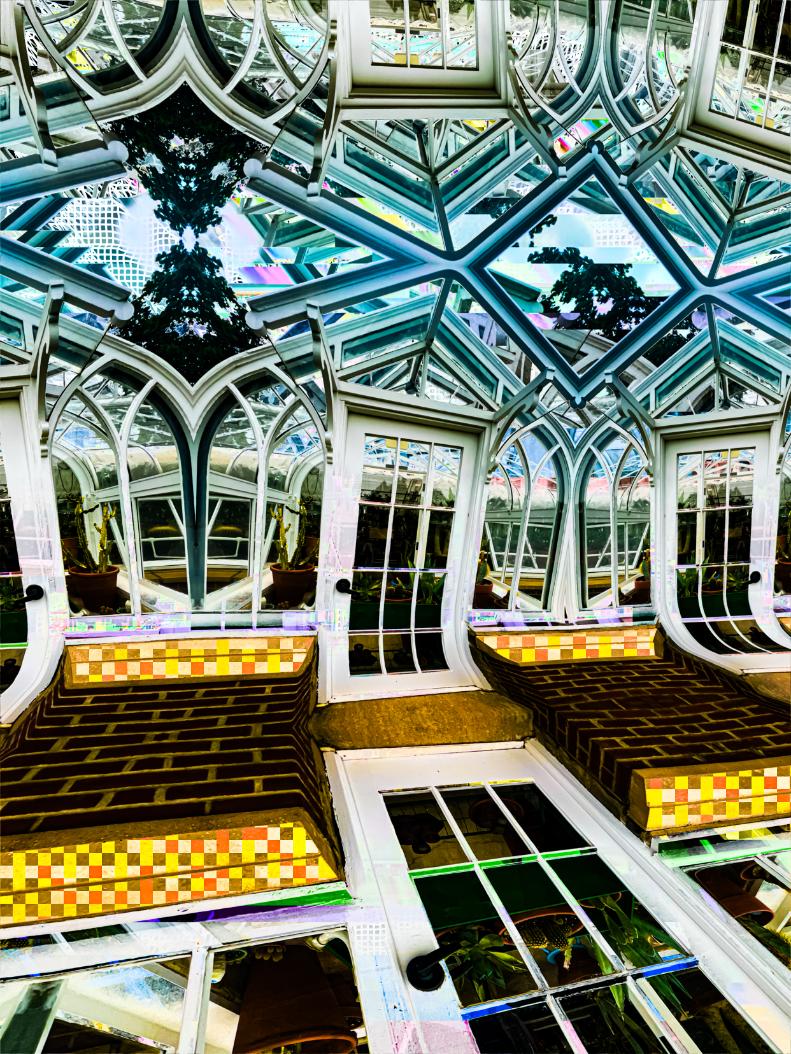
Yeah I'm definitely interested in the reality around us feeling uncanny and surreal, as it often does anyway to me. I also like the idea of being able to make art out of my immediate surroundings and to be able to see the possible artistry in almost anything in life. That's essentially the theme I want to pass off to my viewers, if I had to boil it down to one thing.
You describe digital distortion as a way of making people see their surroundings differently. What do you think we stop noticing when we become too familiar with the world around us?
I think our brain tends to fill in a lot of the gaps around us for efficiency when we get into mindless routines and that might stop us at times from really taking in the details of our surroundings. I also think there is a healthy debate over what should and shouldn't be considered art and I'm pretty liberal when it comes to what I consider art. In some sense, a lawn chair or a football game could be considered art, I try to carry water for that idea.
Glitch is often associated with technological failure, but your work feels less like an accident and more like a deliberate intervention. Where do you draw the line between glitch, manipulation and authorship?
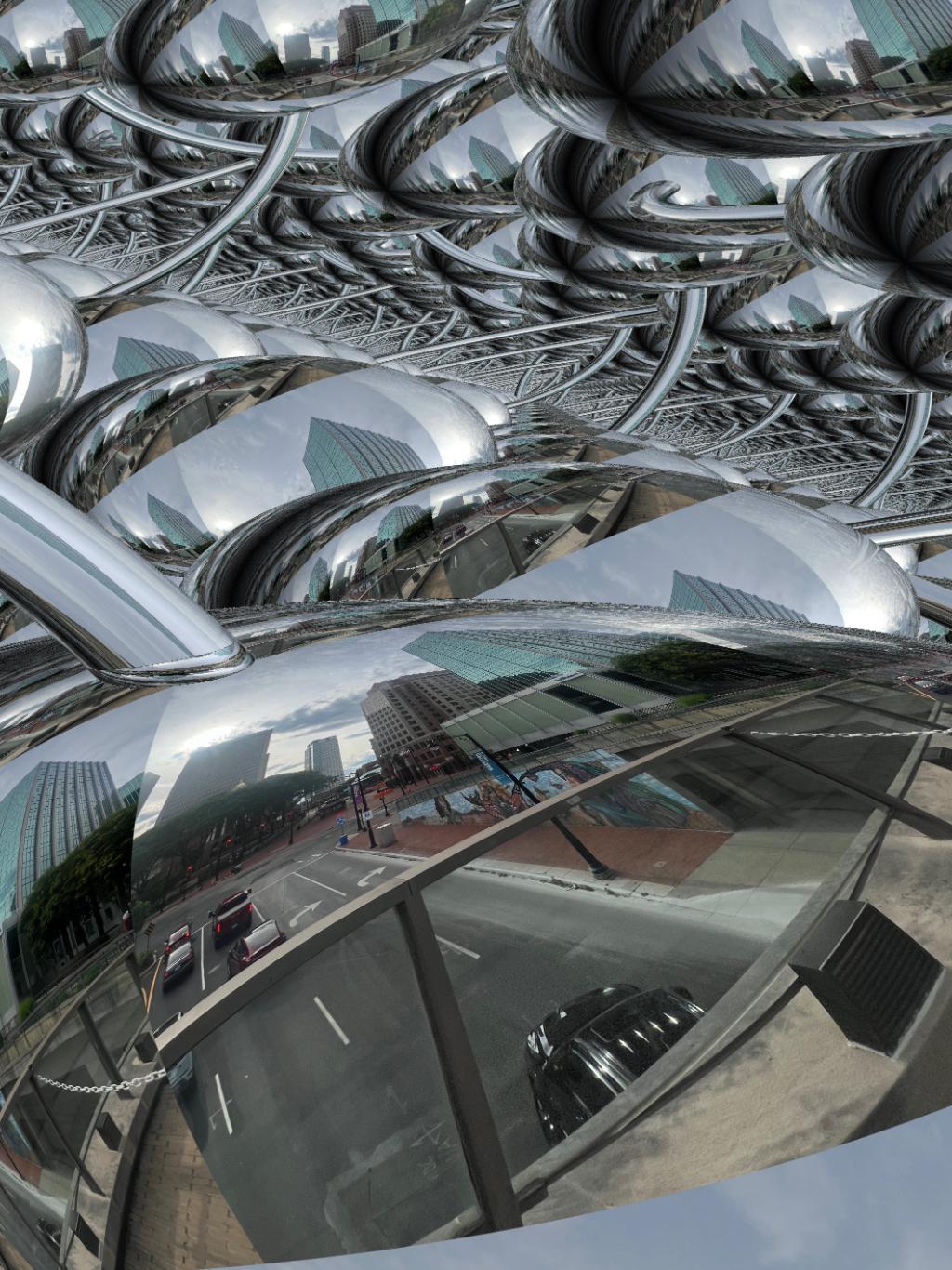
I often label my own art as “glitch” just because that's what a lot of people would group it into anyway, but I actually consider my art to be more a form of augmented reality. I generally try to manipulate my images as much as I can while still retaining the essence of recognition of whatever the photograph that I'm manipulating is. However, on some pieces I go a bit more wild and more abstract and don't worry about the original photo as much and then on others I might be more restrained and let the original photo stand out a bit more.
As for authorship, there are always other creative influences and even contributions at play. Like if I'm editing a photo of a building, that architect who designed the building and the construction workers who built it are involved in the creative process as well. Not to mention, the programmers and designers who made the programs that I use have their own creative input, kind of like how a synthesizer or a drum machine has its own creative input.
Your images can feel like fragments from an alternate reality. Do you think of yourself as documenting a world that already exists somewhere, or constructing one that could never exist outside the image?
I would say that the world I'm building in my work is more of an augmentation or a distortion of the world we already live in. It’s like pulling back the curtain and finding this secret world that's beyond the naked eye.
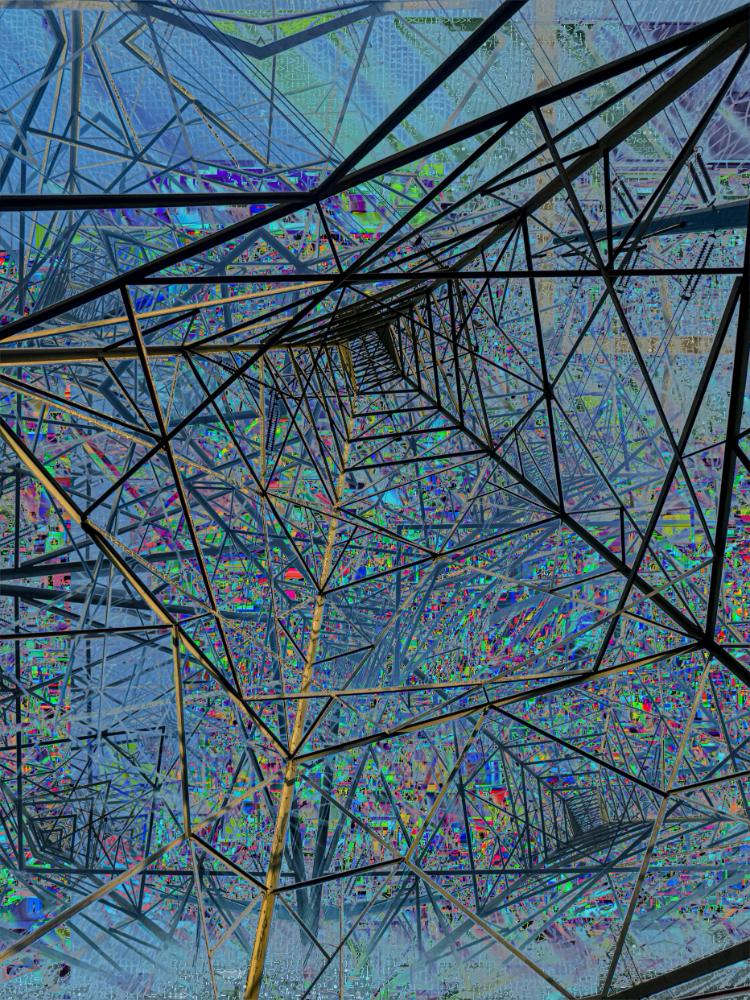
You are based in New England. How much does the landscape around you feed into your visual language? Is there something about the particular atmosphere, architecture or everyday environments there that you find yourself wanting to distort?
I'm not sure if being in New England consciously influences me these days, but it's a natural and incidental influence because most of the work I've done is shot in New England, and whether it's the architecture or the natural landscape, those influences certainly show up. I also plan to travel a bit within the next few years so I'll be working in new locations.
I've actually been taking more shots of more general material lately like hallways, stairwells, powerlines, gentrified areas, etc. which done strictly relate to New England. However, a lot of my earlier work was done during Covid when I would go to different cities and do edits of more localized subjects, like I would go into grittier areas or capture landmarks so my work back then was definitely related to a localized New England theme. It still pops up here and there because I just take shots wherever I am in my personal life, like I uploaded some edits from the coasts of Ogunquit Maine not too long ago.
You started making experimental digital art in 2019. Looking back at those early works compared with what you are making now, what has changed most: your technique, your relationship with technology, or the way you see the world?
I think a lot of my earlier works are more rudimentary, messier, and less detailed than my later work but I still appreciate them because I can feel the excitement and ambition I had for this type of art at the time, as it was still fairly new to me. Earlier on I just took pictures and distorted them and I didn't give it much thought, over time I started to consider what it actually meant to me and what I was trying to say with it.
Other than that, my work has certainly got more refined, I pay closer attention to the intimate details of each piece and I’ve picked up a lot of new techniques over the years, and abandoned or sidelined others as well. I wouldn't say that the artistic process or the themes are entirely different now, I would just say that I'm a lot more conscious and intentional of them now.
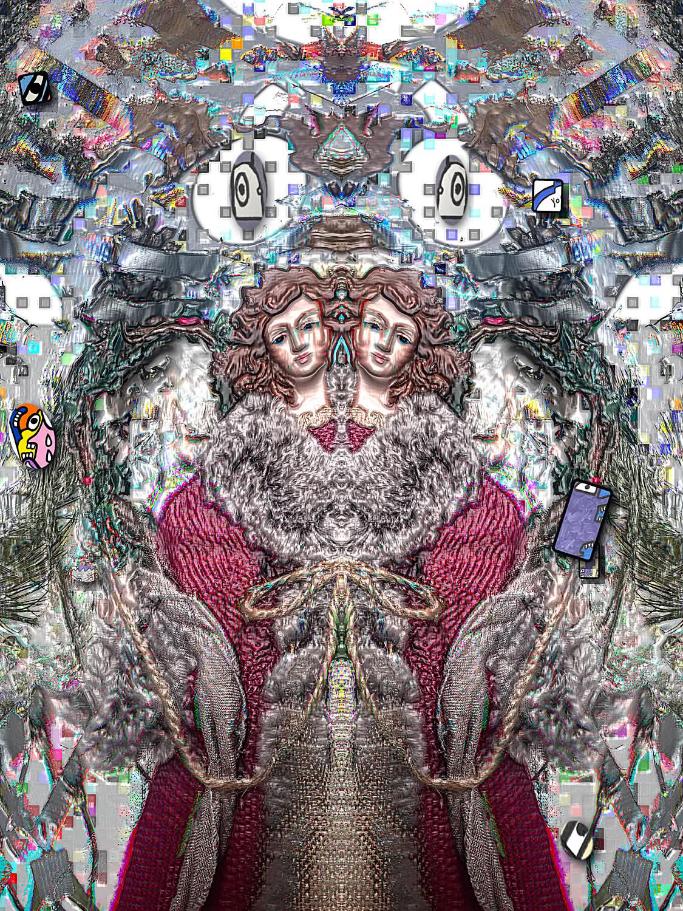
Photography is usually associated with capturing reality. You use photography as a starting point to destabilise it. Has working this way changed your understanding of what a photograph actually is?
That's an interesting question and yeah it's definitely changed the way I see photography. Once you realize that digital photography is just pixels on a screen and that you can do whatever you want with them, it opens a lot of doors. Analog photography has a lot of the same principles but it's with light and not pixels. I've certainly taken representationalist photography and I appreciate that too but I'm really interested in destabilizing it.
What is a visual territory you haven’t entered yet but would like to explore next?
I would like to do more videos that are immersive and highly detailed. I would like for the viewer to be completely encapsulated by what I'm trying to do visually, so maybe something VR related would be cool. I also have a lot of ideas for video games but I currently lack the resources or the even knowledge for that. Maybe one day if I meet the right people, who knows?